A Computer Science PhD's Take: AI Career Planning for New Graduates — Algorithm vs. Application Development

A CS PhD advises new grads to try algorithm roles first but not obsess — application development is the bigger opportunity pool, with LLMs and agents as key skills.
A computer science PhD shared AI career planning advice for new graduates on Bilibili, arguing they should try algorithm roles first but not fixate on them, since application development is the bigger opportunity pool. Algorithm roles have high barriers and few openings, so missing out is normal. Application development is the main battleground for AI implementation, requiring skills in two areas: large models (fine-tuning, quantization, deployment, clusters) and agents (MetaGPT, LangChain). Under the AI + industry trend, every sector needs application developers. His advice: apply to algorithm roles first, learn application skills in parallel, don't treat algorithm failure as the end, and build project experience in industry scenarios.
The AI industry keeps heating up, and new graduates often find themselves torn between algorithm roles and application development roles. A computer science PhD shared his career planning advice on Bilibili, with the core message: try algorithm roles first, but don't beat yourself up over them; application development is where the bigger opportunity pool lies.
Algorithm Roles: High Barriers, Few Positions — But Worth a Shot
The PhD first laid out the priority: consider algorithms first, then applications. He suggested new graduates should all apply to algorithm-related positions and "try their luck."
But the reality is stark — algorithm roles have extremely high requirements and limited openings, concentrated mainly at a handful of big tech companies and top firms. The PhD put it bluntly: "Not getting an algorithm offer is completely normal, because the pie that AI can carve out for algorithm work right now is just that small."
According to his observations, competition for algorithm roles far exceeds that for application development. A strong math foundation, model understanding, and paper reproduction skills are all hard thresholds. If you can't break into algorithm roles, don't be discouraged — because the bigger pie is on the application side.
Application Development: The Main Battleground for AI Implementation
The PhD emphasized that the bigger pie is all in applications and development. Application development roles offer more opportunities and broader coverage, and they are the vehicle through which AI technology truly lands across industries.
He advised that even if the algorithm attempt fails, as long as you build solid application development skills, you can still land a good offer. The key is to recognize the right direction rather than stubbornly grinding away on a single path.
Key Skills: Large Models and Agents
What should you learn for application development? The PhD gave two clear directions: large model-related skills and agent-related skills.

- Large model direction: You need to be familiar with mainstream industry frameworks and master engineering skills such as fine-tuning, quantization, deployment, and cluster usage. These capabilities directly correspond to enterprises' needs for implementing large models.
- Agent direction: Frameworks like MetaGPT and LangChain should be on your learning list. Agents are a hot spot in current AI application development, capable of chaining large model capabilities together to solve real business problems.
The PhD specifically noted that regardless of your background — algorithm-oriented or a career switcher from another field — you should fill in these two modules. When you later submit your resume, it will likely involve application development projects, and large models and agents are precisely where application projects are most concentrated.

Fine-tuning refers to continuing to train a pre-trained large model on data from a specific domain or task so that the model adapts to a particular scenario. Common methods include full-parameter fine-tuning and parameter-efficient fine-tuning (such as LoRA and QLoRA); the latter trains only a small number of additional parameters, greatly reducing compute and storage costs. Quantization converts model weights and activations from high precision (such as FP16) to lower precision (such as INT8 or INT4) to reduce VRAM usage and improve inference speed — a key technique for deploying models to edge devices or lowering costs. Deployment involves packaging a trained model into a callable service, requiring consideration of inference frameworks (such as vLLM and TensorRT-LLM), concurrency throughput, latency optimization, and other engineering issues. Cluster usage refers to distributed training or inference in multi-GPU/multi-machine environments, requiring skills in communication scheduling and resource allocation. These engineering capabilities are exactly what enterprises most urgently need when implementing large models.
LangChain is an open-source framework for building large model applications, offering modules such as chained calls, tool integration, memory management, and retrieval-augmented generation (RAG) to help developers quickly build complex workflows. MetaGPT is a multi-agent collaboration framework that simulates the role division of a software company (such as product manager, architect, and engineer), enabling multiple agents to work together on complex tasks. The core value of such frameworks lies in extending a large model's single-generation capability into plannable, executable, and iterable agent workflows, thereby solving real business problems. When learning, it's recommended to start with official documentation and example projects to understand agent planning, tool use, and multi-turn collaboration mechanisms.
AI + Industry: Many Opportunities, Broad Paths
The PhD pointed out that there are especially many AI application projects, and this is also the direction where AI is most implemented. Every industry is pursuing "AI+", which means job demand is spread across all sectors, giving new graduates a wider range of choices.
Rather than competing in the narrow gate of algorithm roles, it's better to broaden your horizons and find an industry scenario that suits you in application development.
Course and Coaching Information
In the latter half of the video, the PhD introduced updates to the 13th cohort of his AI class, including the latest version of YOLO and the overall large model framework. Tutoring services were upgraded from "one-on-one" to "dedicated specialists per class," with a team consisting of a class advisor, lead instructor, teaching assistant, paper advisor, and career advisor, each with their own responsibilities.

This part is course promotion, but the trend it reflects is worth noting: AI training is evolving toward systematic, full-process coaching, with paper and employment support broken out separately — indicating growing market demand for interdisciplinary AI talent.
Actionable Advice for New Graduates
Synthesizing the PhD's views, a clear path emerges:
- Apply to algorithm roles first — don't assume you can't do it; you won't know until you try;
- Learn application development skills in parallel — focus on large model fine-tuning/deployment and agent frameworks;
- Don't treat algorithm failure as the end — the opportunity pool in application development is bigger;
- Focus on AI + industry implementation — choose fields with real scenarios and accumulate project experience.
Career planning isn't a binary choice. Algorithms and application development are not opposites — the application side also needs people who understand model principles. The key is to stay flexible in your learning and calibrate your direction through experimentation.
Related articles
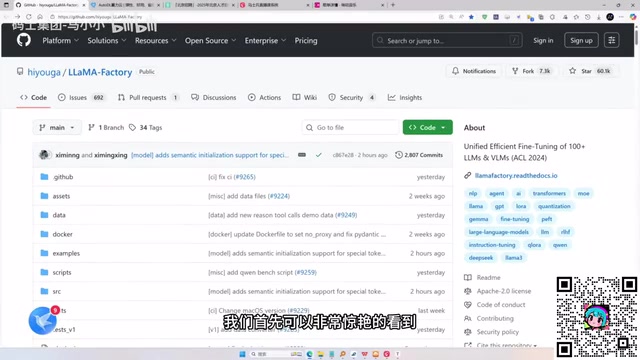
LLaMA-Factory in Practice: A Complete No-Code Guide to Fine-Tuning Large Models
An introduction to LLaMA-Factory, the open-source fine-tuning tool: its 60.1K-star background, supported models and algorithms, local vs. cloud deployment, and CUDA setup steps.

Zeng Ming's Deep Retrospective: Why OpenAI May Not Be the Ultimate Winner — and Why the Corporate System Will Disappear
Zeng Ming's deep retrospective on the AI endgame: model companies are just infrastructure, OpenAI and Anthropic won't be the final winners; the next battle is the Agent entry point standard; the corporate system will disappear as AI restructures collaboration, and only mission-driven companies can survive the cycle.

OpenHands v1.28.0: OpenCode and PI Added as Built-in Agents, API Keys Requestable In-Conversation
OpenHands ships 5 releases in 21 days: v1.27.0 adds OpenCode and PI as built-in agents, v1.28.0 enables in-chat key requests. ACP integration, credential reuse, model list changes, and upgrade advice.