#Databricks
38 related articles

Databricks Named a Visionary in the Gartner Magic Quadrant for Analytics and BI Platforms for the First Time
Databricks enters the Gartner Magic Quadrant for Analytics and BI Platforms for the first time as a Visionary. This article analyzes the milestone, why it was positioned as a Visionary, and the impact on BI-AI convergence and industry competition.

Databricks AI Data Preparation Tools Compared: Mosaic AI Vector Search and Data Quality Solutions
A deep comparison of five AI data preparation tools on Databricks: SqlDBM semantic modeling, Mosaic AI Vector Search, Unstructured document parsing, Soda and Monte Carlo data quality monitoring—analyzing their strengths, weaknesses, pricing, and use cases.

How California Built a Behavioral Health Public Data Platform with Databricks
California DHCS built a public behavioral health county profile platform on Databricks Lakehouse, unifying fragmented county data into comparable, transparent analytics.

Funke Released: Native HL7v2 Medical Data Parsing on Databricks
Databricks launches Funke, providing native HL7v2 healthcare message parsing that reduces ETL overhead and helps clinical data teams integrate data into Lakehouse platforms more efficiently.

How Adidas Uses Databricks Genie to Power Data Analytics and Product Innovation
Adidas uses Databricks Genie to streamline data analytics, freeing analysts from data processing to focus on insights and product innovation. Here's what enterprises can learn.

Databricks Lakebase: A Database Architecture Rebuilt for AI Speed
Databricks launches Lakebase, a ground-up database rearchitecture built for AI-speed spin-up/shutdown and fragmented AI workloads. Here's what it means.

Workday Data Connect Joins Unity Catalog: Unified Governance for HR and Financial Data
Databricks announces Workday Data Connect federation in Unity Catalog Beta, enabling zero-copy read-only access to HR and financial data with unified access control, lineage, and auditing.

Databricks Launches Workday Data Connect Federation Connector: Unity Catalog Now Connects HR Data
Databricks' Workday Data Connect federation connector enters public beta in Unity Catalog, enabling direct federated access to HR and finance data without ETL pipelines.

A Practical Guide to Migrating dbt ETL Pipelines to Databricks
A step-by-step guide to migrating dbt ETL pipelines to Databricks Lakehouse, covering adapter setup, SQL dialect differences, incremental strategies, and data validation.

Migrating Power BI Dashboards on Databricks with GenAI: A Practical Breakdown
A practical breakdown of a Databricks App + GenAI tool that auto-converts DAX measures to SQL, maps visualizations, and deploys AI/BI dashboards — achieving ~90% automation.

IFCO's Large-Scale dbt Project Operations on Databricks
IFCO's data team shares hard-won lessons operating a massive dbt project on Databricks, covering performance, visibility, and debugging at scale.
NEAREST BY Join: How Databricks Scales…
NEAREST BY Join: How Databricks Scales Vector Search for Batch Processing
Databricks Runtime introduces NEAREST BY Join, extending vector search from serving-layer point queries to large-scale batch nearest-neighbor joins for RAG pipelines and semantic analytics.

How Genie Ontology Powers Databricks Product Development
Databricks uses Genie Ontology to inject enterprise data semantics into AI agents, powering internal product development and improving query accuracy.

Databricks Genie Major Update: Context, Data Ingestion, and Automation Get a Full Upgrade
Databricks Genie gets a major update with business-aware ontology, workspace instructions, multi-format file ingestion, Unity Catalog integration, and scheduled automation tasks.

Databricks Data Warehousing & BI Practical Guide: From Architecture to AI Readiness
A practical guide to Databricks' Big Book of Data Warehousing & BI: covering Lakehouse architecture, dimensional modeling, migration strategies, Unity Catalog governance, performance optimization at scale, and AI/BI readiness.

Real-Time Retail Intelligence: Building an E-Commerce Recommendation System with Lakebase and AI Search
Build a low-latency, semantic real-time e-commerce recommendation system on Databricks using Lakebase online data serving and AI Search vector retrieval.
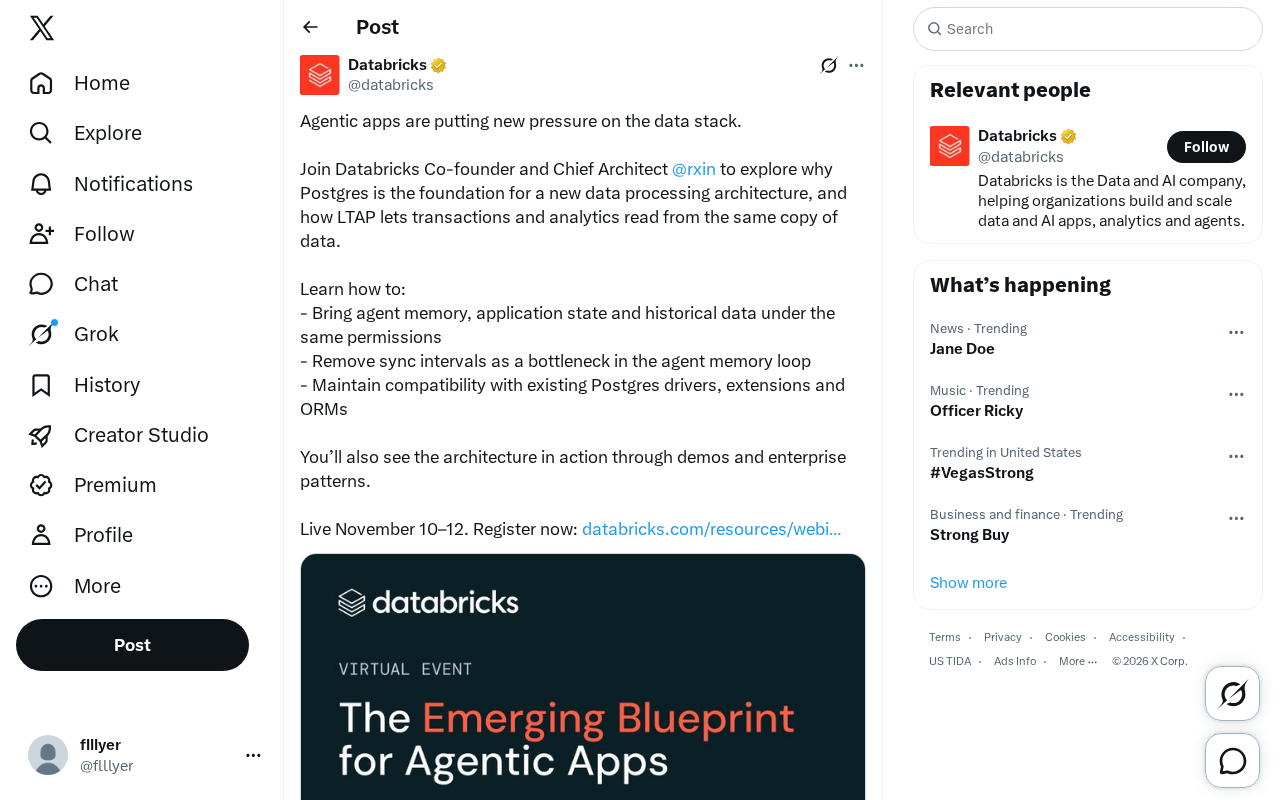
How Agentic Apps Are Reshaping the Data Stack: Why Databricks Is Betting on Postgres and LTAP
Databricks co-founder Reynold Xin explains how agentic apps challenge the data stack, why Postgres is the new foundation, and how LTAP eliminates sync bottlenecks for agent memory loops.

Databricks Launches ai_decide: Fast AI-Powered Decisions on Governed Data
Databricks launches ai_decide, a new AI Function that enables fast, scalable, and governed AI-powered decision-making natively within SQL and data pipelines.

How Databricks Deploys Frontier AI Models to 12,000 Employees on Day One
How Databricks rolls out frontier AI models to 12,000 employees on Day One — covering the key challenges, governance strategies, and enterprise lessons.

How Databricks Manages AI Model Deployment at Scale with Unity Gateway
Databricks reveals its enterprise AI deployment strategy: Unity Gateway enables same-day model rollout for thousands of employees while managing access, costs, and model selection at scale.