Datamimic: Giving AI Coding Assistants a Controlled Test Data World
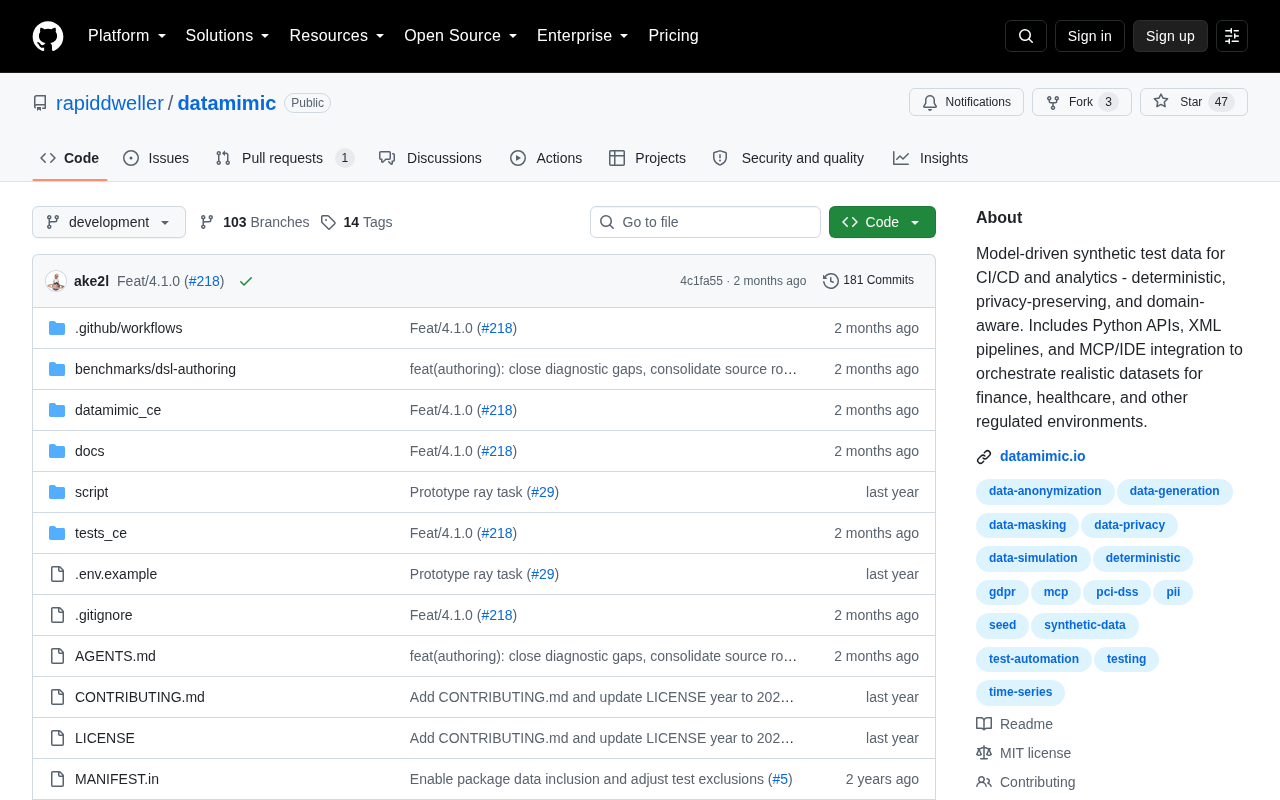
Datamimic replaces AI-improvised test data with rule-driven generation to protect quality in AI-assisted development.
As AI coding assistants become ubiquitous in development workflows, a hidden risk is surfacing: agents generating test data tend to rely on random placeholders, failing to ensure proper field formats, complete edge case coverage, or consistent data relationships — leading to false-passing tests that give developers a dangerous sense of security. The open-source project Datamimic addresses this by shifting data generation control from AI improvisation to declarative rules and model constraints, producing test data that is both realistic and reproducible. The article argues this represents an emerging need for governance infrastructure around AI-assisted development — and while Datamimic's community adoption remains limited, the core tension it identifies between efficiency and controllability is a real engineering challenge every team scaling coding agents must confront.
When Coding Assistants Start "Inventing Their Own World"
As AI coding assistants take on increasingly more tasks in the development workflow, a subtle problem has emerged: when you ask a coding agent to write or run tests, it tends to fabricate test data out of thin air. This data may look plausible on the surface, but it's disconnected from real business scenarios — field formats are arbitrary, edge cases are missing, and data relationships are internally inconsistent. The open-source project Datamimic was created specifically to address this pain point, with a core message that's hard to miss: don't let your coding agent invent its own test world.
This premise reflects a deeper question about the trust boundary in AI-assisted development. If the test data generated by an agent is uncontrolled, the credibility of test results drops significantly — and developers may develop a false sense of security from tests that "pass."
Why AI-Generated Test Data Is Unreliable
When coding agents generate test data without constraints, they typically suffer from several structural flaws. They tend to reach for the simplest placeholders (like test@test.com or John Doe), which can't capture the diversity of real-world data. For fields with dependencies — such as ensuring an order total matches the sum of line items — agents struggle to maintain consistency. Region-specific format rules (national ID numbers, phone numbers, postal codes, etc.) are also frequently wrong.
These issues may have limited impact on unit tests for individual functions, but in integration tests or data-intensive scenarios, fabricated data can mask real edge cases and error paths. Datamimic's approach is to shift test data generation from "the agent's random imagination" to "rule- and model-based, controlled output" — producing data that approximates real distributions while remaining reproducible.
From a test engineering perspective, this problem can be understood through the lens of the Test Oracle Problem: when test data is generated by the same AI system, what's actually being validated is the AI's self-consistency — not whether the code meets real business requirements. Tests that operate this way can all pass while detecting no actual defects. At a more technical level, AI language models generate data based on statistical distributions in their training corpus, which means they naturally gravitate toward the most "common" samples and inherently avoid low-frequency but critical edge cases — things like extremely long strings, special Unicode characters, timestamp boundaries across time zones, and numeric overflow scenarios. These are precisely the conditions where real systems are most likely to fail.
The Core Problem Datamimic Aims to Solve
In terms of project positioning, Datamimic acts as a "guardrail" between coding agents and test data. Developers define the structure, constraints, and distribution characteristics of their data, and the tool generates spec-compliant mock data — rather than letting an AI improvise something new with each run. The immediate benefits are:
- Reproducibility: Test data remains consistent across different environments and runs, making it easier to diagnose issues.
- Realism: Generated data follows real-world format and relational constraints, making tests more meaningful.
- Reduced hallucination risk: Returning control over data generation to explicit rules reduces the danger of AI confidently producing nonsense.
For teams actively scaling up their use of AI coding assistants, tools like this address a real engineering governance question: how do you maintain test quality standards while still reaping the efficiency benefits of agents?
In the landscape of test data management tools, Datamimic sits at the intersection of Synthetic Data Generators and Model-Based Testing. Traditional approaches fall into roughly three categories: random placeholder libraries like Faker and Mimesis, which mainly solve data formatting issues; static test data management via database fixtures and snapshots, which require manual maintenance; and production data exported with anonymization, which carries privacy compliance costs. Datamimic's approach lets developers use declarative rules to describe data structure constraints and inter-field relationships, with the engine guaranteeing internal consistency in the generated output. At scale, this can significantly reduce the burden of manually maintaining fixtures while avoiding the unpredictability of purely random generation.
A Direction Worth Watching — With Eyes Open
To be objective: Datamimic currently has limited traction in the community (only a handful of upvotes and comments on Hacker News), which means it represents more of an emerging awareness of the problem than a mature, widely validated solution. Test data generation itself is not a new field — there are already many mock data, fixture, and synthetic data tools in the industry. Datamimic's differentiating value lies in the fact that it explicitly designs for the AI coding assistant as a use case.
As coding agents become a standard part of development workflows, the surrounding governance tooling — including test data management, output validation, and permission controls — is likely to become the next wave of infrastructure worth watching. The perspective Datamimic introduces lands squarely on an aspect of AI-assisted development that's easy to overlook but carries significant downstream consequences.
Conclusion
The tagline "don't let your coding agent invent its own test world" captures a real tension in the practical deployment of AI programming tools today: the balance between efficiency and controllability. For developers, recognizing the limitations of AI-generated test data and proactively introducing constraint mechanisms is a critical step toward making AI a genuinely reliable assistant. Whether Datamimic becomes the standard tool in this space remains to be seen, but the problem it raises is already compelling enough that any team using coding assistants should take it seriously.
Related articles
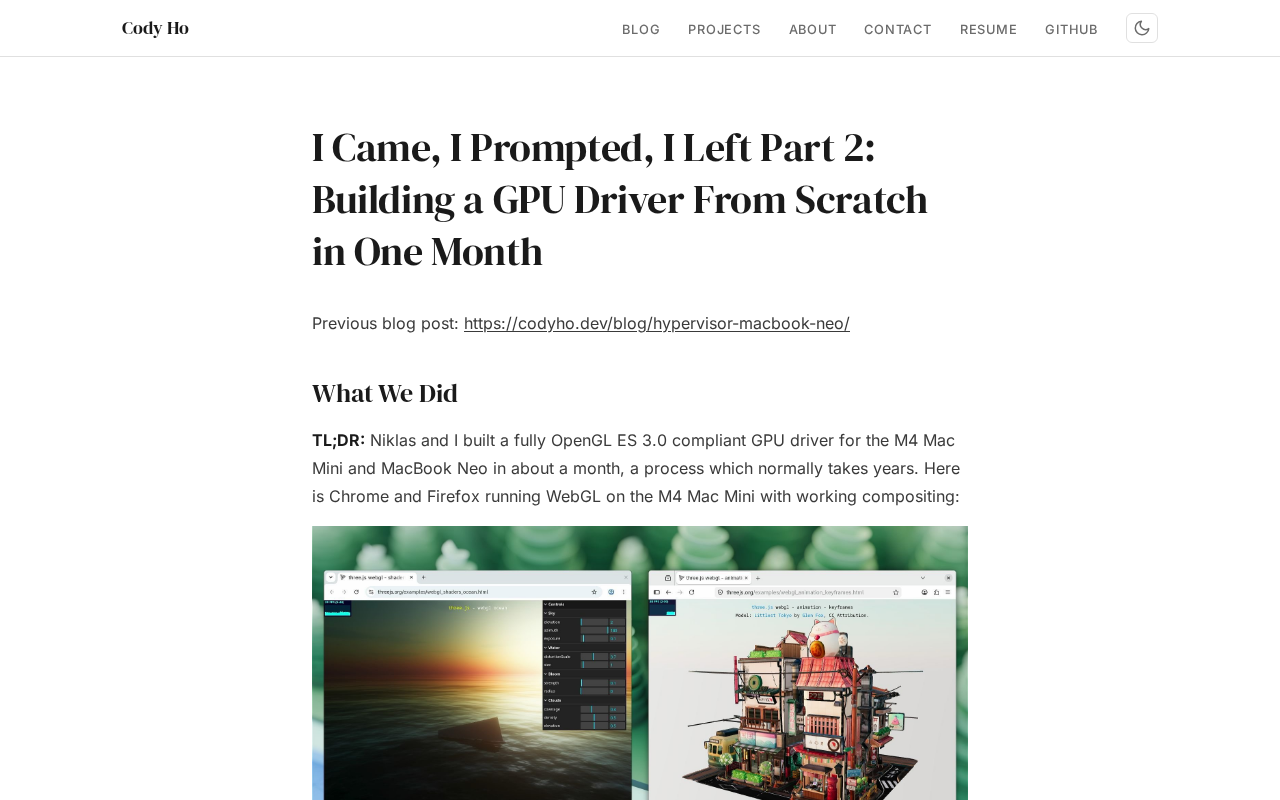
The Technical Challenges of Developing a Linux GPU Driver for the M4 Mac Mini in One Month
Developer Cody Ho built a Linux GPU driver for the M4 Mac Mini in one month. We break down the core challenges of reverse engineering Apple Silicon's closed GPU architecture.
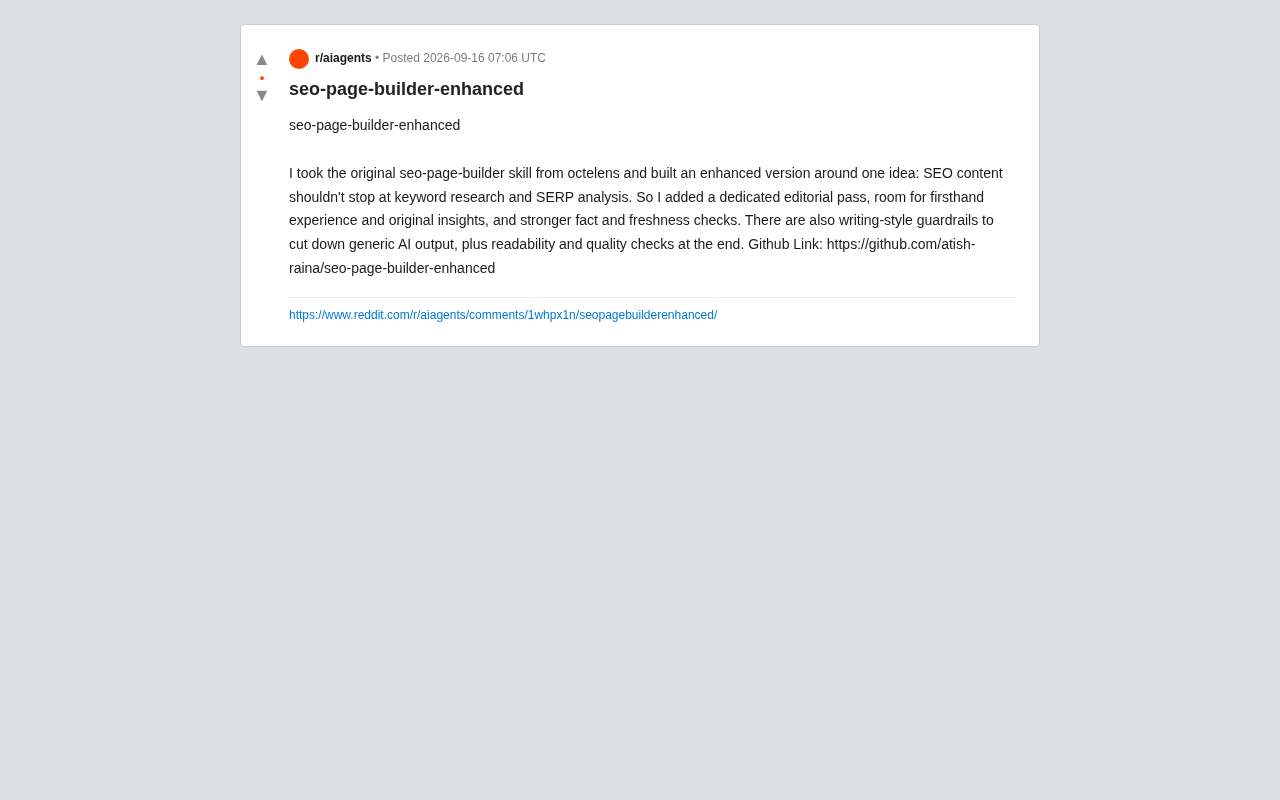
SEO Page Builder Enhanced: Breaking Free from Generic AI-Generated SEO Content
An open-source enhanced SEO content tool that adds editorial review, firsthand experience, fact-checking, and writing-style guardrails to combat generic AI content.

Hierarchical RAG Architecture Research: How Independent Developers Can Break Into Academic Research
An indie developer on Reddit seeks IR professor guidance for hierarchical RAG research. This article explores the technical background and practical advice for independent AI researchers facing academic barriers.