Debian Votes on AI Contribution Policy: A Pivotal Decision for the Open Source Community

Debian initiates a formal vote to establish policies governing AI-generated code contributions to the project.
Debian has launched a General Resolution vote to determine how the project will handle AI/LLM-generated code contributions. The debate centers on copyright uncertainty, code quality risks, and contributor accountability. The community is divided between conservatives favoring strict bans, pragmatists advocating disclosure requirements, and progressives arguing AI needs no special treatment. The outcome will likely serve as a benchmark for AI governance across the open source ecosystem.
Debian Launches Vote on AI/LLM Contribution Policy
As one of the world's oldest and most influential free software projects, Debian has recently initiated a closely watched voting process to determine how to handle code and content contributions generated by AI/Large Language Models (LLMs). This move signals that the open source community is formally bringing the thorny issue of "AI-generated content" to the table, attempting to define boundaries for future contribution standards through community democratic decision-making.
The Debian project was founded in 1993 by Ian Murdock and has maintained a fully community-volunteer-driven model for over thirty years, independent of any commercial company. Its unique democratic governance system includes an elected Project Leader (DPL), a Technical Committee, and a General Resolution (GR) voting mechanism. GR is Debian's highest decision-making process for major controversial issues, requiring developers to propose motions, gather seconds, and ultimately have all voting members decide through the Condorcet voting method. Historically, Debian has used the GR mechanism to decide on far-reaching issues such as free firmware policy and systemd adoption. Launching a GR vote on AI contribution policy fully demonstrates the community's consensus on the importance of this issue.
For a project renowned for its rigorous governance and high transparency, the significance of this vote extends far beyond establishing a single technical rule. It touches on the core values of open source collaboration—fundamental questions about code provenance, copyright ownership, quality control, and contributor responsibility.
Why AI Contributions Have Become a Flashpoint in the Debian Community
Copyright and Licensing Uncertainty
The core reason Debian needs specific rules for AI contributions lies in the legal gray areas. The training data for large language models often contains vast amounts of copyrighted code, and whether the code these models generate is "clean"—or whether it might inadvertently reproduce code snippets under restrictive licenses—remains legally unresolved.
Copyright lawsuits surrounding LLM training data are currently unfolding across multiple jurisdictions worldwide. GitHub Copilot faces a class-action lawsuit, with plaintiffs alleging its output contains unlicensed code snippets under GPL and other copyleft licenses without the corresponding copyright notices and license text. In 2024, the New York Times v. OpenAI case further thrust these issues into the public spotlight. The U.S. Copyright Office has explicitly stated that purely AI-generated content is not copyrightable, but has yet to provide a clear framework for the copyright status of "human-AI collaborative" content. Although the EU AI Act has been passed, there remains extensive interpretive room regarding the boundaries of fair use for training data. This global legal uncertainty is precisely why Debian needs to make institutional arrangements in advance.
For a project that strictly adheres to the DFSG (Debian Free Software Guidelines), any code without clearly verifiable authorization could pose a risk. The DFSG is the core document for determining whether software meets Debian's inclusion criteria, containing ten guidelines covering free redistribution, source code access, permission for modifications, non-discrimination against fields of endeavor, and more. It is also the direct predecessor of the internationally recognized Open Source Definition. Debian's ftp-master team is responsible for rigorously auditing the license of every package; any software with unclear licensing or conflicts with the DFSG is moved to the non-free repository. Once AI-generated code with unclear ownership is merged, the compliance benchmark that the entire distribution has built over decades could be called into question.
Code Quality and Accountability Issues
Another critical issue is quality control. AI-generated code may appear correct while harboring subtle logic flaws or security vulnerabilities. When a contributor submits AI-assisted code, who should be responsible for its quality? The submitter, or an unaccountable AI tool?
Multiple academic studies have provided empirical support for these concerns. A 2023 Stanford University study found that developers using AI programming assistants produced code with a significantly higher proportion of security vulnerabilities than those who didn't, partly because developers developed excessive trust in AI output. Common issues include: generated code may introduce known unsafe patterns (such as SQL injection, buffer overflows), produce "hallucinated" API calls (referencing nonexistent functions or parameters), and contain logic flaws in boundary condition handling. For a distribution like Debian that provides the underlying system for millions of servers, embedded devices, and critical infrastructure worldwide, any security risk could be amplified into systemic risk.
The open source community has long been built on the trust foundation of "contributors are responsible for what they submit." The involvement of AI may dilute this sense of responsibility, making it difficult for maintainers to judge how much human review a given piece of code has actually undergone.
The Community Divide Behind the Vote: Three Positions in Collision
From the current discussion atmosphere, clear divisions exist within the Debian community regarding AI contributions, with several main positions emerging:
Conservatives advocate strict restrictions or even a ban on AI-generated content, arguing that introducing AI contributions before legal and quality issues are resolved is planting a time bomb for the project.
Pragmatists argue that a complete ban is neither realistic nor wise. AI-assisted programming has become a daily tool for developers; rather than imposing a blanket ban, it's better to establish transparent disclosure mechanisms—requiring contributors to indicate which content was AI-assisted, allowing maintainers to make informed judgments.
Progressives argue against excessive restrictions, contending that as long as contributors take responsibility for code quality and comply with existing license requirements, AI is simply one of many auxiliary tools that doesn't warrant special treatment.
This divide itself reflects the broader anxiety across the entire tech industry when facing generative AI: how to embrace efficiency gains while maintaining quality and compliance standards.
Comparing Response Strategies from Other Open Source Projects
Debian is not the first project to confront the AI contribution issue head-on. Linux kernel community's Greg Kroah-Hartman has publicly rejected obviously AI-generated low-quality patches and warned that related submitters might be banned from contributing. The FreeBSD Foundation has taken a relatively moderate stance, requiring contributors to assume full responsibility for all submitted content regardless of whether AI tools were used. The Apache Software Foundation updated the explanatory notes for its Contributor License Agreement (CLA), requiring contributors to confirm they have legal authorization over submitted content. Gentoo Linux explicitly required in 2024 that contributors disclose AI tool usage and assume full responsibility for the output.
These different response strategies form a policy spectrum ranging from strict prohibition to conditional openness. However, Debian's GR voting mechanism makes its decision-making process more systematic and democratic, and its outcome will likely become the most authoritative reference document in the industry.
The Deeper Significance of This Vote
Setting a Precedent for AI Governance in Open Source Communities
Debian's use of a formal voting mechanism (GR, General Resolution) to address this issue reflects its longstanding democratic governance tradition. Regardless of the final outcome, this vote could become a reference model for other open source projects. The Linux kernel, GNU projects, and various foundations all face the same questions, and Debian's decision-making process and results carry significant demonstrative value.
Open Source Governance Challenges in the AI Era
From a broader perspective, this vote reflects the structural challenges the open source movement faces in the AI era. The foundation of open source collaboration is a traceable, verifiable, and trustworthy contribution chain, and generative AI raises a question mark precisely on "traceability." When the "author" of code becomes ambiguous, traditional copyright authorization systems and trust mechanisms all need to be reconsidered.
The deeper essence of this challenge lies in the fact that the traditional open source contribution model is built on the Developer Certificate of Origin (DCO) or Contributor License Agreement (CLA), through which contributors declare they have legal rights over the code they submit. When AI tools participate in code generation, whether contributors can continue to make such legal declarations becomes questionable. If an AI model "memorizes" a segment of GPL code during training and reproduces it nearly verbatim in its output, a contributor using that output may unknowingly violate copyleft obligations. This systemic uncertainty exerts unprecedented pressure on the entire open source licensing framework.
Conclusion: A Vote That Concerns the Future of Open Source
Debian's vote on AI contribution policy may appear to be an internal matter for a technical community, but it is actually a microcosm of the entire open source world's response to the AI wave. The questions it raises—copyright, quality, responsibility, and transparency of AI-generated content—cannot be avoided by any open source project.
Whether the vote leans toward strict restriction or pragmatic openness, this decision will influence Debian's future contribution ecosystem and provide valuable food for thought for other projects. In an era where AI is profoundly transforming software development, finding balance between efficiency and standards, openness and caution, is a defining question that every technical community must answer.
Related articles

Gaussian Process Bandit Optimization: Exploration Strategies and Inference Regret Guarantees
Cumulative regret guarantees in Bayesian optimization fail to reflect final recommendation quality. This article examines a new study that provides inference regret guarantees for Gaussian process bandit optimization through exploration query strategies and fill distance analysis, validated on hyperparameter optimization and control tasks.
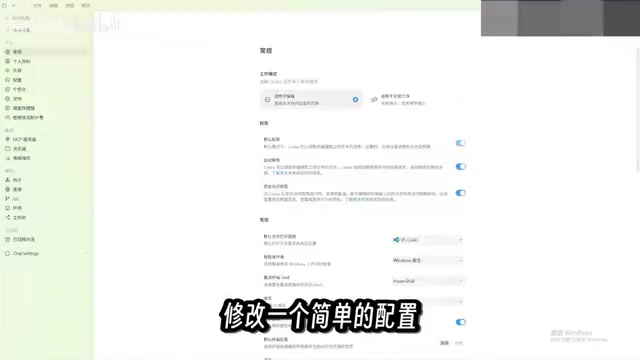
The Most Detailed Codex Guide on Bilibili: From Installation to Real-World Practice
The most detailed Codex guide on Bilibili: from app store installation to daily work mode configuration, with a real coffee shop project demonstrating file organization, data extraction, dashboard creation, and other practical tasks. Learn to use Plan Mode and desktop pets to leverage Codex efficiently.

Appearance Compensation in Volume Rendering: Why RGB Accuracy Cannot Guarantee Density Correctness
Volume rendering research reveals that volumetric data perfectly reproducing external RGB views may still contain density errors: appearance compensation can double central density and keep external rays unchanged even when L2 error exceeds 14.52%. Density recovery depends on appearance capacity, spatial resolution, and measurement design.