Decoding LLM Benchmarks: What 14,767 Papers Reveal About How Evaluation Is Changing
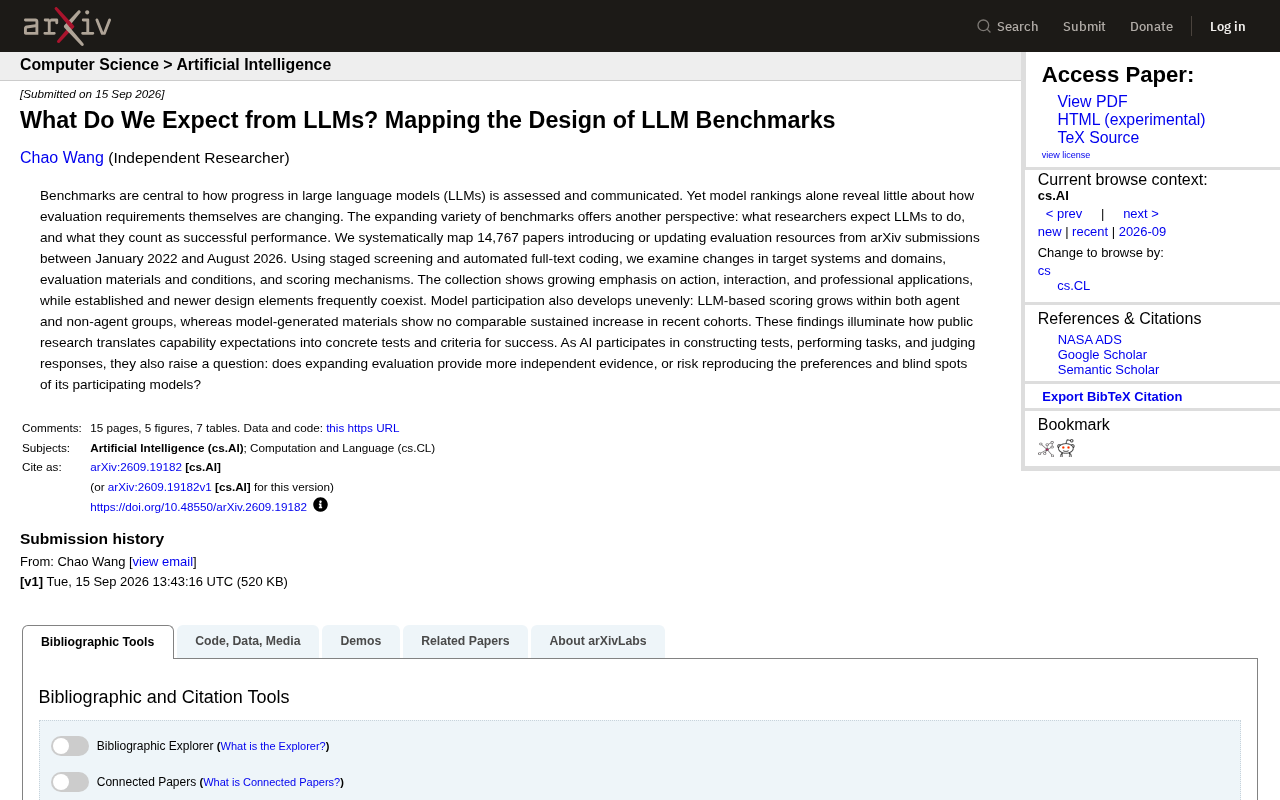
14,767 papers reveal LLM benchmarks are shifting from static Q&A to interactive tasks — with AI now grading its own tests.
This systematic study covering 14,767 arXiv papers maps the evolution of LLM benchmark design from 2022 to 2026 across three dimensions: target systems, evaluation materials, and scoring mechanisms. It finds evaluation is shifting from static multiple-choice Q&A toward action, interaction, and professional applications in step with the Agent paradigm — with old and new designs coexisting rather than replacing each other. More critically, LLM-as-a-judge scoring is expanding steadily while model-generated test materials lag behind, and when AI is involved in writing questions, answering them, and grading responses, benchmarks risk becoming self-referential loops that reward shared model preferences while missing shared blind spots.
Why Benchmarks Deserve Their Own Study
In the story of large language model (LLM) development, benchmarks play a role akin to a referee. Every update to a model leaderboard becomes fodder for industry debate. Yet a new study published on arXiv offers a perspective that has long been overlooked: simply tracking model rankings tells us almost nothing about how the standards of evaluation themselves are evolving.
In other words, rather than only asking "which model is better," we should also be asking "what do researchers actually expect LLMs to do, and what counts as success?" This study systematically maps 14,767 papers on arXiv published between January 2022 and August 2026 that introduce or update evaluation resources, charting the full landscape of benchmark design.
Methodology: From Screening to Full-Text Coding
Faced with nearly fifteen thousand papers, the research team employed a combination of staged screening and automated full-text coding. This pipeline made it possible to analyze the design elements of evaluation resources at scale and in a systematic way.
The study follows three main threads: target systems and domains — what AI systems the benchmarks are designed for and which application areas they cover; evaluation materials and conditions — the content used in testing and how it is constructed; and scoring mechanisms — how a given response is judged as good or bad. Together, these three dimensions reveal how researchers concretely operationalize their expectations of LLM capabilities.
Why Break It Down Into These Three Dimensions
Benchmarks are not neutral measurement tools — they encode the designer's own definitions of "intelligence" and "success." A test that only measures multiple-choice accuracy reflects a fundamentally different view of capability than one that asks a model to complete multi-turn interactive tasks in a real environment. Decomposing evaluation resources into the layers of system, materials, and scoring is precisely what allows these hidden assumptions to surface.
Automated full-text coding refers to the use of programmatic or model-assisted methods to extract and classify structured information from large volumes of literature, replacing traditional manual reading. In this study, with nearly fifteen thousand papers to analyze, manual review was impractical in terms of both time and cost. The research team designed a coding framework that maps each paper's key design elements — such as target system type, scoring approach, and data sources — to quantifiable variables, which are then extracted in bulk through an automated pipeline. The advantage of this approach is its reproducibility and scalability, though it has limitations: automated coding may miss design decisions that are ambiguously worded or highly context-dependent. For this reason, the team typically retained manual review steps for key categories to verify coding quality.
Core Finding: From Static Q&A Toward Action and Interaction
The most prominent trend the study identifies is a shift in evaluation focus — away from traditional static question-answering and toward an emphasis on action, interaction, and professional applications. This shift closely parallels the rise of the Agent paradigm in recent years: rather than being satisfied with a model that "gets the right answer," researchers now expect models to execute tasks in complex environments and engage in sustained interaction with external tools and users.
One key observation is that new and old design elements tend to coexist rather than replace each other. That is, even as interactive, task-based evaluations grow in number, classic static testing paradigms have not disappeared — both exist simultaneously in today's research ecosystem. This suggests that the evolution of benchmarks is an additive, cumulative process rather than a simple generational turnover.
The Agent paradigm refers to elevating LLMs from pure question-answering systems to autonomous actors capable of planning, using tools, and continuously interacting with their environment. Under this paradigm, a model is no longer just "answering a question" — it must decompose goals, invoke tools like search engines or code interpreters, adjust strategy based on intermediate results, and ultimately complete complex multi-step tasks. Representative benchmarks include SWE-bench for automated software development, WebArena for web navigation, and evaluations for automated scientific experimentation. This shift poses a fundamental challenge for benchmark design: the traditional "given input, compare against reference output" static paradigm cannot capture a model's robustness in dynamic environments, its ability to recover from errors, or its long-horizon planning capabilities. New elements such as simulated environments, interaction trajectory logging, and multi-turn scoring are therefore necessary.
Models Are Deeply Embedded in the Evaluation Process Itself
Another intriguing observation from the study is the growing role that AI models play in the evaluation pipeline. Specifically, LLM-based scoring is on the rise in both agentic and non-agentic evaluations — what is colloquially called "LLM-as-a-judge" is becoming increasingly common.
However, model involvement is uneven. Unlike the sustained growth seen in the scoring step, model-generated evaluation materials have not shown a comparable sustained increase in recent paper batches. This means researchers are more willing to let models "grade answers" than to let models "write the questions" — a relative caution on the generative side. This asymmetry itself reflects the community's nuanced judgment about where models can and cannot be trusted.
LLM-as-a-judge refers to using a highly capable language model (such as GPT-4 or Claude) to score the outputs of another model, as a substitute for human annotation or rule-based matching. Its rise stems from a practical need: outputs from open-ended generation tasks — long-form writing, multi-turn dialogue, code review — are difficult to evaluate with exact-match metrics, and human evaluation is prohibitively expensive. Research shows that LLM judges correlate with human ratings to some degree, but they also have well-documented flaws: they tend to favor responses that are confident in tone, longer in length, or stylistically similar to themselves, and they are more lenient toward jailbreak-style phrasing. This means leaderboards centered on LLM scoring are, to some extent, measuring "how well a model pleases the judge" rather than genuine capability — and this is the technical root of the circular problem the article identifies.
A Circular Problem Worth Taking Seriously
When AI is involved in constructing tests, executing tasks, and judging responses simultaneously, a fundamental question emerges: does an ever-expanding evaluation ecosystem provide more independent evidence of capability, or is it quietly replicating the preferences and blind spots of the models participating in it?
This question strikes at the heart of benchmark credibility. If models are writing the questions, answering the questions, and grading the answers, then so-called "objective evaluation" risks becoming self-referential — the tests reward whatever the model population collectively favors, while their shared blind spots may never be detected. For researchers, companies, and the public who rely on benchmark scores to gauge technological progress, this is a methodological challenge that cannot be ignored.
Implications for Practitioners
The value of this research lies not in ranking any particular model, but in providing a mirror that reflects the industry's collective expectations. For practitioners who care about AI evaluation, a few points are worth keeping in mind:
- When reading benchmark results, always examine the scoring mechanism — be especially wary of biases introduced by pure LLM-based scoring;
- Interactive, task-based evaluations are becoming the mainstream direction, and the explanatory power of static accuracy metrics is declining;
- The design of evaluation resources is itself an expression of values — choosing which benchmark to use is, in a sense, choosing your definition of what it means to be "intelligent."
As AI becomes ever more deeply embedded in the evaluation process itself, maintaining a critical eye toward the independence of evaluation may matter more than chasing leaderboard rankings.
Related articles
Three Stages of AI LLM Testing: A Practical Guide from Core Concepts to API Calls
A learning path for testers covering LLM fundamentals, prompt engineering, OpenAI SDK calls, API Key vs Token differences, streaming output, RAG, and Agent systems.
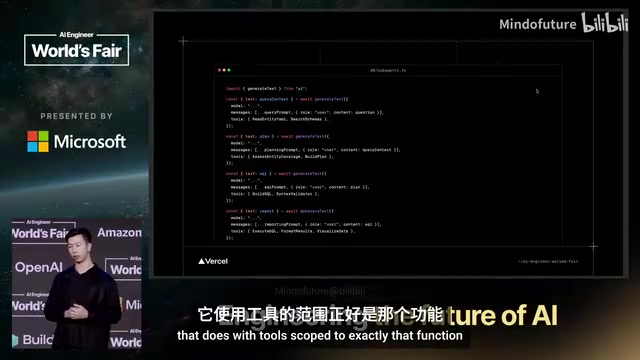
Vercel's Chief of Software Looks Back: The Evolution of Agent Building — From Multi-Agent Chains to File System Agents
Vercel's Chief of Software Andrew recaps the agent-building journey at AI Engineer: from giant prompts to multi-agent chains, monolithic memory, file system agents, and the open-source EVE framework.
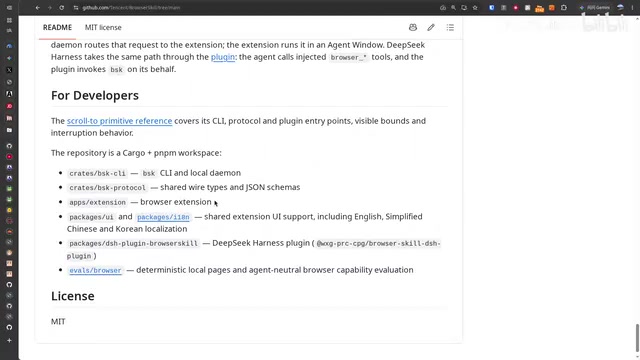
Tencent's Open-Source BSK in Action: Letting AI Take Over Your Already-Logged-In Browser
Tencent's open-source BSK (Browser Skill Kit) lets AI take over your real, logged-in Chrome via WebSocket. We break down the architecture, setup, and three key pitfalls from real-world testing.