Decoding the Government Software Security Executive Order: New Supply Chain Compliance and SBOM Requirements

How the new U.S. Executive Order mandates SBOMs and verifiable supply chain security for government software.
A new U.S. Executive Order requires government software suppliers to provide verifiable security assurances and mandates a Software Bill of Materials (SBOM) system. This article analyzes the policy's core demands, its real-world impact on suppliers and the open-source ecosystem, and the challenges from implementation to practice.
A New Starting Point for Government Software Security
Recently, an Executive Order targeting the secure delivery of government software has drawn widespread attention across the technology and security sectors. The introduction of this policy marks a substantive step forward by the U.S. federal government in governing software supply chain security. For government agencies that have long relied on third-party software, open-source components, and complex delivery chains, this is not merely a compliance requirement—it is a profound transformation concerning trust, transparency, and accountability.
As major supply chain attacks such as SolarWinds and Log4j have erupted one after another, the security risks embedded within the software delivery process have escalated to the level of national security. It is worth noting that software supply chain attacks are not a new phenomenon, but their scale and complexity have grown exponentially in recent years. As early as 2013, hackers injected malicious code into open-source software by compromising the code hosting platform SourceForge. In the 2017 CCleaner incident, attackers hijacked the official build server of this system-cleaning tool—used by millions—and distributed a legitimately signed version containing a backdoor. The reason this attack path has become increasingly favored by nation-state actors lies fundamentally in its extremely high return on investment: compromising a single upstream node enables mass infiltration of all downstream users, with a stealth far exceeding that of traditional targeted attacks.
The SolarWinds Incident (2020) stands as one of the most devastating software supply chain attacks to date. Rather than directly breaching the defenses of target government agencies, the attackers chose to compromise SolarWinds' Continuous Integration/Continuous Delivery (CI/CD) build system—the core pipeline through which software is compiled from source code into an executable product. By injecting malicious code during the build stage, the attackers made it part of the legitimately signed software, distributing it to approximately 18,000 government and enterprise customers via official updates to the Orion network monitoring software. Victims included core U.S. institutions such as the Department of the Treasury and the Department of State. Because the malicious code carried a legitimate digital signature, traditional endpoint security detection was virtually unable to identify it, and the attackers lurked undetected for months. Subsequent investigation revealed that the attackers (attributed to APT29, a group under Russia's Foreign Intelligence Service, the SVR) had planted a malicious program named "SUNSPOT" within the SolarWinds build environment. This program specifically monitored the build process, replacing target source code files with backdoored versions in real time as they were compiled—a sophisticated attack against the build process itself, representing a blind spot that traditional code review and security scanning could scarcely cover.
The Log4j Vulnerability (2021, CVE-2021-44228) revealed the systemic risks of open-source dependencies from another dimension. Log4j is a Java logging library maintained by the Apache Software Foundation. Due to its comprehensive functionality and ease of integration, it is embedded in hundreds of millions of applications and devices—yet the vast majority of its users are unaware of its presence. This vulnerability allowed attackers to trigger a JNDI (Java Naming and Directory Interface) lookup by sending a specially crafted string to the logging system, thereby achieving Remote Code Execution (RCE)—running arbitrary commands on the target server with the highest privileges, without any authentication. Within 72 hours of the vulnerability's disclosure, global scanning and exploitation attempts surpassed millions. The deeper lesson of the Log4j incident lies in the severity of the "hidden dependency" problem: many affected organizations were still unable to determine weeks after disclosure whether they were using Log4j, because the library was often indirectly introduced as a transitive dependency of other frameworks, rendered nearly invisible beneath dozens of layers of nested dependencies. CISA's post-incident assessment showed that even one year after disclosure, a large number of exposed vulnerable instances remained on the internet, underscoring the ongoing cost of lacking dependency visibility.
Together, these two incidents reveal a profound logic: attackers need not breach a target system's layered defenses head-on—they only need to compromise a single upstream link in its chain of trust to achieve large-scale, silent infiltration of all downstream users. As one of the largest purchasers of software, the government's elevation of security standards will exert a profound demonstrative and driving effect on the entire software industry.
The Core Demands of the Executive Order
The Evolution of Software Supply Chain Security Policy
This Executive Order is not an isolated event, but rather a component of the ongoing evolution of the federal government's software security governance system. Executive Order 14028 (EO 14028), issued in May 2021, was an important precursor. It was the first to explicitly require SBOMs, zero trust architecture, and software supply chain security standards at the federal level, and it authorized NIST to develop corresponding guidelines.
The core concept of Zero Trust Architecture is "never trust, always verify"—abandoning the traditional security assumption based on network perimeters and requiring every access request to undergo identity authentication, device health checks, and least-privilege validation, regardless of whether the request originates from within or outside the internal network. NIST SP 800-207 provides federal agencies with a standard reference for zero trust architecture. Since then, NIST has successively released supporting documents such as SP 800-161r1 (Supply Chain Risk Management Practices) and the Cybersecurity Framework (CSF) 2.0. Meanwhile, CISA maintains the Known Exploited Vulnerabilities (KEV) catalog, requiring federal agencies to complete remediation within prescribed deadlines. The gradual maturation of this policy ecosystem means that compliance requirements will become increasingly specific and enforceable, rather than remaining at the level of principle.
Within the existing federal software procurement compliance system, FedRAMP (Federal Risk and Authorization Management Program) has long played the role of a security baseline for cloud services. Established in 2011 and based on the NIST SP 800-53 security control framework, FedRAMP requires cloud service providers to be audited by a Third Party Assessment Organization (3PAO) and obtain authorization before they can provide services to federal agencies. This "authorize first, then use" model is essentially a centralized risk management mechanism—federal agencies share the same security assessment results, avoiding the resource waste of repeated audits by individual agencies. The introduction of the new Executive Order means this compliance ecosystem will extend across the entire software delivery chain. The FedRAMP model is expected to be further strengthened and expanded to non-cloud software scenarios, forming a comprehensive compliance framework covering everything from cloud services to on-premises software.
Notably, the U.S. federal government's annual software procurement is estimated to exceed $100 billion, making it one of the largest single software buyers in the world. This scale grants government procurement standards enormous market-shaping power. Historically, the Department of Defense's DO-178C airborne software airworthiness standard, the HIPAA medical data privacy regulations, and the PCI-DSS payment card industry standard all drove upgrades in the entire industry's security practices through similar mechanisms. The concurrent advancement of the EU's Cyber Resilience Act means this wave of rising security standards is forming a transatlantic policy synergy.
Strengthening the Verifiability of the Software Supply Chain
One of the key directions of the new Executive Order is to require suppliers delivering software to the government to provide stronger security assurances. The origin, build process, and dependencies of software must all possess traceable and verifiable characteristics. "Secure delivery" no longer means merely delivering a product that runs—it means proving that every stage of that product, from code writing to final deployment, complies with security specifications.
The technical connotations of verifiability span multiple levels: at the code level, cryptographic Code Signing ensures the code's origin is trustworthy and untampered; at the build level, Build Provenance records which code version, in what environment, and through which process the software was generated; at the dependency level, Integrity Verification ensures that every introduced third-party component is consistent with its publisher's declaration.
Build Provenance at the engineering level is typically embodied as a JSON document in the SLSA Provenance format, recording key metadata such as the builder's identity, build materials (cryptographic hashes of the input source code), build environment configuration, and build steps, all endorsed by the build service with a cryptographic signature to ensure that this "construction record" itself cannot be forged. Mainstream CI platforms such as GitHub Actions and Google Cloud Build already natively support the automatic generation of SLSA provenance. Developers only need to enable the corresponding feature in their pipeline configuration to automatically produce provenance documents meeting SLSA L2/L3 requirements, greatly lowering the technical barrier to compliance.
The SLSA (Supply-chain Levels for Software Artifacts, pronounced 'salsa') framework was proposed by Google in 2021 and has since been handed over to OpenSSF governance. It divides software supply chain security capabilities into four levels, providing the industry with a progressive compliance path from low to high. Its tiered system is ingeniously designed: L1 requires the build process to be documented and to generate basic provenance; L2 requires the build service to be hosted, with provenance generated by the service itself rather than manually submitted by developers; L3 requires the build environment to be security-hardened and the build steps to be immutable; L4 (the theoretical highest level) requires two-person code review and reproducible builds. This progressive design allows organizations to start with lower-cost basic compliance and gradually evolve toward higher security assurances, avoiding the policy rigidity of an "all or nothing" dilemma. Notably, the SLSA framework's design philosophy aligns closely with the "trust but verify" principle in software engineering—it does not rely on trusting individual developers, but rather establishes security assurances on an objectively verifiable chain of evidence through systematic technical constraints and automated records. This is the fundamental reason it is favored by government policymakers.
At the code signing infrastructure level, the Sigstore project has fundamentally transformed the traditional paradigm through "Keyless Signing": developers sign artifacts using temporary certificates (obtained through OIDC authentication), and the signing records are written to the publicly accessible Rekor transparency log, which anyone can audit and verify at any time. This means that even if an individual developer's temporary credentials are stolen, attackers cannot forge historical signing records. Major package management platforms such as npm and PyPI have gradually integrated Sigstore, enabling the publishers of millions of open-source packages to establish verifiable publishing chains of trust at near-zero cost.
The logic behind this demand is clear: if the government cannot verify the complete build chain of software, then any single link having malicious code planted into it would constitute a potential national security risk.
Institutionalizing the Software Bill of Materials (SBOM)
Under this policy framework, the Software Bill of Materials (SBOM) is likely to become a mandatory requirement. An SBOM is essentially a software "ingredient list," detailing all components, libraries, and dependencies contained in a piece of software, along with their version information, licenses, and associations with known vulnerabilities.
Currently, there are two mainstream SBOM format standards, which differ significantly in design philosophy:
- SPDX (Software Package Data Exchange): Led by the Linux Foundation, it became the international standard ISO/IEC 5962:2021 in 2021. It focuses on open-source license compliance scenarios, with a mature format and a complete toolchain, making it suitable for enterprise-level scenarios that need to interface with international standards.
- CycloneDX: Promoted by OWASP (Open Web Application Security Project), it is widely popular in the security community due to its built-in rich support for security metadata (such as vulnerability disclosures, exploitability scores, and component dependency graphs), and is more aligned with security operations scenarios centered on vulnerability management.
The U.S. National Telecommunications and Information Administration (NTIA) has published a minimum elements requirement document, defining seven baseline fields: supplier name, component name, version, unique identifier, dependency relationships, SBOM data author, and timestamp.
The practical value of an SBOM depends largely on the quality of its integration with vulnerability intelligence databases. Current mainstream vulnerability databases include: NVD (the U.S. National Vulnerability Database, maintained by NIST), OSV (the open-source vulnerability database led by Google, using a machine-friendly JSON format and covering major ecosystems such as PyPI, npm, and Maven), GHSA (the GitHub Security Advisory database), and various ecosystem-specific databases. Only by comparing the component identifiers in an SBOM (such as PURL—Package URL, in a format like pkg:npm/lodash@4.17.21, a unified cross-ecosystem component locator standard) against the above databases in real time can a static list be transformed into a dynamic risk dashboard.
However, the large-scale application of SBOMs also faces a real pain point: a typical enterprise-level application may directly and indirectly depend on hundreds or even thousands of components, many of which contain historical CVEs—yet these vulnerabilities may not be exploitable at all within the specific usage context of the current product. This has given rise to an important complementary mechanism—VEX (Vulnerability Exploitability eXchange). VEX allows software suppliers to declare the actual exploitability status of each known vulnerability in a specific product version, including four states—"affected," "not affected," "fixed," and "under investigation"—accompanied by technical explanations. This solves the problem of "vulnerability false-positive noise" in SBOM scenarios, enabling security operations teams to focus their limited response resources on genuine risks rather than drowning in a flood of theoretical vulnerability alerts with low exploitability. CISA has published a VEX minimum requirements document, and both the CycloneDX and CSAF (Common Security Advisory Framework) formats natively support VEX, evolving the SBOM from a passive inventory into a proactive risk communication tool. The true value of an SBOM lies not only in its one-time generation, but more importantly in its continuous updating in sync with the software lifecycle—only by linking it in real time with vulnerability databases and VEX can we achieve the leap from a static list to dynamic risk awareness.
With an SBOM, government agencies can rapidly assess their own scope of impact when a vulnerability erupts. Take Log4j as an example: agencies with a complete SBOM could locate all affected systems within minutes and generate a remediation priority list, without spending days or even weeks on manual code inspection. This gap in response efficiency often directly determines the boundary of losses in a large-scale vulnerability crisis.
The Real-World Impact on Software Suppliers
Comprehensively Raising the Compliance Threshold
For enterprises hoping to sell software to the government, this Executive Order means a higher barrier to market entry. Suppliers need to establish a robust Secure Development Lifecycle (SDLC) process, adopting a series of technical measures such as signature verification, build reproducibility, and dependency scanning.
The Secure SDLC is an engineering framework that systematically embeds security activities into every stage of software development. Its core practices include:
- Requirements Phase: Threat Modeling—systematically identifying attack surfaces, potential threats, and corresponding mitigation measures. The STRIDE model (Spoofing, Tampering, Repudiation, Information disclosure, Denial of service, Elevation of privilege) is one of the most widely used methodologies.
- Development Phase: Static Application Security Testing (SAST) scans source code for security defects without running it; Software Composition Analysis (SCA) specifically detects known vulnerabilities and license risks in third-party and open-source dependencies.
- Testing Phase: Dynamic Application Security Testing (DAST) simulates attack behavior in a running state; Fuzzing triggers boundary-condition vulnerabilities through massive random or mutated inputs, and platforms such as OSS-Fuzz have run continuous fuzz testing for hundreds of open-source projects.
- Build Phase: Reproducible Builds represent a key technical breakthrough in supply chain security in recent years—they require that the same source code, in the same build environment, must produce byte-for-byte identical binary output. This means any third party can independently rebuild the software and compare it byte-for-byte with the released version, thereby verifying whether tampering occurred during the build stage. Achieving reproducible builds requires systematically eliminating sources of non-determinism in the build process: timestamps, random number seeds, file system enumeration order, and compiler version differences can all lead to inconsistent output. Distributions such as Debian and Arch Linux have incorporated reproducible builds into their core goals, and the reproducible-builds.org community continuously tracks the progress of reproducibility rates across major distributions.
For large technology companies, this may simply be a matter of refining processes. But for small and medium-sized software suppliers and open-source projects, the increase in compliance costs cannot be ignored. How to reduce the burden on these participants while safeguarding security will be a key issue to balance during the policy's implementation.
The Ripple Effect on the Open-Source Ecosystem
Government software makes extensive use of open-source components, and the Executive Order's requirements for secure delivery will, in effect, be transmitted upstream to the open-source community through the supply chain. This is both a pressure and a driving force.
The security dilemma of open-source software is essentially a public goods problem: critical infrastructure code is often maintained by a small number of volunteers, yet used for free by tens of thousands of commercial products, creating a severe imbalance in contribution. A joint study by Harvard's Laboratory for Innovation Science and the Linux Foundation (the "Census II" report) found that fewer than 10% of open-source maintainers contribute more than 90% of security-related code commits; among the most widely used open-source packages, a considerable proportion are supported by a single maintainer and lack basic security auditing resources.
The XZ Utils backdoor incident (CVE-2024-3094), exposed in March 2024, laid this structural fragility bare, and is regarded by security researchers as the most sophisticated open-source supply chain attack discovered to date. The attacker "Jia Tan" (very likely a state-sponsored actor) spent more than two years building community trust through continuous high-quality code contributions, gradually gaining core maintainer privileges, and ultimately planting a carefully designed backdoor in the build configuration of specific distributions—a backdoor that activated only under specific conditions, specifically targeting authentication bypass on SSH servers. The incident was accidentally noticed by Microsoft engineer Andres Freund during performance benchmarking, triggered by an abnormal increase of about 500 milliseconds in SSH login time. This case profoundly reveals the limitations of relying purely on manual code review: when attackers possess sufficient patience and technical capability, the combination of social engineering and technical means can bypass nearly all defenses based on human judgment. Even more alarming, the XZ Utils backdoor was deliberately designed to activate only in pre-release versions of specific Linux distributions linked through systemd. This highly targeted trigger condition made it nearly invisible in standard test environments, underscoring the indispensability of automated build provenance and reproducible build verification as objective technical measures. When the incident was exposed, the world realized that this core compression library—relied upon by millions of Linux systems—had long been independently maintained by a single maintainer, who had been in a state of chronic overwork.
To address this structural dilemma, several systematic initiatives have already emerged at the industry level: OpenSSF (Open Source Security Foundation) has launched Scorecard (an automated tool for quantitatively assessing the security practices of open-source projects), the Alpha-Omega project (which provides targeted funding for security improvements to the most critical open-source projects), and the SLSA framework; Google and GitHub have respectively introduced platform-level security capabilities such as dependency review and private vulnerability reporting.
The strengthening of government procurement requirements objectively provides a new path to solving this dilemma—when downstream commercial users face compliance pressure, their motivation to invest security resources in upstream open-source projects will significantly increase. This mechanism is expected to improve the long-standing fragile situation of "critical infrastructure maintained by volunteers," forming a virtuous transmission chain from policy pressure to commercial investment to improved open-source security.
The Core Challenges from Policy to Practice
Unifying and Implementing Technical Standards
The value of any security policy ultimately depends on its effectiveness at the execution level. The current core challenge lies in how to translate the principled requirements in the Executive Order into operable, measurable technical standards—SBOM format specifications, verification mechanisms, audit processes, and more all need to form consensus at the industry level.
Interoperability is one of the most prominent technical obstacles at present. SBOMs generated by different agencies and different toolchains vary significantly in field completeness, dependency graph depth, and update frequency. Without unified ingestion and verification standards, the policy value of SBOMs will be greatly diminished. The root of this problem lies in the capability differences among SBOM generation tools themselves: source-code-analysis-based tools (such as Syft and Trivy) and binary-analysis-based tools often produce lists of different depth and accuracy; the completeness of direct dependencies versus transitive dependencies also varies by tool—and it is precisely transitive dependencies (dependencies of dependencies) that constitute the largest security blind spot. CISA is working to establish a federal-level SBOM sharing platform and machine-readable standards, but cross-agency technical alignment will still take time. Moreover, federal agencies vary in their execution capabilities and technical maturity, so ensuring consistent policy implementation across the entire federal system is likewise a major challenge.
The Dynamic Balance Between Security and Efficiency
The requirements for secure delivery will inevitably increase the complexity and cycle time of software delivery. While pursuing security, how to avoid excessive bureaucracy that slows the pace of government digital transformation is a proposition that decision-makers must weigh carefully.
A practical direction worth noting is Shift Left Security—moving security detection and verification as early as possible into the development stage, rather than concentrating it just before delivery. Research shows that the cost of discovering and fixing a vulnerability during the design phase is about 1/100 of the cost of fixing an equivalent vulnerability in the production phase. By deeply integrating security tools into the IDEs, code repositories, and CI/CD pipelines that developers use daily, security checks can achieve automated coverage without significantly affecting the delivery cadence. "Platform Engineering," an engineering practice that has risen in recent years, is precisely the vehicle for implementing this concept: dedicated platform teams build "golden path" development templates with built-in security capabilities, allowing application developers to automatically meet compliance requirements such as SBOM generation, SLSA provenance, and dependency scanning simply by following the default workflow—transforming security from an extra burden on developers into a capability provided by default by the infrastructure. A truly successful policy should make security a "default-on" part of the software delivery process, rather than an additional burden layered on top.
Conclusion: Security Becomes the New Normal of Software Delivery
The deeper significance of this Executive Order is that it is transforming "security" from an optional feature of software delivery into a mandatory one. Software supply chain security will become an important cornerstone of future digital governance—this trend is becoming increasingly clear.
From a more macro perspective, this policy shift also reflects the profound expansion of national security boundaries in the digital age—software infrastructure has become as important as physical infrastructure, and the responsibility for protecting software infrastructure security can no longer rest solely on the government's shoulders, but requires the coordinated undertaking of the entire software ecosystem chain.
For the entire software industry, this is both a challenge and an opportunity. Enterprises that can be the first to establish trustworthy, transparent, and verifiable delivery capabilities will gain a first-mover advantage in future government and even commercial markets. Security is evolving from a cost item into a core competitive advantage.
Key Takeaways
Related articles
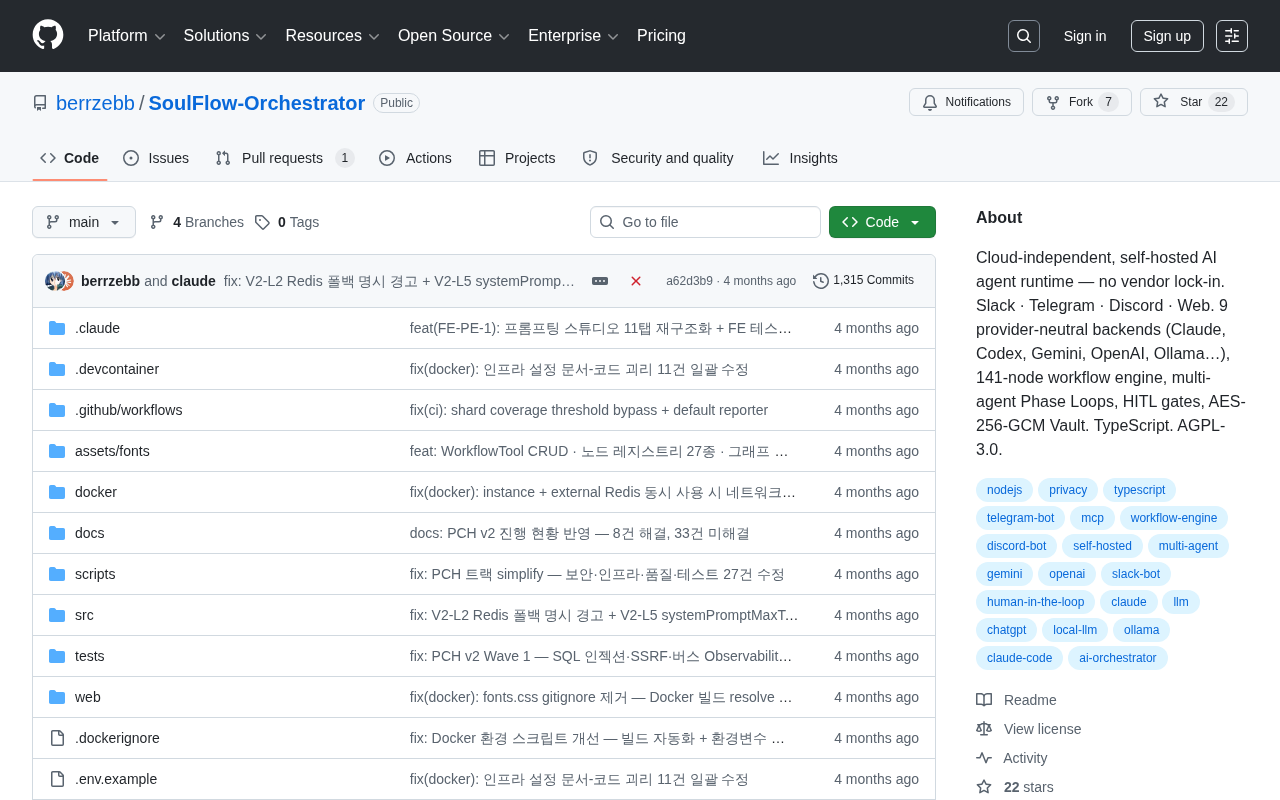
SoulFlow-Orchestrator: A Self-Hosted, Vendor-Lock-In-Free AI Agent Runtime
SoulFlow-Orchestrator is an open-source, self-hosted AI agent runtime with no vendor lock-in. Supports 9 neutral backends (Claude, OpenAI, Ollama), 141-node workflow engine, multi-agent loops, and HITL gates.
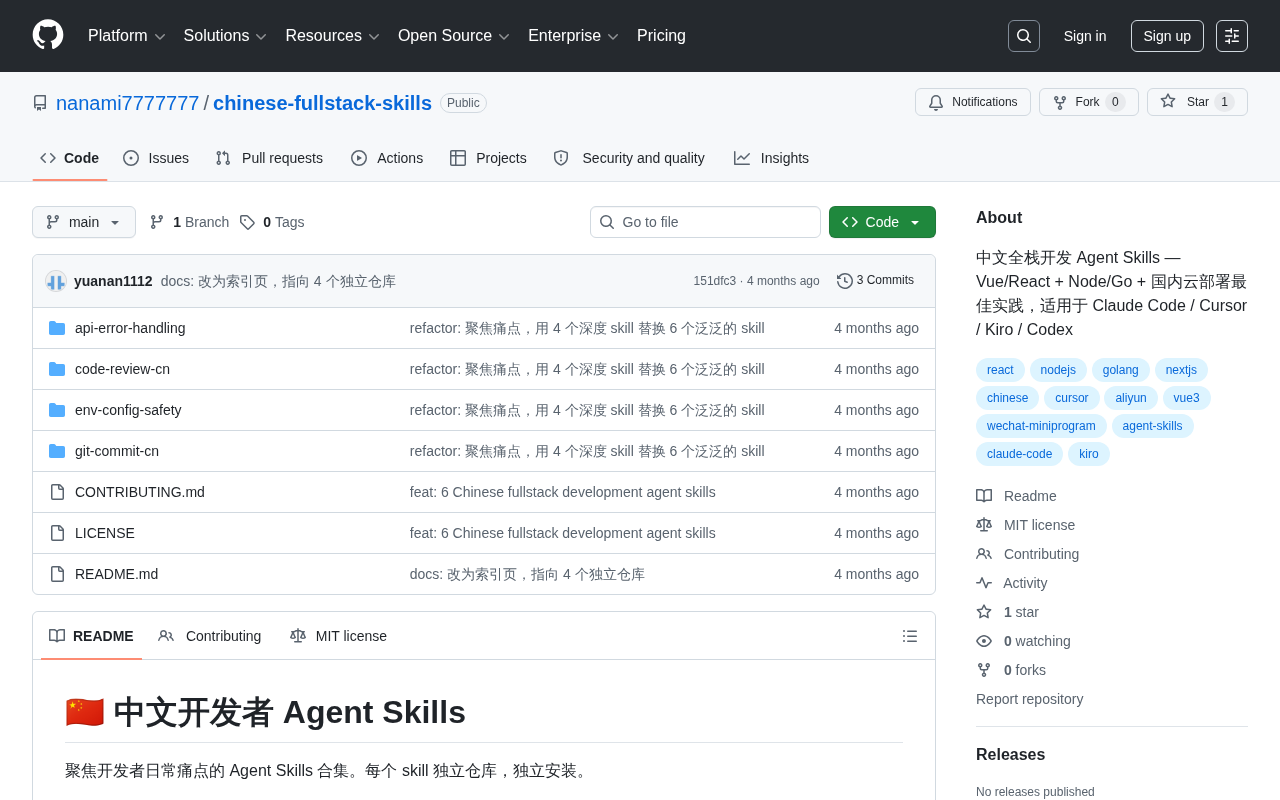
Chinese Full-Stack Agent Skills: A Skill Library Tailored for Domestic AI-Assisted Development
chinese-fullstack-skills is an Agent Skills library for Chinese full-stack development, covering Vue/React, Node/Go, and domestic cloud deployment best practices. Compatible with Claude Code, Cursor, Kiro, and Codex.
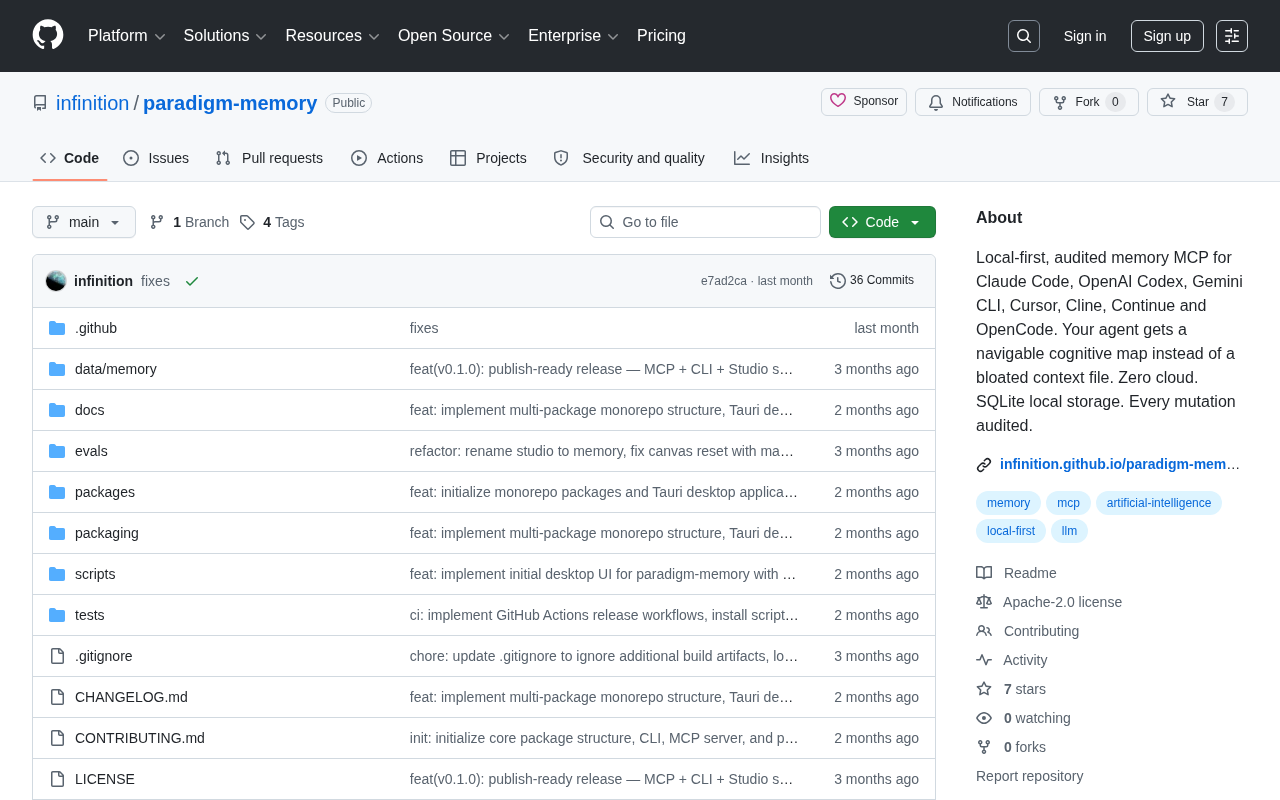
Paradigm Memory: A Local-First Memory System for AI Coding Assistants
paradigm-memory is a local MCP memory tool for Claude Code, Cursor, and Cline. It uses SQLite local storage, zero cloud, full audit trails, and a navigable cognitive map instead of bloated context files.