Decoding the Obfuscated Bash Script on a Uniqlo T-Shirt: Tech Easter Eggs and Security Lessons

Decoding an obfuscated Bash script on a Uniqlo T-shirt: reverse-engineering techniques and security lessons.
A tech enthusiast successfully decoded an obfuscated Bash script printed on a Uniqlo T-shirt, sparking discussion in the tech community. This article breaks down the reverse-analysis approach, reveals code obfuscation techniques and safe-execution principles, and explores the unique appeal of code as a cultural symbol.
When Fashion Meets Code
Recently, a tech enthusiast shared a fascinating reverse-engineering experience on Hacker News: decoding an obfuscated Bash script printed on a Uniqlo T-shirt. The post quickly gathered a flood of upvotes and discussion, becoming a hot topic in the tech community.
For most people, a code pattern on clothing is nothing more than a bit of "geeky" decoration. But for programmers, these seemingly random characters may hide genuinely executable logic. The characters on this T-shirt were exactly that—a carefully obfuscated, actually runnable Shell script—rather than meaningless visual elements.
The Allure of Obfuscated Code
Bash script obfuscation is a common technique whose goal is to hide the true intent of the code. To appreciate the depth of this technique, it helps to first understand the characteristics of Bash (Bourne Again SHell) itself: written in 1989 by Brian Fox for the GNU Project as an enhanced replacement for the Bourne Shell, Bash is not only the default shell for the vast majority of Linux distributions and macOS, but also a Turing-complete scripting language. It is precisely this dual nature—being both an interpreter and a language—that gives Bash extraordinary flexibility in string handling, providing fertile ground for obfuscation techniques.
From a deeper computer-science perspective, the fundamental principle behind Bash obfuscation lies in exploiting the shell interpreter's multi-stage evaluation mechanism. When processing a single command, the shell actually passes it through as many as eight successive expansion stages: brace expansion, tilde expansion, parameter and variable expansion, command substitution, arithmetic expansion, word splitting, pathname expansion, and finally quote removal. Obfuscators cleverly "hide" the true intent between these stages—the code must undergo multiple rounds of internal expansion before final execution, and the intermediate result of each round is nearly incomprehensible to a human reader. This multi-stage processing mechanism offers far richer room for maneuvering than other scripting languages, and is the fundamental reason Bash obfuscation techniques continue to proliferate to this day.
This technique originated from a series of encoding methods developed by Unix/Linux system administrators to protect proprietary script logic. As early as the 1990s, administrators began using simple variable substitution and string manipulation to hide script intent. As security research deepened, obfuscation gradually evolved into a field studied by both offense and defense—defenders use it to protect intellectual property, while attackers use it to bypass security detection tools.
Modern Bash obfuscation techniques can be divided into several levels: surface-level obfuscation relies on name mangling (naming variables _ or random strings); mid-level obfuscation uses base conversion, turning ASCII characters into forms like \x41 (hexadecimal) or \101 (octal); and deep-level obfuscation builds a multi-layered "onion structure" through eval dynamic execution, Base64 decoding chains, nested $() command substitution, and other methods—each layer must be peeled away to reveal the true content of the next. It's worth noting that Base64 is not an encryption algorithm but an encoding scheme that converts binary data into printable ASCII characters. Its output typically ends with = and contains only letters, numbers, and the +/ symbols—a characteristic that makes Base64-encoded content relatively easy to identify within obfuscated scripts. Common methods include: variable substitution, character encoding conversion (hexadecimal, octal, Base64), string concatenation, and using special shell syntax features to disrupt readability.
Printing such code on clothing is both a display of technical prowess and a coded invitation to those in the know—those who can read and decode it will naturally smile knowingly.
The Decoding Process and Approach
When faced with an obfuscated Bash script, reverse analysis generally follows several key steps. It's worth noting that reverse engineering, in the field of software security, refers to the process of restoring a program's logic by analyzing its behavior, structure, and output without obtaining the source code. For scripting languages, reverse engineering is more straightforward than for binary programs, since the script itself exists in text form—but obfuscation techniques artificially increase the difficulty of analysis. In contrast, binary reverse engineering requires analysts to use disassembly tools like IDA Pro or Ghidra to restore machine code into assembly language, then further infer high-level logic—a task orders of magnitude harder. This also explains why script obfuscation, though "weaker" than binary encryption, is still widely used in practice—its barrier is high enough to deter most non-specialists.
Notably, a fairly complete tool ecosystem has formed for reverse analysis of shell scripts. On the static side, ShellCheck can analyze script syntax and point out potentially dangerous patterns; bashdb provides gdb-like debugger functionality, allowing step-by-step execution and observation of variable states; and the online platform explainshell.com can break down complex shell commands into human-readable item-by-item explanations, which is extremely helpful for understanding unfamiliar syntax within obfuscated fragments. The existence of these tools greatly lowers the barrier to analysis, enabling even developers with limited experience to systematically dismantle structurally complex obfuscated scripts without relying entirely on manual, character-by-character reasoning.
Tool Ecosystem Supplement: ShellCheck was developed by Vidar Holen in 2012 and has since become the most widely used shell static-analysis tool in the open-source community. Written in Haskell, it identifies structural problems in scripts by building an abstract syntax tree (AST). bashdb, on the other hand, derives from the design philosophy of the GNU Debugger (gdb)—pausing program execution at specific breakpoints to inspect memory and variable states in real time. For obfuscated script analysis, bashdb's most valuable feature is its "step-through" mode, which lets analysts observe the intermediate state of each variable expansion line by line, fully revealing the otherwise invisible multi-layer decoding process. This capability of "transparent execution" is one of the most effective technical means for combating complex obfuscated scripts.
Step One: Static Observation, Identifying Obfuscation Patterns
Obfuscated scripts are often full of escape characters, base representations, and string operations. The analyst must first identify the obfuscation techniques used. Static analysis refers to the method of understanding a program's structure and intent by reading and parsing the code text without actually running it. This stands in contrast to dynamic analysis, which gathers information by actually executing the program and observing its behavior. For obfuscated scripts, static analysis is the preferred first step: it produces no side effects and can safely establish a preliminary understanding of the code's overall structure.
Static and dynamic analysis each have their emphases in the field of security engineering, and the two often need to be used in combination. The advantage of static analysis is that it covers all possible execution paths of the code, including logic branches triggered only under specific conditions; but for obfuscated scripts, multi-layered nested string operations often plunge pure static analysis into a "symbol explosion" predicament. Dynamic analysis, on the other hand, can faithfully restore runtime states, but carries the risk of triggering malicious logic, and therefore must be conducted in an isolated environment. Modern security analysis platforms (such as VirusTotal's behavioral analysis module) typically combine both methods: first using a static rule engine (such as YARA rules) to identify known obfuscation feature patterns, then dynamically executing in a sandbox to capture the complete behavioral trace, and finally merging the two datasets to produce a threat assessment report.
For example, in Bash, $'\xHH' commonly represents a hexadecimal character, ${var} is used for variable expansion, and eval is a high-risk statement that executes dynamically generated commands. Once these patterns are identified, one can gauge the complexity and obfuscation level of the code—many obfuscated scripts use multiple nested layers that need to be peeled away one at a time.
Step Two: Safe "Unpacking"—Never Execute Blindly
The most crucial principle in decoding obfuscated scripts is to never execute blindly. You cannot predict the code's final behavior—it might be a harmless "Hello World," or it might contain dangerous operations.
The correct approach is to replace eval or directly executed parts with echo, letting the script "print" out what it would otherwise execute, rather than actually running it. This is essentially a "dry run" strategy, consistent with the security philosophy behind DevOps pre-check commands like ansible-playbook --check and terraform plan—letting the system "tell" you what it intends to do rather than actually doing it.
Moreover, in professional security work, analyzing suspicious scripts should also leverage sandbox technology—running code in a controlled environment isolated from the host system, such as a Docker container or virtual machine, to prevent any unexpected behavior from affecting the real system. The core principle of sandbox technology is operating-system-level resource isolation: Docker uses Linux's cgroups (control groups) and namespaces mechanisms to thoroughly separate processes inside a container from the host system across dimensions such as the filesystem, network, and process tree; whereas traditional virtual machines simulate a complete hardware environment through a hypervisor, providing more thorough isolation at the cost of higher resource overhead. Professional malware analysis platforms (such as Cuckoo Sandbox and Any.run) are built on this very principle, constructing automatically restorable analysis environments that let analysts repeatedly and safely observe the complete behavioral trace of suspicious code. By peeling back the layers one at a time, the readable final code can be safely reconstructed. This is also the core technique in this T-shirt script decoding.
On the Deeper Mechanisms of Sandbox Technology: Linux namespaces technology was first introduced with kernel version 2.4.19 in 2002, and after years of iteration has formed today's complete isolation system covering seven types of namespaces: Mount, PID, Network, IPC, UTS, User, and Cgroup. cgroups (Control Groups), designed by Google engineers Paul Menage and Rohit Seth in 2006 and merged into the Linux kernel mainline in 2008, are responsible for fine-grained quota control over process resource usage such as CPU, memory, disk I/O, and network bandwidth. Docker cleverly combines these two kernel features—using namespaces to achieve "can't see" (isolated view) and cgroups to achieve "can't over-use" (resource limits)—which together form the technical cornerstone of container sandboxes. Understanding this underlying mechanism helps in assessing the actual protection boundaries of a Docker sandbox under specific attack scenarios—for example, container escape vulnerabilities are precisely achieved by breaking through these two layers of mechanisms.
On the Security Risks of
eval:evalis one of the most powerful and dangerous built-in commands in shell scripting. It takes a string argument and dynamically executes it as a shell command, which means anyone who can control its input effectively gains the ability to execute arbitrary commands on the target system. This vulnerability pattern is known in security as "code injection," one of the top ten security risks tracked by OWASP (Open Web Application Security Project) for years. OWASP and many security standards recommend avoidingevalwhenever possible, which explains why replacingevalwithechois the preferred strategy in security analysis.
Step Three: Layer-by-Layer Reconstruction, Unveiling the Truth
After layers of decoding, the real script hidden beneath the obfuscation finally surfaces. Such "Easter eggs" usually print an amusing message, output some pattern, or pay tribute to classic programming culture. The whole process is less a matter of cracking and more a carefully designed intellectual game. The sense of accomplishment brought by the moment of successful decoding is vividly called the "Aha Moment" in the programmer community—this is also one of the psychological roots of the enduring popularity of CTF (Capture The Flag) security competitions: gamifying technical challenges so that the problem-solving process itself becomes the reward.
As one of the most important practical vehicles for security education, the influence of CTF competitions has long extended beyond pure competition. CTFtime, the world's largest CTF information aggregation platform, catalogs over a thousand official events from around the globe, attracting hundreds of thousands of participants each year. Competition problems typically cover five core areas—reverse engineering, cryptography, binary exploitation, web security, and forensic analysis—and shell script reverse engineering happens to be a classic entry-level reverse challenge, often serving as the first threshold for newcomers to build confidence. More profoundly, many top security engineers and vulnerability researchers regard their CTF participation as a key starting point for their careers—tech giants like Google and Microsoft even recruit security talent directly by hosting CTF events (such as Google CTF and the Microsoft Cybersecurity Challenge). This educational model of gamifying technical challenges transforms abstract security concepts into concrete, actionable problem-solving challenges, greatly broadening the talent-cultivation pathways in the security field.
The Origin and Evolution of CTF Competitions: The prototype of CTF competitions can be traced back to the 1996 DEF CON security conference, where participants had to genuinely attack and defend servers on a physical network—a format known as the "Attack-Defense" mode. As the number of participants surged and network infrastructure became widespread, the more easily scalable "Jeopardy Style" gradually became mainstream—participants choose from a set of independent problems, each corresponding to a hidden flag string, and score by submitting the correct flag. This mode lowered the barrier to entry, taking CTF from an elite circle to university students and programming enthusiasts. Today, picoCTF (hosted by Carnegie Mellon University), designed specifically for teenagers and beginners, attracts over a hundred thousand students annually, becoming the world's largest cybersecurity-education CTF event and confirming the far-reaching influence of this educational model.
Why This Matters
Code as a Cultural Symbol
Printing executable code on clothing reflects how tech culture is permeating mainstream consumer goods. As a mass-market fast-fashion brand, Uniqlo's choice to use real rather than arbitrarily fabricated code as a design element means the designer possessed a certain degree of technical literacy, or deliberately buried a "hidden level" for the tech community.
This practice of "planting Easter eggs" has a long-standing tradition in tech circles. The tech world's Easter egg culture can be traced back to 1979, when Atari game developer Warren Robinett hid a secret developer room in Adventure to sign his own name without company permission—widely considered the first Easter egg in software history. Since then, this tradition has flourished in the tech community: early versions of Excel hid a complete 3D flight simulator, typing "do a barrel roll" in the Google search box makes the page spin, comments in the Linux kernel code occasionally pay homage to classic sci-fi films, and even the HTML source code of well-known websites has hidden job listings.
The Social-Psychological Roots of Easter Egg Culture: The phenomenon of software Easter eggs reflects, on a psychological level, the programmer community's deep-seated desire for "authorship" and "creator identity." In the early days of industrialized software development, large companies often did not allow developers to leave personal marks in products, giving Warren Robinett's covert signing a certain symbolic "rebelliousness." This cultural gene has continued to this day, evolving into the tech community's unique humorous language: hiding jokes in dry code comments, adding hidden greeting features in command-line tools, writing jokes into HTTP response headers—these behaviors together constitute an important dimension of "humanization" in tech culture, reminding the outside world that behind these complex systems are flesh-and-blood creators. This also explains why the tech community is always enthusiastic about discovering such "code Easter eggs": it's not just a technical puzzle, but a secret handshake with another creator across time and space.
Extending Easter eggs from the digital space to physical products carries an important cultural implication: it creates an invisible cognitive dividing line between those in the know and those who aren't, producing a psychological effect sociologists call "in-group identity"—only those with specific knowledge can perceive and interpret the existence of this Easter egg, and that unique perception itself becomes a marker of identity. From a broader cultural perspective, this phenomenon is highly similar to the social function of "argot" in linguistics: a specific group reinforces internal cohesion through a shared symbolic system that outsiders find difficult to understand, while maintaining a hint of mystery in its interactions with the outside world. Programmers wearing executable code is essentially projecting the group identity marker of the digital world onto physical reality—a concrete manifestation of the growing confidence of tech culture. This Uniqlo T-shirt is not the first of its kind—developers have previously printed runnable code on business cards, posters, and even tattoos, forming a unique "geek aesthetic" subculture that creates an unspoken understanding between those who get it and those who don't.
An Important Reminder About Security Awareness
This decoding exercise also conveys a key security lesson: when facing code of unknown origin, never execute it directly. Even if it's printed on a seemingly harmless T-shirt, the responsible approach is still to analyze it first in an isolated environment, using echo in place of execution to observe its behavior.
In reality, attackers often use obfuscation techniques to hide malicious scripts and lure users into copy-pasting and running them—these attack methods are known as "clipboard hijacking" or "social engineering injection," and there are many documented cases in the security community. One typical variant is the "visual deception paste attack" (Pastejacking): a malicious website uses JavaScript to monitor the user's copy operation, and while the user thinks they've copied a harmless command, the clipboard content is replaced with a complete command sequence containing dangerous instructions. Since terminals typically don't display the full content before pasting, such attacks are extremely difficult for ordinary users to detect.
This threat has been confirmed multiple times in real-world security incidents in recent years. In 2022, the security research organization Bleeping Computer documented several Pastejacking attacks targeting Linux users, in which attackers specifically deployed the above mechanism on tech forums and documentation pages aimed at developers, exploiting developers' habit of "seeing a command and directly copying and executing it" to carry out intrusions. A more covert variant even embeds invisible Unicode control characters in the copied text, making the command appear in normal form in the terminal while triggering a completely different instruction sequence upon actual execution—this attack technique, called "Trojan Source," was formally disclosed by Cambridge University researchers in 2021 and verified across the compilers and interpreters of multiple mainstream programming languages. These real cases clearly show that security awareness education should not remain merely theoretical; the habit of "analyze first, then execute" must be internalized as a developer's reflexive response to any unfamiliar code. Cultivating this habit is a basic security literacy every developer should possess.
The Technical Principle of Trojan Source Attacks: The core of this attack lies in exploiting Unicode bidirectional text control characters (Bidi Control Characters), especially invisible characters like
U+202A(Left-to-Right Embedding) andU+202B(Right-to-Left Embedding). These characters were originally designed to support right-to-left languages such as Arabic and Hebrew, altering the visual arrangement direction of characters at the text-rendering level without affecting the underlying processing order of the character sequence by the compiler or interpreter. By embedding these control characters in code comments or string literals, attackers can construct malicious code fragments that "visually look like comments but are actually executable code." The Cambridge University research team successfully verified this attack in mainstream languages including C, C++, C#, JavaScript, Java, Rust, Go, and Python, forcing GCC, Clang, the Rust compiler, and code-hosting platforms like GitHub to urgently release security updates that add warning prompts for files containing such characters.
Conclusion
An obfuscated Bash script on a Uniqlo T-shirt may seem like a trivial matter, yet it perfectly embodies the curiosity and spirit of exploration of the programmer community. It reminds us: technology is everywhere, and even in the most unexpected places, there may be logic worth savoring in detail.
For readers who enjoy hands-on practice, why not find an obfuscated script and test your own decoding skills—and if possible, do it in a Docker container or virtual machine. Remember the golden rule—observe with echo, don't execute with bash. While satisfying your curiosity, don't forget to safeguard your system's security.
Key Takeaways
- Obfuscation ≠ Encryption: Bash script obfuscation increases the difficulty of manual reading, but it remains plaintext code at its core—an analyst with enough patience can always reconstruct it, which is fundamentally different from true encryption algorithms.
evalIs a Double-Edged Sword: It grants scripts dynamic execution capability, is the core vehicle of obfuscation techniques, and is a high-risk source of security vulnerabilities—understanding how it works is key to reading obfuscated scripts.- Analyze First, Execute Later: No matter how harmless the code's source appears, establishing the operational habit of "observe first in a sandbox, then execute" is an indispensable security literacy for modern developers.
- The Physical Extension of Geek Culture: The appearance of executable code on consumer goods marks a further blurring of the boundary between tech culture and daily life, and provides a new expressive medium for the "those who get it, get it" sense of in-group identity.
Related articles
What Is Vibe Coding? The AI Programming Skill Every Developer Needs
What is Vibe Coding? Learn how AI programming is reshaping dev teams, why traditional programmers face displacement, and why Cursor & Claude Code matter.
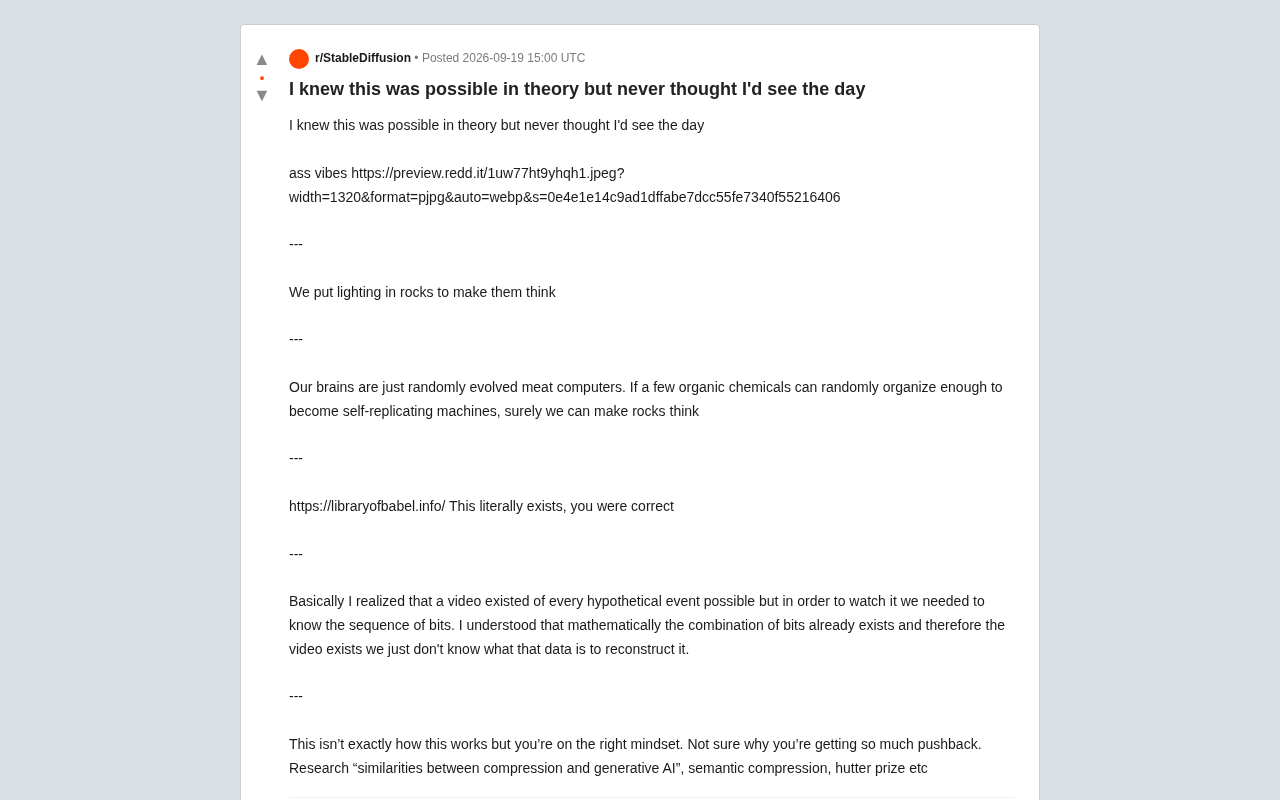
Making Rocks Think: A Philosophical Exploration of Generative AI and Information Compression
From a viral Reddit post to deep AI theory: why compression equals understanding, the Library of Babel thought experiment, semantic compression, and the Hutter Prize.

Irregular Warns: Four AI Lab Security Breaches Traced to the Same Root Cause
Irregular reveals four AI lab security breaches share a single root cause, exposing systemic risks from technology stack homogeneity across the AI industry.