Decoding xAI's Open Partnership Strategy: How Musk Is Building His AI Ecosystem
Decoding xAI's Open Partnership Strate…
How xAI's open API strategy and partnerships are shaping Musk's AI ecosystem ambitions.
A cryptic tweet about partnering with xAI has sparked industry speculation. This article examines xAI's Grok model evolution, its Colossus supercomputing cluster, the dual-edged value of X platform data, and how its open API and partnership strategy positions it against OpenAI, Anthropic, and Google in the race to build the most dominant AI ecosystem.
The Industry Signal Behind a Brief Tweet
A tersely worded tweet recently sparked widespread discussion across the AI community: "Excited to partner with the @xai team for this one." Just a handful of words, with no specific details revealed — yet the combination of "partner" and "xAI" was enough to set industry insiders buzzing with speculation.
In today's fiercely competitive AI landscape, any partnership involving a top-tier lab can signal new technical directions or upcoming product launches. xAI, the artificial intelligence company founded by Elon Musk in 2023, is an organization whose every move keeps the entire industry on edge. This article uses that tweet as a starting point to map out xAI's current ecosystem strategy and analyze the deeper logic behind its open partnership approach.
Who Is xAI: Musk's Strategic Play in AI
Starting with Grok
xAI's flagship product is the large language model Grok. Compared to OpenAI's ChatGPT and Anthropic's Claude, Grok's key differentiator is real-time access — it is deeply integrated with the X (formerly Twitter) platform, enabling direct access to the platform's live information stream, which gives it a unique edge when handling time-sensitive topics.
The development arc of the Grok model family is worth examining closely. In November 2023, xAI released the original Grok-1, with approximately 31.4 billion parameters and a Mixture of Experts (MoE) architecture — a design that activates only a subset of parameters during inference, significantly reducing computational overhead while preserving the model's overall capacity. In March 2024, xAI took the unusual step of releasing Grok-1's full weights as open source, a move that sent shockwaves through the industry at a time when most major model vendors were firmly committed to closed-source strategies. It was widely interpreted as a direct challenge to competitors like OpenAI. The subsequent Grok-1.5 and Grok-2 releases posted impressive results on multiple benchmarks, gradually closing the gap with top-tier models like GPT-4 and Claude 3 — particularly in mathematical reasoning and code generation. Grok-2 also introduced image understanding capabilities, marking xAI's formal entry into the multimodal competition.
One of Musk's stated motivations for founding xAI was to build an AI system that is "maximally truth-seeking," distinguishing it from models at other companies he has criticized. After multiple iterations, the Grok family has made significant strides in reasoning, code generation, and multimodal processing, and has gradually earned a place among the first-tier competitors.
A Dual Moat: Compute and Data
xAI's core competitive advantage stems largely from two dimensions.
On the compute side, the "Colossus" supercomputing cluster xAI has built is central to understanding its competitive strength. In 2024, xAI announced the completion and operation of this cluster in Memphis, Tennessee, initially deploying approximately 100,000 NVIDIA H100 GPUs with plans to expand to 200,000 — placing it among the largest AI training clusters in the world. By comparison, OpenAI relies on Microsoft's Azure cloud infrastructure, while Meta accumulates compute through its own data centers. xAI's choice to build its own supercomputer requires far greater capital investment, but in return grants complete control over the training process. It's also worth noting that Musk's Tesla is simultaneously deploying the Dojo supercomputer at scale, and the potential resource synergies between the two remain a topic of ongoing industry interest.
On the data side, X platform's real-time data is a double-edged sword for Grok. The upside is clear: X generates hundreds of millions of posts, news comments, and public discussions every day, spanning politics, technology, finance, entertainment, and virtually every other domain — giving Grok an information freshness that other models struggle to match when handling current events. However, social media data is notoriously uneven in quality, riddled with noise, bias, and misinformation. Filtering out low-quality content while preserving the real-time advantage is an ongoing challenge for xAI. Furthermore, Musk's simultaneous control of both X and xAI has raised concerns about data usage compliance and user privacy, with some European regulators already launching investigations. Together, these factors form a competitive moat that is difficult to replicate — but one that comes with its own controversies and risks.
What "Partnership" Means: Unpacking xAI's Open Ecosystem
Open API and Ecosystem Expansion
The word "partner" in the tweet likely points to xAI's increasingly open collaboration strategy. To understand this strategy, it needs to be viewed within the broader competitive landscape. OpenAI pioneered the "Model as a Service" (MaaS) business model when it launched the GPT-3 API in 2020, rapidly accumulating a massive developer ecosystem. Anthropic's Claude API and Google's Gemini API followed suit, forming a three-way competitive dynamic. The core logic of an open API strategy is straightforward: by lowering the barrier to entry, you attract developers to embed model capabilities into their own applications, creating network effects — more users generate richer feedback data, which accelerates model iteration, which in turn attracts even more users.
In recent years, xAI has progressively opened up Grok's API, allowing third-party developers to integrate its capabilities into their own applications. This shift from "closed, in-house development" toward "open collaboration" represents not just a monetization path for xAI, but a strategic tool for breaking through OpenAI's first-mover advantage and rapidly expanding market share.
By partnering with external teams, companies, or developers, xAI can achieve multiple objectives:
- Expand use cases: Extend Grok's capabilities into more vertical domains, including developer tools, enterprise services, and content creation;
- Validate model performance: Use partners' real-world business scenarios to continuously test and refine model behavior;
- Build ecosystem barriers: Cultivate a developer community and product matrix around Grok, deepening user stickiness and platform dependency.
The Many Forms a Partnership Can Take
xAI's open partnership strategy is not without precedent — there are clear industry models to draw from. The OpenAI–Microsoft partnership stands as the benchmark: Microsoft has invested over $13 billion in OpenAI in exchange for exclusive Azure deployment rights, and has deeply integrated GPT capabilities into Office 365, GitHub Copilot, and other product lines, achieving a powerful union of technical capability and distribution reach. Anthropic has taken a diversified approach, accepting strategic investment from both Amazon AWS and Google while deploying Claude on both cloud platforms — a strategy designed to avoid over-dependence on any single partner. Meta took a radically different path, open-sourcing the LLaMA model family to build a vast open-source community ecosystem, trading "free" access for ecosystem dominance.
Such partnerships in the industry typically take several forms: technical integration, where the partner uses Grok as the underlying engine in their own product; joint development, where both parties collaborate on a specific technical challenge or new feature; or resource complementarity, where one party provides compute or data while the other provides application scenarios or distribution channels. Which model applies here remains to be seen pending official disclosure.
What This Tweet Reveals About AI Industry Trends
Ecosystem Co-Building Replaces Going It Alone
Notably, the AI industry is gradually shifting from an "arms race" mentality toward "ecosystem co-building." No single lab can cover every application scenario, and achieving complementary capabilities through partnerships has become the dominant playbook. These different approaches all point in the same direction: as large model capabilities increasingly converge, competition over ecosystems and distribution channels is becoming ever more critical. The deep integration between OpenAI and Microsoft, and Anthropic's multi-party collaborations with Amazon and Google, both confirm this trend. xAI's embrace of open partnerships is a natural response to this industry logic.
The Communication Wisdom Behind a Vague Teaser
From a content marketing perspective, the "blank space" strategy in this tweet is quite clever. By withholding specific details, it stokes audience curiosity and discussion, leaving ample room for a subsequent formal announcement to generate its own buzz. This kind of "appetite-whetting" pre-launch teaser is a well-worn technique in tech product releases and a classic playbook for content operations in the social media era. Apple's "One more thing," Tesla's mysterious countdown timers — these are all different expressions of the same logic: use informational incompleteness to create suspense, and convert audience anticipation into organic, self-propagating discussion.
A Balanced View: Anticipation with Reservations
It's worth noting that, given the extremely limited information available, the analysis in this article is largely informed speculation based on xAI's publicly known trajectory. The specific content of the partnership, the parties involved, and the ultimate product form all remain to be confirmed by an official announcement.
For readers following AI developments, rather than over-interpreting a single tweet, it's more useful to treat it as an observation window — one that reflects xAI's active effort to open its doors to the outside world and accelerate the maturation of its ecosystem through collaboration. For the industry as a whole, that is a positive signal worth tracking.
Conclusion
A brief partnership teaser reflects the strategic thinking of a company seeking to break through in an intensely competitive field. In an era where compute, data, and model capabilities are gradually converging, whoever can build the most vibrant collaborative ecosystem will be better positioned to take the initiative in the next phase of competition. From Grok's technical evolution, to the compute accumulation of the Colossus supercluster, to the double-edged nature of X platform data — every move xAI makes is preparation for this ecosystem battle. We will continue to follow the developments from this partnership, and look forward to seeing what new possibilities it brings to AI applications.
Related articles
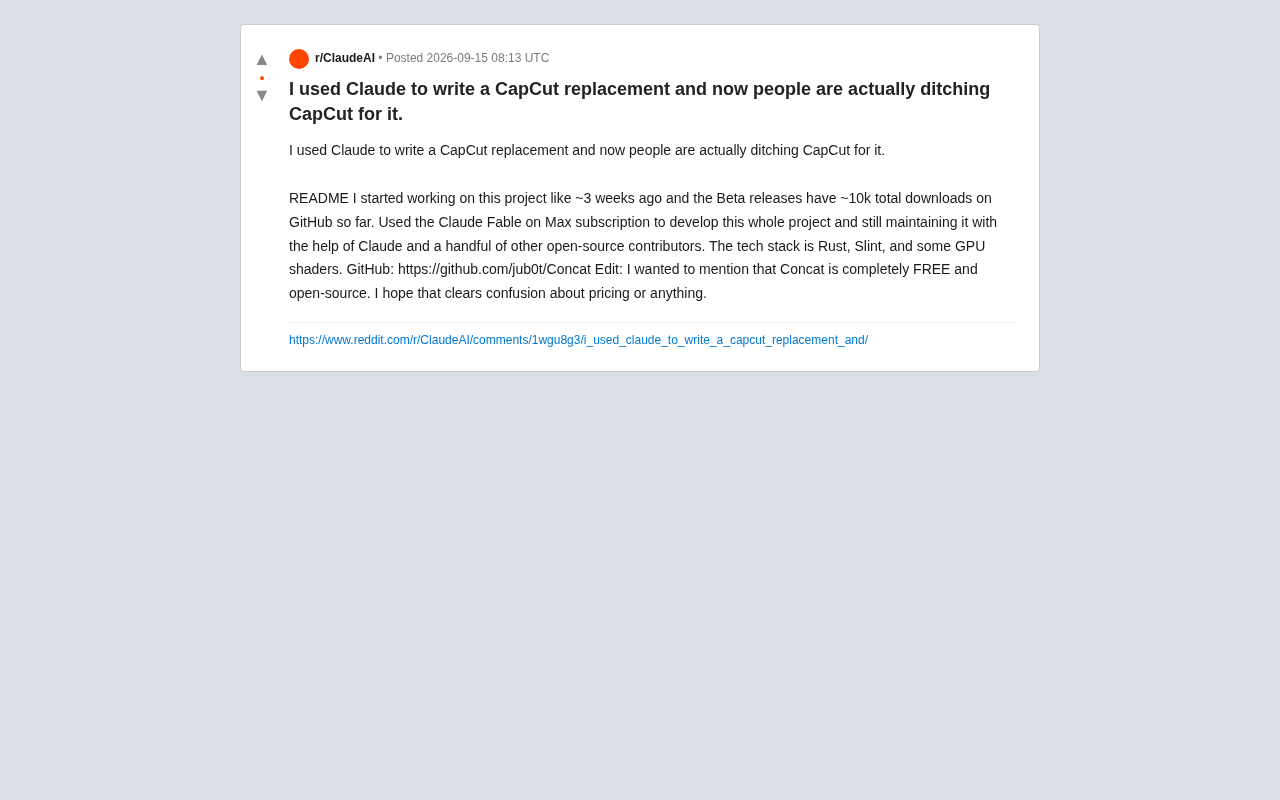
Building Open-Source Video Editor Concat with Claude: A Free Alternative to CapCut
A developer used Claude to build Concat, an open-source CapCut alternative, in just three weeks. With nearly 10K downloads, it's a striking example of AI-assisted solo development.
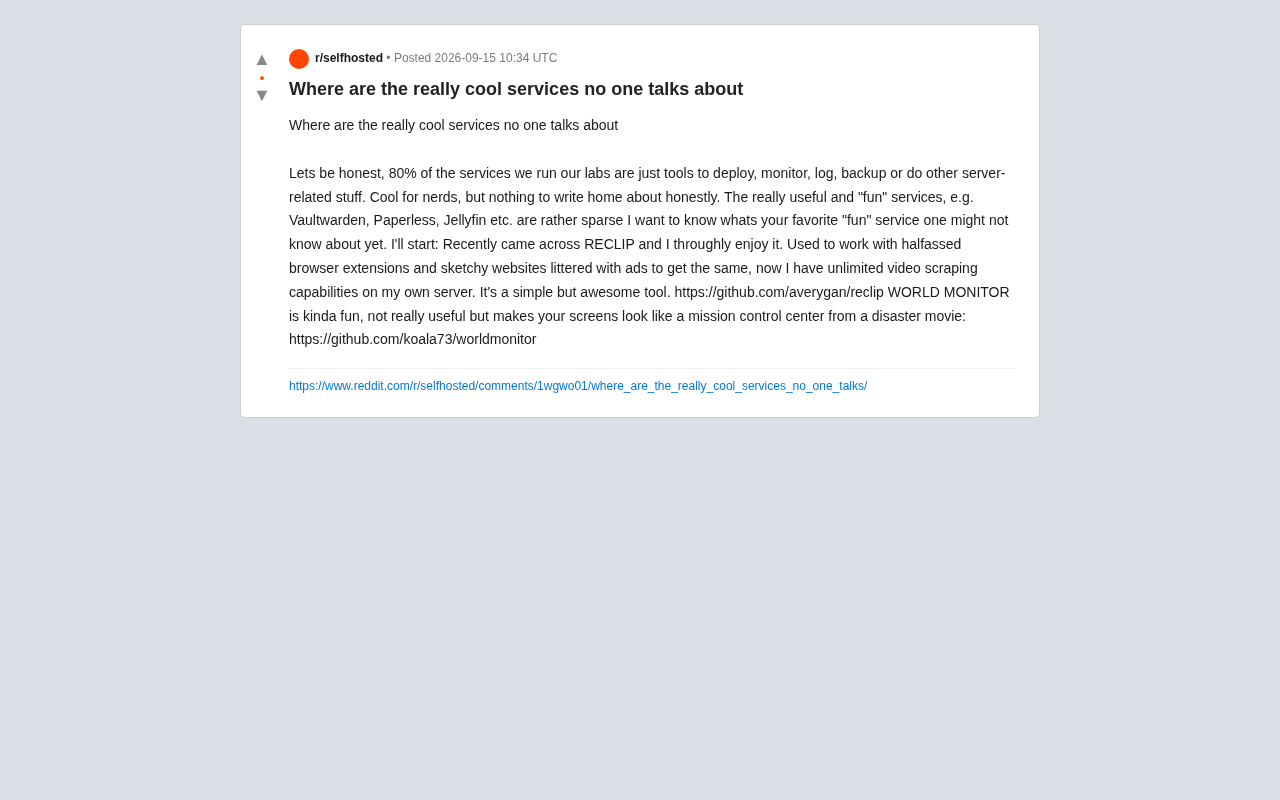
The Overlooked Gems of Self-Hosting: Fun and Useful Services Nobody Talks About
From a Reddit thread, we explore overlooked self-hosted services — including video scraper RECLIP and data viz project WORLD MONITOR — and why fun services are so rare.
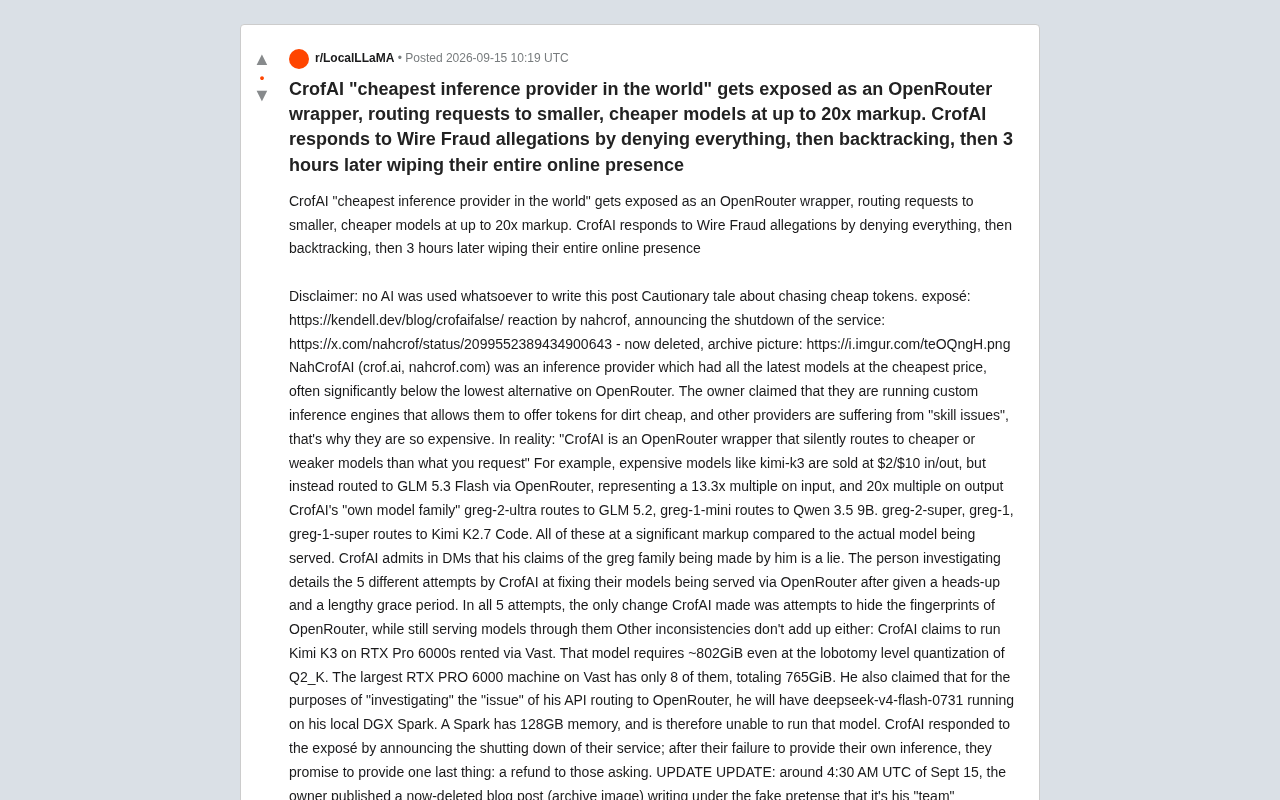
CrofAI Fraud Exposed: 'World's Cheapest AI Inference' Turns Out to Be an OpenRouter Wrapper Scam
CrofAI claimed to offer the world's cheapest AI inference, but was exposed as an OpenRouter wrapper silently rerouting requests to cheap models at up to 20x markups.