Deep Analysis of the AI Coding Landscape: Why Context Determines the Fate of Cursor, Windsurf, and Their Peers

AI coding evolves from code completion to autonomous engineers, with context as the core bottleneck and moat.
AI coding is evolving from Copilot mode (human-led, AI-assisted) to Agent mode (AI-led, human-supervised), but fully autonomous programming remains immature due to model context lengths being far too short to comprehend large codebases. Vibe Coding makes natural language the new programming language but demands even higher architectural and system design skills. The core competitive moat lies in capturing edge-side context data—the deeper logic behind ByteDance Trae's free strategy and OpenAI's Windsurf acquisition. Startups must find non-consensus entry points to seize opportunities.
AI Coding has become one of the most certain scenarios for AI implementation. From GitHub Copilot's sustained growth, to Cursor's valuation soaring to $10 billion, to OpenAI's $3 billion acquisition of Windsurf, and Apple partnering with Anthropic to develop an AI coding platform—this sector is experiencing an unprecedented influx of capital and technology.
This article is based on an in-depth conversation between Chen Shi, Investment Partner at Frees Fund, and Amber, Global Growth Lead for Trae (ByteDance's AI coding product), systematically examining the evolution path, competitive landscape, and future opportunities in AI coding.
The Evolution of AI Coding: From Code Completion to Autonomous Engineers
The Origins of GitHub Copilot and Its Technical Breakthrough
The true origin of AI coding can be traced back to 2021. Before that, there was a classic methodology in programming called "pair programming"—two programmers collaborating on one computer, with one typing code (the driver) and the other observing and guiding (the navigator). In 2021, Microsoft and OpenAI jointly launched GitHub Copilot, positioning AI for the first time as "the other person in pair programming," with code completion as its primary function.
But the real usability breakthrough came after GPT-3.5 was released in late 2022. Subsequently, the continuous improvement of Claude and GPT-series model capabilities enabled AI to handle more difficult and complex coding tasks, giving rise to products like Cursor, Trae, and Windsurf.
Copilot vs. Agent: Two Development Paths
AI coding currently follows two distinct paths:
Path One: Copilot Mode (human-led, AI-assisted)—including GitHub Copilot, Cursor, Windsurf, Trae, and similar products. This path has entered the practical stage with scaled users and revenue, making it one of the few areas in AI applications that has truly found PMF (Product-Market Fit).
Path Two: Agent Mode (AI-led, human-supervised)—represented by Devin, aiming to have AI independently complete entire programming tasks. This path has yet to find PMF and faces enormous technical challenges.

Why AI Agents Still Can't Deliver: Context Is the Core Bottleneck
The Model's "Brain Capacity" Is Far from Sufficient
Devin caused a huge sensation when it was released, but why has it remained difficult to truly implement? Chen Shi offered an intuitive explanation:
Take Google Chrome as an example—its codebase is approximately 3 million lines, with each line averaging about 10 tokens, totaling roughly 30 million tokens. Meanwhile, the model context length currently used by Cursor is only 200,000 tokens—it can't even fit the code, let alone understand the overall architecture and system design. Distributed systems like Facebook and Netflix have codebases measured in the hundreds of millions of lines.
To put it simply: AI isn't just writing a single line of code—it needs to "read every book in an entire library and understand the logical relationships between them" to truly do programming well.
The Dual Challenge of Context Collection
AI Agents face not only the model-side context length limitation but also the challenge of collecting front-end user context. For AI to truly understand a complex requirement, it needs to know the user's personal preferences, the company's codebase, industry domain knowledge, internal documentation, and more. If it can't even "get" the requirements, autonomous programming is out of the question.
This also explains why the most robust current usage remains the Copilot mode—the programmer acts as the "navigator," the AI as the "driver," with humans providing directional guidance while AI handles the implementation.
Vibe Coding: Natural Language Is Becoming the New Programming Language
What Is Vibe Coding
Andrej Karpathy of OpenAI proposed the concept of "Vibe Coding": instead of typing code line by line, you describe requirements in natural language and let the LLM generate code. Programmers don't need to focus on code details—they only provide high-level guidance and review.
This actually continues the abstraction trend of programming languages from low-level to high-level—from assembly to C, from C to Python, and now potentially abstracting further to natural language. As Karpathy said: "The best programming language might just be natural language in the future."

Experienced Programmers Are Actually More Valuable Now
But Vibe Coding doesn't mean technical ability is no longer needed. Quite the opposite—it demands even higher requirements for systems thinking and architectural capability.
Chen Shi shared a personal experience: he asked AI on Trae to generate graphical output using a certain framework, but encountered repeated errors due to version compatibility issues. The AI kept "going in circles" within the same framework, unable to resolve the issue after dozens of conversation turns. Ultimately, he drew on his experience as a veteran programmer to identify the root cause, and a simple "switch to a different framework" solved everything.
"This is the value of an experienced programmer—you know roughly where the problem lies and can point it in the right direction."
Amber expressed a similar view: "Vibe Coders are Engineers. You need to understand technology, architecture, and system design for AI to truly 'vibe.' In the future, debugging details might not matter as much, but requirements for system design and product taste will become even more important."
Context Is King: Where the True Moat in AI Coding Lies
The Core Value of Edge-Side Context
Chen Shi offered a profound insight: value and moats in the AI era will concentrate on "both sides of the cloud." The cloud side is the large model, providing intelligence and creativity; while the core task on the edge side is to capture user context.
Context includes: individual users' usage habits, preferences, and background; enterprises' codebases, domain knowledge, internal data, and documentation. More importantly, every time a user interacts with an AI coding tool—every edit, every piece of feedback—they're creating "annotations" for themselves, generating high-value data that has never existed on the internet before.
"The future of applications will likely belong to whoever owns the context."

The Deeper Logic Behind ByteDance Trae's Free Strategy
Trae currently adopts a free strategy. On the surface, it's about lowering barriers and unleashing productivity, but the deeper logic may be: acquiring massive user context data through free access. This is consistent with Douyin's (TikTok's) early promotion logic—capture users first, then build moats.
This also explains why OpenAI was willing to spend $3 billion to acquire Windsurf: pre-training data on the internet is approaching exhaustion, and the context data generated by users in AI coding tools is a wellspring of human needs and the key fuel for training next-generation models.
Opportunities for Startups: Non-Consensus Is the Moat
The Non-Consensus Choices of Cursor and Devin
In the AI coding space, the core advantage of startups lies in daring to do "non-consensus" things.
Cursor's non-consensus: GitHub Copilot exists as a VS Code plugin, and no company was willing to rebuild an entire IDE for AI features—modifying 500,000 lines of TypeScript was too much work. But Cursor did exactly that, building an AI-native editing environment based on VS Code's open-source code, achieving multi-file long-range code completion, automatic context packaging, and other experiences that completely surpass the plugin model.
Devin's non-consensus: Directly targeting the ultimate form of an "autonomous software engineer." While current technical conditions aren't yet mature, this unique positioning itself serves as a protective umbrella—big companies don't want to chase it, and small companies find it too difficult.

Differences in AI Coding Startup Environments Between China and the US
The US startup environment is more friendly to AI coding companies: fundraising is easier, customer acquisition barriers are lower, big companies are slower to follow, and acquisition exit paths are clear. In China, when original breakthroughs emerge in the US, Chinese startups and big companies see the opportunity simultaneously, and startups naturally lose the time window before PMF discovery.
However, China's capability in 2C products and business model innovation is "unmatched." Just as in the mobile internet era, China started by learning from the US but ultimately created better commercial products and exported them back. The AI coding space may replay this pattern.
The Endgame Is Undecided; Opportunities in AI Coding Remain
The endgame of AI coding is still full of uncertainty: the precision problem of natural language as a programming language, the technical bottleneck of context length, the boundary between code and neural networks, the evolution of human-machine collaboration models... these are all unresolved questions.
But as Amber said, a few years ago no one believed that San Francisco's streets would be full of self-driving cars, yet now Waymo is everywhere. A fully autonomous AI engineer isn't a fantasy—it just requires "laying eggs along the way"—continuously producing usable products at intermediate stages, accumulating data and experience, and waiting for model capabilities and context technology to mature.
In this stage of "fishing in murky waters," not being able to see the endgame actually means opportunity. For startups, the key is finding non-consensus entry points; for big companies, the core is building context moats; for every developer, systems thinking and architectural capability will become more important than writing code itself.
Related articles
Meta Muse Hits 900K Downloads in Six D…
Meta Muse Hits 900K Downloads in Six Days: The AI Agent Era Has Officially Arrived
Meta's AI agent Muse hit 902K downloads in 6 days, topping US App Store and Google Play charts above ChatGPT and Claude. A deep dive into Muse's capabilities and the AI Agent race.
 Industry Insights
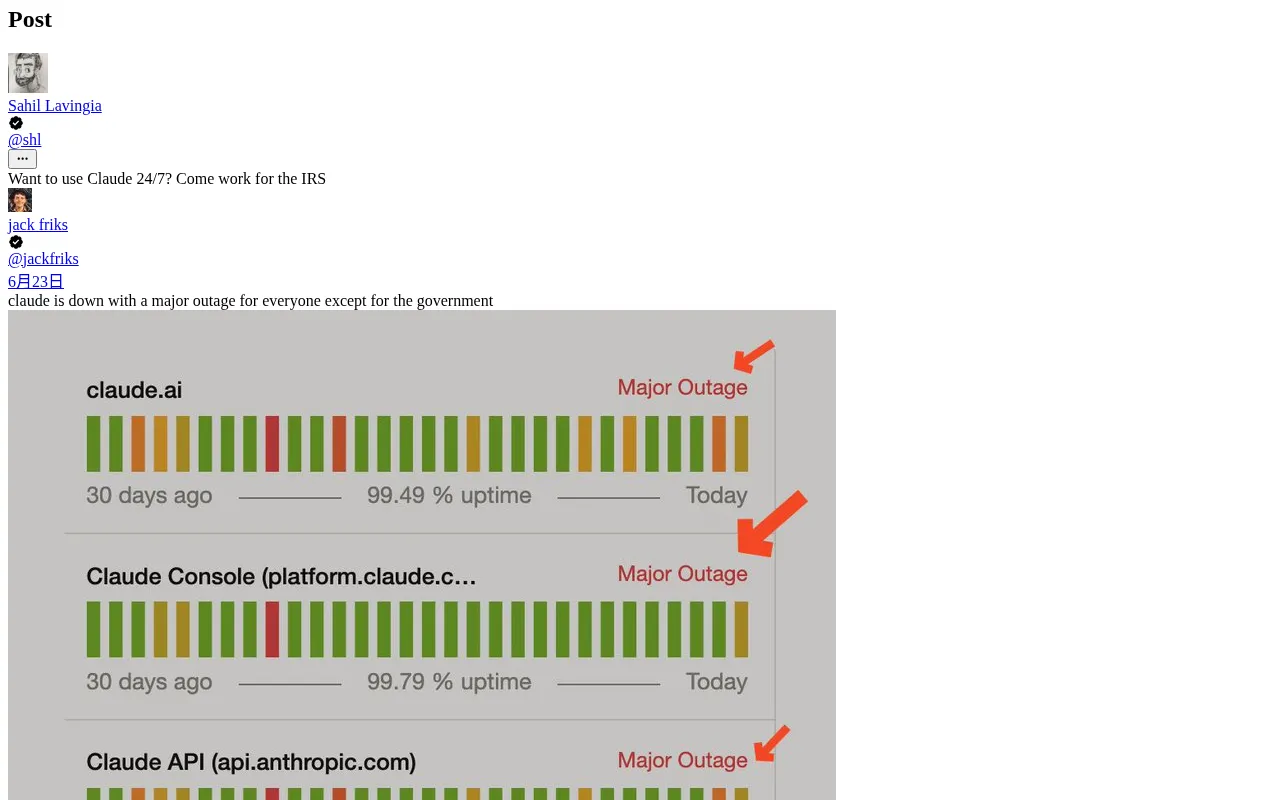
IRS Fully Embraces Claude AI, Accelerating Federal Government's AI Adoption
The IRS is recruiting staff with 24/7 Claude AI access, marking Anthropic's breakthrough into the federal government. Explore the strategic implications and tax use cases.
 Industry Insights
The IRS Mobile App Debate: A Trust Crisis in Government Digital Transformation
The IRS's proposed mobile app has sparked heated debate. This article analyzes the core arguments, exploring data security, privacy, and the trust crisis in government digital transformation.