Deep Dive into Agent Eval Harnesses: Build vs. Buy?

Break down the four components of an agent eval harness and decide whether to build or adopt one.
Based on a Reddit developer's breakdown, this article systematically examines how AI agent eval harnesses are structured. A complete harness comprises four components: Cases (defining tasks and success criteria), a Runner (executing the real agent), a Capture layer (recording full behavioral traces), and Graders (converting evidence into pass/fail verdicts). Key engineering challenges include LLM nondeterminism, multi-turn conversation complexity, cost at scale, and the lack of exact ground truth for open-ended tasks. On the build-vs-adopt decision, the author recommends a hybrid approach — using mature frameworks for general infrastructure while building custom capture and scoring logic for what matters most.
What Is an Agent Eval Harness
As AI agents see increasing adoption in production environments, systematically evaluating their performance has become an unavoidable engineering challenge. A Reddit developer recently shared a breakdown of agent eval harnesses, noting that these systems are actually far simpler than they sound — at their core, they consist of just four components.
The value of an eval harness lies in transforming the vague question of "is this agent actually reliable?" into a repeatable, quantifiable testing process. For any team planning to deploy agents in real-world business contexts, a robust evaluation mechanism is the essential bridge between prototype and production.
The Four Core Components of an Eval Harness
Based on the original post's breakdown, a complete agent eval harness consists of the following four parts:
Case (Test Cases)
Defines the task itself and the criteria for success. This is the starting point for the entire evaluation — you need to clearly tell the system "what counts as success." For deterministic tasks, success might mean an exact match against an expected answer; for open-ended tasks, defining the criteria is an art in itself.
Runner (Executor)
Responsible for driving the actual agent. The runner must invoke the agent under test directly — not simulate its behavior — so it can capture how the agent actually performs in real conditions.
Capture (Capture Layer)
Records the agent's complete behavioral trace, including the final answer, tool calls, execution results, and key events such as interrupts. This layer provides the evidentiary foundation for all subsequent judgment — without complete records, there's no way to accurately determine whether the agent behaved as expected.
Graders (Scorers)
Translate the captured evidence into pass/fail verdicts. Graders are the bridge between raw execution data and final evaluation conclusions, and their design directly determines how trustworthy the results are.
Where the Real Difficulty Lies
While the four components seem straightforward, the original author points out that the real challenge lies in making this mechanism adapt to the genuine complexity of agents in practice:
Nondeterminism: LLM-driven agents may produce different outputs on each run — the same input doesn't always yield the same result. This means a single test pass or failure isn't enough to be conclusive. Eval harnesses need to account for multiple runs, statistical pass rates, and similar approaches.
Multi-turn conversations: Agents often don't operate in a single question-and-answer format — they complete tasks through multi-turn interactions. Evaluating the overall quality of a conversational flow is far more complex than evaluating a single response.
Cost: Every agent run incurs real API call expenses. When the number of test cases grows and multiple retries are needed, costs accumulate quickly, requiring the harness to make trade-offs between coverage and economy.
No exact oracle: Many tasks have no single correct answer. In these scenarios, graders often need to rely on another model to make judgments (LLM-as-judge), or use more lenient semantic matching rules — which itself introduces new sources of uncertainty.
LLM-as-judge is the dominant approach for handling scenarios without a precise ground truth: an independent language model (typically a more capable one) reads the agent's output and produces a score or pass/fail verdict. The advantage is that it can assess semantic quality at the natural language level without relying on hard-coded rules. However, it also introduces the judge model's own biases, sensitivity to prompt wording, and additional cost. To mitigate these issues, engineering practice typically involves averaging across multiple judge models, providing explicit rubrics rather than letting the model freely evaluate, and periodically calibrating the judge model's accuracy against human annotations. Understanding these limitations helps teams set appropriate confidence expectations for evaluation conclusions when designing their graders.
Build vs. Adopt an Existing Framework
On the classic engineering decision of "build vs. adopt," the original author offers a pragmatic set of criteria:
Scenarios that favor building: When your agent requires highly customized capture logic and assertions, building your own is the better fit. For example, if you need to record certain special internal states, or have very specific validation requirements around the ordering or parameters of tool calls, off-the-shelf frameworks may not cover these details.
Scenarios that favor adopting: When capabilities like retries, batching, trace parsing, CI report integration, and visualization dashboards become bottlenecks, adopting a mature framework can save enormous amounts of time reinventing the wheel. These features have nothing to do with your business logic, yet they're indispensable infrastructure for evaluation at scale.
Notably, the author argues that for many projects, the answer is often "both" — use an existing framework to handle general execution scheduling and reporting, while building custom capture and scoring logic for the parts that matter most. This hybrid strategy avoids duplicated effort while retaining control over the critical evaluation steps.
Several open-source and commercial eval frameworks in the current ecosystem are worth noting: LangSmith (part of the LangChain ecosystem), Braintrust, Promptfoo, and RAGAS (primarily focused on RAG scenarios). These frameworks typically include built-in trace logging, batch execution, CI/CD integration, and visualization reporting, which can significantly reduce the cost of standing up evaluation infrastructure. Key factors to evaluate during selection include: extensibility for custom graders, granularity of tool call trace parsing, and support for async/parallel execution to control run costs. For teams that already have observability infrastructure in place, it's also worth considering building an evaluation layer on top of an existing tracing system (such as OpenTelemetry) to avoid introducing additional data silos.
Implications for AI Engineering Teams
The value of this breakdown is that it takes what seems like a sprawling topic and deconstructs it into actionable modules. For teams building agent applications, rather than debating whether to implement an eval harness at all, it's more productive to examine your needs through the lens of these four components: which capabilities are generic enough to outsource to a framework, and which core assertions must remain under your own control.
As agent applications move from experimentation to production, evaluation will no longer be optional — it will be a core engineering practice for ensuring reliability. Understanding the structure of eval harnesses and the paths to building them is a lesson every AI engineer should learn.
Related articles

RTX 5090 Stock Crisis: Why Third-Party Sellers Are Charging $9,500
NVIDIA's RTX 5090 has vanished from U.S. online retail, with third-party sellers asking up to $9,500. Here's how AI compute demand is driving GPU prices to extremes.
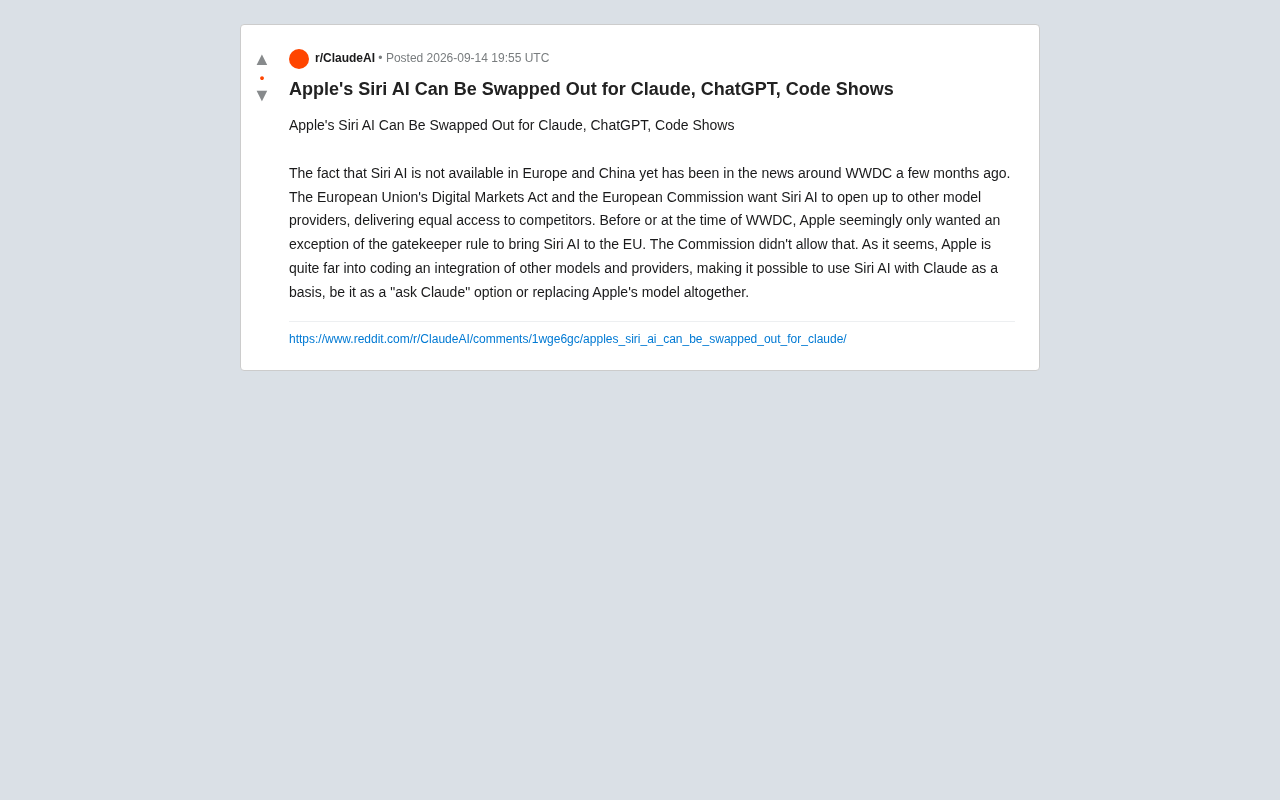
Apple Siri May Support Swapping in Claude and ChatGPT — Code Already Shows Signs
Leaked code shows Apple is developing third-party AI model integration for Siri, potentially allowing users to swap in Claude or ChatGPT under EU DMA pressure.

EPA Moves to Scrap Power Plant Greenhouse Gas Emission Standards Amid Surging AI Energy Demand
The EPA plans to eliminate all power plant greenhouse gas emission standards, just as AI, EVs, and manufacturing drive electricity demand higher — making U.S. power potentially far dirtier.