DeepAgent Sub-Agent Breakdown: Precompilation, Sync vs. Async, and Selection Pitfalls
A systematic breakdown of DeepAgent sub-agents: creation, sync/async selection, precompilation reuse, and LangGraph-Server hosting.
This article examines DeepAgent's sub-agent mechanism: it clarifies DeepAgent's position in the LangChain ecosystem—built on LangChain components and LangGraph runtime to keep long-running agents stable. It explains that sub-agents are dynamically created with independent contexts and toolsets, compares sync vs. async creation in blocking behavior, concurrency, and error handling, discusses precompilation reuse for high-frequency sub-agents, and covers LangGraph-Server hosting for state persistence and recovery, plus pitfalls to avoid.
When building complex AI agents, the sub-agent mechanism of the DeepAgent framework is key to enhancing task processing capabilities. Based on an in-depth explanation by a Bilibili creator, this article systematically breaks down how sub-agents are created, the differences between synchronous and asynchronous sub-agents, precompilation reuse strategies, and the LangGraph-Server hosting approach, helping developers avoid common selection pitfalls.
DeepAgent's Position in the LangChain Ecosystem
DeepAgent is an agent framework released by the LangChain team, designed specifically for building long-running agents that handle complex tasks. Its core goal is to make it easier for developers to create agents and keep them running stably over the long term—"stability" is the keyword that distinguishes DeepAgent from other frameworks.
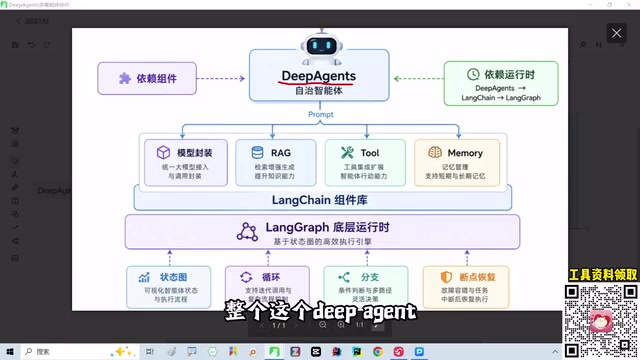
From an ecosystem perspective, DeepAgent wasn't built from scratch; it stands on the shoulders of LangChain and LangGraph. LangChain provides foundational components such as model wrappers, tool calling, and memory management; LangGraph provides runtime mechanisms such as state management, loops and branching, and checkpoint recovery; DeepAgent assembles these capabilities into a more complete and more powerful agent. One student drew an apt analogy: it's like the relationship between Spring and Spring Boot—the latter is built on the former but offers higher-level abstractions and out-of-the-box capabilities.
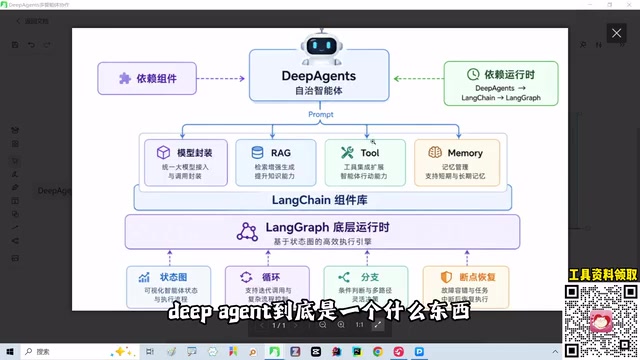
Understanding this hierarchy is important: learning DeepAgent doesn't require becoming a LangGraph expert first. The creator explicitly stated during the livestream that even if you've only learned a little LangGraph, it won't stop you from following the core content on sub-agents. The key is understanding why sub-agents exist and how to use them.
LangGraph is a directed-graph agent runtime released by the LangChain team. Its core abstraction is the StateGraph: nodes represent computation steps, edges represent control flow, and it supports loops, conditional branching, and persistent checkpoints. Unlike chain-based invocation, LangGraph allows pausing at any node and saving the complete state, which makes interruption recovery, human intervention, and concurrent scheduling possible for long-running tasks. DeepAgent leverages these mechanisms to manage the lifecycle of sub-agents, so understanding the concept of a "state graph" helps grasp how sub-agents are suspended, resumed, and context-isolated at runtime.
Sub-Agents: The Core Mechanism of DeepAgent
The reason DeepAgent can handle long-running complex tasks is that the sub-agent mechanism provides core support. A sub-agent is a secondary agent that is dynamically created and invoked while a main agent is running; each sub-agent can have its own independent context, toolset, and task objective. This design lets the system decompose complex tasks into multiple sub-tasks processed in parallel or in sequence, while keeping the main flow clear and controllable.
Sub-agents are primarily created in two ways: synchronous and asynchronous. Synchronous sub-agents execute in a blocking manner within the main flow—the caller must wait for them to finish before continuing—making them suitable for scenarios with strong dependencies that must execute in order. Asynchronous sub-agents allow the main flow to continue other work after initiating the call, making them suitable for independent tasks that can be processed in parallel. The two differ noticeably in resource usage, response latency, and error-handling strategy, so selection should be based on the task topology.
Context isolation is a key design constraint of the sub-agent mechanism. During long-running operation, the main agent accumulates a large amount of conversation and tool-call records. If all sub-tasks shared the same context, it would not only quickly exhaust the model's context window but also let irrelevant information interfere with reasoning. By having their own independent context space, sub-agents receive only the task descriptions and necessary data explicitly passed down by the parent, thereby keeping each sub-task's input within a controllable range. This mechanism aligns with the "orchestrator–worker" pattern in multi-agent systems and is an important prerequisite for DeepAgent's ability to reliably handle complex long-running tasks.
Precompilation Reuse and Sync vs. Async Selection
Precompilation reuse is an easily overlooked but highly valuable practice in DeepAgent sub-agent design. Through precompilation, a sub-agent's definition and dependencies can be reused across multiple invocations, avoiding the overhead of repeated initialization. For frequently invoked sub-agents, precompilation can significantly reduce startup latency and improve overall throughput.
The choice between synchronous and asynchronous directly affects system robustness. Synchronous mode is intuitive and easy to debug, but one stuck sub-agent can slow down the entire chain; asynchronous mode improves concurrency but introduces complexity in state consistency and error propagation. The creator emphasized in the explanation that neither option is inherently superior—the key is whether strong data dependencies exist between tasks and whether a failure requires rolling back the entire operation.
At the implementation level, precompilation typically means completing initialization work such as graph structure construction, tool binding, and prompt template instantiation before the agent starts, and caching the results as reusable objects. If everything were rebuilt on each invocation, the model client, tool registry, and state graph definition would all be recreated repeatedly, causing considerable latency and memory overhead in high-frequency scenarios. Note that precompilation reuse requires a sub-agent's definition to remain immutable during execution; if a sub-agent needs to dynamically adjust its toolset based on runtime parameters, you should inject parameters on top of the precompiled base rather than rebuilding the entire instance each time.
LangGraph-Server Hosting and Pitfall Avoidance
Handing DeepAgent sub-agents over to LangGraph-Server for hosting is a common practice in production environments. LangGraph-Server provides the state persistence, checkpoint recovery, and concurrent scheduling capabilities needed to run agents, so developers don't have to reinvent the underlying runtime mechanisms. Under this hosting model, sub-agents can run more stably over the long term, consistent with DeepAgent's design goal of "stability."
Regarding pitfalls, the creator highlighted several key points: don't confuse the responsibility boundaries of LangChain, LangGraph, and DeepAgent; don't blindly pursue asynchronous mode without understanding the differences between sync and async; and evaluate the benefits of precompilation reuse against actual invocation frequency—forcing precompilation on low-frequency sub-agents only increases maintenance costs. In addition, LangSmith in the ecosystem handles agent monitoring; used together with DeepAgent, it provides better observability into sub-agent runtime status.
Overall, the design philosophy of DeepAgent sub-agents reflects the evolution of enterprise-grade agent development from "it runs" to "it runs reliably." Mastering how sub-agents are created, reused, and hosted is an essential skill for building reliable long-running agents.
LangSmith is the observability platform in the LangChain ecosystem, used to trace agent execution paths, record the inputs and outputs of each model call and tool call, and support evaluation and debugging. In sub-agent scenarios, because a main task may spawn multiple sub-agents running in parallel, the call chain takes on a tree structure. LangSmith's trace view can reconstruct this structure by parent-child relationships, helping identify which sub-agent caused an error or latency. Its hosting responsibility differs from that of LangGraph-Server: the latter handles running and state persistence, while the former handles observability and analysis—only together can they cover stable operation and troubleshooting in production environments.
Related articles
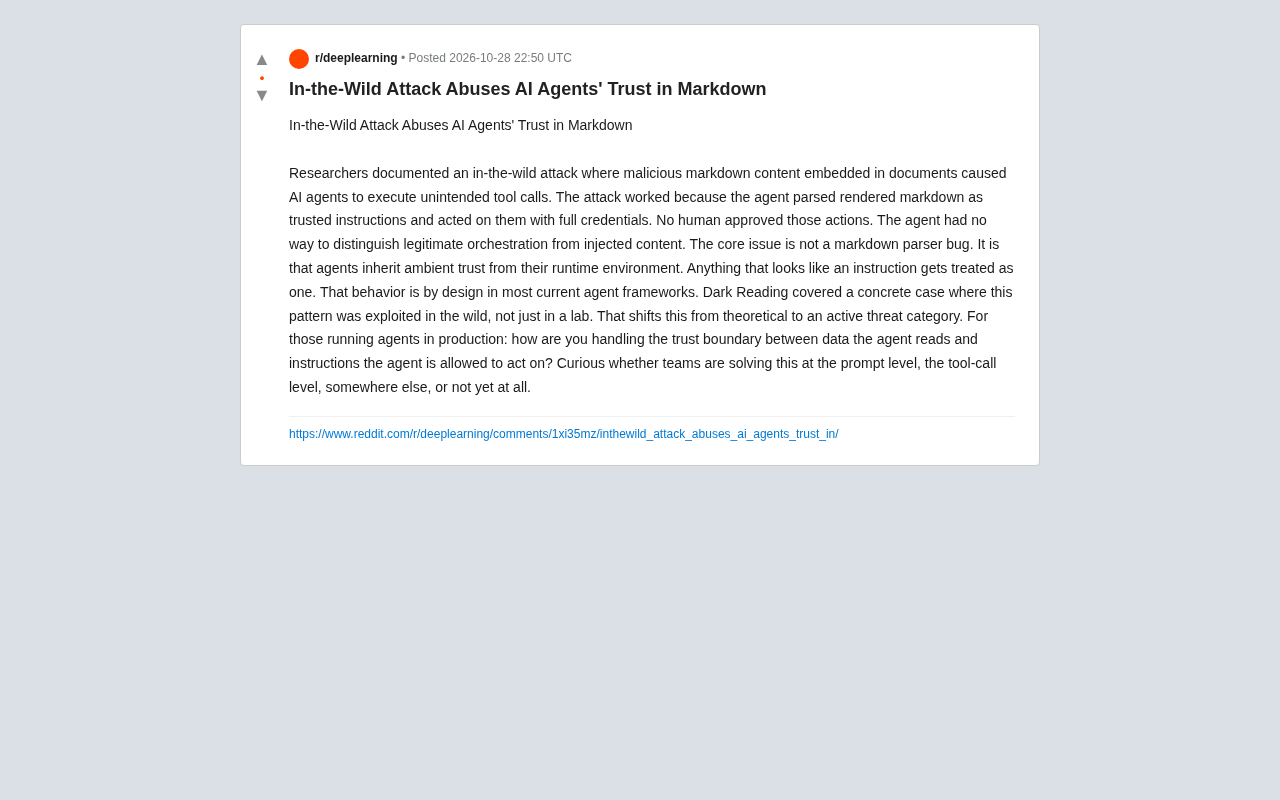
AI Agent Trust Crisis: Markdown Injection Attacks Have Moved from Lab to Reality
Security researchers document an in-the-wild Markdown injection attack: malicious document content is misclassified by AI agents as trusted instructions, executing unauthorized tool calls with full credentials. This article analyzes the attack mechanism, the root cause of ambient trust, and defense approaches for trust boundaries in production environments.
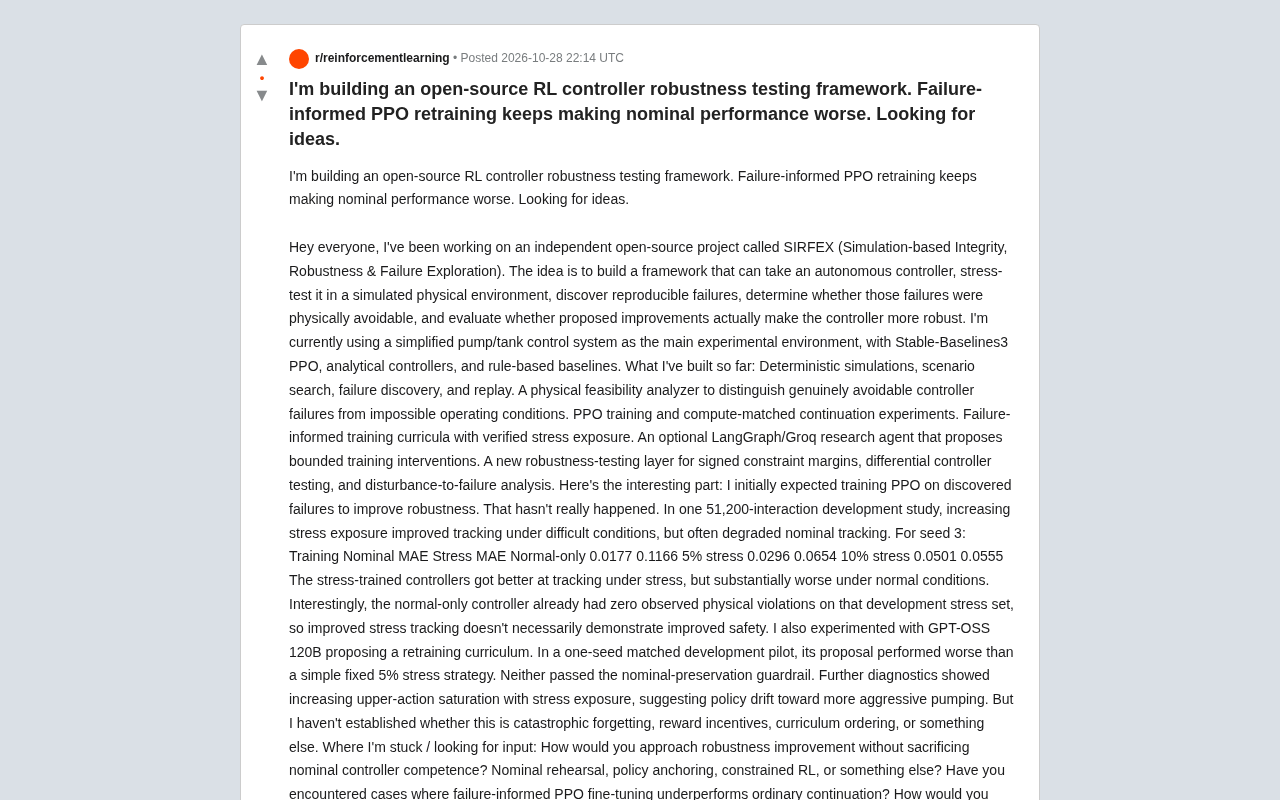
Open-Source Robustness Testing Framework SIRFEX: Why Does Failure-Driven PPO Retraining Hurt Nominal Performance?
Open-source framework SIRFEX fine-tunes PPO on failure scenarios, yet nominal performance degrades. We analyze the experimental data, causes of negative results, and the balance between robustness and nominal performance.
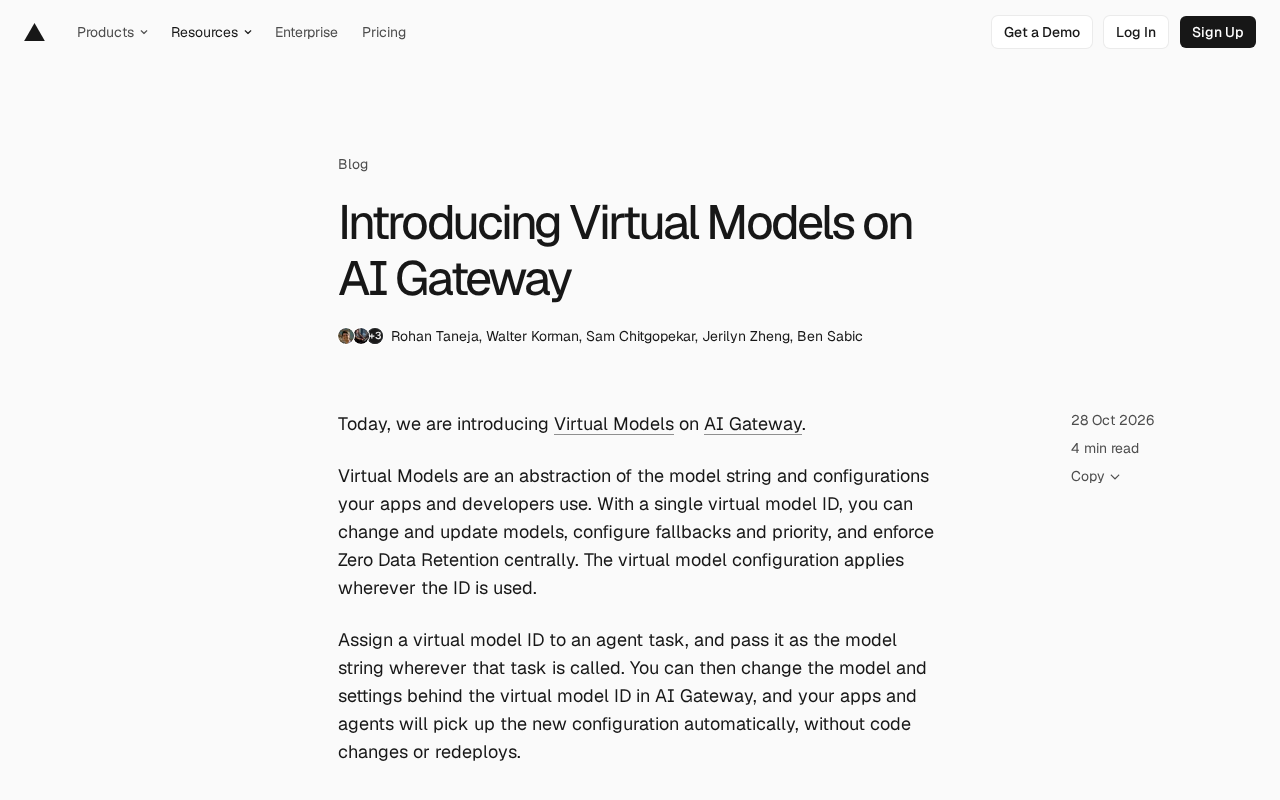
AI Gateway Introduces Virtual Models: Switch Models Without Changing Code
Vercel AI Gateway launches Virtual Models, abstracting model strings and configuration into reusable IDs so model switching needs no code changes or redeployment, with centralized governance of fallback, Zero Data Retention, and permission control.