DeepMind Releases AlphaGenome Atlas: AI-Powered Prediction of Human Genome Variant Effects
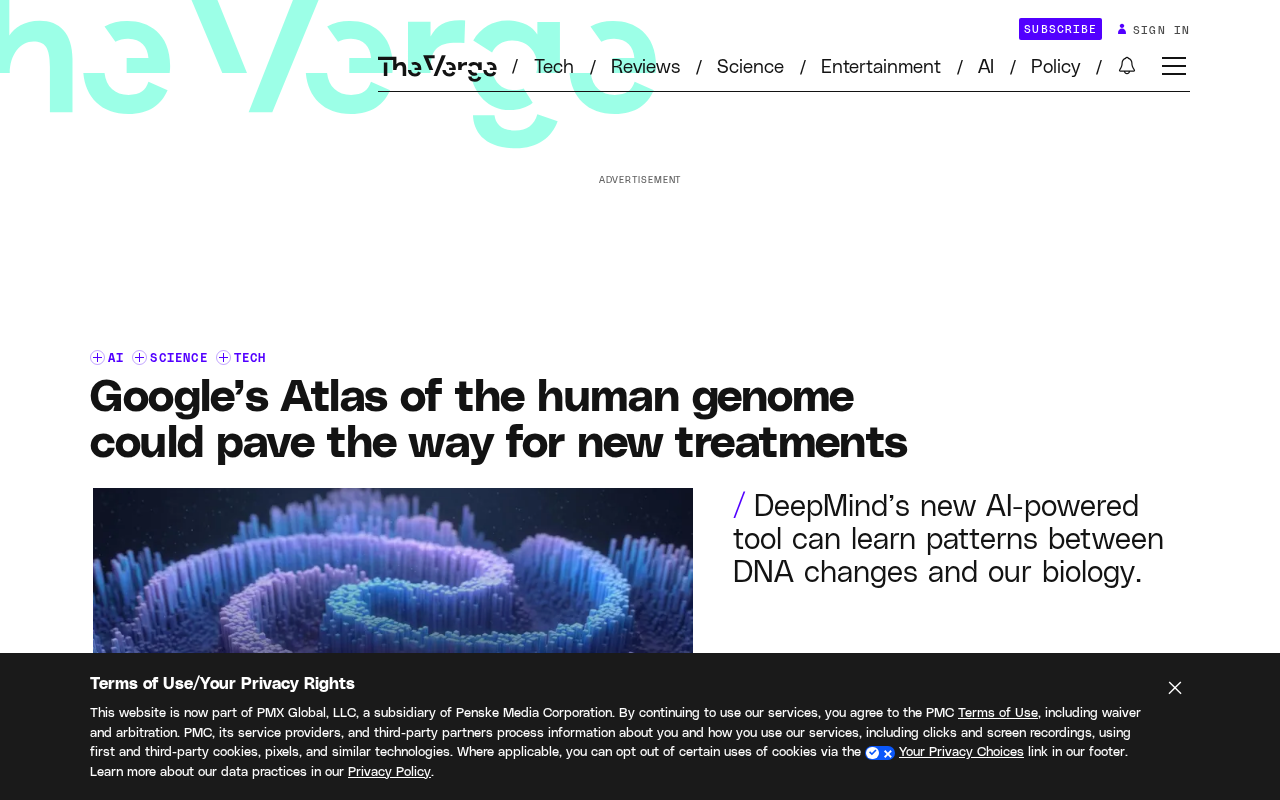
DeepMind's AlphaGenome Atlas uses AI to predict effects of all human genome variants, transforming medicine.
Google DeepMind's AlphaGenome Atlas is a breakthrough AI platform that predicts the impact of every possible DNA variant in the human genome. This tool accelerates rare disease research, enables precision medicine, and aids drug target discovery by rapidly assessing genetic mutations without lengthy experiments.
Google DeepMind recently unveiled a groundbreaking AI tool—AlphaGenome Atlas—a platform believed to potentially revolutionize our understanding of the human genome and biology, opening new pathways for disease treatment.
What is AlphaGenome Atlas: An AI Revolution in Genomic Prediction
AlphaGenome Atlas is a platform that provides predictive mapping for every possible DNA letter change across the human genome. This tool can systematically analyze and predict the potential impact of genetic mutations on the human body—a task that has traditionally been extremely time-consuming and complex in genomic research.
DNA Letter Changes and Base Pair Fundamentals
DNA molecules consist of four nucleotides, represented by the letters A (adenine), T (thymine), G (guanine), and C (cytosine). These four "letters" arrange in specific sequences to encode genetic information. Two DNA strands form a double helix structure through base pairing (A pairs with T, G pairs with C), with each paired set of bases called a "base pair." The human genome contains approximately 3 billion base pairs, and any letter change at any position (such as A changing to G) can alter gene function. These changes are called "single nucleotide variants" (SNVs), which are important sources of human genetic diversity and disease susceptibility. Traditional methods of verifying the functional impact of each variant individually require massive experimentation, while AI models can predict the effects of unknown variants by learning patterns from known data.
DeepMind scientists state that AlphaGenome Atlas promises to help researchers unlock the mysteries of the human genome. The human genome contains approximately 3 billion base pairs, where variants may cause disease or be benign. Accurately identifying which variants have functional impacts has long been one of the core challenges in biomedical research.
How AlphaGenome Atlas Accelerates Scientific Research and Disease Treatment
The core value of AlphaGenome Atlas lies in its powerful predictive capabilities. Through AI models, researchers can rapidly assess the potential impact of specific genetic variants without conducting time-consuming experimental validation. This will significantly accelerate research progress in several areas:
- Rare disease research: Many rare genetic diseases are caused by single gene mutations; rapid identification of pathogenic variants can help patients receive earlier diagnoses
- Precision medicine: Understanding how individual genomic variants affect disease risk and drug response enables more personalized treatment plans
- Drug target discovery: Identifying key genetic variants associated with disease helps develop more targeted new drugs
Technical Foundation of Precision Medicine
Precision Medicine is a new paradigm that customizes medical decisions based on individual genomic, environmental, and lifestyle differences, forming a stark contrast to traditional "one-size-fits-all" treatments. Its core relies on three technological pillars: high-throughput gene sequencing (enabling rapid reading of an individual's entire genome), bioinformatics analysis (interpreting massive genetic data), and clinical databases (correlating genetic variants with disease phenotypes). For example, some breast cancer patients carry BRCA1/2 gene mutations, and targeted therapies like PARP inhibitors can be used for these patients. Similarly, variants in drug metabolism-related genes (such as CYP2D6) affect patient responses to antidepressants, and genetic testing can guide dosage adjustments. AlphaGenome Atlas provides more powerful decision-support tools for precision medicine by predicting how each person's unique combination of genetic variants affects disease and drug responses.
AlphaFold and the Breakthrough in Protein Structure Prediction
The release of this tool marks a new stage in the application of AI technology in genomics. From AlphaFold's successful prediction of protein structures to AlphaGenome Atlas mapping genetic variant landscapes, DeepMind is systematically using AI technology to tackle fundamental challenges in life sciences.
AlphaFold is an AI system launched by DeepMind in 2020 that solved the protein structure prediction problem that had perplexed biologists for 50 years. Proteins fold from amino acid chains, and their three-dimensional structure determines function, but determining structure through experiments (such as X-ray crystallography) is time-consuming and expensive. AlphaFold uses deep learning to directly predict protein three-dimensional structures from amino acid sequences with accuracy approaching experimental levels. This breakthrough enables scientists to predict millions of protein structures in minutes, greatly accelerating drug development, enzyme engineering, and disease mechanism research. AlphaFold2 has publicly predicted over 200 million protein structures, covering nearly all known proteins, and was named the 2021 Breakthrough of the Year by Science magazine. AlphaGenome Atlas continues this approach, extending AI predictive capabilities from protein structures to genomic variant functions.
AlphaGenome Atlas's Profound Impact on Biological Research
AlphaGenome Atlas is not merely a tool but represents a fundamental shift in research paradigms. Traditionally, gene function research requires experimentally validating the impact of each variant individually, a process that can take years or even decades. AI-driven predictive models can provide genome-wide insights in a short time.
Genetic Characteristics of Complex Diseases
This capability is particularly critical for understanding complex diseases. Many common diseases such as heart disease, diabetes, and cancer involve interactions among multiple genes. AlphaGenome Atlas can help researchers identify these complex gene regulatory networks and reveal the molecular mechanisms underlying disease onset.
Unlike single-gene genetic disorders, common diseases such as heart disease, diabetes, and cancer are "complex diseases" caused by multiple genes interacting with environmental factors. These diseases typically involve the cumulative small effects of dozens or even hundreds of gene loci, where each locus individually has minimal impact but collectively significantly increases disease risk. For example, over 400 gene loci associated with type 2 diabetes have been discovered, involving insulin secretion, glucose metabolism, fat storage, and other pathways. Additionally, "epistasis" exists between genes, meaning the action of certain genes depends on the state of other genes. Traditional research methods struggle to fully capture these complex gene interaction networks. Through systematic analysis of genome-wide variants, AlphaGenome Atlas promises to reveal these hidden gene regulatory relationships, helping understand the molecular mechanisms of complex diseases and identify new intervention targets.
Notably, the openness and accessibility threshold of this tool will directly determine its actual value to the scientific community. If widely accessible to researchers globally, it will greatly promote the popularization of genomic medicine, enabling more laboratories to conduct cutting-edge research.
Outlook: Deep Integration of AI and Life Sciences
The release of AlphaGenome Atlas once again confirms AI's tremendous potential in life sciences. From structural biology to genomics, AI is becoming an indispensable research partner for scientists. In the future, more similar tools will collectively build an AI-driven biological knowledge system.
For patients, this means faster diagnoses, more precise treatments, and greater possibilities. For the scientific community, this represents the opening of a new era—AI can not only accelerate research progress but also discover patterns and connections that human researchers find difficult to detect, pushing our understanding of the essence of life to unprecedented depths.
Related articles

Hermes Agent in Practice: A Comprehensive AI Framework Compared to OpenClaude
Deep dive into Hermes Agent framework's core capabilities: built-in Claude Code programming, layered memory, automatic Skill generation, 200+ model support, and WeChat remote control. Comparison with OpenClaude advantages and hands-on experience.

Cross-Platform Family Location Sharing with Open Source: A Complete Guide to OwnTracks and Traccar
How can families with mixed iOS and Android devices share locations? A detailed guide to OwnTracks, Traccar, and Home Assistant for privacy-first, cross-platform family tracking.
LangGraph Human-in-the-Loop in Practice: Implementing Agent Pause and Human Approval with interrupt
Deep dive into LangGraph Human-in-the-Loop core mechanisms through a minimal viable example: interrupt() pause triggers, MemorySaver state persistence, Command resume execution, and conditional routing to master AI Agent human-AI collaboration principles and real-world applications.