DeepSeek Extends Long Conversations to 7 Days, Gemini 4 Free API and Qwen 4 Song Painting Interaction
DeepSeek extends long conversations to 7 days, while Gemini's free API, model price cuts, and open-source agent tools all gain momentum
This article summarizes several AI developments: DeepSeek App extends the long-conversation inactivity period from 72 hours to 7 days, with old records retained and exportable, encouraging users to treat AI as a continuous collaboration partner; Google Gemini 4 Hydrogen opens a free API focused on million-level context plus programming and agent scenarios, while the heavier Crypton model enters gray-scale testing with about twice Carbon's thinking volume; Qwen 4 turns the Southern Song painting Bingzhu Night Excursion into an interactive scroll with four switchable scenes, showcasing semantic understanding and re-creation of classical art; Claude Haiku 5.5 lowers the price floor to $0.1 per million input tokens and $0.5 output; Tencent open-sources LoopForge, embedding programming agents into the full R&D process under MIT; and open-source video editor OpenCut surpasses 98,000 GitHub stars. The overall keyword is continuity.
Long Conversations Without Anxiety: DeepSeek Extends Inactivity Period from 72 Hours to 7 Days
According to Will Shu's daily AI updates, based on user feedback, the inactivity period for long conversations in the DeepSeekAd App is being gradually adjusted from 72 hours to 7 days. For users who are used to using long conversations to organize projects and ask follow-up questions repeatedly, this means the "shelf life" of conversation threads is greatly extended, and they no longer need to worry about context being cleared after returning a few days later. Old records will not be deleted; users can still export them, and they can also retain continuity with previous content when starting a new conversation.
This change may seem minor, but it directly addresses a real pain point in the daily use of AI assistants: long conversations carry the thinking process rather than a single Q&A exchange. Relaxing the window from 3 days to a week is effectively encouraging users to treat AI as a continuous collaboration partner, rather than a disposable search box.
Gemini 4 Hydrogen Opens Free API, Focusing on Programming and Agents with Million-Level Context
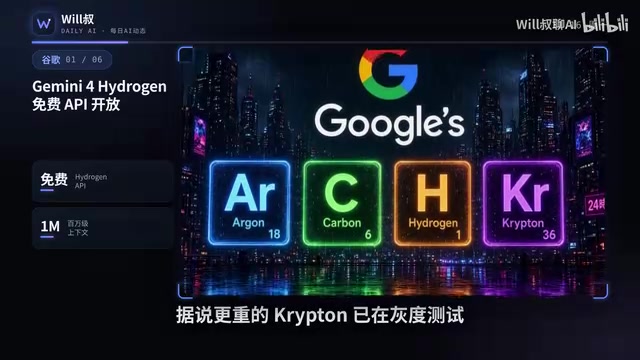
On Google's side, Gemini 4 Hydrogen has opened a free API, focusing on million-level context and positioned for everyday programming and agent scenarios. According to the same source, the heavier Crypton model is already in gray-scale testing, with roughly twice the thinking volume of Carbon.
A million-level context combined with a free API means developers can experiment with tasks such as long-document understanding and multi-file codebase analysis at a lower barrier to entry. Crypton's increased "thinking volume" suggests that Google is making reasoning depth a differentiating selling point for the next generation of models, forming two parallel competitive routes with simply stacking context length.
Million-level context (1M Context Window) refers to the number of input tokens a model can process in a single call reaching around 1 million. Estimating at roughly 4 English characters per token, a million tokens is roughly equivalent to hundreds of thousands of Chinese characters or hundreds of pages of technical documentation, enough to put an entire small-to-medium codebase, a long contract, or multiple meeting records into the prompt at once. Compared with RAG (Retrieval-Augmented Generation), long context eliminates the engineering steps of chunking, retrieval, and stitching, allowing the model to perform cross-file references and consistency checks directly under a global view; the cost is that GPU memory usage, first-token latency, and per-call cost rise with length, and the model's recall of content in the middle of ultra-long inputs may still degrade. This is also the practical reason why companies are pursuing a separate "reasoning depth" route beyond "stacking context."
Qwen 4 Brings Song Paintings to Life: An Interactive Scroll with Four Scene Switches
In multimodal creation, Quinn 4.0 Max Preview (i.e., Qwen 4) has turned the Southern Song dynasty painter Mali's Bingzhu Night Excursion into an interactive scroll. Users can freely switch among four scenes—snow scene, music, night rain, and crabapple blossoms—accompanied by drum-and-qin music.
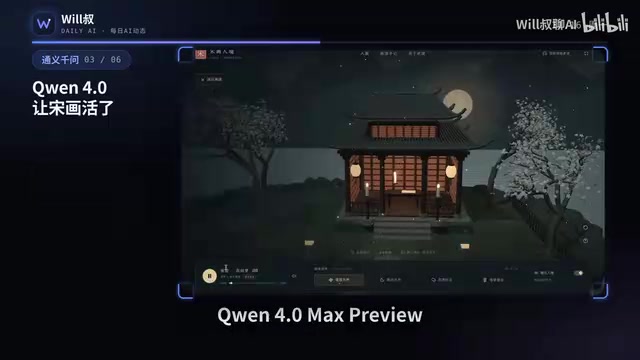
The value of this kind of demo is not in "showing off," but in demonstrating the model's semantic understanding and re-creation ability for classical paintings—breaking down interactive narrative elements from a static image and reassembling them into an experienceable scene. For cultural digitization and interactive content creation, this is a落地 path worth watching.
Price War Continues: Claude Haiku 5.5 at $0.1 per Million Input Tokens
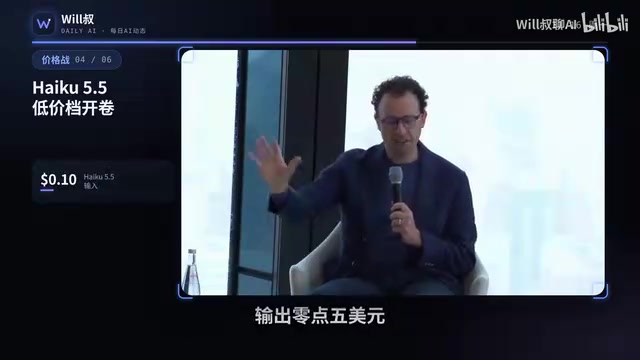
The API price war shows no sign of stopping. Claude Haiku 5.5 costs only $0.1 per million input tokens and $0.5 for output. According to the blogger's statistics, DeepSeek's input price is around 1 to 5 cents, and competition in the low-price tier is becoming increasingly fierce.
For developers, this round of price cuts has pushed the cost of high-frequency calls and large-batch processing to a new low, but it also means that when choosing a model, one cannot look only at the unit price—context length, output quality, and rate-limiting policies all affect the actual total cost. Low-price models are better suited for preprocessing, classification, summarization, and other high-volume but less demanding tasks.
Input/output token pricing is the mainstream billing method for current large-model APIs: input refers to the prompt and context submitted by the user, and output refers to the response generated by the model. Because the generation stage requires token-by-token autoregressive decoding and is more computation-intensive, the output unit price is usually several times the input price; Claude Haiku 5.5's $0.1 versus $0.5 is an example. The actual bill is also affected by cache-hit discounts, batch interfaces, rate limits (RPM/TPM), and extra tokens caused by retries; in long-context scenarios, history must be resubmitted each round of conversation, so input tokens accumulate and amplify with the number of turns. Therefore, "low unit price" does not equal "low total cost," and when selecting a model, an end-to-end estimate should be made based on the real call pattern.
Tencent Open-Sources LoopForge: Embedding Programming Agents into the Full R&D Process
Tencent has open-sourced LoopForge, embedding programming agents into the complete process from requirements design and implementation to review and test integration, emphasizing role separation and sandbox isolation, supporting more than ten kinds of agent tools, and using the MIT license.
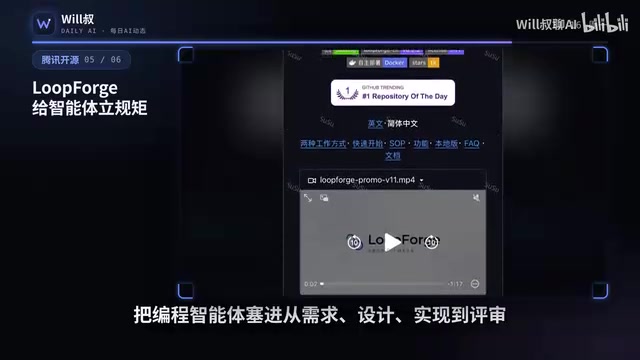
Compared with single-point code completion tools, LoopForge's approach is to place agents into the process for collaboration: different roles perform their own duties, and sandbox isolation reduces execution risk. The MIT license clears licensing obstacles for enterprises' secondary development and integration, making it suitable as an experimental foundation for internal R&D automation.
MCP (Model Context Protocol) is an open protocol used to standardize connections between large models and external tools and data sources: the model side only needs to declare callable tools according to the protocol, while the server side exposes capabilities such as file systems, databases, command lines, and third-party APIs, without needing to write an adapter layer separately for each model. It is especially critical in programming agent scenarios—reading repositories, running tests, and querying documentation can all be orchestrated and called as MCP tools, while sandboxing and permission control determine the security boundaries of these calls. LoopForge supports more than ten kinds of agent tools, and OpenCut has built-in MCP; essentially, both use the same set of interfaces to let agents "connect" to real work environments, reducing integration costs and improving portability.
Open-Source Video Editor OpenCut Surpasses 98,000 GitHub Stars
Finally, the open-source video editor OpenCut has surpassed 98,000 stars on GitHub. It is free and watermark-free, offers a multi-track timeline and built-in MCP, and allows AI agents to participate in editing operations.
The high star count shows strong demand among creators for the combination of "free + watermark-free + extensible," while built-in MCP access for agents makes automated orchestration possible in video editing—from material organization to rough cuts, agents can take on repetitive labor and leave creative decisions to users.
Overall, the keyword for the day's developments is "continuity": long-conversation periods are extended, API prices are moving lower, and open-source tools are embedding agents into processes. AI is moving from single calls toward infrastructure for continuous collaboration.
One-line Summary
DeepSeek extends long-conversation period to 7 days, while Gemini's free API, model price cuts, and open-source agent tools all gain momentum
Paragraph Summary
This article summarizes several developments in the AI field that day: the DeepSeek App is gradually extending the inactivity period for long conversations from 72 hours to 7 days, with old records retained and exportable, aiming to encourage users to treat AI as a continuous collaboration partner; Google's Gemini 4 Hydrogen opens a free API, focusing on million-level context and programming/agent scenarios, while the heavier Crypton model enters gray-scale testing with about twice the thinking volume of Carbon; Qwen 4 turns the Southern Song dynasty Bingzhu Night Excursion into an interactive scroll with four switchable scenes, demonstrating semantic understanding and re-creation of classical paintings; Claude Haiku 5.5 pushes the lower price limit to $0.1 per million input tokens and $0.5 for output; Tencent open-sources LoopForge, embedding programming agents into the complete R&D process under the MIT license; and the open-source video editor OpenCut surpasses 98,000 GitHub stars. The overall keyword is "continuity."
Related articles

OpenAI to Shut Down Agent Builder and Two Other Services on November 30, Developers Must Migrate Urgently
OpenAI will shut down Agent Builder, the evals dashboard, and reusable prompts on November 30; evals is already read-only. Here's the scope, OpenAI's migration paths (Agent SDK, PromptFu, your own code), and what developers should export and rebuild this week.
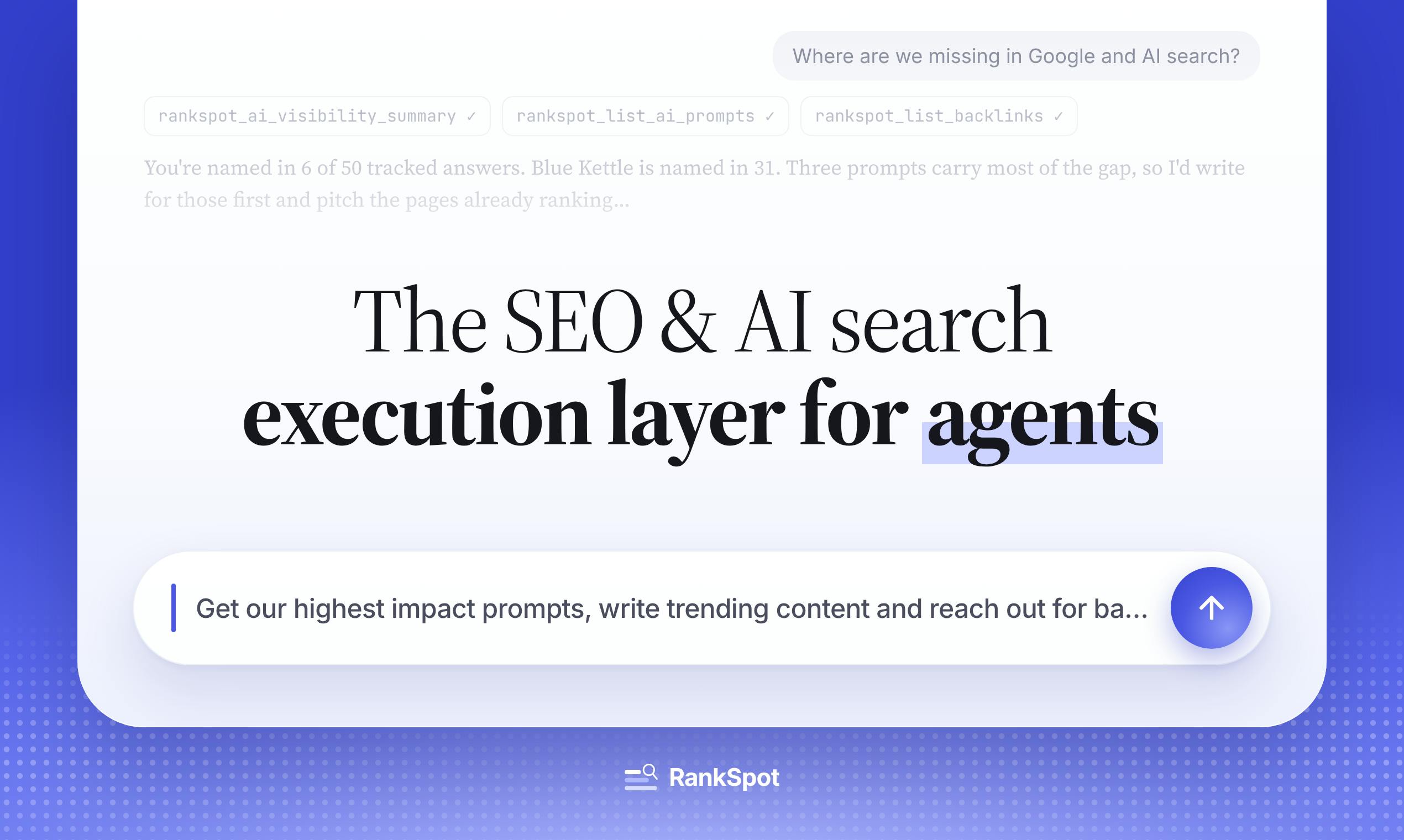
RankSpot: A Pay-Per-Use SEO & AI Search Execution Layer That Lets Agents Write, Publish, and Build Backlinks for You
RankSpot is an SEO & AI search execution layer for AI Agents. Connect via MCP to Claude or ChatGPT to write, publish & build backlinks. Pay-per-use, $3/article.

Appxiom: Giving AI Coding Assistants Production Context
Appxiom gives AI coding agents production context—crashes, jank, memory leaks, failed network calls—across Android, iOS, Flutter, KMP, and Web, ranking bugs by Goal Friction Impact.