DeepSeek Harness Architecture Breakdown: The Engineering Core of AI Agents
DeepSeek Harness architecture explained: the engineering system beyond the model that determines AI agent quality.
This article breaks down the DeepSeek Harness architecture — the engineering system beyond the model that transforms raw LLM capabilities into reliable AI agents. It explains why the same model performs differently across tools, explores the seven-layer implementation including tool invocation, memory systems, sandboxing, and context management, and covers key technologies like Function Calling, ReAct, and RAG that form the Harness backbone.
What Is Harness? A Core Concept You Can't Ignore in AI Engineering
As the capabilities of large models advance at breakneck speed, a new concept is becoming a buzzword in AI engineering — Harness. DeepSeek's release of a product called "DeepSeek Harness" has brought this term firmly into the spotlight.
What Are Large Models and Agents?
Large Language Models (LLMs) are deep learning models with parameters ranging from billions to hundreds of billions, such as GPT, Claude, and DeepSeek. These models acquire powerful language understanding and generation capabilities through pre-training on massive text datasets. Agents, on the other hand, are application systems built on top of large models. They can not only understand and generate text but also accomplish complex tasks through tool invocation and environmental interaction. The defining characteristics of an agent are its ability to perceive, make decisions, and take action — autonomously planning and executing task steps. The core challenge in AI engineering today is how to transform the general capabilities of large models into reliable agent applications.
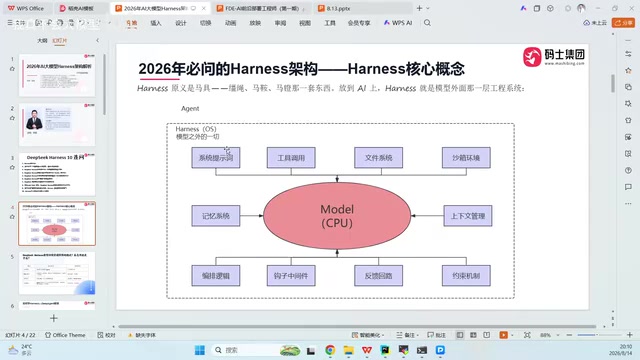
So what exactly is Harness? It actually has two layers of meaning: from a product perspective, it's an agent application released by DeepSeek that conforms to the Harness architecture; but from a more fundamental technical perspective, Harness represents an architectural paradigm — the entire engineering system beyond the model itself.
The English word "harness" originally refers to the set of equipment including reins, bridle, and saddle for a horse. This metaphor is remarkably apt: today's large models are like incredibly powerful wild horses — immensely strong, but without proper restraint and guidance, they can hardly perform reliably in enterprise scenarios. Harness is the reins and saddle placed on this wild horse — taming the model's powerful capabilities so they can be truly engineered and utilized.
The Model Sets the Floor, Harness Sets the Ceiling
The key to understanding Harness lies in clarifying the division of labor between it and the model itself.
Here's an analogy: the model is like a CPU, responsible for reasoning and computation; Harness handles everything else beyond the model. When you connect the model to file systems, browsers, and code environments, when you build memory systems, context management, and constraint boundaries for it — all of this belongs to the Harness layer.
Why Large Models Inherently "Have No Memory" and Need Harness to Fill the Gap
A classic pain point is that large models are inherently stateless. What you asked in the previous turn might be completely "forgotten" in the next. Therefore, agents must rely on external memory systems to record interaction history and maintain context. This is one of the core problems Harness is designed to solve.
Statelessness and Context Windows
The "stateless" nature of large models is an inherent property of their architecture. With each API call, the model itself retains no historical information — it can only see the context provided in the current request. While this design simplifies the model architecture, it creates challenges for application development. A model's Context Window refers to the maximum number of tokens that can be accommodated in a single input, with current mainstream models reaching 128K or even 200K tokens. But no matter how large the window gets, without an external system to manage conversation history, filter key information, and maintain task state, the model still cannot maintain coherence across multi-turn interactions. This is the fundamental reason why the Harness layer needs to build memory systems and context management mechanisms.
Beyond this, Harness also needs to handle:
- Feedback loops: How to retry, roll back, or escalate to human intervention when the model makes errors
- Boundary constraints: Clearly defining what the model can and cannot do
- Execution environments: Safely running model-generated code through sandbox mechanisms
Sandbox Environments and Code Execution Safety
When an agent needs to execute code, sandbox technology is an indispensable security mechanism. A sandbox is an isolated runtime environment that restricts code access to system resources, preventing malicious code from compromising the host system. Common sandbox implementations include Docker containers, virtual machines, and WebAssembly runtimes. In AI application scenarios, sandboxes need to address three core issues: resource limits (CPU, memory, runtime duration), permission control (file system, network access), and result verification (output checking, error capture). AI coding tools like GitHub Copilot and Cursor all rely on mature sandbox mechanisms to safely execute model-generated code.
Same Model, So Why Does It Perform Vastly Differently Across Tools?
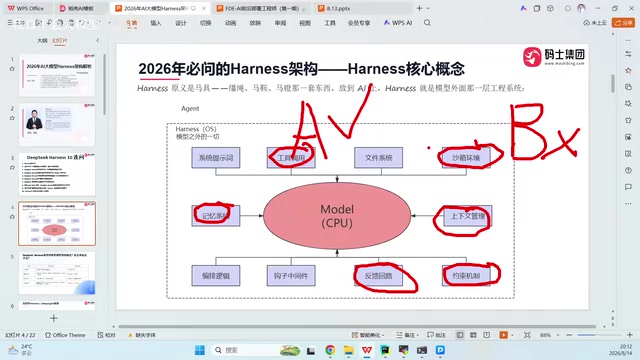
Many people are puzzled by this: using the exact same DeepSeek model, why does it perform brilliantly in Tool A but seem "dumb" in Tool B?
The answer lies in the Harness.
If Agent A has an excellent memory mechanism, reliable tool invocation, comprehensive context management, and proper constraints with fallback handling for errors, it will inevitably appear very intelligent. But if Agent B handles these aspects crudely or lacks them entirely, with no feedback mechanism for errors, it will seem clumsy.
Function Calling and Tool Invocation
Tool Use/Function Calling is the key technology that enables large models to break beyond pure text interaction. After OpenAI officially launched Function Calling in 2023, this paradigm quickly became an industry standard. Here's how it works: developers pre-define tool names, parameters, and functional descriptions; the model identifies scenarios requiring tool invocation during inference and outputs structured function call requests; external systems execute these requests and return results to the model for continued processing. Common tools include search engines, database queries, API calls, code executors, and more. Tool invocation evolved models from "can only talk" to "can take action," forming the foundational capability for agents to accomplish complex tasks.
This isn't a model problem — it's an engineering gap. The model only determines the agent's capability floor, while the ceiling is entirely determined by the engineering quality of the Harness layer.
Prompt Engineering and System Prompts
Prompt Engineering is the core technique for guiding large model behavior. In the Harness architecture, the System Prompt plays the role of a "constitution," defining the agent's identity, capability boundaries, behavioral guidelines, and output format. Excellent system prompt design requires balancing multiple dimensions: clarity (defining task objectives), constraint (setting prohibited behaviors), guidance (providing thinking frameworks), and flexibility (adapting to different scenarios). Few-shot Learning techniques significantly improve model performance on specific tasks by providing examples in the prompt. Techniques like CoT (Chain-of-Thought) guide the model through step-by-step reasoning via structured prompts.
This also explains why more and more interviewers are focusing on candidates' understanding of "engineering systems beyond the model." If you're heading in the algorithms direction, that means diving deep into the model itself; but if you're pursuing AI application development, Harness is essentially a required course.
The Seven Layers of Harness Architecture
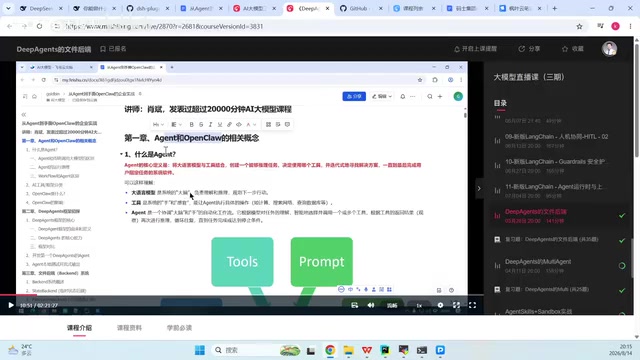
In fact, Harness didn't appear out of thin air. Before it had a unified name, the industry already had similar framework practices. For example, the DeepAgents framework was a complete prototype of the Harness architecture.
The DeepAgents framework proposed approximately seven layers of modular implementation, all centered around the engineering system beyond the model:
- Tool invocation: Enabling the model to call external capabilities
- File system: Accessing and manipulating files
- Sandbox environment: Safely executing code
- Context management: Maintaining conversation and task context
- Memory system: Compensating for the model's stateless nature
- Logic orchestration / middleware: Coordinating execution flows across modules
- Feedback loops / constraint mechanisms: Handling errors and setting boundaries
ReAct and Task Planning Paradigms
ReAct (Reasoning and Acting) is an agent architecture paradigm proposed in 2022. Its core idea is to have the model alternate between reasoning and action. The specific workflow is: the model first analyzes the task (Thought), decides on the next action (Action), observes the execution result (Observation), then continues reasoning based on the result, forming a closed loop. This paradigm significantly improves agents' ability to handle complex tasks. Similar paradigms include Plan-and-Execute (plan first, then execute) and Tree-of-Thought. The logic orchestration module in the Harness layer is the engineering implementation of these paradigms, coordinating model-tool interaction flows through state machines, workflow engines, and other technologies to ensure task execution reliability and traceability.
RAG and Knowledge Augmentation
RAG (Retrieval-Augmented Generation) is a key technology for addressing the timeliness and domain-specificity limitations of large model knowledge. Its principle is to retrieve relevant documents from an external knowledge base before the model generates a response, injecting the retrieval results into the prompt so the model can answer based on the most current and accurate information. RAG systems typically consist of three core components: document processing (chunking, vectorization), vector databases (storage and retrieval), and retrieval strategies (similarity computation, re-ranking). Within the Harness architecture, RAG can be viewed as a special form of tool invocation, providing dynamic knowledge support for the model. Frameworks like LangChain and LlamaIndex have standardized RAG into reusable modules.
These seven layers together form the engineering foundation that makes an agent truly "intelligent." The release of DeepSeek Harness essentially productizes and standardizes this engineering paradigm, giving it a clear name.
Embracing Harness Architecture: A Developer's Core Competitive Advantage
From an engineering practice perspective, technology in the AI field iterates extremely fast. Whoever masters new technologies faster gains an edge in job hunting and project development.
The significance of DeepSeek Harness lies not only in being an agent product you can download and experience, but more importantly in signaling that the "Model + Harness" dual-layer architecture has officially become the mainstream paradigm for AI application development. For developers, understanding and mastering the Harness architecture means being able to truly harness the capabilities of large models and build stable, reliable, and intelligent agent applications.
In summary: the model is the wild horse, and the Harness is the saddle. What truly determines the ceiling of an AI application has never been just the model itself — it's the entire carefully designed engineering system beyond the model.
Key Takeaways
- Harness is the engineering system beyond the model, responsible for critical functions like tool invocation, memory management, and context maintenance
- The stateless nature of large models requires external systems to compensate — no matter how large the context window, it cannot replace engineered memory mechanisms
- The same model can perform drastically differently across applications, and the root cause lies in the engineering quality of the Harness layer
- Technologies like Function Calling, ReAct, and RAG are core components of the Harness architecture
- Mastering Harness architecture is a core competitive advantage for AI application developers and a key focus in technical interviews
Related articles
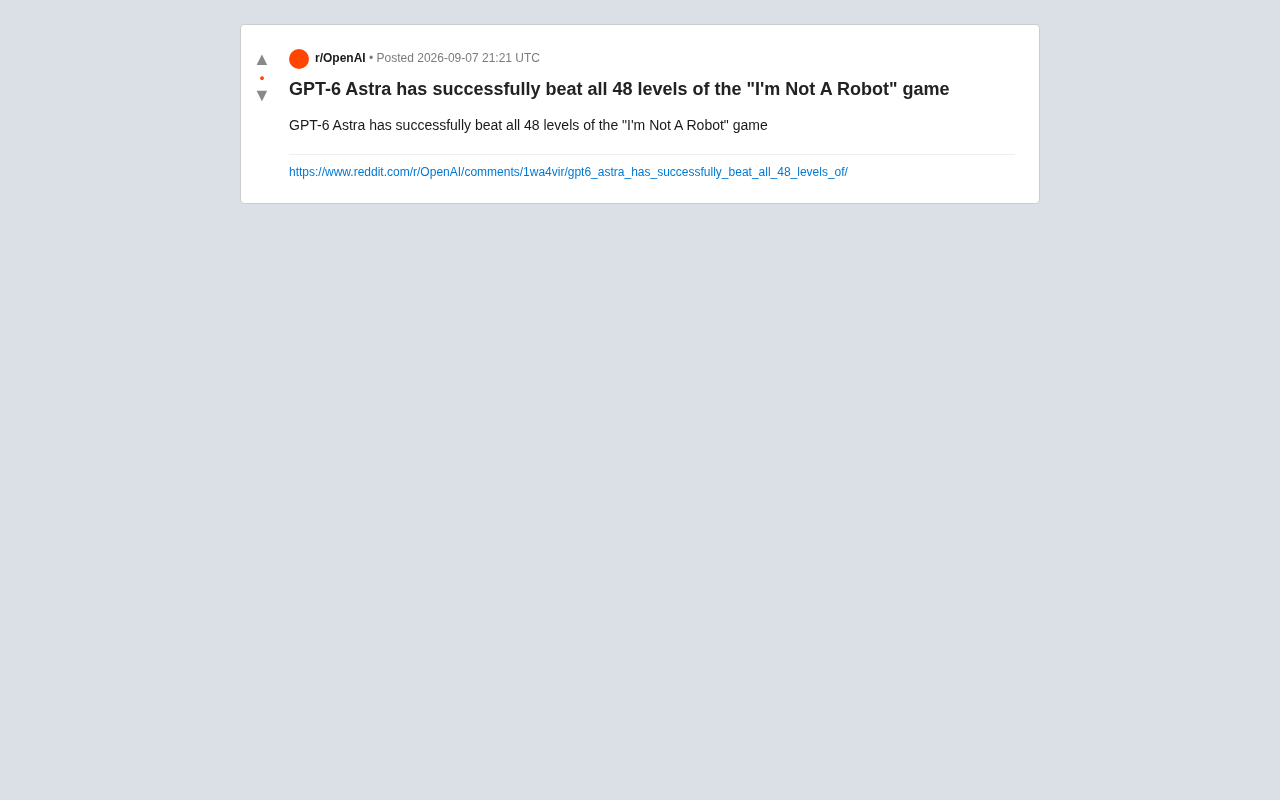
GPT-6 Astra Completes All 48 Levels of 'I'm Not A Robot' Game
GPT-6 Astra successfully completes all 48 levels of the 'I'm Not A Robot' game, demonstrating remarkable visual understanding, logical reasoning, and task adaptation. This article analyzes the technical capabilities behind this breakthrough and its implications for CAPTCHA verification and AI safety.
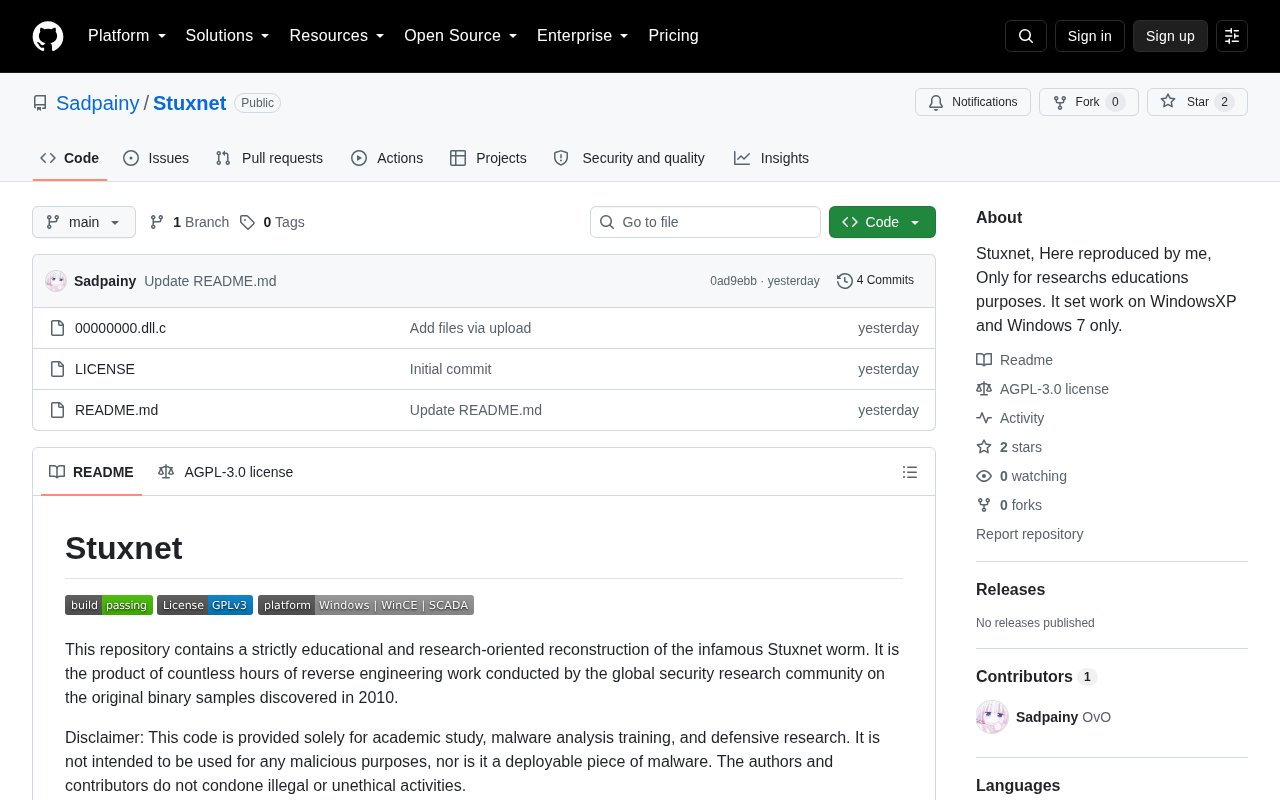
Stuxnet Source Code Reconstruction: Dissecting the Attack Chain of History's Most Complex Cyber Weapon
In-depth analysis of the Stuxnet source code reconstruction open-source project, examining how this cyber weapon targeting Iranian nuclear facilities exploited four zero-day vulnerabilities, stole digital certificates, covertly manipulated PLC centrifuges, and exploring industrial security lessons and ethical controversies of open-source reconstruction.
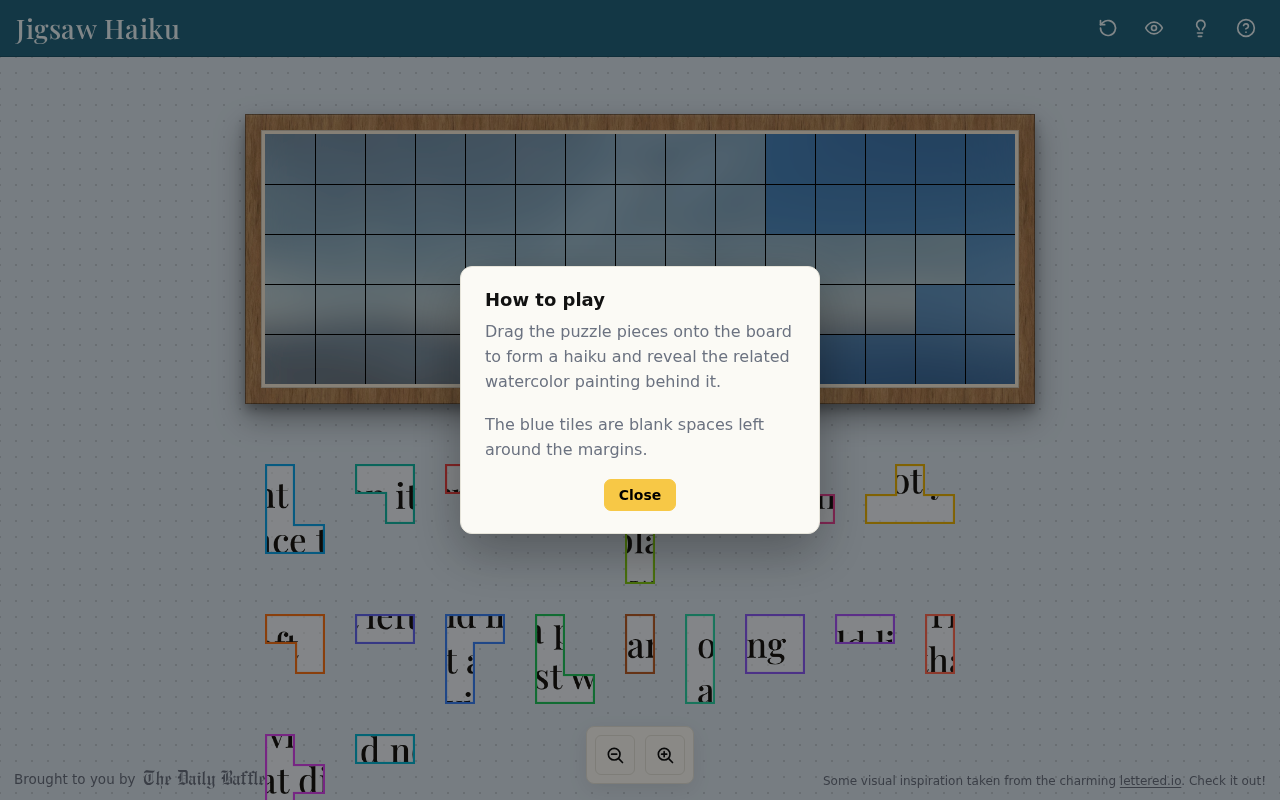
Minimalist Aesthetic Puzzle Game Development: Insights from Independent Creation
An in-depth analysis of an independent developer's aesthetic puzzle project shared on Hacker News, exploring minimalist design philosophy, Show HN community culture, and aesthetics-first product thinking in independent development.