DeepSeek Open-Sources Agent Foundation: How a Plugin Architecture Lets AI Actually Get Work Done

Harness is becoming the new focal point of Agent competition as AI moves from chatting to getting work done.
The article argues that the focus of AI competition is shifting from model benchmarks to who can actually complete tasks, and the key concept behind this shift is Harness — the model's hands, feet, and working system, responsible for task scheduling, tool invocation, and state management. Centered on a LEGO-style "everything is a plugin" architecture, it explains that model adapters, tools, storage, and schedulers can be combined on demand for strong extensibility. In scenarios such as video creation, Agents can connect multi-step work like asset organization, data analysis, and topic reports, but remain constrained by permissions and security rules. The article stresses that OpenAI, Anthropic, and others are all building Agent development tools, and future success will depend on the stability and usability of the tool ecosystem rather than model parameters alone. As for rumors about DeepSeek's open-source Harness, the author notes that official confirmation is still pending.
Whether AI can actually get work done may matter more than whether it can chat well. In the past, we compared who answered more intelligently and scored higher on benchmarks, but now the real differentiator is who can make AI call tools on its own, operate files, and even complete an entire set of tasks in sequence. Behind this lies a key concept — Harness — which is becoming the new focal point of Agent competition.
What Is Harness? The AI's Brain and Limbs
You can think of the AI model as the brain, and Harness as its hands, feet, and working system. No matter how smart the brain is, if it can't use tools or remember task progress, it will still be lost when facing complex work.
The core value of Harness lies in converting model capabilities into actual productivity. It handles task scheduling, tool invocation, and state management, turning AI from "telling you how to do it" into "getting things done for you." This shift may seem simple, but it actually involves a comprehensive upgrade of the system architecture.
Agent is the prerequisite concept for understanding Harness. Unlike chatbots that handle single-turn Q&A, an Agent refers to an AI system that can perceive its environment, autonomously plan steps, call external tools, and execute in a loop until it achieves a goal. It typically includes three core modules: planning (task decomposition), memory (context and historical state), and tool use (APIs, file systems, browsers, etc.). The industry often describes its working loop with paradigms such as ReAct (alternating reasoning and acting): the model first thinks about the next step, then chooses a tool to execute, observes the result, and continues reasoning. For this reason, an Agent's capability ceiling depends not only on the model itself but also on the runtime system that carries it — that is, Harness.
Tool Calling / Function Calling is the interface mechanism through which the model interacts with the outside world. Developers use structured descriptions (such as JSON Schema) to declare the names, parameters, and purposes of available tools. During reasoning, the model outputs invocation requests that conform to the format, and the external runtime actually executes them and passes the results back to the model. The model itself does not truly "operate files" or "send requests"; it only generates invocation intentions. What actually carries them out is Harness. This explains why the same model performs very differently under different Harness implementations: tool description quality, error handling, and retry strategies are all determined by Harness.
Everything Is a Plugin: A LEGO-Style Agent Architecture
Recently, there has been talk online that DeepSeekAd has launched an open-source Harness system that adopts a LEGO-brick-like plugin architecture, in which models, tools, storage, and task scheduling can all be combined as needed. However, the project's official identity and specific release information still need to be verified, so let's first discuss why this technical approach is worth paying attention to.
The most interesting design is that "everything is a plugin." A plugin in ordinary software is like adding a dashcam to a car, but this modular Harness can theoretically replace even the engine and chassis. If you want to connect a different AI model, you swap the model adapter; if you want the AI to operate a new tool, you add the corresponding component — without tearing down the entire system and starting over.

This architecture offers extremely strong extensibility. For developers, it means capability modules can be assembled on demand; for ordinary users, it means the tool ecosystem can continue to grow without waiting for major version updates.
Plugin architecture in the Agent context usually corresponds to "composability" design, whose technical foundation is a unified interface contract and dependency injection. Each capability module (model adapter, tool, storage backend, scheduler) only needs to implement the agreed interface to be replaced or combined without changing the core logic. This follows the same line of thinking as microservices and service-oriented architecture, but places greater emphasis on dynamic assembly at runtime. Common implementations include registry-based component discovery, configuration-file-driven capability assembly, and exposing tools through standard protocols (such as MCP, Model Context Protocol). The cost of pluginization is the additional complexity and performance overhead brought by abstraction layers; the benefit is ecosystem extensibility and avoiding vendor lock-in.
Real-World Scenarios: From Organizing Assets to Data Analysis
Take video creation as an example. Making videos usually requires organizing assets, analyzing playback data, and generating topic reports, which previously meant switching back and forth between several pieces of software. If the Agent's workflow is mature enough, it has the opportunity to string these steps together and let AI continue executing them, rather than merely giving a set of operation suggestions.

Going further, an Agent can even attempt to dynamically combine tool workflows. But this does not mean AI can already evolve indefinitely on its own; actual operation must still be constrained by permissions and security rules.
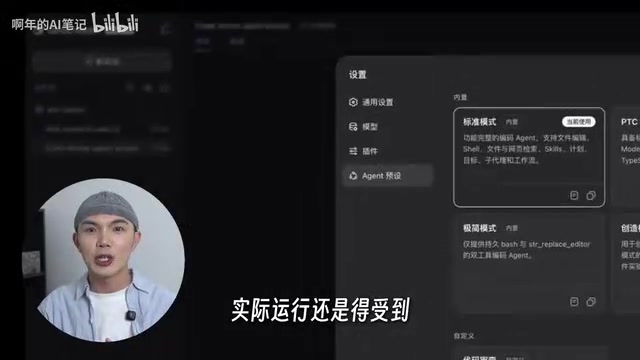
State management is the key to an Agent's ability to complete multi-step tasks continuously. Unlike stateless one-off Q&A, long tasks need to preserve intermediate results, task progress, and executed steps across multiple rounds of tool calls; otherwise, the model will "lose memory" after the context is truncated. Common practices include maintaining an explicit todo list that the Agent checks off step by step, persisting intermediate outputs to files or databases, and summarizing and compressing context to control the token budget. The quality of state management directly determines whether an Agent can stably complete long workflows, and it is also one of the core capabilities that distinguishes Harness from simple prompt wrappers.
The Shift in Competition: From Model Capability to Tool Ecosystem
Companies such as OpenAI and Anthropic are also developing Agent development tools. In the future, who is stronger will depend not only on the model itself but also on the stability of the tool ecosystem and whether ordinary people can truly use it.
This shift in the dimension of competition means that the era of simply comparing model parameters and benchmark scores is passing. A stable, easy-to-use, and extensible Harness system may determine the actual value of an AI product more than the model itself. For users, what is most worth looking forward to has never been yet another AI chat box, but that AI finally has the opportunity to go from "telling you how to do it" to "getting things done for you."
It should be noted that regarding the specific details of DeepSeek's open-source Harness, the online information has not yet been officially confirmed, and it is advisable to follow subsequent official releases. However, the direction of pluginized, modular Agent architecture has already become an industry consensus.
Permissions and security constraints are the hard boundaries for Agent deployment. Because Agents can actually perform file reads and writes, network requests, and even code execution, it is necessary to introduce the principle of least privilege, sandbox isolation (containers or virtual machines), operation confirmation mechanisms, and audit logs. Common risks include prompt injection (malicious content inducing an Agent to perform unintended operations), tool abuse, and data leakage. A mature Harness usually implements whitelist controls at the tool layer, requires human confirmation before high-risk operations, and imposes resource and network limits on the execution environment. This is also the technical reason why "an Agent is not unlimited self-evolution": the stronger the autonomy, the stricter the constraint mechanisms must be.
Related articles
 Tech Frontiers
MuJoCo: An Analysis of DeepMind's Open-Source General-Purpose Physics Simulator
An in-depth analysis of Google DeepMind's open-source physics simulator MuJoCo: high-performance C++ kernel, MJCF modeling format, contact solving principles, MJX GPU acceleration, and robot reinforcement learning use cases.
 Tech Frontiers
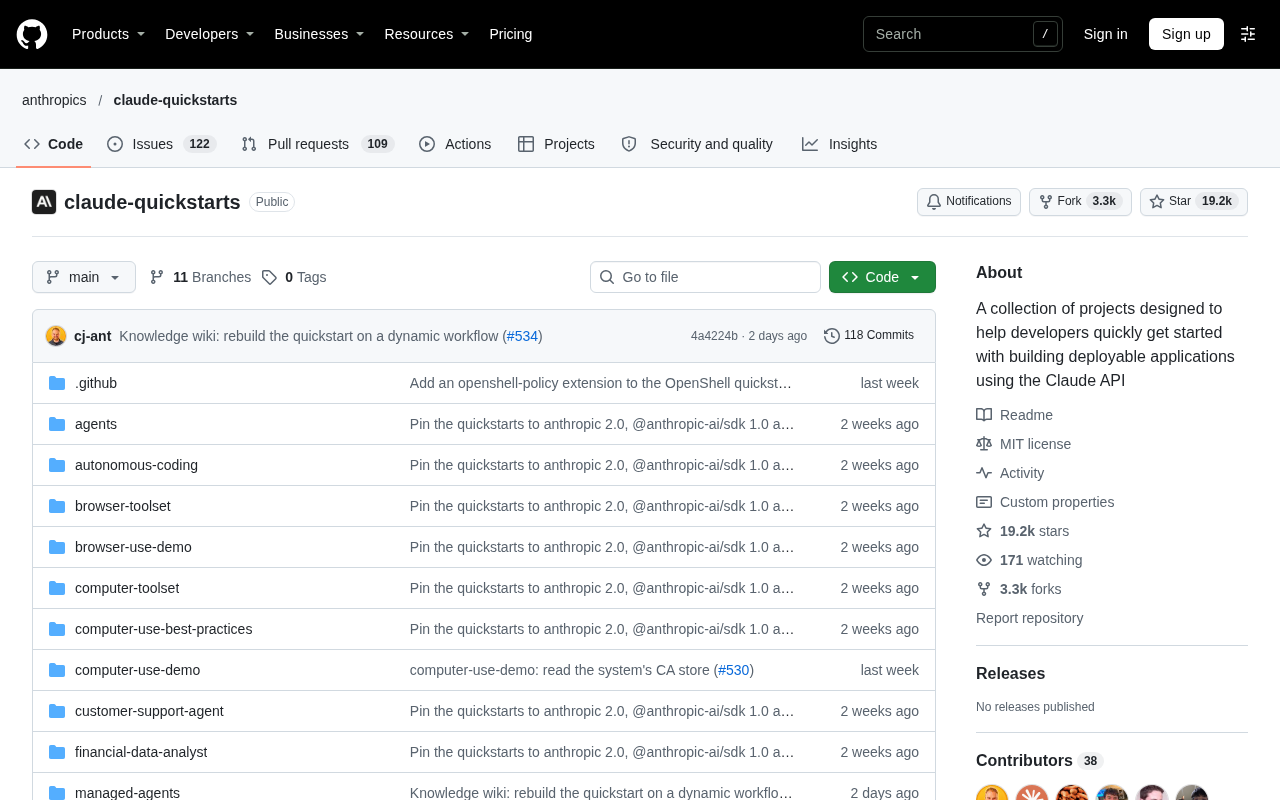
Claude API Quick Start: The Official Quickstarts Project Collection
Anthropic's official claude-quickstarts project collection helps developers quickly build deployable apps with the Claude API. Nearly 20k stars, Python-based, great for beginners and prototyping.
 Tech Frontiers
AI Agents Connecting Directly to APIs: Which Calls Can Be Safely Allowed?
AI agents can call any API, but the real challenge is deciding which calls can be safely allowed. This article analyzes allowance decisions from three dimensions—intent matching, least privilege, and controllable impact—and argues that the control layer should sit outside the agent, combined with audit traceability to build a trustworthy API call governance mechanism.