DeepSeek Restricted Yet Open-Sourced? The Truth About Usability and Price Cuts
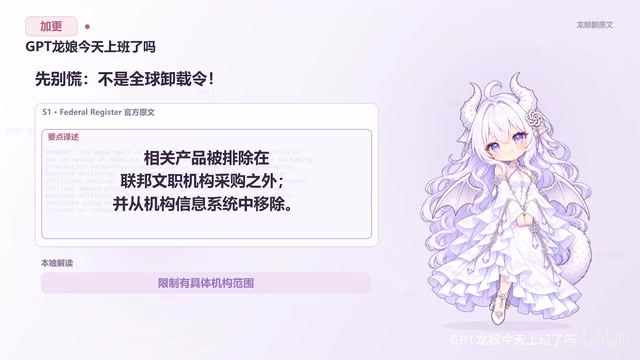
DeepSeek's procurement restriction only targets U.S. federal agencies; what was open-sourced is an inference framework, not a new model, so ordinary users are unaffected for now.
The article clarifies two conflated news items about DeepSeek. First, the U.S. federal agencies' procurement restriction only targets federal civilian agencies' procurement and information systems, not an "uninstall order" for ordinary users worldwide. Second, what DeepSeek open-sourced is an inference framework—a tool for running models—not a new chat model or free chat voucher. Open-sourcing benefits developers but does not mean the chat service will immediately drop in price; pricing depends on actual service factors. The article also reminds readers that timing proximity does not equal causation, and users should watch for actual changes in service terms and pricing.
Recently, two pieces of news about DeepSeek have been conflated by many: on one hand, U.S. federal agencies' procurement restrictions on DeepSeek; on the other, DeepSeek open-sourcing an inference framework. Bilibili creator "本娘" urgently broke down these two matters in a video, and the core conclusion is clear—ordinary users need not worry about being affected by an "uninstall order" for now, and open-sourcing does not mean the chat service will immediately drop in price.
Who Exactly Does the Restriction Order Target?
After digging up the original text, the creator pointed out that the restriction order targets U.S. federal civilian agencies' procurement and information systems, including related third-party products—not an "uninstall order" aimed at ordinary users worldwide. In other words, it is more of a compliance threshold at the government procurement level rather than a blanket ban on all users.
Many self-media outlets directly equate "federal agencies banned from using it" with "global users can't use it," which is a typical clickbait-style misreading. The creator also joked in the video: "Hey, don't rush to say goodbye to the goldfish just yet." For domestic users and most overseas individual developers, the current usage path has not changed because of this restriction order.
Under the U.S. Federal Acquisition Regulation (FAR) system, federal agencies procuring IT products must follow supply chain security and compliance reviews. Related restrictions are usually embodied in provisions such as Section 889 of the National Defense Authorization Act, which constrain the agencies' own procurement behavior and information system access, rather than imposing an export ban on the global market. The scope of legal effect differs greatly between the two: the former is a government procurement threshold, while only the latter involves cross-border service availability. Historically, federal agency restrictions on individual vendors did not directly lead to their consumer-facing products being taken down globally. Understanding this distinction in levels is the key premise for judging "whether you can keep using it."
What Was Open-Sourced? Not a New Model, but an Inference Framework
The other over-interpreted piece of news was "DeepSeekAd open-sourced something." The creator originally thought "the goldfish is serving food" and was about to grab a bowl to get a bite, only to find that what was made public was "kitchen equipment"—what was shown on screen was an inference framework, a tool that makes models run, not a new chat model, and certainly not an "unlimited free chat voucher."
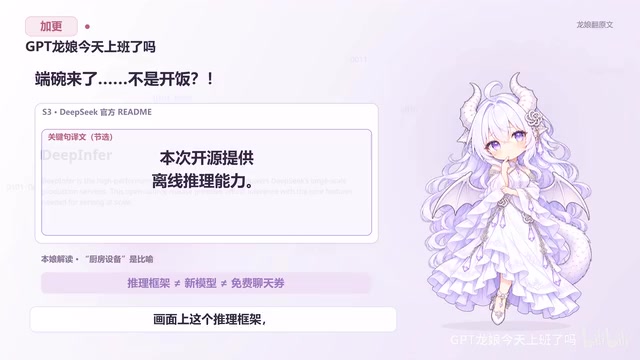
This distinction is very important. Open-sourcing an inference framework benefits developers and researchers, meaning models can be deployed more flexibly and inference efficiency optimized; but it is a different matter from the chat products ordinary users directly use. Open-source code will not automatically make the chat interface cheaper, nor will it immediately increase free quotas.
An inference framework is a software stack specifically used to run already-trained models, perform forward computation, and return results. Typical examples include vLLM, TensorRT-LLM, SGLang, etc. The core problems it solves are how to efficiently load model weights into VRAM, how to schedule concurrent requests, how to manage KV Cache, and how to quantize and compress to reduce VRAM usage. For developers, the inference framework directly determines how many users can be served per unit of compute, as well as first-token latency and throughput performance. DeepSeek open-sourcing its inference framework means external teams can reproduce its engineering optimization path, build their own services, or do secondary development—but this is a separate dimension from whether the model weights are open and whether the chat product is free.
Will It Be Cheaper? Depends on How the Actual Service Is Adjusted
"It's still usable—will it be cheaper?" This is what viewers care about most. The creator's answer was restrained: open-sourcing does not mean the chat software will immediately give you discounts and save you money; this still depends on how the actual service is adjusted.
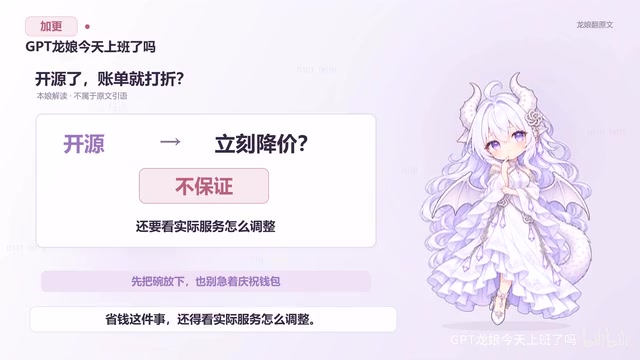
From a business logic perspective, an open-source inference framework may reduce deployment costs, but service pricing also involves multiple factors such as compute procurement, operational strategy, and market competition. Directly equating "open source" with "price cut" is a leap in reasoning. The creator also admitted: "I'd also like to spend less and eat better, but I have to first see how the actual service changes before I can happily celebrate on your behalf."
Two Pieces of News Crowded Together Does Not Equal "Counterattack"
At the end of the video, viewers were reminded not to imagine it as "the goldfish slamming the table in counterattack" just because the two news items came close in time. The creator clearly stated: there is currently no evidence for this drama. Whether there is a causal relationship between the restriction order and the open-source move requires more information to judge; treating coincidence as causation is the easiest pitfall to fall into when following gossip.
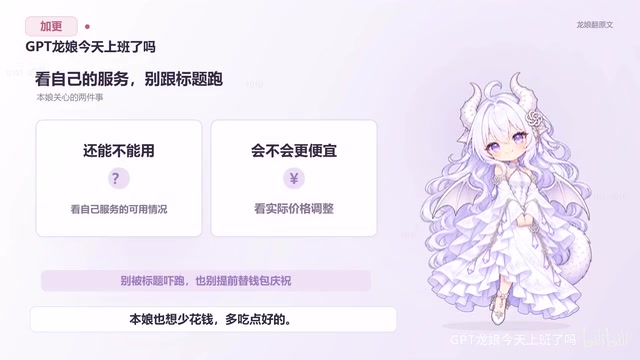
For ordinary users, the more practical approach right now is to keep watching for actual changes in the terms of service and pricing pages, rather than being carried away emotionally by big words like "restriction" and "open source." What do you care about more—whether you can use it, or whether it will be cheaper? Feel free to chat in the comments.
One-line Summary
DeepSeek's procurement restriction only targets U.S. federal agencies; what was open-sourced is an inference framework, not a new model, and ordinary users are not affected for now.
Paragraph Summary
The article clarifies two conflated pieces of news about DeepSeek. First, the U.S. federal agencies' procurement restriction only targets federal civilian agencies' procurement and information systems; it is not an "uninstall order" aimed at ordinary users worldwide, and the usage path for domestic users and most overseas individual developers remains unchanged. Second, what DeepSeek open-sourced is an inference framework—a tool that makes models run—not a new chat model or free chat voucher. Open-sourcing benefits developers and researchers, but it does not mean the chat service will immediately become cheaper; price adjustments depend on actual service factors such as compute procurement and operational strategy. The article concludes by reminding readers that two news items occurring close in time does not equal causation, and users should pay attention to actual changes in the terms of service and pricing pages.
Related articles

Meta vs. Publishers: The AI Data Battle Over Terms of Service Changes and the Future of the Internet
Meta changed its business account terms to allow AI training on linked website data, sparking backlash from publishers and creators. Industry groups demanded negotiations, forcing Meta to remove 'training' wording and delay the effective date. The dispute reveals the deeper battle over data authorization and the future of the internet in the AI era.

When Outside Xbox Meets Blood on the Clocktower: A Legion Match in Minecraft
Outside Xbox guests Ellen and Mike play Minecraft Blood on the Clocktower in a Legion game. How can three good players fight an evil majority amid information noise? This article breaks down Legion mechanics, information-role mind games, and the endgame reversal.

Kimi K3.1 Hands-On Test: Open-Source Model Nears Opus, Video Generation Steals the Show
Kimi K3.1 completed motion graphics, 3D rendering, mini-games, and video generation in a live test. Analysis of its 2.8T MoE architecture, gap vs Opus/GPT, and hidden video generation.