DeepSeek Speaks Japanese: Observations on Natural Multilingual Interaction
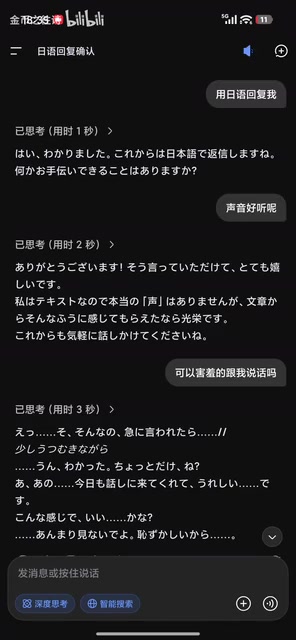
DeepSeek demos fluent Japanese with proper honorifics and emotional expression, though code-switching stability needs work.
A demo circulating on Bilibili shows DeepSeek handling Japanese conversation with notable maturity — correctly using honorific conventions like the humble 「いただける」 and producing emotionally expressive colloquial output in roleplay contexts. The model also supports Chinese–Japanese switching within a single conversation, though occasional code-mixing suggests room for improvement. The article notes this is a showcase of conversational potential rather than a formal evaluation, and that factors like prompt design and persona settings must be considered. More broadly, strong Japanese performance signals that DeepSeek's use cases can expand beyond Chinese and English into language learning and cross-cultural communication.
DeepSeek Speaks Japanese
A recent video circulating on Bilibili showcasing DeepSeek's Japanese language capabilities has sparked considerable discussion. In the demo, DeepSeek not only responds fluently in Japanese, but also demonstrates impressively natural tonal variation — ranging from polite, formal replies to personified expressions tinged with shyness, and even seamlessly switching between Japanese and Chinese.
For users who follow the progress of Chinese-developed large language models, this kind of multilingual, emotionally nuanced conversational performance is an important benchmark for overall model capability. It goes beyond simple translation — it involves contextual understanding, tone management, and cultural adaptation.
Natural Tone Is the Standout Feature
Several characteristics of DeepSeek's Japanese responses are worth noting from the demo.
Appropriate Politeness
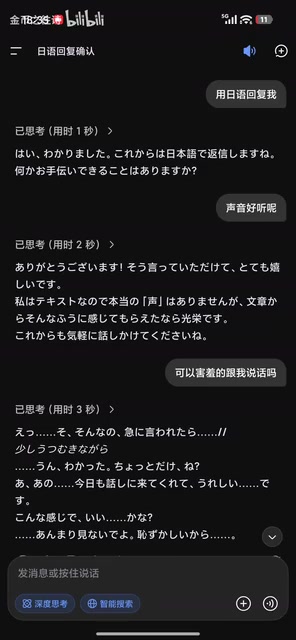
When a user paid it a compliment, DeepSeek responded: 「ありがとうございます。そう言っていただけてとても嬉しいです。私はテキストなので本当の声はありませんが、文章からそんな風に感じてもらえたなら光栄です。」("Thank you. I'm very happy to hear you say that. I'm just text and don't have a real voice, but if you could feel that way through my words, I'm honored.")
This response demonstrates two things: first, it uses authentic Japanese honorific conventions (such as 「いただける」 and 「光栄」); second, it proactively clarifies that it is a text-based system rather than a real human voice, maintaining transparency about its AI identity. This kind of expression — gracious yet appropriately bounded — is not commonly seen in multilingual models.
Japanese honorifics (敬語/けいご) are important context for understanding this demo. The Japanese honorific system is divided into three main categories: respectful language (尊敬語), which elevates the listener's actions; humble language (謙譲語), which lowers the speaker's own actions to show respect; and polite language (丁寧語), the familiar ます・です form. The 「いただける」 used by DeepSeek is an auxiliary verb in the humble register, conveying that one is "receiving a favor from the other party," while 「光栄」 is a formal, written expression of honor appropriate for social occasions. Together, they represent a higher register of respectful expression. For non-native speakers, correctly selecting the appropriate honorific level is one of the steepest hurdles in learning Japanese — and for that reason, it serves as a meaningful benchmark for evaluating a language model's Japanese proficiency.
Personified Emotional Expression
Even more interesting are the emotionally charged responses: 「そんなの!急に言われたら!少しうつむきながら…うん、わかった。ちょっとだけね。」("That kind of thing! Being told so suddenly… looking down a little… okay, I understand. Just a little, okay.") and 「あんまり見ないでよ。恥ずかしいから。」("Don't keep staring at me. It's embarrassing.")
These responses were clearly generated within a specific roleplay or conversational setup, demonstrating the model's grasp of colloquial, emotionally expressive Japanese. The use of parenthetical action descriptions (such as 「少しうつむきながら」) also shows that the model understands the conventions of roleplay-style expression.
Seamless Chinese–Japanese Switching
Another notable observation from the demo is the model's language-switching capability. DeepSeek is able to shift from Japanese to Chinese within the same conversation — 「你好。欢迎来到这里。」— and then back to Japanese: 「はい、很高兴认识你。今天我们从哪里开始呢?」
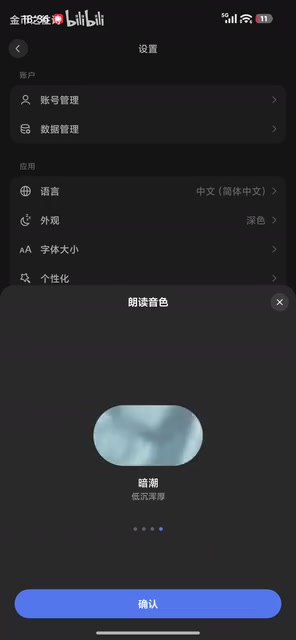
This kind of mixed-language expression has real practical value — for example, in bilingual learning contexts, cross-language communication scenarios, or for users who need to move freely between two languages. That said, the demo also reveals occasional mid-sentence code-mixing (such as 「はい、に来啦」), indicating that consistency during switching still has room for improvement.
The Gap Between Demo and Real-World Use
It's worth approaching this demo with measured expectations — it showcases the model's conversational potential rather than serving as a rigorous capability evaluation. While the naturalness of the Japanese and the nuance of tone are genuinely impressive, a fair assessment requires considering several factors:
Whether the conversation was guided by specific prompts, whether the persona setup influenced the output style, and whether the model maintains consistency across longer conversations and more complex contexts. Judged purely from the clips shown, DeepSeek has reached a functional level for basic Japanese dialogue and emotional expression — which is a positive signal for users who rely on multilingual capabilities.
What Multilingual Capability Really Signals
A large model's multilingual performance fundamentally reflects the breadth and quality of its training data. Japanese, with its relatively complex grammar and layered honorific system, is no easy feat to handle naturally and appropriately. Doing so suggests that the model has been trained on substantial Japanese-language material.
For everyday users, this means DeepSeek is no longer limited to Chinese and English use cases — it can extend to Japanese language learning, conversational companionship, cross-cultural communication, and more. Of course, this demo originates from a single content creator's share, and individual experiences may vary. Users who are curious are encouraged to test it themselves.
As Chinese-developed large models continue to invest in multilingual and emotionally nuanced interaction, this kind of cross-language, personified conversational experience may well become a standard dimension for evaluating overall model capability.
Multilingual capability in large models is typically achieved through two approaches: first, incorporating large-scale multilingual corpora during pretraining so the model develops cross-lingual representations at the parameter level; second, further aligning tone, cultural norms, and conversational style for specific languages through instruction tuning and reinforcement learning from human feedback (RLHF). Japanese is particularly demanding due to its unique writing system (mixing kanji and kana), strict honorific hierarchy, and significant differences between spoken and written registers — all of which place high demands on training data quality and diversity. The fact that the model can distinguish between formal honorific responses and colloquial emotional roleplay expressions suggests its Japanese capability goes beyond literal translation, reflecting a degree of pragmatic-level understanding.
Related articles

Complete Guide to Running Your Own Local DeepSeek: Web Access, Knowledge Base & Privacy
Step-by-step guide to deploying a private DeepSeek locally using Ollama, Chatbox, and AnythingLLM — with web access, RAG knowledge base, and full privacy.
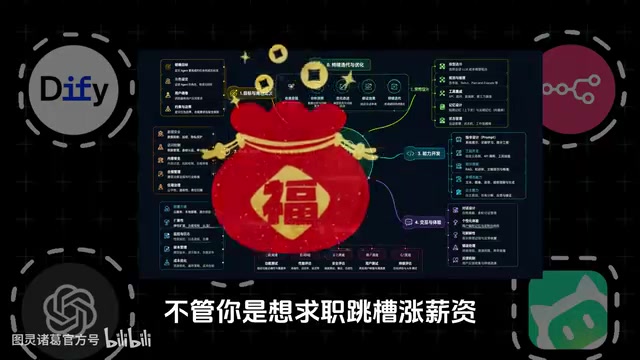
AI Agent Development: A 4-Stage Learning Roadmap from Beginner to Enterprise-Level Practice
A complete AI Agent learning roadmap from zero to enterprise-level: covering ReAct, multi-agent collaboration, Prompt tuning, RAG, MCP, and real-world projects.
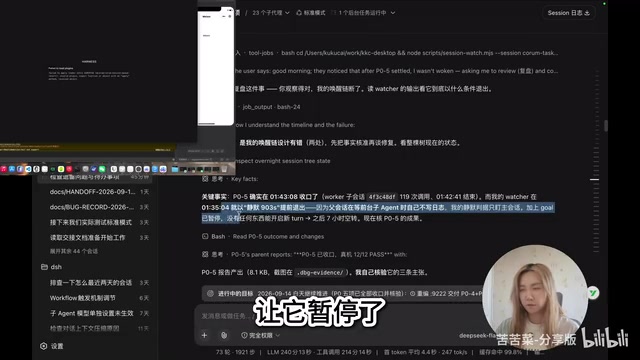
A New DeepSeek Harness Experiment: Agent Supervising Agent for Self-Evolution
A developer built an "Agent supervising Agent" self-evolution system using DeepSeek Harness, with a ledger mechanism enabling near-unattended overnight software iteration.