DeepSeek V4.1 Flash 1017 Local Deployment in Practice: Running Code Generation with Dual T5000s

A heterogeneous solution with dual T5000s plus a microserver node runs DeepSeek V4.1 Flash locally, lowering the enterprise private deployment barrier via graphical ops.
A team used two Weidasur T5000 inference nodes plus one microserver compute node to locally deploy DeepSeek V4.1 Flash 1017 for a software R&D team with strict code confidentiality needs. The core is heterogeneous division of labor—inference separated from management to avoid VRAM contention and ops chaos—plus a graphical interface showing model status, token stats, and memory usage. Local deployment is driven by public cloud API shortcomings in compliance, cross-border transfer, and code asset protection, but is best positioned as a dedicated channel for data-sensitive tasks, with hybrid architecture more pragmatic than full replacement.
Title
DeepSeek V4.1 Flash 1017 Local Deployment in Practice: Running Code Generation with Dual T5000s
Meta Description
A real-world DeepSeekAd V4.1 Flash 1017 local deployment: two Weidasur T5000s plus a microserver node run code generation and code review, with a graphical management interface lowering the ops barrier and meeting private, no-cloud data confidentiality requirements.
Article Content
The key tension in enterprise AI adoption is shifting from "is the model strong enough" to "can the data leave our domain." One team used two Weidasur T5000s plus a microserver compute node to complete a local inference deployment of DeepSeek V4.1 Flash version 1017, and has already delivered it to a software R&D team with strict confidentiality requirements for code data. The value of this case isn't in stacking hardware—it's in demonstrating a replicable private deployment path: inference, model management, and monitoring dashboards each handle their own responsibilities, ready to use out of the box.
What This Solution Actually Runs
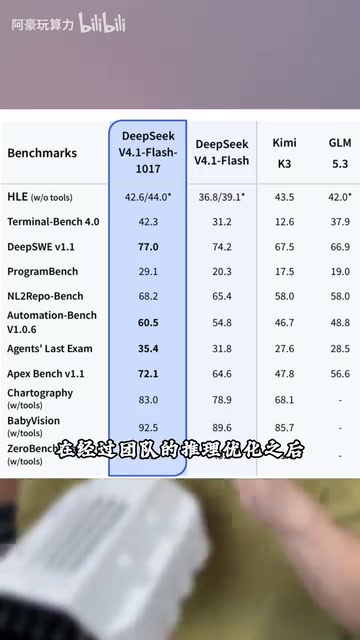
According to a deployment write-up published by a Bilibili creator, the team completed inference optimization for DeepSeek V4.1 Flash version 1017 in a local environment, with performance that can go head-to-head with many online large models. It should be noted that "1017" here is a version identifier; the actual capability boundaries still depend on quantization strategy and concurrency configuration. The creator did not provide a complete benchmark comparison table, so readers should not directly equate this with official leaderboard results.
What really makes this solution work is heterogeneous division of labor: two T5000s carry the inference load, while one microserver compute node handles data and model management, remote access, and graphical deployment. This split of "inference for inference, management for management" avoids the VRAM contention and operational chaos that come from cramming all services onto a single machine.
Heterogeneous inference architecture refers to a deployment model that splits inference load from management/service load across different physical nodes. In local large-model deployment, having a single machine simultaneously host model inference and service orchestration easily leads to VRAM contention, reduced GPU utilization, and operational coupling; heterogeneous division of labor lets inference nodes focus on tensor computation and management nodes focus on scheduling and visualization, thereby improving overall stability. This model is especially common in private deployment scenarios for small and medium enterprises, because it allows lower-cost general-purpose compute nodes to replace some high-spec GPU servers.
Why the Client Had to Deploy Locally
The client that came knocking was a software R&D team whose core needs centered on two things: code generation and code review. These two types of tasks naturally require feeding in large private code repositories, and the project's data is confidential and explicitly cannot go to the cloud.

This is precisely the most typical motivation for enterprises adopting local large models today. Public cloud APIs have inherent shortcomings in compliance auditing, cross-border data transfer, and code asset protection—especially source code from R&D teams, which touches intellectual property red lines the moment it leaves the intranet. Local deployment locks code, data, and workflows entirely within one's own environment, a value proposition no cloud service can replace.
Cross-border data transfer and compliance auditing are important legal considerations behind enterprises choosing local deployment. Under the Data Security Law, the Personal Information Protection Law, and industry regulatory requirements, data involving national security, trade secrets, or large amounts of personal information must undergo security assessment before being transmitted abroad or to third-party cloud platforms. Source code, as a core asset of software companies, is typically classified as a trade secret; once uploaded to a public cloud API, it may trigger intellectual property leakage risks. Local deployment uses physical isolation to confine data flow within the intranet, architecturally avoiding the compliance uncertainties of cross-border transfer and third-party hosting.
How Much Did Graphical Ops Lower the Barrier?
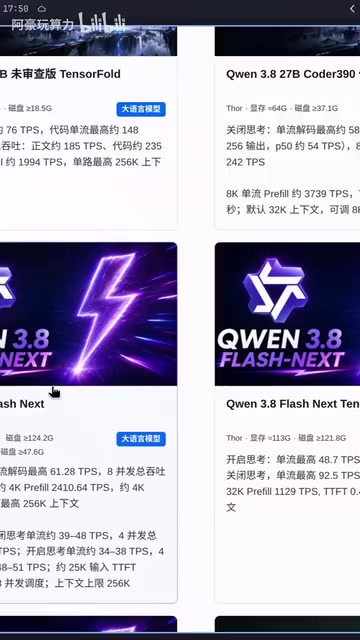
One point repeatedly emphasized in the deployment write-up is "no messing around on the command line." The entire environment and parameters are pre-configured, and the running status, token statistics, and memory usage of commonly used models are all consolidated into a single visual interface.

For small and medium teams without dedicated MLOps engineers, the weight of this detail is severely underestimated. Among failed local deployment cases, a considerable proportion fail not because the model can't run, but because environment dependencies, driver versions, and service orchestration drag down operations. Making monitoring and deployment graphical is equivalent to filling more than half of the gap between "it can run" and "it can run stably over the long term."
MLOps (machine learning operations) is an engineering practice system covering model deployment, monitoring, version management, and resource scheduling. Traditional local large-model deployment requires operations staff to be familiar with low-level details such as CUDA drivers, container orchestration, and inference framework configuration, posing a high barrier for small and medium enterprises without dedicated algorithm operations teams. Graphical operations platforms encapsulate operations such as model loading, token statistics, and VRAM monitoring into visual interfaces—essentially using productization to replace part of MLOps manpower, enabling business teams to handle daily operations themselves. This is also the key support for the replicability of this solution.
Where Are the Boundaries of Local Deployment?
This solution is not a universal panacea. The creator mentioned that reference data on single-stream concurrency, preview version performance, and context length can be provided to interested teams, indicating that performance metrics are highly dependent on specific configuration combinations, and throughput differences under different business loads will be substantial. Inference optimization can narrow the gap with online models, but closing it entirely is unrealistic—cloud large models still have structural advantages in peak elasticity, multimodal expansion, and continuous iteration.
A more pragmatic judgment is to position local deployment as a "dedicated channel for data-sensitive tasks" rather than a comprehensive replacement for the cloud. Scenarios such as code generation, internal knowledge Q&A, and compliance review should be prioritized for localization, while general Q&A and creative tasks continue to use APIs. A hybrid architecture is often more economical than choosing one or the other.
Quantization strategy is a core variable affecting local inference performance and accuracy. Common quantization methods include GPTQ, AWQ, and GGUF, which reduce VRAM usage and improve throughput by compressing model weights from FP16 to INT8 or INT4, but introduce varying degrees of accuracy loss. Code generation tasks are sensitive to token-level precision, and quantized models may degrade in complex logic completion; therefore, deployers typically need to run regression tests for specific tasks and strike a balance among concurrency, context length, and quantization level. This also explains why the same model performs significantly differently under different configurations.
FAQ
Q: What is the minimum hardware required to run DeepSeek V4.1 Flash 1017? A: This case uses dual T5000 inference nodes plus one microserver management node. Specific VRAM and concurrency capabilities need to be assessed in conjunction with the actual quantization scheme; it is recommended to request single-stream concurrency and context length data from the deployer.
Q: Will model performance be compromised after local deployment? A: After inference optimization, it can approach online model levels, but quantization introduces some accuracy loss. For tasks such as code generation, targeted regression testing is recommended.
Q: Can it be maintained without an operations team? A: The graphical interface covers model status, token statistics, and memory monitoring, making daily operations significantly less demanding than pure command-line solutions, though basic environment maintenance capability is still required.
One-line Summary
A heterogeneous solution with dual T5000s plus a microserver node runs DeepSeek V4.1 Flash local deployment, lowering the enterprise private deployment barrier with graphical operations.
Paragraph Summary
The article describes how a team used two Weidasur T5000 inference nodes plus one microserver compute node to complete a local inference deployment of DeepSeek V4.1 Flash version 1017, delivered to a software R&D team with strict confidentiality requirements for code data. The core of the solution is heterogeneous division of labor: separating inference from management to avoid VRAM contention and operational chaos; a graphical interface uniformly displays model status, token statistics, and memory usage, greatly lowering the deployment barrier. The article points out that the driving force behind local deployment is the shortcomings of public cloud APIs in compliance auditing, cross-border data transfer, and code asset protection. It also emphasizes that local deployment is not a panacea—performance is highly dependent on quantization strategy and concurrency configuration—and should be positioned as a dedicated channel for data-sensitive tasks, with a hybrid architecture being more pragmatic than comprehensive replacement.
Related articles

WorkBuddy Agent in Action: From AI Q&A to Automated Office Work
WorkBuddy is Tencent's AI agent desktop workbench that reads local files, operates office software, executes multi-step tasks, and runs on schedules. This article explains its core features, key differences from traditional AI tools, and use cases.

Anthropic Research: LLMs Make Formal Software Verification at Scale Possible
Anthropic Frontier Red Team research shows LLMs can generate formal proofs at the RISC-V assembly level for over 100 real open-source libraries, covering 123 OSS-Fuzz libraries and 239 entry points, totaling about 180 million lines of Rocq proofs and finding hundreds of bugs. The article analyzes specification generation, the proof pipeline, trust boundaries, and cost reduction paths.

Prompt Engineering for Beginners: From Writing Prompts to Building AI Collaboration Skills
From the four functions of prompts to the six-step prompt engineering process, this article systematically covers core concepts, business value, and three layers of limitations to help beginners build a complete cognitive framework for prompt engineering.