DeepSeek V4.1 Flash Hits 77% Coding Pass Rate, Search API Opens at Half Price

Two days after an outage, DeepSeek makes three moves: a new model that beats overseas flagships on benchmarks, an open search API, and half-price per-request billing.
The article reviews DeepSeek's three-in-one release within two days after a near-five-hour outage on October 15. First, V4.1 Flash 1017 achieves a 77.0% pass rate on the DeepSWE-V 1.1 coding test, higher than GPT-5.6's 73.0% and Claude Opus 5's 74.0%, while API pricing remains unchanged; the cost advantage stems from the asymmetric structure of the September 10 version (8B activated for input, 16B for output) and a sharp reduction in KV cache demand. Second, it opens its self-developed search as two read-only APIs, Search and Fetch, with limits of 100 and 25 requests per second, positioned as Agent web-access infrastructure. Third, pricing: 5 yuan per 1,000 successful requests, half of the standard search API and Kimi Basic, with billing starting November 1. The article concludes that search pricing still faces three hurdles—call structure, retention after the free period, and competitors matching prices—and success will depend on actual call volume after billing begins.
After Two Days of Downtime, DeepSeek Plays Three Cards at Once
The near-five-hour outage on October 15 briefly raised concerns that DeepSeekAd's momentum would be disrupted. But what happened two days later gave the opposite answer: DeepSeek didn't get bogged down in PR damage control—instead, it played three cards at once: releasing the V4.1 Flash 1017 model, opening its self-developed search API, and upgrading its official website, App, and API simultaneously.
According to an analysis by Bilibili creator "Guan Nan Shen Industry Economics," this update compressed capability improvements and commercialization into the same time window. The model got stronger without a price increase; the search API opened up at half the price of competitors. Three questions need to be answered at once: how much stronger is the new model, why open the search API to developers, and is per-request search pricing a subsidy or a sustainable price.
77% Coding Pass Rate, Beating Two Overseas Flagships
Let's start with the hardest metric. The V4.1 Flash 1017 version improved its pass rate on the DeepSWE-V 1.1 coding test from 74.2% in the previous version to 77.0%. For reference, GPT-5.6 scores 73.0% on this test, and Claude Opus 5 scores 74.0%. In other words, on this test—considered a touchstone for coding ability—a domestic model has directly surpassed two overseas flagships.
The performance gain comes from post-training in the 1017 version, while API pricing remains unchanged. The company calls this a "Pareto improvement in performance cost"—capabilities go up, costs don't follow. This confidence in not raising prices traces back to the asymmetric structure adopted by V4.1 Flash released on September 10: only 8B parameters are activated for input, while 16B parameters are activated for output—the parameter counts activated for input and output are not the same.
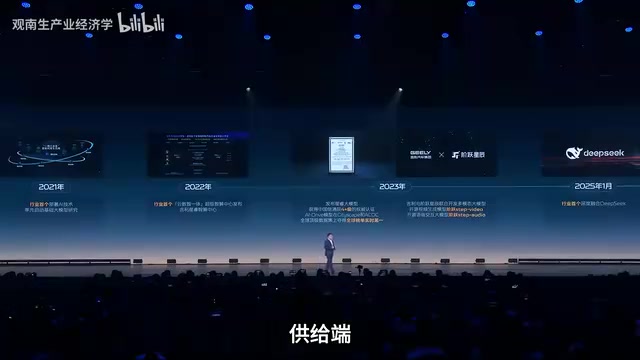
This structure delivers a very direct cost advantage: 552B total parameters, KV cache demand for high-bandwidth memory reduced to a quarter of the previous generation, and demand for solid-state drives reduced to an eighth. KV cache is the VRAM occupied during model inference—the larger the cache, the fewer requests a single card can handle, and the higher the unit cost. Pressing this down is equivalent to lowering per-token inference cost on the supply side first.
On the pricing side, the 1017 version had already been adjusted twice before: time-based pricing was enabled on August 17, with off-peak prices at half of peak prices; then prices dropped again on September 10. One blogger tested more than a dozen cases for 28 yuan, and another estimate put the cost of the same coding task down from 3.3 yuan in the previous version to 1.3 yuan. According to third-party estimates, weekday daytime input prices are only one-thirteenth to one-seventeenth of GPT-5.6 and Claude Opus 5, and output prices are one-seventeenth to one-twenty-first. On OpenRouter, V4.1 Flash has ranked first in weekly usage almost every week since its release.
Beyond benchmarks, the 1017 version can also build projects from scratch. In official demos, with a few sentences of requirements and a few rounds of interaction, the model can build a runnable web-based racing game in DeepSeek Harness; 3D modeling of the Forbidden City and a Portal 2 recreation also came from the same batch of demos. For projects built from scratch like these, the barrier for developers drops from "knowing how to write code" to "being able to clearly state requirements."
DeepSWE-V 1.1 is a benchmark for software engineering tasks. Its problems come from issue fixes and feature implementations in real repositories, requiring the model to complete multi-file modifications in a given codebase and pass hidden tests—making it closer to actual development scenarios than single-file code completion. Post-training refers to secondary training on top of a pretrained base model, using supervised fine-tuning, preference optimization, or reinforcement learning to target specific capabilities (here, coding and project building). It typically does not change the model architecture or total parameter count, so it can improve downstream performance without raising per-token inference cost—which is the origin of the phrase "Pareto improvement in performance cost."
Search as Infrastructure, Competing for the Agent Entry Point
The second question is the search API. On October 17, DeepSeek turned its self-developed search into two APIs: Search and Fetch. Search returns structured results by keyword, while Fetch retrieves a single web page and returns the Markdown body—both are read-only requests. Account-level rate limits were also announced: Search at 100 requests per second, Fetch at 25 per second.
This isn't about adding a web button to a chat box—it's about making search a callable infrastructure. In the past, building an Agent meant either connecting to someone else's API for search capability or writing your own crawler; by opening up its underlying self-developed engine, DeepSeek gives Agents a ready-made entry point for web access. Its engine handles hundreds of millions of search requests daily and specifically filters ranking manipulation and low-quality AI-generated content for AI search scenarios.
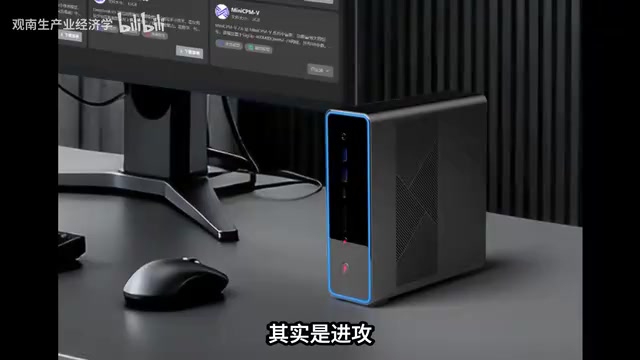
In terms of positioning, this looks more like an offensive move than a defensive one. Consumer-facing chat remains a free entry point, the B2B model API already charges by token, and search is a second revenue stream. Making search into infrastructure is essentially about capturing the Agent web-access entry point.
Agent refers to a program driven by a large model that can autonomously plan steps and call external tools to complete tasks; web retrieval is a key part of how it obtains real-time information. The industry-standard approach is to connect to a third-party search API or build your own crawler: the former is constrained by others' quotas and pricing, while the latter requires handling anti-crawling measures, parsing, and compliance yourself. The two-stage Search/Fetch API is a common paradigm for Agent tool calls: Search handles recall of candidate links, and Fetch converts the target page into model-friendly Markdown body text. Ranking manipulation refers to artificially inflating page rankings through keyword stuffing, click fraud, and similar methods, while low-quality AI-generated content refers to mass-produced, homogeneous web pages; both pollute retrieval results, so search engines designed for AI scenarios typically need dedicated filtering at the ranking layer.
5 Yuan per Thousand Requests: Three Hurdles for Half-Price Pricing
Pricing is the third question. Search and Fetch charge 5 yuan per 1,000 successful requests; failures, no results, and timeouts are not charged. Billing starts at midnight on November 1; before November 1, calls made in DeepSeek Harness, Claude Code, and Codex are free.
What level is 5 yuan? The standard search API charges 10 yuan per thousand requests, and Kimi Basic also charges 10 yuan per thousand—DeepSeek is exactly half. This price wasn't set on a whim: first exchange price for developers, then spread fixed costs like indexing across call volume. Model APIs are priced by token, while search and fetching are priced by request—two separate accounts.
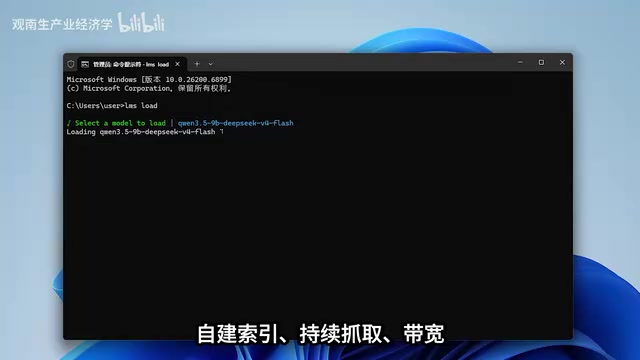
The confidence to quote half price comes from being able to absorb the costs internally: indexing and the engine are self-developed, and crawling and bandwidth scale with call volume, so there's no need to purchase search results externally. DeepSeek isn't the only one charging—Doubao turned high-end office capabilities into memberships on June 24, and Qianwen followed on August 10, with Doubao at 68 to 500 yuan per month and Qianwen at 19 to 128 yuan per month. Free was never a business model—it's a customer acquisition cost.
Liang Wenfeng comes from a quantitative background, and his playbook of scale first, profit later has been carried from models all the way to tools. But the search pricing business faces three hurdles: first, call structure—Agents' high-frequency short queries stress concurrency, while humans' low-frequency long queries stress bandwidth, and which dominates determines whether the business can be sustainable long term; second, retention—how many people remain after the free period ends is the real demand; third, price matching—there's more than one competitor at the same price point, and following one step further shortens the first-mover advantage by a notch.
The near-five-hour outage was a service failure. Two days later, the 1017 version launched and search pricing was announced—the operations account and the business account are calculated separately. Whether search billing can become a business depends not on this version's benchmark scores, but on call volume after billing begins.
(This article is based on a video analysis by Bilibili creator "Guan Nan Shen Industry Economics" and publicly available information. Some data are third-party estimates and are for reference only.)
The per-request pricing of the search API and the per-token pricing of the model API are two different cost structures: the former corresponds to relatively fixed marginal costs such as index maintenance, crawling, and bandwidth, where unit costs are more easily diluted as call volume grows; the latter varies linearly with input and output length. Therefore, whether "5 yuan per thousand requests" is sustainable depends on whether call volume can cover fixed investments like indexing. The reason call structure is critical is that high-frequency short queries mainly consume concurrency and QPS capacity, while low-frequency long queries (such as fetching full-page body text) mainly consume bandwidth and storage. The marginal cost curves of these two load types differ, and developer composition will directly change the gross margin of this business.
Related articles

Overmind: An Open-Source Continual Learning Platform That Turns Production Traces into Custom Models
Overmind is an open-source continual learning platform launched on Product Hunt for AI teams. It turns production traces into team-owned custom models, covering training, benchmarking, and model serving.
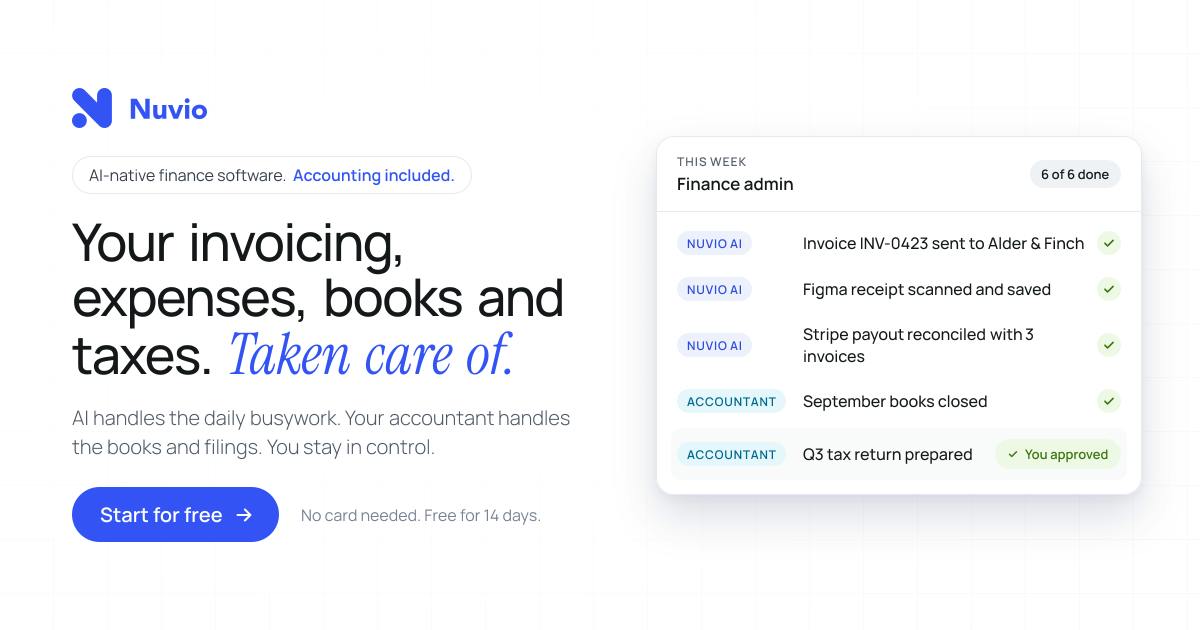
Nuvio 5.0: Handing Financial Back Office to AI Agents
Nuvio 5.0 launches on Product Hunt to hand financial admin to AI agents—automated invoicing, expenses, and reconciliation—with ChatGPT, Claude, or custom agent access, plus new bookkeeping and tax services.
Notra: The GEO Tool That Helps Your Brand Stand Out in AI Search
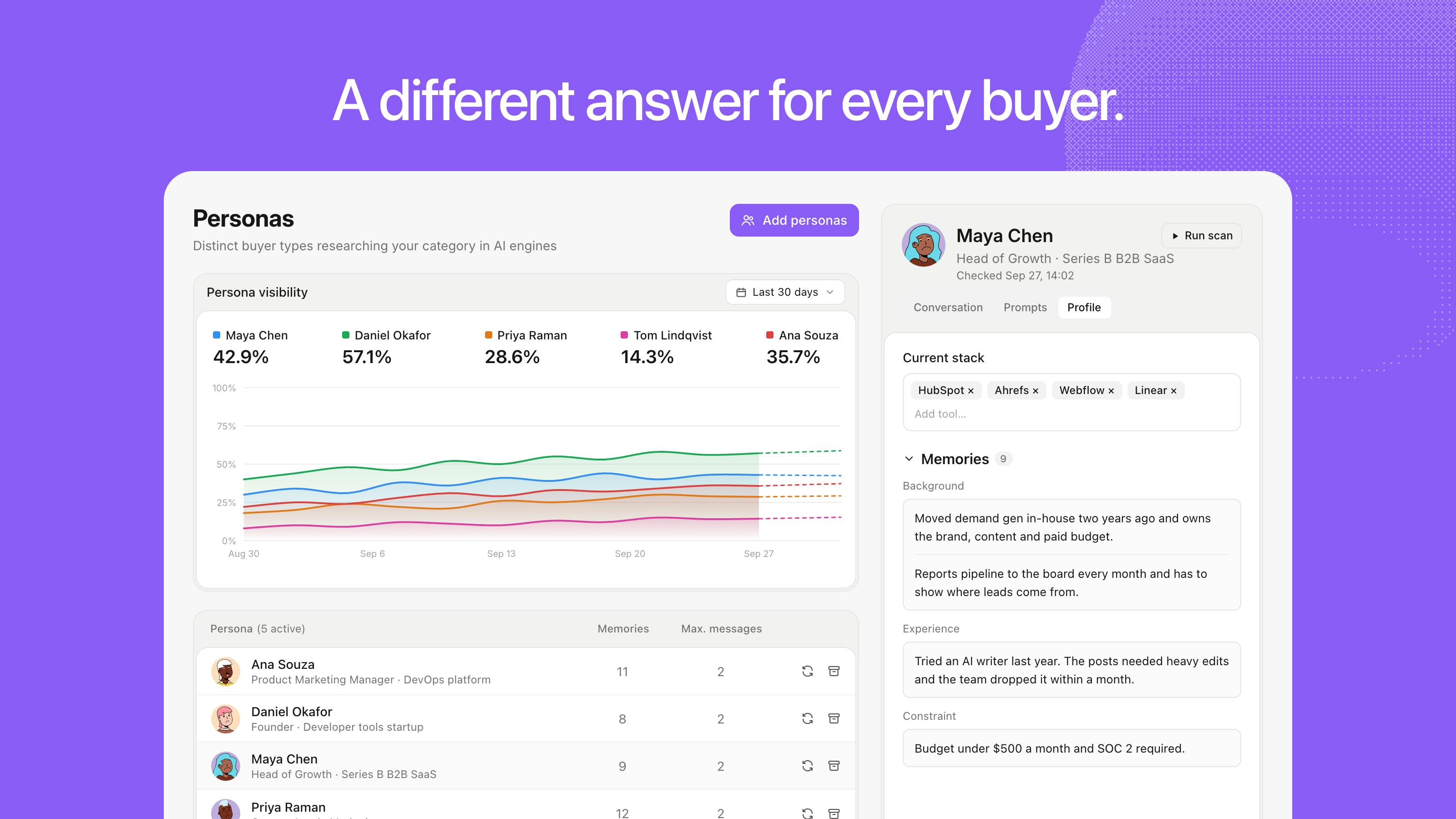
Notra is a GEO tool that simulates buyer questions to ChatGPT, Claude, and Gemini to check brand visibility in AI search and provide optimization tips, helping marketers boost exposure in the generative AI era.