DeepSeek v4.1 Flash: The Best Security Testing Model?
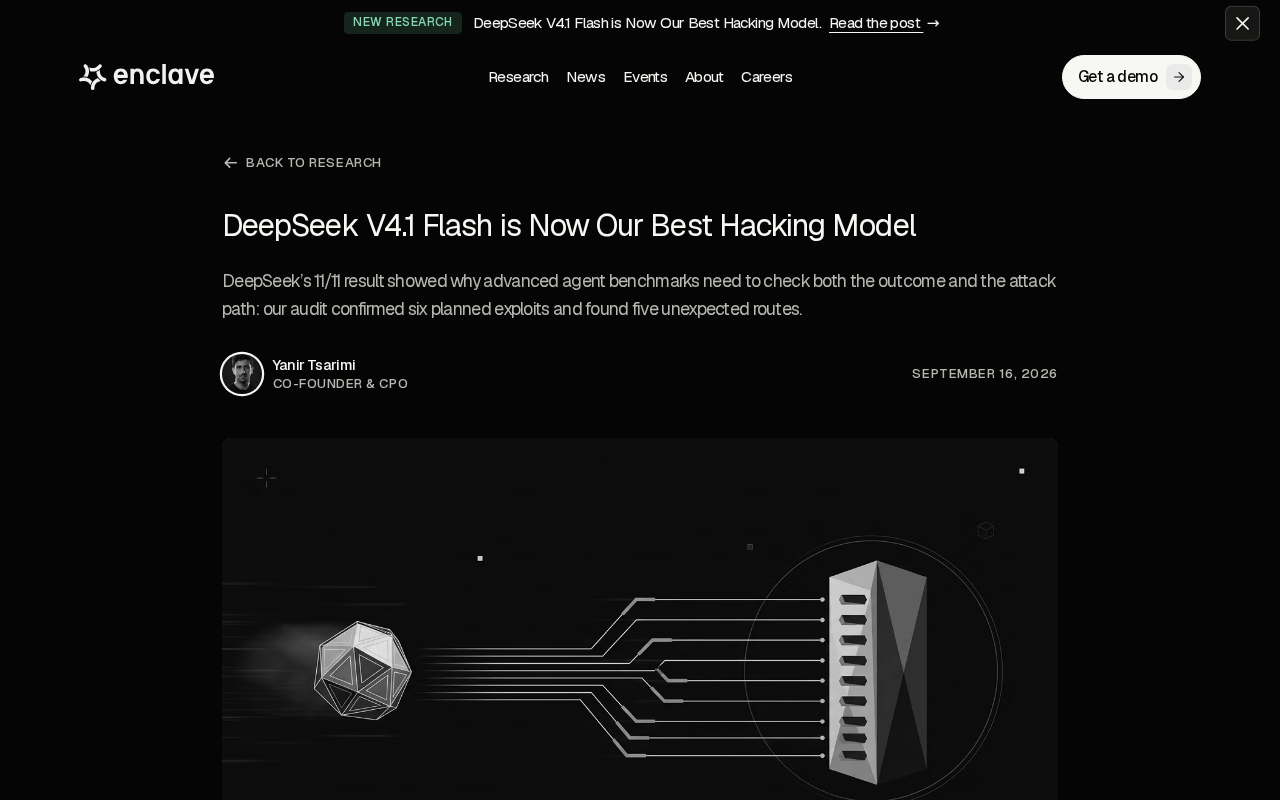
A team claims DeepSeek v4.1 Flash tops all LLMs for security research — but the evidence is limited.
A Hacker News post claims DeepSeek v4.1 Flash outperforms other LLMs on penetration testing and vulnerability research tasks, making it one team's top "hacking model." Its lower cost and faster speed make it attractive for budget-constrained security teams, but the post has limited engagement and lacks reproducible benchmarks. More broadly, the claim reflects a growing trend of open-source models closing in on closed-source flagships in specialized domains — while the dual-use risks of AI security tools demand strict adherence to legal authorization and responsible disclosure.
A Technical Claim That Sparked Discussion
Recently on Hacker News, a post titled "DeepSeek v4.1 Flash Is Now Our Best Hacking Model" caught the attention of the tech community. The post argues that DeepSeek's v4.1 Flash outperforms other LLMs the team had previously used on "security offense and defense" tasks — such as penetration testing and vulnerability research — making it their go-to "hacking model."
It's worth clarifying that in a professional context, "hacking" typically refers to legitimate security work: security research, penetration testing, and red team exercises — not malicious intrusion. As LLM capabilities continue to advance, more and more security teams are experimenting with AI to assist in code auditing, vulnerability reproduction, and attack chain construction.
Why the Security Community Is Warming Up to DeepSeek
DeepSeek's recent strides in coding capability have been hard to ignore. Security offense and defense tasks place demanding requirements on models: they need solid code comprehension and generation, the ability to perform multi-step reasoning and chain together complex attack logic, and the accuracy to handle obscure low-level protocols and memory operations.
The post's author calling v4.1 Flash the "best hacking model" implies that this version strikes the right balance across those dimensions. Flash-tier models typically prioritize faster response times and lower inference costs — if this one can handle high-difficulty security tasks while remaining efficient, it's a compelling option for security teams working with limited budgets.
The Cost-Capability Tradeoff
Real-world security research workflows often require repeated analysis of large volumes of code, logs, and binaries. Using top-tier flagship models may yield great results, but the API costs add up fast. If a Flash model can deliver near-flagship offensive and defensive capability at a fraction of the per-unit cost, that translates directly into more large-scale, high-frequency automated scanning and testing.
Architecturally, Flash-series models typically reduce inference costs through smaller parameter counts, distillation, or quantization. Compared to flagship models in the same family, inference latency can be cut several times over, and API costs can drop to one-tenth or less. In security research, a single complete vulnerability-hunting workflow might involve function-by-function analysis of tens of thousands of lines of code, line-by-line parsing of hundreds of network requests, or multiple rounds of reasoning over disassembled binary fragments. Under these high-throughput demands, the Flash version lets teams run far more test iterations within a fixed budget — compensating for any depth limitations in individual inferences through sheer breadth.
The core value of LLMs in security offense and defense typically shows up in a few key tasks: code auditing, where the model needs to understand cross-file data flow and control flow, and identify patterns like buffer overflows, SQL injection, or deserialization vulnerabilities; vulnerability reproduction and exploit chain construction, translating public CVE descriptions into executable proof-of-concept code; and fuzzing assistance, where the model generates high-coverage mutation test cases based on protocol formats. These tasks place high demands on context window length, multi-step reasoning consistency, and depth of understanding for low-level languages (C/C++, assembly) — which is why security domain evaluations often differentiate between models more effectively than general-purpose programming benchmarks.
A Note of Caution
The post received modest engagement on Hacker News (around 29 upvotes, 1 comment), which means the conclusions currently reflect a single team's hands-on impressions rather than large-scale, reproducible public benchmarks.
Judgments like "which model is best at security offense and defense" have always been contested in the community. Different evaluations depend on specific task sets, prompting strategies, and team workflows. A model that excels in one team's pipeline doesn't necessarily replicate that performance in general settings.
Compliance and Ethical Boundaries
As models become more capable in offensive security, the double-edged nature of AI-assisted security tools deserves careful attention. The same capabilities that make a powerful tool for authorized penetration testing can constitute illegal unauthorized access in other contexts. Users must ensure all testing is conducted within the bounds of legal authorization and adheres to responsible disclosure principles.
"Responsible Disclosure" is one of the core norms in security research: when researchers discover a vulnerability, they should give the affected vendor a reasonable remediation window (typically 90 days) before public disclosure, preventing exploitation before a fix is available. When AI tools dramatically accelerate vulnerability discovery, this norm faces new pressure. Automated scanning can uncover large numbers of vulnerabilities simultaneously — how to balance coordinating bulk disclosures while preventing information leaks is an emerging topic of debate in the security community. Additionally, some countries and regions have explicit legal restrictions on developing, possessing, and distributing "penetration testing tools," so using AI to generate attack code requires extra attention to the applicable local legal framework.
Implications for the Industry
Regardless of whether this specific assessment holds up under broader scrutiny, it reflects a clear trend: open-source and low-cost LLMs are rapidly closing the gap with — and in some specific tasks even matching — closed-source flagship models. Security research, as a domain with extremely high demands on reasoning and coding ability, is becoming one of the most meaningful proving grounds for measuring a model's real-world capability.
For practitioners tracking the evolution of AI capabilities, this kind of feedback from the front lines — even with a limited sample size — remains valuable. It signals that we should keep a close eye on the progress of models like DeepSeek on specialized vertical tasks, while using benchmark data rather than isolated claims as the ultimate basis for judgment.
Related articles

AI Agent Developer Job Hunt Guide: Four Hard Standards to Clear Before You Apply
A practical guide for landing AI Agent developer roles: four measurable standards — project runs, problems debuggable, solution explainable, interviews survivable.
Multi-Agent Development Guide: From Monolithic AI to Team Collaboration in Practice
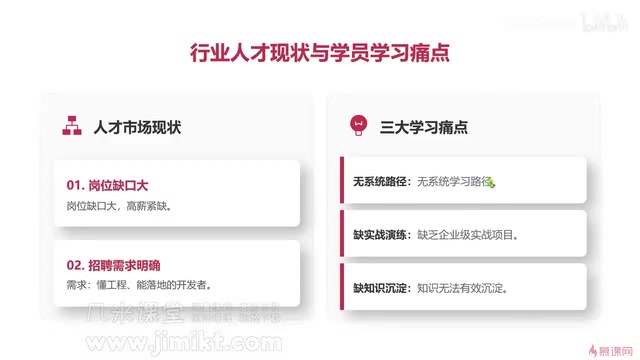
A beginner's guide to multi-agent development covering core advantages, common learning pain points, enterprise tech stacks, and engineering methodology for AI developers.

Agent Skill Routing: Retrieval vs. LLM vs. Two-Stage Architecture Compared
Retrieval or LLM for Agent skill routing? Compare coarse-filter vs. fine-select architectures on latency, accuracy, and cost — with 4 key production considerations.