DeepSeekMath: An Open-Source Model Pushing the Limits of Mathematical Reasoning
DeepSeekMath tackles mathematical reasoning through vertical specialization, with the community watching its open-source value and real-world stability.
The article centers on DeepSeekMath, a model specialized in mathematical reasoning, first explaining why mathematical reasoning is a capability ceiling for large models: multi-step logical deduction, symbolic computation, and unique-answer convergence requirements mean any single-step error gets amplified. It then introduces DeepSeekMath's positioning—under the DeepSeek series' open-source and reproducible路线, systematically optimizing high-quality math corpora, training objectives, and inference-stage computation strategies rather than evenly distributing effort across general capabilities. The article also notes that Hacker News discussion reflects strong community interest in open-source models' math capabilities, reminds developers to focus on error accumulation over long-chain derivations, robustness of formula handling, and inference cost during evaluation, and emphasizes the domain fine-tuning and business integration opportunities enabled by open weights.
Why Mathematical Reasoning Is a "Hard Nut to Crack" for Large Models
Mathematical reasoning has long been regarded as one of the ceilings of large language model capability. Unlike ordinary text generation, math problems require models to perform multi-step logical deduction, symbolic computation, and strict answer convergence—any single misstep can throw off the final result. For this reason, math benchmarks are often used to measure whether a model can "truly think."
DeepSeekMath, which sparked discussion on Hacker News, is precisely a work aimed at this challenge. As the title "Pushing the Limits of Mathematical Reasoning" suggests, its goal is not a routine model iteration but an attempt to push the boundary of mathematical reasoning capability outward.
To understand why mathematical reasoning is difficult, one must first distinguish two types of reasoning tasks. One is pattern-matching reasoning, where the model only needs to retrieve similar solution paths from its training corpus; the other is compositional reasoning, where each step must generate a new intermediate state based on the previous step's result, and the space of intermediate states grows exponentially with the number of reasoning steps. Math problems belong to the latter: a multi-step algebra problem contains multiple subgoals that must hold in sequence, and the model must not only choose the right operation rule at each step but also ensure that symbol bindings, dimensions, and constraint conditions remain consistent across the entire chain.
Another key factor is the uniqueness of the answer. Natural language generation allows reasonable diversity, whereas math problems usually have only one correct answer or equivalent forms, meaning any early deviation cannot be "canceled out" by subsequent sampling but will instead be progressively amplified. This is also why math benchmarks are harder to "game" than ordinary language modeling benchmarks—they demand convergence, not fluency.
DeepSeekMath's Positioning and Approach
Based on public information, DeepSeekMath is the model direction within the DeepSeekAd series focused on mathematical reasoning. It continues the series' emphasis on open source and reproducibility, attempting to provide a competitive solution in the high-difficulty domain of mathematics.
Improving mathematical capability typically involves several key components: construction of high-quality mathematical corpora, design of training objectives, and computation strategies during inference. DeepSeekMath's value lies in systematically optimizing these components around the vertical capability of "mathematics" rather than distributing effort evenly across general capabilities.
It should be noted that the material for this piece includes only the title and an overview of community discussion, without paper details, benchmark scores, or model parameters. Therefore, the following analysis is based more on the work's positioning than on restating specific metrics.
The "computation strategies during inference" mentioned above usually refers in the industry to test-time compute scaling—that is, without changing model weights, improving final accuracy by increasing sampling counts, lengthening chain-of-thought, introducing verifiers, or search. Corresponding to this are training-stage strategies such as continued pretraining to inject mathematical corpora, instruction fine-tuning, and preference optimization.
Verifiers and search are core components of mathematical reasoning: the verifier determines whether a given intermediate derivation or candidate answer is correct, while search selects the best among candidate paths or backtracks. Combining the two can significantly mitigate the problem of error accumulation over long chains and is one of the main engineering approaches for improving math benchmark performance today. When evaluating, distinguishing between "pure model capability" and "capability after adding inference strategies" is very important for judging practical usability.
What the Community's Focus Signals
That this content appeared on Hacker News and generated discussion itself sends a signal: the developer community remains highly interested in whether open-source models can match or even surpass closed-source solutions in mathematical reasoning. Advances in mathematical reasoning often transfer to scenarios such as code generation, logical analysis, and scientific computing, so such work is often seen as a bellwether for model capability upgrades.
For developers, what is worth watching is whether such models can be deployed locally or in low-cost environments, and how stable they are in actual problem solving and derivation/proof, not merely their ranking on leaderboards.
Leaderboard rankings cannot be directly equated with actual capability because of the risk of data contamination and test leakage. Math problem statements and answers are highly structured and easily reposted in large quantities across the internet; if the training corpus already contains problems that overlap or approximately overlap with the evaluation set, the model may show "memorization-style" high scores.
Therefore, the community typically focuses on several aspects of open-source math models: whether the evaluation set provides decontamination documentation, whether scores are reported across different difficulty tiers, and whether zero-shot results are distinguished from results with tools or search. For developers, the most reliable validation method remains conducting small-scale controlled experiments on the real problem distribution of their own business, rather than relying on a single leaderboard ranking.
Practical Significance for Developers
If your work involves educational problem-solving tools, data analysis assistance, or Agent workflows that require models to perform multi-step reasoning, math-specialized models are worth including in your evaluation. When evaluating, it is recommended to focus on three points: first, how errors accumulate over long-chain derivations; second, whether handling of symbols and formulas is robust; third, whether inference cost is acceptable.
The significance of the open-source route also lies in customizability—teams can perform domain fine-tuning based on public weights and connect mathematical capability to their own business scenarios, an advantage that pure API solutions cannot easily replace.
Conclusion
DeepSeekMath represents a clear technical orientation: beyond general large models, tackling the key capability of mathematical reasoning through vertical specialization. As more details and evaluation results are released, whether it can truly "push the limits" will still need to be tested by the community with real tasks.
Related articles

Garmin Forerunner 265S Drops to Lowest Price of the Year: A Balanced Choice for Small-Wristed Runners
Garmin Forerunner 265S drops to $300, its lowest price of the year. This small-wrist-friendly running watch features an OLED touchscreen, good battery life, and was called a balanced choice in testing.
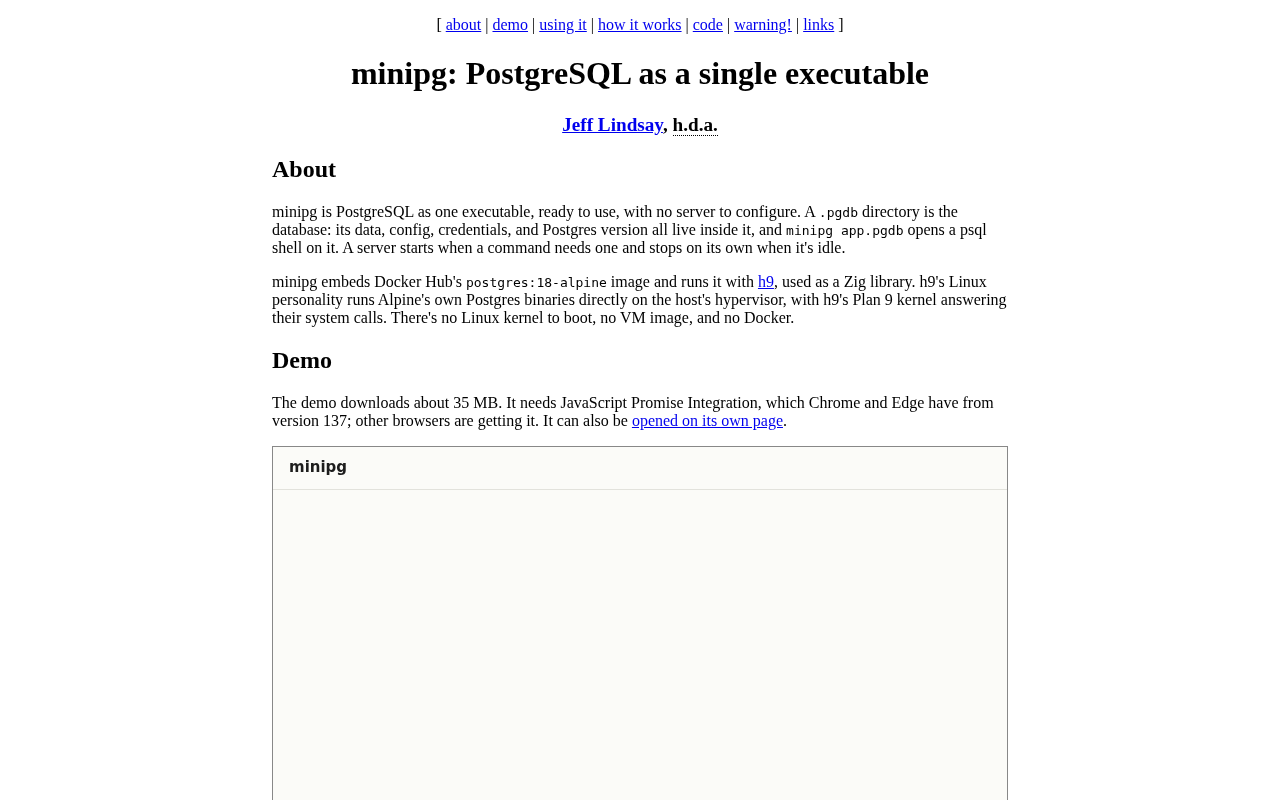
Minipg: Packaging PostgreSQL into a Single Executable File
Minipg packages PostgreSQL into a single executable that runs without dependencies. We analyze its technical approach, use cases, and limitations, exploring how single-file databases impact development and deployment.

Will AI End Our Careers?
Hacker News buzzes over 'AI may end our careers.' This article analyzes the real basis of this anxiety, the difference between task replacement and occupational reshaping, and response strategies for tech professionals.