Democrats' New Midterm Strategy: Winning Back the Internet with "Thirst Trap" Videos

Democrats pivot to "thirst trap" short videos, copying the GOP's digital playbook to court young voters.
After losing the 2024 election, Democratic introspection centered on two terms: "gerontocracy" and digital strategy shortfalls. According to Vox's Sean Ramos and *The 19th*'s Grace Panetta, the GOP and Trump team generated massive organic engagement on TikTok and Instagram that Democratic official content couldn't match. Democratic operatives are now adopting "thirst trap"-style videos—using entertaining, high-appeal content to first capture young voters' attention, then deliver political messages. The pivot also requires collaborating with non-political creators to embed messaging in entertainment content. But Panetta notes risks: serious issues may be sidelined, and traffic may not convert into votes—a challenge amplified by low midterm turnout.
From "Gerontocracy" to "Thirst Traps": The Democrats' Digital Strategy Pivot
After losing the 2024 election, the Democratic Party launched a wide-ranging internal debate about why they lost. According to a conversation between Sean Ramos, host of Vox's podcast Today Explained, and Grace Panetta, a reporter for The 19th, the post-mortem centered on two key terms: gerontocracy and digital strategy. Panetta noted that there is a broad sense within the party that Democrats are "governed by a group of people who are very old—for most of this century," while the Republican Party and the Trump campaign successfully generated massive organic engagement on platforms like TikTok and Instagram—platforms from which many Americans now get their news.

This contrast produced a blunt conclusion: Democrats need to "have fun" on the internet, because Republicans are doing it and it seems to be working. And so a video strategy that outsiders have dubbed the "thirst trap" has begun entering Democratic operatives' toolbox—using more engaging, pop-culture-adjacent content formats to pull voters back into the conversation.
Organic engagement is a core concept in social media operations, referring to the likes, comments, shares, and views that users generate spontaneously based on the appeal of the content itself, as opposed to paid reach. Platform algorithms generally favor content with high organic engagement rates, because that signals the content can extend user dwell time and trigger social sharing. In political communication, organic engagement is seen as a more credible and penetrating metric than campaign ads—when non-political creators or ordinary users spontaneously discuss a candidate, the information reaches far beyond the official account's follower base. In the 2024 cycle, the Trump team formed exactly this kind of spontaneous engagement ecosystem on TikTok and Instagram by encouraging large numbers of unofficial creators to produce content, while Democratic official content struggled to earn algorithmic recommendation due to its serious tone and low engagement rates.
How "Thirst Trap" Videos Serve the Midterms
The so-called "thirst trap" was originally a type of social media content that grabs attention with sexy or suggestive imagery. But in a political context, Democratic operatives have turned it into a low-barrier, high-reach get-out-the-vote tool. In the interview, Panetta described the goal of these videos as "engaging voters in the midterm elections."

The core logic isn't complicated: when young voters are congregating en masse on TikTok and Instagram, political content has to compete for attention with native platform content. The serious face of traditional campaign ads struggles to win in the feed, while entertaining—even slightly provocative—videos can win algorithmic favor and spontaneous user sharing. One Democrat interviewed said outright that this is how the party will "win back the internet"—first get users to stop and watch, then talk about delivering political messages.
Midterm elections are U.S. congressional elections held in the middle year of a presidential term, covering all 435 House seats, about one-third of Senate seats, and a large number of governor and state legislature positions. Compared with presidential election years, midterms typically see significantly lower national attention and voter turnout, with participation among young voters dropping especially sharply. This structural feature makes digital mobilization for midterms more challenging: candidates must attract attention and drive turnout through content itself, without the halo of a presidential candidate. Democratic operatives' choice to use "thirst trap"-style videos to break into the midterms reflects their recognition of how efficiently such content captures traffic in a low-attention environment—but the low-turnout baseline also means the chain from traffic to actual votes is longer and more uncertain.
The GOP's Platform Advantage and the Democrats' Catch-Up
Panetta stressed that this Democratic pivot is a direct response to the Republican Party's digital advantage. During the 2024 cycle, the Trump team and its allies not only produced large volumes of content on platforms like TikTok and Instagram but also actively encouraged non-political creators to participate in political communication, forming an organic content ecosystem beyond official channels.
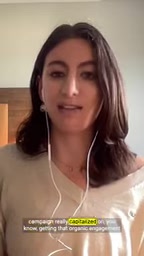
Democrats acknowledge that this "unofficial, informal" content is often more penetrating than posts published by campaign teams themselves. The new strategy therefore not only requires operatives to produce eye-catching content themselves but also means working with a broader range of creators so that political messages can be embedded in entertainment content more naturally. Panetta's reporting shows that this approach is becoming part of the Democrats' midterm digital layout, though its actual effectiveness remains to be tested.
The Boundaries and Risks of Entertaining Political Communication
Bringing "thirst traps" into political communication is not without controversy. On one hand, it may indeed lower the psychological barrier to political participation, exposing young users who normally don't follow the news to candidate information. On the other hand, over-reliance on physical appeal and suggestive innuendo may marginalize serious policy issues and even invite inappropriate attention toward female candidates and candidates of color.

Panetta did not shy away from this tension in the interview. She noted that Democrats internally see this strategy as an attempt to "win back the internet," but they are also clear that entertaining content is only the entry point—the real test is whether traffic can be converted into voting behavior. Midterm turnout has historically been lower than in presidential years, and the visual impact of short videos alone may not solve the fundamental problems of grassroots mobilization and issue persuasion.
Implications for AI and Tech Content Creators
From the perspective of technology and the content ecosystem, the Democrats' "thirst trap" experiment reveals a broader trend: platform algorithms are reshaping the form of political communication. Whether it's TikTok's recommendation mechanism or Instagram's short-video-first strategy, both reward high-engagement, high-emotion content and penalize serious, lengthy information output. Political operatives are simply adapting to these rules.
For AI content creators, this means two things. First, understanding the native grammar of platform content is more important than simply increasing output. Second, as political content begins to imitate the form of entertainment content, content moderation, deepfake detection, and algorithmic transparency will face new pressures. Whether Democrats can win back the internet with "thirst traps" remains to be seen, but what is certain is that the entertainment turn in political communication is very hard to reverse.
Recommendation algorithms are the core mechanism by which platforms like TikTok and Instagram decide what content users see, usually aiming to maximize user dwell time and engagement rates. Algorithms prioritize short videos that quickly trigger emotional reactions (curiosity, pleasure, anger, resonance), while serious, lengthy content or content requiring background knowledge tends to be downranked. This incentive structure produces a kind of "content grammar": the first few seconds must capture attention, the format must align with native platform pop culture, and information density gives way to emotional density. Political communicators imitating entertainment content are essentially adapting to this grammar. For AI content creators, understanding the tension between algorithmic preferences and content quality is crucial—high engagement does not equal high credibility, and once political content becomes entertainment, deepfakes and misleading content can more easily exploit the same grammar to gain a传播 advantage, making content moderation and algorithmic transparency more urgent governance issues.
One-line Summary
After their election loss, Democrats are turning to "thirst trap"-style short videos, imitating the GOP's digital playbook to court young voters.
Related articles

Amphibious Transforming Drone: Beyond 100x Power Savings, What Are the Real Needs?
Is the amphibious transforming drone just a gimmick? Starting from the 100x power difference of the M4 Morphobot, explore real application scenarios and thesis topic ideas, analyzing boundary conditions where pure drones and pure ground robots both fail.

Warhound Raises $200 Million: Genetically Engineered "War Dogs" Paired with Anduril Gear
Warhound raises $200M, backed by Ben Lamm and Palmer Luckey, to genetically engineer dogs for military and law enforcement use and equip them with Anduril gear. This article analyzes its technology direction, funding logic, and ethical controversy.

Claude API Comes to Google Cloud: IAM Integration and SDK Access Guide
Anthropic hosts the full Claude API on Google Cloud with IAM-controlled permissions and unified billing. This guide covers the Vertex AI and Anthropic-hosted entry points, IAM role configuration, and SDK access.