Deploying AI Agents on Eve Platform in Three Steps: A Minimalist Solution from Prompts to Production
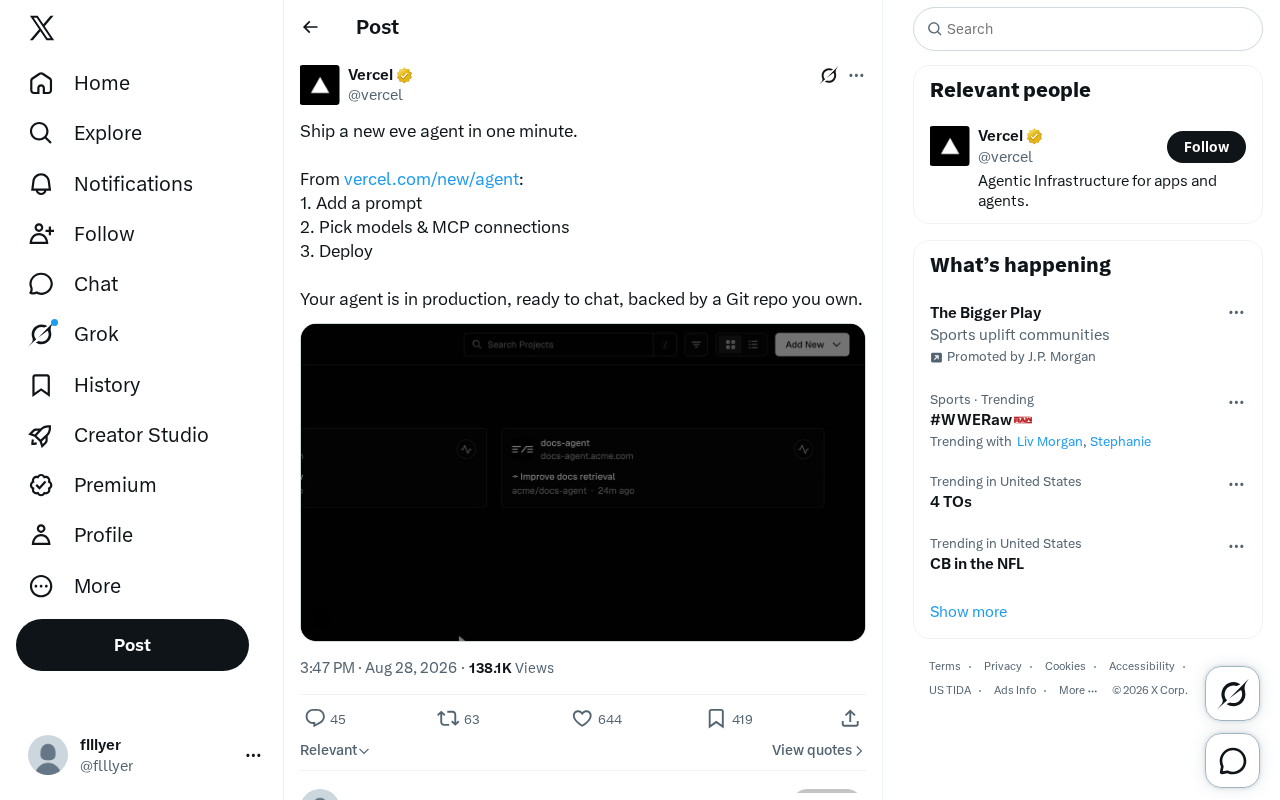
Eve platform enables one-minute AI Agent deployment through prompts, model selection, and MCP connections.
Eve platform revolutionizes AI Agent deployment by compressing the process to three simple steps: add prompts, select models with MCP connections, and deploy. Built on Git repositories users own, it leverages the emerging MCP standard for tool integration while maintaining code transparency and version control. Though deployment is rapid, production success still requires addressing observability, cost management, and security challenges.
From Prompts to Production: A Minimalist Paradigm for Agent Deployment
Building and deploying a production-ready AI Agent used to require days or even weeks of engineering effort—from model selection and backend setup to API integration and deployment, each step presented barriers. Early Agent systems (like AutoGPT and BabyAGI that emerged in 2023) demonstrated the potential for autonomous task planning, but had extremely high deployment thresholds: developers needed to build task queues from scratch, handle retry logic for failed model calls, design memory management mechanisms, and maintain integration interfaces with external tools. While frameworks like LangChain and LlamaIndex have matured and lowered these barriers somewhat, significant engineering background is still required. The Eve platform, which has recently gained widespread attention on social media, has compressed this process to "one minute," representing the latest stage in Agent toolchain evolution—completely abstracting away underlying complexity and making business logic expression (i.e., prompt design) the sole core work.
According to official information, Eve's entire Agent creation process requires just three steps:
- Add a prompt: Define the Agent's core behavior and personality.
- Pick models & MCP connections: Select the underlying large model and connect required external tools and data sources.
- Deploy: Push the Agent to production environment, immediately ready to use.
Once completed, your Agent enters production state immediately and can start conversational interactions right away. This "prompt-as-product" approach is becoming the mainstream direction for current Agent development tools. Under this paradigm, prompt engineering has evolved from an auxiliary skill to a core competency: a high-quality system prompt typically needs to clearly define the Agent's role and boundaries, strategies for handling ambiguous inputs, output format constraints, and mechanisms for maintaining consistency across multi-turn conversations. Techniques like Few-Shot prompting, Chain-of-Thought, and role-playing frameworks have formed relatively mature methodologies, and after platforms abstract away infrastructure complexity, prompt quality becomes the decisive factor in an Agent's capability ceiling.
MCP Connections: The Critical Bridge Between AI Agents and the Real World
Particularly noteworthy in Eve's workflow is its native support for MCP (Model Context Protocol) connections. MCP was open-sourced by Anthropic in November 2024, with design inspiration from the Language Server Protocol (LSP)—which solved the fragmented integration problem between IDEs and programming language toolchains through a unified interface. MCP adopts a similar approach: defining a standardized JSON-RPC communication protocol that enables any MCP-supporting AI model to invoke tools, access resources, and use prompt templates provided by "MCP servers" in a unified manner. An MCP server is essentially a lightweight adapter layer that can encapsulate database queries, file system operations, third-party API calls, or any other capabilities. As of early 2025, Anthropic, OpenAI, Google, and other mainstream AI vendors, along with numerous third-party developers, have built an MCP server ecosystem covering hundreds of tools including GitHub, Slack, PostgreSQL, and Brave Search. MCP is rapidly becoming the "universal interface" connecting large models with real-world capabilities and the de facto standard in the AI tool invocation domain.
Why MCP is Critical for AI Agents
An Agent that can only converse has limited value; truly productive Agents need to query data, invoke APIs, manipulate files, or trigger workflows. In traditional approaches, these integrations require developers to manually write substantial glue code, with different tools having varying integration methods and high maintenance costs.
MCP's emergence has standardized this process. By making MCP connections a default option in Agent creation, Eve means users can directly select needed tool capabilities during configuration without touching underlying integration code. This significantly lowers the barrier to building AI Agents with "actual action capabilities."
Git Repository Support: Truly Owning Your Agent Code
One easily overlooked but highly significant design feature in Eve's promotion is: your Agent is backed by a Git repo you own.
This design isn't just a convenience consideration—it introduces over forty years of software engineering best practices into AI application development. Git's distributed version control model means every prompt modification, model parameter adjustment, or tool connection change corresponds to a hash-addressable commit record. Teams can conduct peer reviews of prompt changes through Pull Request workflows and directly apply Git-based CI/CD pipelines to Agents—each commit triggers automated testing to verify whether the Agent's behavior on standard test cases meets expectations. This brings several important implications:
- Transparent code ownership: The Agent's configuration, prompts, connection logic, etc. exist as code in the user's own repository, not locked in a platform black box.
- Version control and traceability: With Git, every Agent iteration can be recorded, rolled back, and audited, fully aligned with engineering best practices. For compliance-constrained industries (finance, healthcare, legal), this auditable change history is a foundational condition for meeting regulatory requirements.
- Avoiding vendor lock-in: Owning the underlying code means users theoretically have the ability to migrate and self-operate, reducing dependency risk on a single platform.
In an era where more Agent platforms adopt closed hosting, Eve's "code belongs to users" stance is quite attractive to teams that value control and compliance.
Opportunities and Challenges Under the Rapid Deployment Trend
From a more macro perspective, Eve represents a clear trend in current AI Agent toolchains: drastically lowering creation and deployment barriers. Such tools enable non-professional developers to quickly transform ideas into runnable intelligent agents, accelerating AI application adoption.
Opportunity: Rapid Validation and Agile Iteration
For startup teams and individual developers, one-minute deployment means rapid validation of product hypotheses and iteration of business logic, concentrating effort on prompt engineering and scenario design rather than repetitive infrastructure building.
Production Challenges That Need Realistic Assessment
However, "one-minute deployment" primarily refers to the convenience of creation and launch, not solving all Agent productionization challenges. Real challenges often emerge after deployment, with observability being the primary engineering challenge. Unlike traditional software, Agent behavior is probabilistic—the same input may produce different tool invocation paths and output results across different calls, making traditional log monitoring solutions insufficient for capturing anomalous behavior. The industry is seeing the rise of specialized LLM observability tools (like LangSmith and Langfuse) that can track complete reasoning chains, record parameters and results of each tool call, and compile token consumption distributions. Specific challenges include:
- Reliability and hallucination control: Stable Agent performance in real scenarios still requires extensive testing and tuning.
- Cost management: Actual operating costs of model calls and tool connections need continuous monitoring. A poorly designed Agent may generate API fees far exceeding expectations due to recursive calls, invalid retries, or oversized context windows. Production-grade Agents need token budget caps and call rate limiting.
- Security and permission control: Permission boundaries and data security when MCP connects to external systems are unavoidable issues in production environments.
Therefore, while tool convenience lowers the "startup" barrier, "doing well" with an Agent still requires deep investment in engineering capabilities and scenario understanding.
Summary: Deployment is Just the Starting Point, Continuous Refinement is Core
The "three-step deployment" workflow demonstrated by Eve is a microcosm of AI Agent development tools moving toward democratization. By integrating prompt configuration, model selection, MCP connections, and Git version management, it packages originally complex engineering processes into an intuitive product experience.
For teams looking to rapidly experiment with Agent applications, such tools are undoubtedly worth attention. But while enjoying deployment convenience, developers should maintain clear awareness of production environment reliability, cost, and security—true value has always resided in the continuous refinement after deployment.
Key Takeaways
- Eve compresses Agent deployment to three steps: add prompt, select models & MCP connections, deploy
- MCP (Model Context Protocol) is becoming the standard interface for connecting AI models with external tools
- Git repository backing provides code ownership, version control, and avoids vendor lock-in
- One-minute deployment lowers barriers but doesn't eliminate production challenges like observability, cost control, and security
- Prompt engineering has evolved from auxiliary skill to core competency in the platform-abstracted era
Related articles

How Short-Form Video Creators Are Using AI Video Generation Tools
Exploring the real-world application of AI video generation tools in short-form video creation. From Seedance to Runway, how do creators integrate AI assets? Revealing the gap between demos and production use.

Home Data Center Setup Guide: A Complete Self-Hosted Private Cloud Implementation
Deep dive into building a home data center: hardware selection, software architecture, cost analysis, and operational challenges. From data sovereignty to technical implementation, build your private cloud infrastructure and control your digital assets.
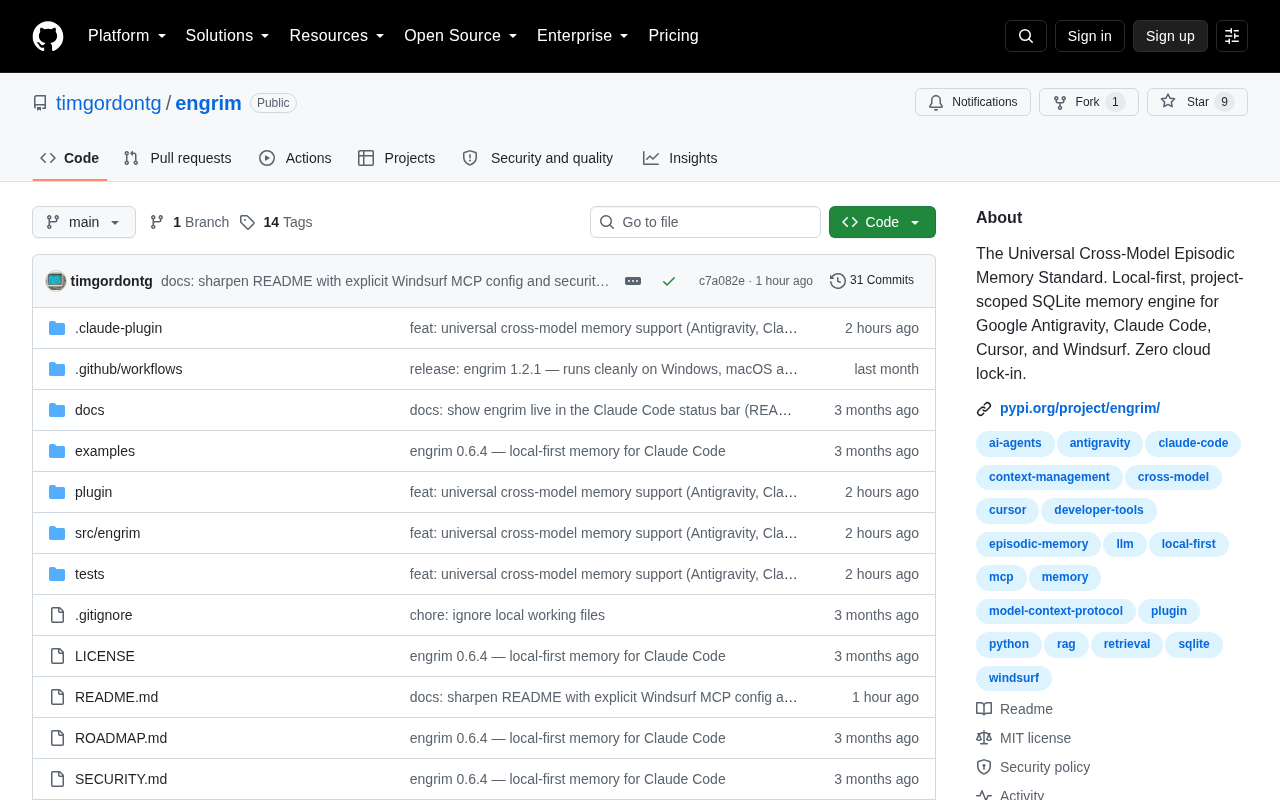
Engrim: A Local Memory Engine Solution for AI CLI Tools
Engrim is an open-source, local-first SQLite memory engine built for AI CLI tools like Claude Code and Aider, solving context loss while keeping data private.