Devin Launches Code Scans: Automatically Turning Engineering Goals into Code Improvements
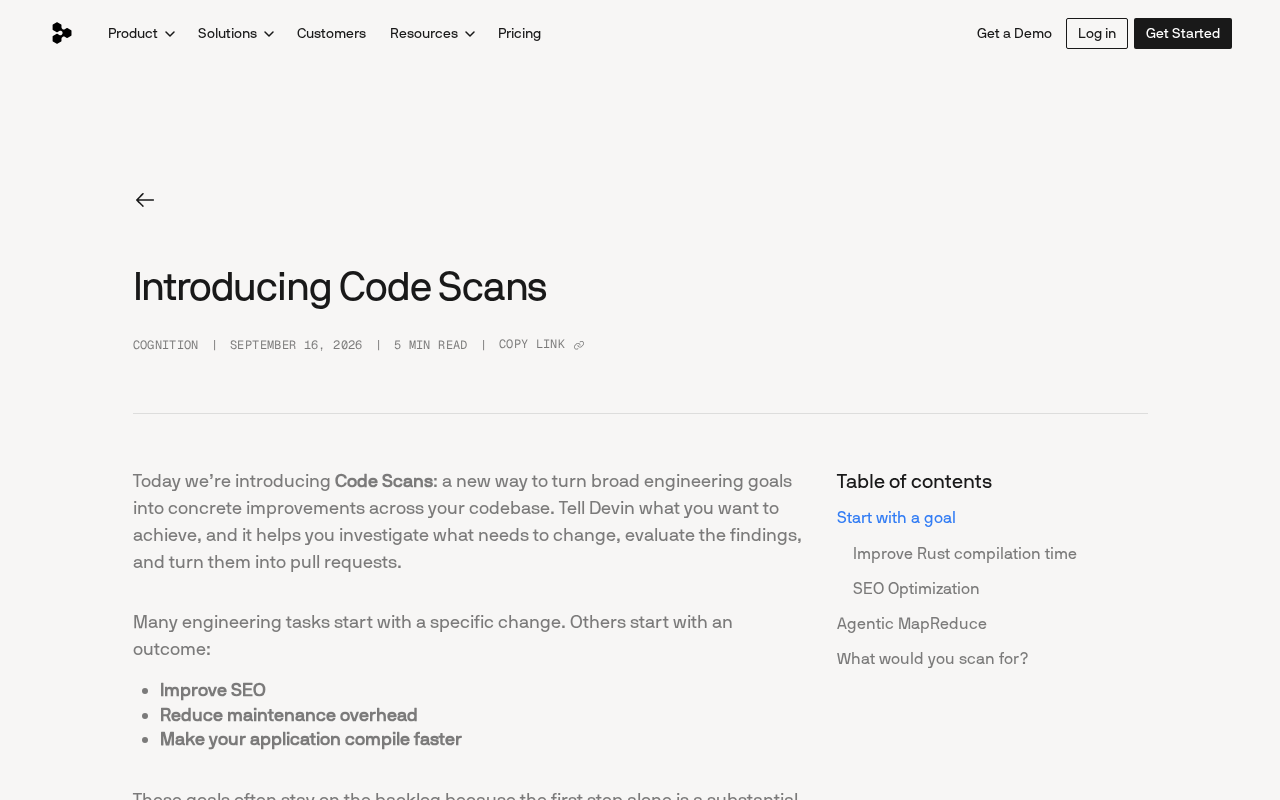
Devin's Code Scans converts vague engineering goals into reviewable PRs, evolving AI from instruction-follower to active codebase maintainer.
Cognition's AI software engineer Devin has launched Code Scans to fill a long-standing gap in AI coding tools: handling broad, ambiguous goals like "improve overall code quality." The workflow spans three phases—proactive codebase investigation, filtering of worthwhile changes, and PR generation that preserves human review authority. This intent-driven approach suits architectural-level tasks like technical debt cleanup, standards unification, and large-scale refactoring. Key details around evaluation accuracy and performance on large codebases remain to be verified through real-world use.
What Is Code Scans
Cognition's AI software engineer Devin has released a new feature called Code Scans. The core idea is straightforward: translate broad engineering goals into concrete improvements across a codebase. Developers simply tell Devin what they want to achieve, and it proactively investigates what needs to change, evaluates those findings, and ultimately turns them into reviewable Pull Requests (PRs).
This feature addresses a longstanding gap in AI coding assistants. Most tools excel at responding to clear, specific instructions (like "fix this bug" or "write tests for this function"), but struggle with vague, wide-ranging goals like "improve overall code quality." Code Scans aims to shift AI from a passive executor to an active codebase maintainer.
Devin is an AI software engineer product released by Cognition AI in 2024, designed to independently complete end-to-end software development tasks as an Agent—rather than serving purely as a code completion or Q&A tool. Unlike tools like GitHub Copilot that focus on "assisted suggestions," Devin can autonomously use terminals, browsers, and code editors to execute complex, multi-step tasks. Code Scans is a new capability built on top of this Agent architecture. It's precisely because Devin has the underlying ability to actively explore and plan that an interaction style like "give it a broad goal and let it break down and execute the work" becomes possible.
The Workflow: From Goal to PR
According to the official description, Code Scans operates in three phases.
Investigation Phase
When you set a high-level goal—such as "reduce technical debt in the codebase" or "standardize error handling patterns"—Devin proactively scans the entire codebase to locate specific areas relevant to that goal. The value here is that it automates the "find where the problems are" work that typically costs developers significant time.
Evaluation Phase
Once potential improvements are identified, Devin doesn't act blindly. Instead, it evaluates the findings—assessing which changes are genuinely worth making and which might introduce risk, then filtering and prioritizing the results. This step is critical for avoiding noisy, low-value changes.
PR Generation Phase
Finally, Devin converts the evaluated improvements into Pull Requests. This design preserves the human developer's final say—all changes are presented as PRs that the team can review, discuss, and merge through their existing code review workflow, rather than having AI directly modify the main branch.
A Pull Request (PR) is one of the most central collaboration mechanisms in modern software teams. After completing changes on a separate branch, developers submit a PR to request merging into the target branch. Team members can conduct line-by-line code review, leave comments, and trigger automated tests (CI/CD) before merging. This process serves both as a quality checkpoint and as a complete record of change history. By choosing PRs over direct commits as its output format, Devin essentially integrates AI-generated work into a governance framework already widely accepted by engineering teams—balancing AI autonomy with team control. For teams with a mature code review culture, this "AI proposes, humans decide" model faces the least resistance and is the easiest to adopt.
Why This Pattern Is Worth Paying Attention To
Accepting a "broad goal" as input is the biggest differentiator between Code Scans and traditional AI coding tools. In the past, when developers collaborated with AI, they often had to manually break large tasks into smaller pieces before handing them off. Code Scans delegates that decomposition to the AI as well: you describe your intent, and it handles the planning and execution.
This "intent-driven" interaction style aligns more closely with how team leads and architects actually work. They're typically concerned not with how individual functions are written, but with the overall health, consistency, and long-term maintainability of the system. Code Scans gives those high-level intentions an actionable path forward.
The choice of PR as the deliverable is also pragmatic. Rather than bypassing existing software engineering collaboration workflows, it embeds within them. Code review, CI checks, and team discussion all continue to function as before. AI output is incorporated into a controlled, traceable engineering practice, reducing the risk of blindly trusting AI-generated changes.
Potential Use Cases
Based on the information provided officially, Code Scans is well-suited for a category of "cross-cutting tasks" that have often been deferred in the past:
- Technical debt cleanup: Duplicated code across modules, outdated dependencies, inconsistent implementations.
- Code standards unification: Aligning scattered coding styles, naming conventions, and error handling patterns to a single standard.
- Large-scale refactoring: Scenarios requiring coordinated changes across many files, where manual execution is costly and error-prone.
What these tasks share is broad scope, low individual point value but high aggregate value—exactly the kind of work human engineers tend to procrastinate on, and where AI can consistently invest effort.
The concept of technical debt was introduced by software engineer Ward Cunningham as a metaphor for code quality problems that accumulate when teams prioritize short-term development speed—like taking out a loan that must be repaid with interest later. Common forms include: core modules lacking test coverage, naming conventions that have drifted inconsistently over time, duplicated implementations of the same logic, and long-unupgraded dependency libraries. The difficulty isn't the complexity of any single fix, but that these issues are scattered across the entire codebase and require systematic scanning and coordination to address effectively. This maps directly to the comparative advantage AI Agents have in "broad scanning plus batch execution."
Questions Worth Watching
The official release information is currently fairly sparse, and several key details remain unclear. For example, how accurate is Devin's evaluation phase? How does it perform on large, complex codebases? Is the quality of generated PRs consistent? What security and privacy safeguards exist for private codebases? These questions can only be answered through real-world use.
For teams, having AI proactively scan and submit changes improves efficiency—but it could also lead to a surge in PR volume and increased review burden. Striking the right balance between automated improvements and human review will be a practical challenge to navigate when adopting this type of feature.
Summary
Code Scans represents one direction in the evolution of AI coding tools: from "executing specific instructions" toward "understanding and implementing engineering intent." It connects investigation, evaluation, and PR generation into a complete closed loop, while preserving human final control through the PR mechanism. For teams looking to systematically improve codebase quality, this is a new tool worth watching—though its real-world effectiveness still needs validation across more practical scenarios.
Related articles
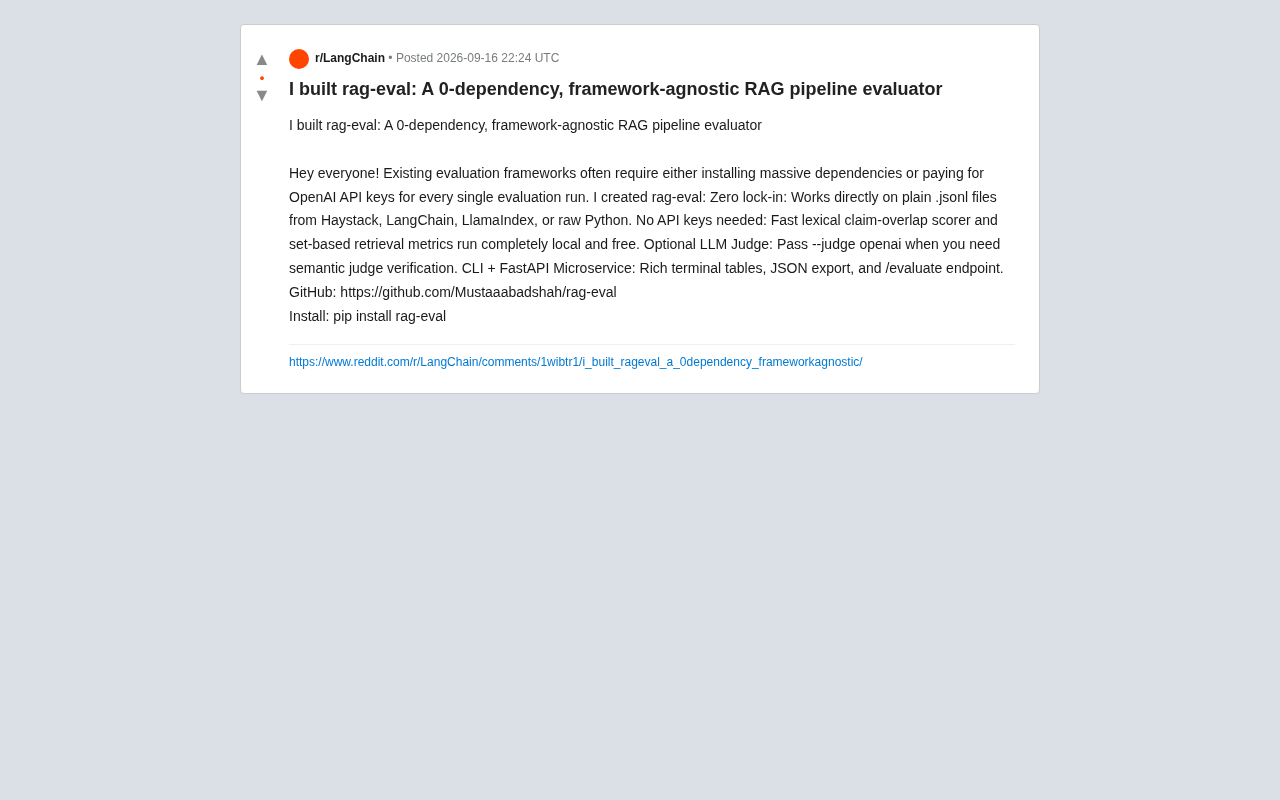
rag-eval: A Zero-Dependency, No-API-Key RAG Evaluation Tool
rag-eval is a zero-dependency, framework-agnostic open-source RAG pipeline evaluation tool. It supports free local lexical and retrieval metrics with no API keys required, and offers optional LLM Judge for semantic validation. Compatible with Haystack, LangChain, and LlamaIndex.
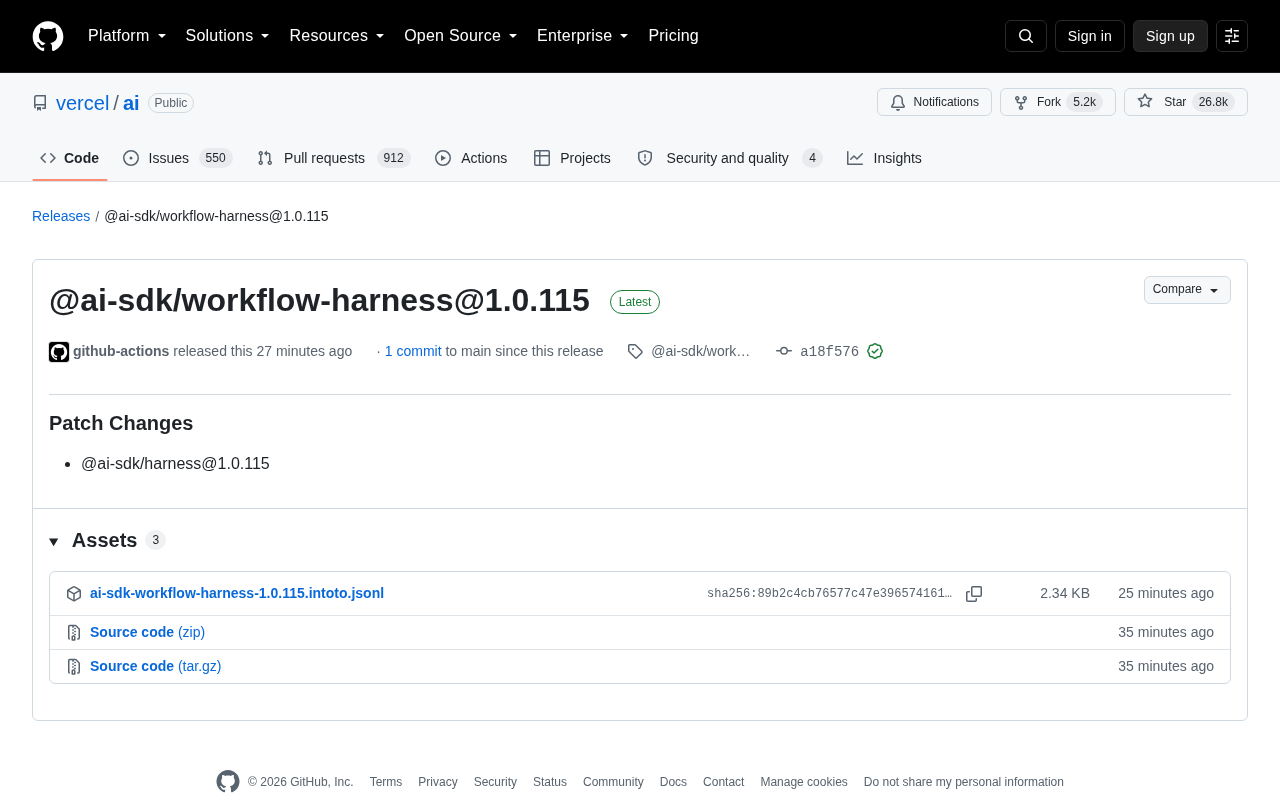
Vercel AI SDK Releases workflow-harness 1.0.115 Patch Update
Vercel AI SDK releases @ai-sdk/workflow-harness 1.0.115 patch update, syncing the @ai-sdk/harness dependency. Learn about the update, release mechanism, and what it means for developers.
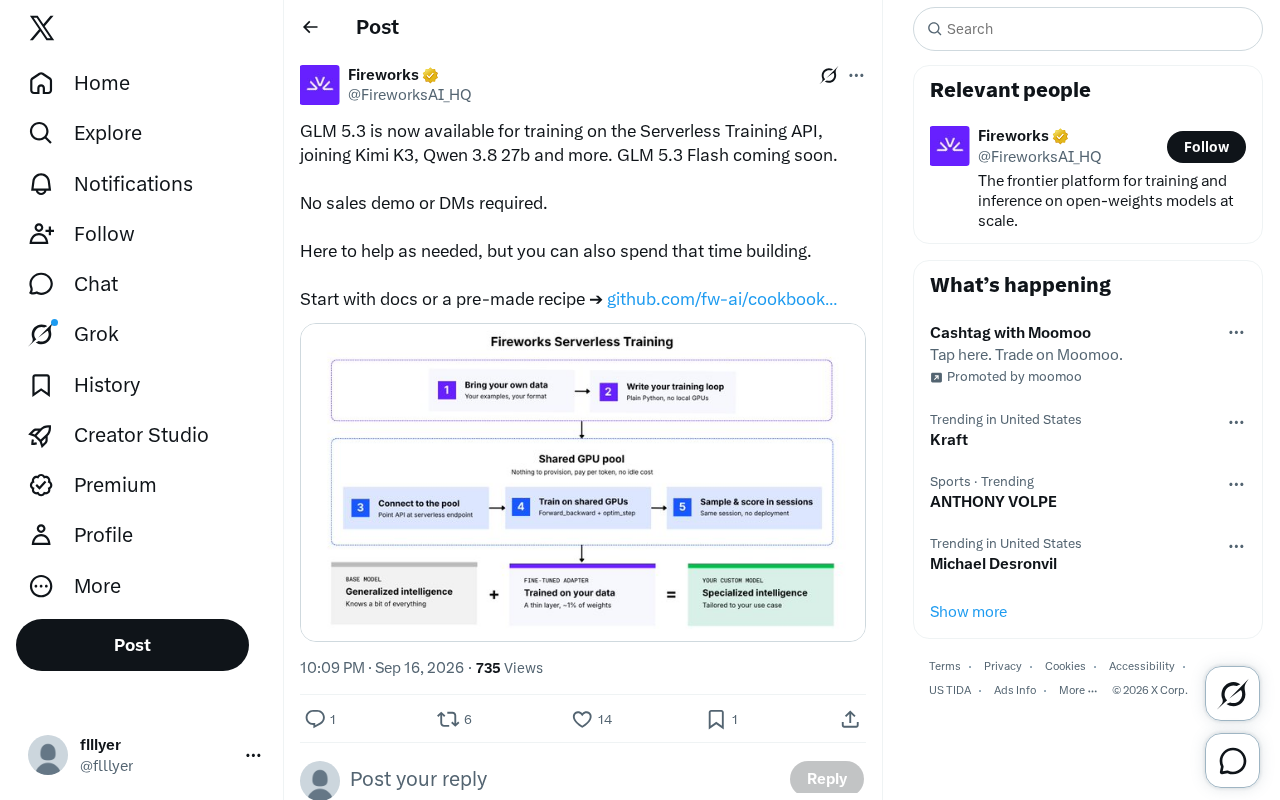
GLM 5.3 Now Available on Serverless Training API — No Sales Process Required
GLM 5.3 is now available on Serverless Training API alongside Kimi K3 and Qwen 3.8 27b. No sales process needed — start fine-tuning directly via docs or pre-made recipes.