Devin Plugins Launch: How BlackRock Is Governing AI Agents at Scale
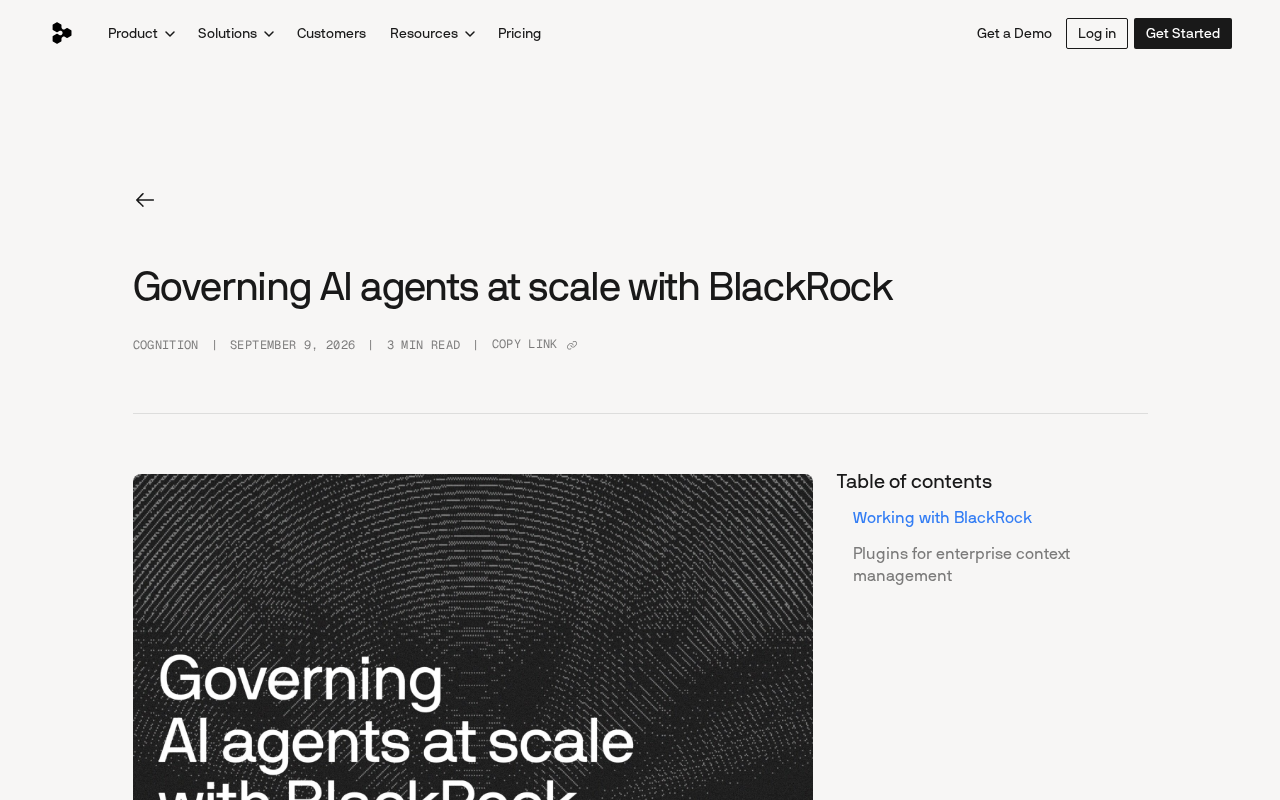
Cognition and BlackRock launch Devin Plugins to unify AI agent capabilities, rules, and governance at enterprise scale.
Devin Plugins, developed by Cognition in partnership with BlackRock, is an enterprise-grade solution for governing AI agents at scale. It bundles skills, rules, MCP servers, hooks, and subagents into reusable configuration units, enabling consistent agent behavior and policy enforcement across both local and cloud environments. Its core value is a "define once, enforce everywhere" governance model that lets compliance teams centrally control all agent boundaries. BlackRock's involvement as a flagship customer highlights how seriously large financial institutions are taking agent compliance risk — and signals a broader industry shift from individual agent performance toward platformized, enterprise-level governance.
A New Answer to Enterprise AI Agent Governance
As AI coding agents move from experimentation into production, enterprises face an increasingly thorny challenge: how to uniformly manage context, capabilities, and behavioral rules across large-scale deployments. Devin Plugins, launched by Cognition in collaboration with BlackRock, is their answer to this governance pain point.
For large financial institutions like BlackRock, AI agents are no longer point tools — they're a distributed workforce spanning on-premises and cloud environments across multiple teams. At scale, the absence of unified configuration and governance mechanisms creates serious risks around consistency and compliance. The core value of Devin Plugins lies in standardizing and making manageable what was previously a fragmented set of capabilities.
What a Plugin Actually Bundles
According to the official announcement, Devin Plugins bundle multiple agent capability components into reusable, distributable governance units. These include:
- Skills: Specific capability modules the agent can invoke
- Rules: Policies and constraints that govern agent behavior
- MCP servers: Context service integrations based on the Model Context Protocol
- Hooks: Trigger points for injecting custom logic into the agent's execution flow
- Subagents: Subordinate agents that can be orchestrated by a parent agent
The significance of this packaging approach is that enterprises no longer need to configure capabilities and rules for each agent individually. Instead, Plugins enable modular encapsulation and bulk deployment. A single Plugin can define what an agent can do (skills, subagents), what it cannot do (rules), how it accesses external context (MCP servers), and how governance logic is enforced at critical checkpoints (hooks).
Model Context Protocol (MCP) is an open standard proposed by Anthropic in late 2024, designed to give AI agents a unified way to access context services. Traditionally, agents accessing external data sources — such as databases, APIs, or file systems — required custom integration code for each source. MCP standardizes this process: through an MCP Server, any data source or tool that conforms to the protocol can be discovered and invoked by agents in a consistent way. Within the Devin Plugins architecture, MCP Servers serve as the context access layer, allowing enterprises to bring internal systems (such as code repositories, knowledge bases, and monitoring platforms) into the agent's awareness without re-configuring integrations for each agent. This explains why MCP is increasingly viewed as a foundational infrastructure component — not an optional add-on — in enterprise agent deployments.
Consistency and Governance Are the Keywords
The most notable design goal of Devin Plugins is enabling consistent configuration and governance between local and cloud-based agents. In practice, agents running locally on a developer's machine and those operating in cloud-based automation pipelines are often configured in silos, leading to inconsistent behavior and making audits difficult.
Plugins address this through a unified configuration layer, ensuring the same set of skills, rules, and context remains consistent across different runtime environments. For heavily regulated industries like finance and healthcare, this "define once, enforce everywhere" governance capability is especially critical — it means compliance teams can manage the boundaries of all agents from a single place, rather than hunting through dozens of scattered configurations.
The Hooks mechanism is a key technical detail for understanding Devin Plugins' governance capabilities. In software engineering, hooks refer to mechanisms that insert custom logic at specific points in a program's execution flow — commonly seen in CI/CD pipelines (e.g., Git hooks) and event-driven systems. In the context of AI agents, Hooks allow enterprises to automatically trigger approval workflows, logging, or compliance checks at critical nodes in the agent's behavior chain — for example, before calling an external API, before committing code, or when accessing sensitive data. This means governance behavior doesn't rely on the agent's own "good judgment" but is enforced through external mechanisms, guaranteeing auditability at the architectural level. For financial institutions like BlackRock, this kind of mechanism aligns naturally with their existing operational risk management processes.
What This Means for Enterprise AI Adoption
From an industry perspective, AI agents are moving past the "can we use them?" phase and into the "how do we govern them?" phase. BlackRock's involvement as an early anchor customer at scale speaks volumes about how urgently large enterprises need agent governance solutions.
The launch of Devin Plugins reflects a broader evolution in AI coding tools toward platformization and enterprise-grade capabilities. Simply improving the performance of individual agents is no longer enough. The decisive factor for whether AI can truly scale within organizations is the ability to uniformly orchestrate, constrain, and audit thousands of agents across the enterprise. As agents continue to penetrate deeper into corporate workflows, governance frameworks like this one are poised to become standard infrastructure for enterprise AI.
Note: This article is based on limited information from Cognition's official announcement. Specific pricing, availability, and more detailed technical specifications for Devin Plugins are yet to be disclosed.
Related articles
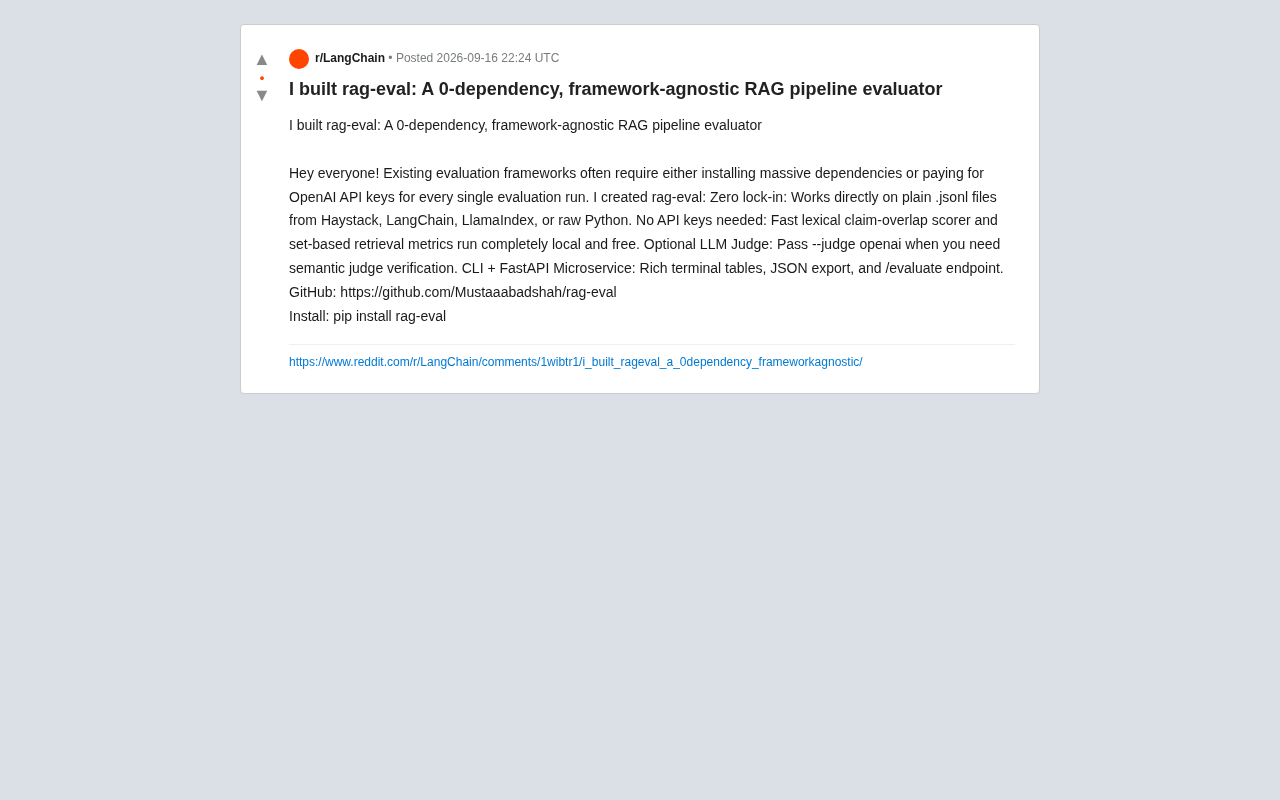
rag-eval: A Zero-Dependency, No-API-Key RAG Evaluation Tool
rag-eval is a zero-dependency, framework-agnostic open-source RAG pipeline evaluation tool. It supports free local lexical and retrieval metrics with no API keys required, and offers optional LLM Judge for semantic validation. Compatible with Haystack, LangChain, and LlamaIndex.
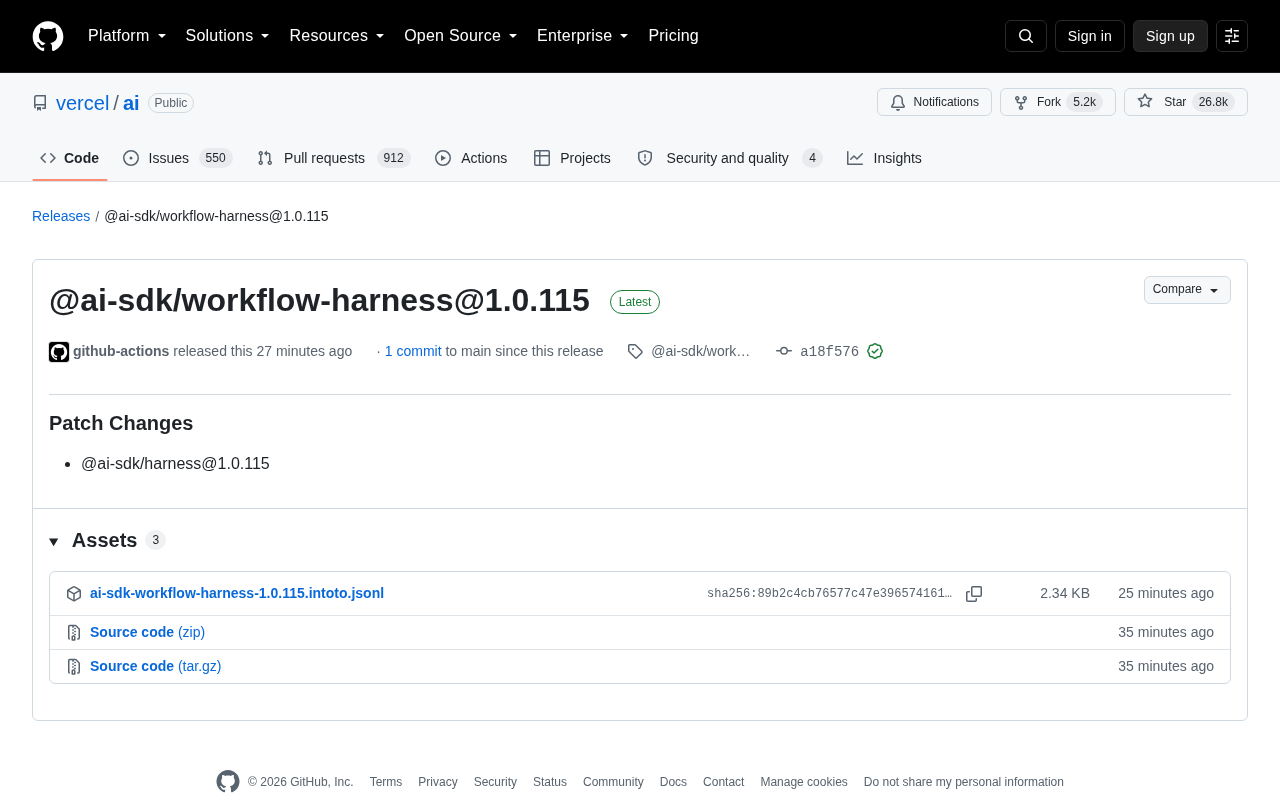
Vercel AI SDK Releases workflow-harness 1.0.115 Patch Update
Vercel AI SDK releases @ai-sdk/workflow-harness 1.0.115 patch update, syncing the @ai-sdk/harness dependency. Learn about the update, release mechanism, and what it means for developers.
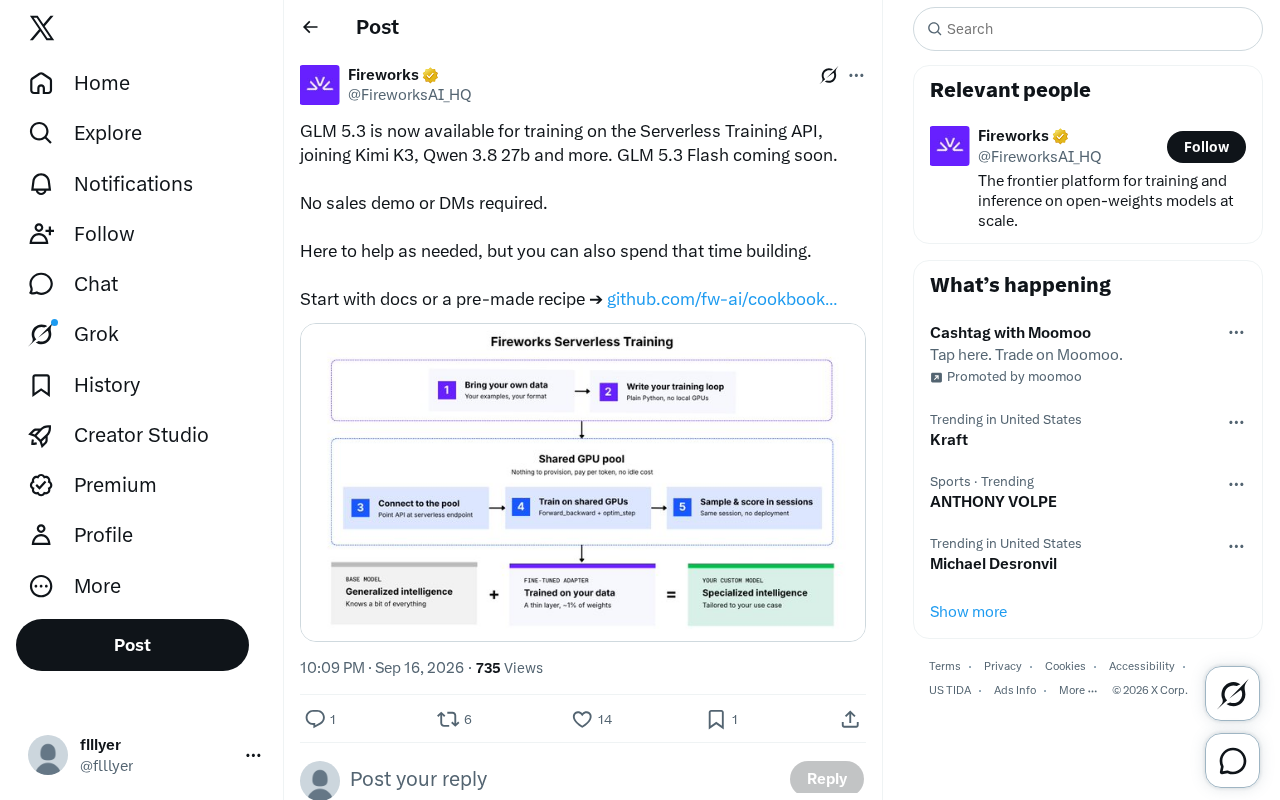
GLM 5.3 Now Available on Serverless Training API — No Sales Process Required
GLM 5.3 is now available on Serverless Training API alongside Kimi K3 and Qwen 3.8 27b. No sales process needed — start fine-tuning directly via docs or pre-made recipes.