Dex: Turn Your AI Coding Assistant into an Analytics Engineer with One Command

Dex injects analytics engineering capabilities into AI coding assistants with a single npx command.
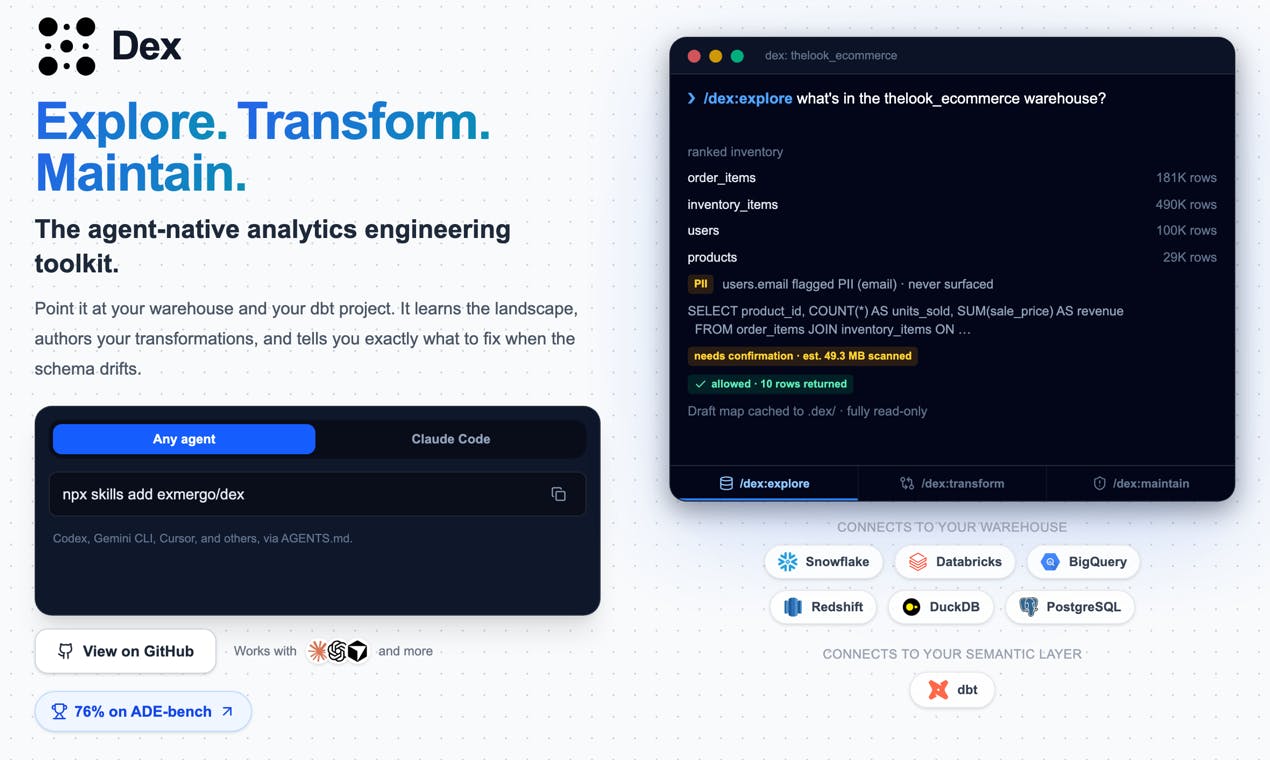
Dex by Exmergo is a new skill plugin that transforms general-purpose AI coding assistants like Claude Code and Cursor into analytics engineers. Installed via `npx skills add exmergo/dex`, it provides read-only data warehouse schema mapping with cost guardrails, reviewable diff-based model generation, and data drift detection—addressing the gap between generic AI coding tools and the specialized needs of dbt-based data teams.
When AI Coding Assistants Meet the Data Warehouse
In the era of AI coding assistants, tools like Claude Code, Codex, Cursor, and Gemini CLI have become daily companions for many developers. They excel at writing business logic, fixing bugs, and generating boilerplate—but in the vertical domain of Analytics Engineering, general-purpose coding assistants often fall short. They don't understand your data warehouse structure, can't grasp the modeling logic of a dbt project, and have no way to assess the cascading effects a single change might trigger.
Analytics Engineering is a role that has gradually emerged as an independent discipline alongside the rise of the Modern Data Stack. Traditionally, data teams were split between data engineers (responsible for pipeline construction and infrastructure) and data analysts (responsible for business insights and reporting), with a clear skills gap between them. The Analytics Engineer fills this void—using SQL and tools like dbt to perform data modeling, transformation, and quality assurance within the data warehouse. They combine engineering practices (version control, CI/CD, testing) with an understanding of business metric definitions and logic. The core output of this role is a maintainable, testable, well-documented data model layer that provides a trustworthy data foundation for downstream BI reports and machine learning.
Recently launched on Product Hunt, Dex by Exmergo targets precisely this gap. Its positioning is refreshingly direct: Turn Your Coding Agent into an Analytics Engineer. With a single installation command—npx skills add exmergo/dex—developers can inject Dex's capabilities into their existing AI coding environment.
Behind the npx skills add command is an emerging capability extension paradigm in the AI coding assistant ecosystem—similar to browser extensions or IDE plugins, but designed for AI Agents. Through a standardized Skill protocol, third-party developers can add domain-specific tool use capabilities, system prompts, and context injection to mainstream coding assistants like Claude Code, Cursor, and Codex. This architecture allows AI assistants to gain deep understanding and operational capabilities in specific domains without modifying the core model.
Dex's Three Core Capabilities Explained
Based on the official description, Dex isn't a standalone chatbot—it's an enhancement layer (Skill) that, once installed, equips your coding assistant with three core capabilities:
Read-Only Data Warehouse Schema Mapping with Cost Guardrails
Dex scans and maps your data warehouse table structures in a read-only manner, giving the AI assistant genuine understanding of your tables, fields, and relationships. More critically, it sets up cost guardrails during this process—something extremely important in production environments.
Modern cloud data warehouses (such as Google BigQuery, Snowflake, and Databricks) commonly use usage-based pricing models. BigQuery charges based on data scanned per query (approximately $5-6.25 per TB), while Snowflake charges based on compute credits consumed. This means an unoptimized SELECT * query scanning tens of TB across partitioned tables could generate tens or even hundreds of dollars in costs. In production environments, if an AI runs unconstrained exploratory queries to "understand" data structures, it could burn through a monthly budget in minutes. Therefore, Dex's cost guardrail mechanism—limiting scan scope and prioritizing metadata tables like INFORMATION_SCHEMA over direct data table scans—carries real financial significance in enterprise scenarios.
Writing Models and Metrics as Reviewable Diffs
A major pain point with traditional AI-generated code is the "black box" feeling—you're never quite sure what it actually changed. Dex's approach is to present newly created data models and metrics as diffs for your review. This aligns with the Git workflow that data engineers are already familiar with: review the changes first, then decide whether to merge.
This Human-in-the-Loop (HITL) design is an important paradigm in AI systems, where human decision-making authority is preserved at critical junctures in automated workflows. In data engineering scenarios, this means AI can automatically generate data model code and write transformation logic, but the final merge decision must be reviewed and confirmed by a human engineer. This design solves two core problems: first, it reduces risks from AI hallucination—in the data domain, an incorrect JOIN condition could double a metric without throwing any errors; second, it satisfies compliance requirements—many enterprises' data governance policies require all data model changes to undergo code review. Ultimately, this design preserves AI's efficiency while returning final control to the engineer.
Data Drift Detection: Proactively Telling You "What Broke"
One of the most headache-inducing problems in data pipelines is data drift—upstream schemas change, field meanings shift, data distributions change, and downstream models and reports silently break. Dex claims it can tell you exactly what broke when things drift. If this capability proves reliable enough, it directly addresses one of the most time-consuming troubleshooting tasks for data teams.
Data drift has multiple meanings in the data engineering context. Schema Drift refers to changes in upstream data source table structures—such as added fields, removed fields, or field type changes—causing downstream ETL processes or models to break. Data Drift in a broader sense also includes changes in data distribution (such as a categorical field suddenly presenting new enum values), abnormal fluctuations in data volume, and semantic drift (where field names remain unchanged but actual meanings shift). Without automated detection mechanisms, these issues are often only discovered after downstream reports show obvious errors, and the debugging process can take hours to days. Traditional solutions include dbt's built-in schema tests, data quality frameworks like Great Expectations, but these tools require pre-written rules and struggle to cover unknown change patterns—precisely where AI may have an advantage.
Why This Direction Deserves Attention
Analytics Engineering Is Being "AI-ified"
Over the past two years, the primary battleground for AI coding assistants has been software engineering. But analytics engineering (represented by dbt and the modern data stack) is equally a domain with abundant repetitive work, clear rules, and strong context dependencies—making it naturally suited for AI augmentation.
dbt (data build tool) is the most representative data transformation tool in the modern data stack, developed and maintained by dbt Labs. It allows data teams to write data transformation logic in pure SQL while introducing software engineering best practices: modularity (through ref() functions to establish inter-model dependencies), testability (built-in schema tests and data tests), documentation (YAML files describing field meanings and business logic), and version control (all code hosted in Git repositories). A typical dbt project organizes models in a layered structure of staging → intermediate → marts, forming a clear data lineage graph. Because dbt projects have strict structural conventions and rich metadata, they're particularly well-suited for AI tools to understand and assist with.
Dex's emergence confirms a trend: AI coding capabilities are permeating from general software development into vertical data domains.
"Plugin-Based" Rather Than "Starting from Scratch"
Dex's smartest product decision is choosing to be a Skill for existing coding assistants rather than building yet another IDE or standalone Agent. Developers don't need to switch tools or change workflows—just npx skills add exmergo/dex and they're connected to Claude Code, Cursor, Codex, or Gemini CLI. This "parasitic enhancement" approach dramatically lowers the adoption barrier and aligns with the current AI tool ecosystem's trend toward composability and pluggability.
There's deep market logic behind this product strategy: in the AI coding assistant space, platform-level players (Anthropic, OpenAI, Google) have already established powerful network effects and user stickiness. Independent startups attempting to build an entirely new coding environment from scratch have almost no chance of winning. The more pragmatic path is to accept the platform landscape and provide irreplaceable professional capabilities in vertical domains—just as in the mobile internet era's app ecosystem, platforms provide infrastructure while vertical tools provide domain depth.
Respect for Production Environments
From read-only schema mapping and cost guardrails to the diff review mechanism, Dex reveals a consistent caution toward production data safety. This stands in stark contrast to many "move fast and break things" AI tools. For engineers who actually manage data warehouses in enterprises, this attitude of "don't touch what shouldn't be touched, everything reviewable, costs controllable" is often more persuasive than flashy automation.
In data engineering, the risk level of production environments far exceeds that of ordinary software development. A faulty data model deployment could cause the CEO to see doubled daily active user numbers, create financial reporting discrepancies, or even trigger compliance issues. What's trickier is that data errors tend to be "silent"—unlike software bugs that immediately throw exceptions, incorrect data may influence weeks of business decisions before being discovered. Data teams therefore have a naturally higher trust threshold for automation tools, and any product claiming to "automate" data engineering must first prove its safety boundaries.
Practical Considerations Before Using Dex
As a new product that just debuted on Product Hunt (ranked #20 on its launch day, with modest votes and comments), Dex is currently more of a directional validation worth watching than a mature conclusion. Several questions remain to be observed:
- Schema comprehension accuracy: Real data warehouses often have hundreds or thousands of tables with chaotic naming and missing documentation. Can the AI truly "understand" rather than "guess"?
- Drift detection reliability: Can it precisely pinpoint root causes rather than generating floods of false positives?
- Deep integration with the dbt ecosystem: dbt already has testing, documentation, and lineage capabilities. Dex needs to prove it's complementary rather than redundant.
Additionally, Dex also offers a Python package form, meaning it can operate independently of coding assistants as a standalone component within data pipelines. This opens up broader application scenarios—for example, integrating into DAGs of orchestration tools like Airflow or Dagster as a data quality check node.
Conclusion
Dex by Exmergo represents a clear and pragmatic product philosophy: don't reinvent the wheel—instead, transform increasingly powerful general-purpose coding assistants into analytics engineers who understand data warehouses, dbt, costs, and security. After years of the "everyone can be a data analyst" slogan, Dex attempts to use AI to bridge that most difficult engineering gap. Whether it can deliver on its promises still requires time and validation through real projects, but the direction itself deserves the attention of every data professional.
Related articles
Robinhood Executive to Speak at TechCrunch Disrupt 2026 on Winning the Modern Financial Consumer
Robinhood VP of Product Marketing Abhishek Fatehpuria will speak at TechCrunch Disrupt 2026 on winning the modern financial consumer. Early-bird saves up to $200 before Sept 25.
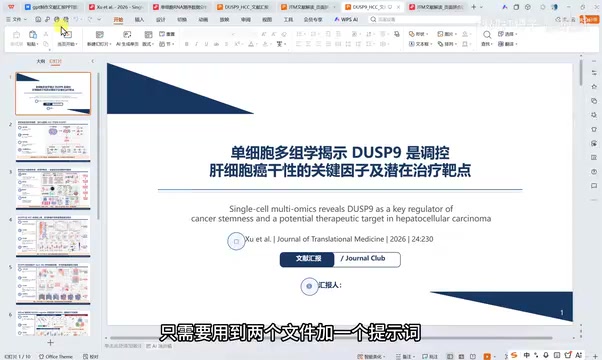
Using ChatGPT to Batch-Generate Editable Academic Slides: A Practical Efficiency Tool for Researchers
A complete workflow for batch-generating editable academic PPTs with ChatGPT: upload a PDF and template, use a structured prompt to render slides as images, then convert to editable format — all in under 30 minutes.

GPT-6 Full Power Guide: Unlocking Ultra Thinking Intensity via GPT-work
Step-by-step guide to using GPT-6 at full power: Apple ID registration, Plus/Pro subscription, and unlocking GPT-6 Ultra max thinking intensity via GPT-work client.