Diffusion Models: From Beginner to Expert — Theory Derivation and DiT Source Code in Practice
A systematic diffusion model learning path from theory to DiT source code practice to paper innovation.
The article targets two common detours in learning diffusion models — grinding at theory without understanding it, and running code without grasping the principles — and proposes a path from zero foundation to innovation. It emphasizes solidifying core theory (forward noising and reverse denoising), reading papers on acceleration, lightweighting, and structural optimization, and starting with the clear, model-rich DiT toolkit rather than large projects. The core method is comparing principles and optimization techniques line by line against DiT source code to close the knowledge loop, mastering two or three core codebases before pursuing advanced design and personal innovation. It notes that model improvements without hands-on source-code practice lack persuasiveness, and offers a full resource package of papers, videos, and runnable code.
Although diffusion models have passed the peak hype of 2022–2023, they remain a core hotbed for paper innovation and model improvement. Many people take the wrong path when learning diffusion models: either they grind away at gray-area theory without understanding it, or they can only run open-source code without any grasp of the underlying logic, leaving them helpless when it comes to modifying models or innovating. This article lays out a learning path that takes you from zero to a solid command of diffusion models — something you can put into practice and publish papers with — helping you avoid common pitfalls.
Build a Solid Core Theory Foundation: Clarify the Framework Before the Formulas
Learning diffusion models inevitably involves foundational theory and core mathematical derivations. Many people pile up towering formulas when writing related papers but only half-understand them, and then crash and burn in their defense or revision. The problem usually lies in rushing to apply formulas without fully grasping the underlying logic.
You don't need to dive into complex high-order derivations right away, but you absolutely must clarify the core idea of diffusion models: how forward diffusion gradually adds noise, and how reverse generation gradually denoises — string the complete logic of these two stages together. This is the foundation for later source-code work and innovation; without a clear basic framework, everything that follows is a castle in the air.
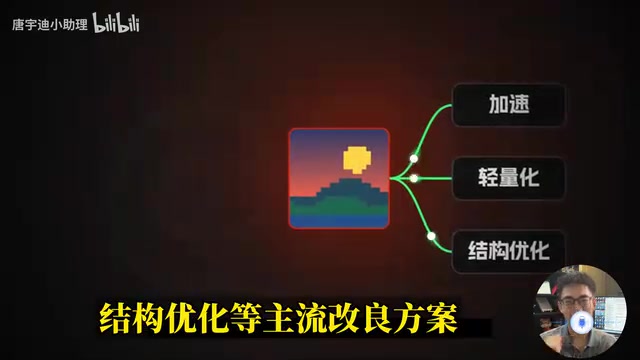
At the theory stage, you can do targeted close readings of high-quality papers, focusing on mainstream improvement approaches such as model acceleration, lightweighting, and structural optimization. These directions are the commonly used innovation ideas today — only by understanding them will you have an entry point for subsequent research projects.
The formal correspondence between forward diffusion and reverse generation
Forward diffusion is a fixed Markov chain: starting from real data $x_0$, Gaussian noise is gradually injected according to a preset noise schedule $\beta_t$, and after $T$ steps it approximates a standard normal distribution. Because each step is a linear Gaussian transformation, $x_t$ at any timestep can be sampled directly from $x_0$ via a closed-form solution — this is exactly the key to efficiently constructing supervision signals during training. The reverse process, on the other hand, requires learning a parameterized network to estimate the denoising mean at each step (or equivalently, to predict the noise $\epsilon$), and the training objective is usually simplified to the mean squared error of noise prediction. Understanding this symmetric structure of "fixed forward, learnable reverse" is more important than memorizing formulas — it explains why diffusion models can be trained stably, and it also determines where subsequent improvements such as accelerated sampling, distillation, and few-step generation can intervene.
Choose the Right Toolkit: Beginners Should Start with Lightweight Open-Source Projects
The biggest mistake beginners make is diving headfirst into massive, overly complex open-source projects and getting scared off immediately. A more sensible approach is to start with lightweight open-source toolkits with clear source code.
The most recommended here is the DiT (Diffusion Transformer) toolkit based on the low-born Transformer — it is also a core tool with very high usage in the industry. Its advantages: it comes with a large number of ready-to-use open-source models, has strong adaptability, and its source code is concise and clear, making it ideal for beginners to compare line by line and debug hands-on. When you later build your own projects, modify models, or innovate, this toolkit can be put to direct use — its practicality is maxed out.
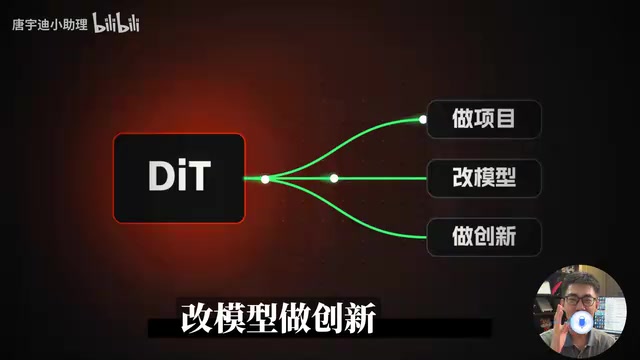
Key structural points of DiT (Diffusion Transformer)
DiT replaces the U-Net backbone commonly used in traditional diffusion models with a Transformer, performing denoising prediction on patch sequences in latent space. It follows the ViT approach: the latent variable is cut into patches, linearly projected into tokens, then stacked into several Transformer blocks, with timestep and class conditions injected into each block via adaptive layer normalization (adaLN). Compared with convolutional U-Nets, this structure is more regular and has clearer module boundaries; the call chain of "add noise — predict — sample" in the source code is crystal clear, making it very suitable for line-by-line reading alongside theory. At the same time, DiT is an important structural foundation for video generation models such as Sora; mastering it helps you understand the current mainstream diffusion Transformer paradigm and how it extends to resolution and conditional control.
Combine Theory with Source Code: Close the Loop on Knowledge Points
The correct learning method is to take the diffusion model principles, acceleration optimization, lightweighting improvements, and other knowledge points you learned earlier, and go through them line by line alongside the DiT source code. Those mathematical formulas you can't understand, algorithm flows you can't sort out, and experimental logic you can't connect — all of these should be resolved through hands-on source-code practice, forming a closed loop.
It is recommended to first thoroughly master two or three core source codebases, fully trace the algorithm's running logic, and completely understand the essence of diffusion models before delving into advanced algorithm design and personal innovation. This way, the difficulty of implementing research projects is directly halved. Here is a core principle: understand the principles first, master the source code, and only then talk about innovation and publishing papers. Skipping hands-on source-code practice makes all model improvements castles in the air, with no persuasiveness whatsoever.
Noise schedulers and samplers: the two places in source code most worth comparing against theory
When reading source code, the noise scheduler and the sampler are the two modules where theory and implementation connect most tightly. The scheduler defines how coefficients such as $\beta_t$ and $\alpha_t$ vary over time (linear, cosine, etc.), directly determining the forward noise curve and training difficulty; the sampler implements reverse iteration — DDPM requires thousands of steps, while DDIM, DPM-Solver, and others compress the number of steps to dozens or even a few through different numerical approximations. Mapping these two pieces of code one-to-one with the paper's formulas gives you an intuitive understanding of exactly which stage "acceleration" and "lightweighting" improvements modify, and it is also the starting point for subsequently replacing scheduling strategies or designing new samplers yourself.
From Theory to Innovation: A Complete Learning Resource Package
To help everyone get started quickly and avoid detours, this learning path comes with a curated collection of selected diffusion model papers, including directly viewable original paper texts, easy-to-understand principle explanation videos, and a full set of runnable source code — covering the complete chain from theoretical study and hands-on source-code practice to innovative ideas, so even complete beginners can systematically master diffusion models.
For students who want to modify models, innovate, and publish papers, connecting theory, source code, and innovative ideas is far more effective than simply watching videos or running code. First build a framework-level understanding, then use the toolkit at hand to run every stage through, and finally return to the papers to find points for improvement — this path is worth walking carefully.
One-line Summary
A systematic learning path for diffusion models, from theoretical framework to hands-on DiT source code to paper innovation.
Paragraph Summary
The article addresses two common detours in learning diffusion models — grinding at theory without understanding it, and only being able to run code without grasping the principles — and proposes a learning path from zero foundation to being able to innovate. First, it emphasizes building a solid core theory foundation, clarifying the complete logic of forward noising and reverse denoising, and doing targeted close readings of papers on mainstream improvement directions such as model acceleration, lightweighting, and structural optimization. Second, it recommends that beginners start with the DiT toolkit, which has clear source code and rich built-in models, rather than tackling large projects head-on. The core method is to compare principles and optimization techniques line by line against the DiT source code to form a closed knowledge loop — thoroughly mastering two or three core codebases before discussing advanced algorithm design and personal innovation. Finally, the article points out that model improvements without hands-on source-code practice lack persuasiveness, and provides a complete resource package of paper collections, explanation videos, and runnable source code.
Related articles

Diffusion Models for Beginners: From DDPM Principles to UNet in Practice
A systematic explanation of diffusion model (DDPM) principles, including mathematical derivations of forward noising and reverse denoising, plus UNet training and sampling code. Compares with GANs to help readers understand advantages and practical points—ideal for beginners.

AI Agents Keep Making the Same Mistakes? Try Looking for Common Ground
AI agent failures never seem to end? A developer offers a new perspective: many seemingly different failures may stem from the same pattern—the agent treats unchecked things as checked. This article analyzes the implications of this hypothesis for agent engineering practice, explores why fixing bugs one by one has limited effect, and how to build verification into the system level.

Claude Suddenly "Throws Punches": When AI Assistants Stop Being Compliant
A viral Reddit post "Claude throwing punches out here" sparks discussion: why do users feel both startled and resonant when Claude gives blunt, sharp responses? This article analyzes the style tension as LLMs shift from "docile assistant" to "trustworthy partner," plus practical implications for prompting.