Diffusion Models from Zero: Principles, Tools, and Innovation Paths Explained
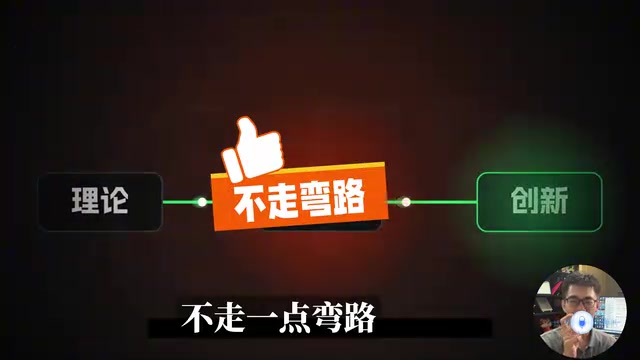
Diffusion model learning path: theory first, then DiT source code, then innovation—avoid only grinding theory or only running code.
This article outlines a systematic diffusion model learning path based on a popular Bilibili tutorial. It stresses building a solid framework of forward diffusion and reverse generation without overdoing advanced derivations, then recommends starting with the Transformer DiT toolkit to connect formulas with code line by line. Master two or three core codebases before pursuing innovation, which should focus on model acceleration and lightweight structural optimization grounded in extensive reading and coding practice.
Although the hype around Diffusion Models has cooled slightly from its peak, it remains a core direction for paper innovation and model improvement. Many learners fall into two extremes: either grinding through obscure mathematical theory, or only being able to run open-source code without understanding the underlying logic. Based on a popular Bilibili tutorial, this article lays out a complete learning path—from building a theoretical foundation to hands-on coding and finally to innovation—to help beginners systematically master diffusion models.
Building a Solid Theoretical Foundation: What to Derive and What to Skip
Learning diffusion models inevitably involves two core processes: forward diffusion and reverse generation. Forward diffusion gradually adds noise to transform the data distribution into a standard Gaussian distribution, while reverse generation learns a denoising process to reconstruct the data. Many students write seemingly impressive formula derivations in their papers, only to get stumped during their defense because their fundamentals are shaky. Therefore, you don't need to dive into overly advanced and complex derivations, but you must clarify the logical chain of the overall framework—this is the foundation for reading source code and pursuing innovation later.
During the theory-learning phase, you should also selectively read high-quality papers, focusing on mainstream improvement approaches such as model acceleration and lightweight structural optimization. According to the Bilibili creator, understanding commonly used innovation ideas today can help you find entry points for future research projects. Theory, derivation, and papers are all indispensable, but the order and depth of study require deliberate trade-offs.
The forward diffusion process is typically modeled as a Markov chain that adds a small amount of Gaussian noise to the data at each step; after enough steps, the data distribution approaches a standard normal distribution. The reverse process learns a parameterized denoising network that gradually recovers data from pure noise. The training objective is generally derived through the variational lower bound (ELBO) and ultimately simplified to a mean squared error loss for predicting noise—this is the core of DDPM (Denoising Diffusion Probabilistic Models). Understanding this derivation chain helps clarify why diffusion models can generate high-quality samples and why different improvement schemes (such as accelerated sampling) are effective.
Using the Right Toolkit: Closing the Loop with DiT Source Code
The most common mistake beginners make is diving straight into overly complex open-source projects and getting discouraged. The tutorial specifically recommends starting with the low-barrier Transformer DiT (Diffusion Transformer) toolkit. According to the creator, DiT includes many ready-to-use open-source models, offers strong adaptability, and has concise, clear source code that is ideal for line-by-line bug tracing—and it can be directly reused for future projects and model modifications.
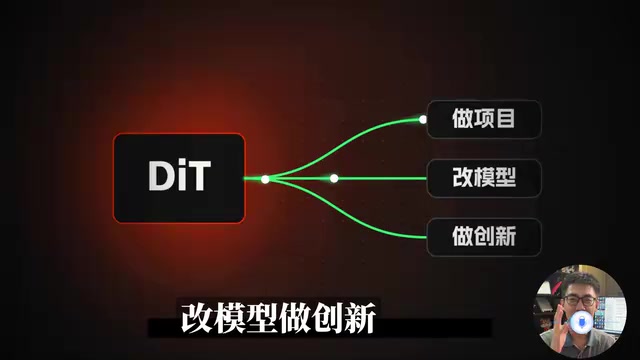
The right learning approach is to take the principles, acceleration optimization, and lightweight improvement knowledge you've learned and go through the DiT source code line by line. Mathematical formulas you don't understand and algorithm flows you can't sort out all get connected through hands-on coding. Master two or three core codebases first, thoroughly understand the algorithm's execution logic, and fully grasp the essence of diffusion models—then move on to advanced algorithm design, and the difficulty will be cut in half.
One core principle must be kept in mind: understand the principles and master the source code first, then talk about innovation and publishing papers. Model improvements that skip source-code practice are castles in the air and carry no persuasive weight.
DiT (Diffusion Transformer) is a generative model that introduces the Transformer architecture into diffusion models, replacing the traditional U-Net as the backbone of the denoising network. The core idea of DiT is to leverage the Transformer's powerful sequence modeling capability to process sequences of image patches and to inject timestep and class conditions through adaptive layer normalization (adaLN). Because of its concise structure and good scalability, DiT has become the foundational architecture for many advanced diffusion models (such as Sora). Open-source implementations usually provide pretrained models and clear training scripts, making them a suitable entry point for learning diffusion model code implementations.
Putting Innovation into Practice: From Source Code to Research Projects
Once the theoretical foundation and hands-on coding are solid, there is fertile ground for identifying innovation points. The tutorial notes that you can look for improvement opportunities around directions such as model acceleration and lightweight structural optimization—these are also common innovation paths in current papers.
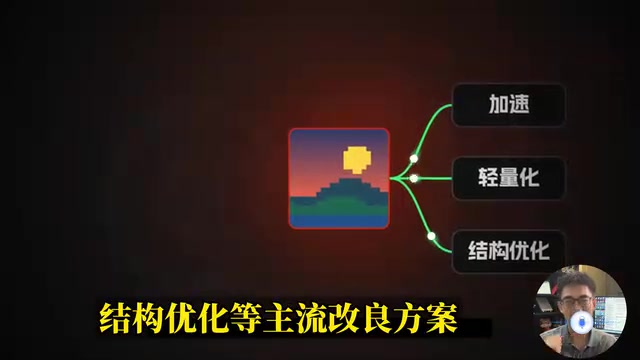
It should be noted that innovation is not about random guesswork; it is built on extensive reading and coding practice. Only by understanding the bottlenecks and design trade-offs of existing models can you propose persuasive improvement schemes.
For learners who want to avoid detours, the tutorial author has put together a resource package that includes a curated collection of diffusion model papers, principle-explanation videos, and runnable source code, covering the full chain from theory to innovation ideas. However, resources are ultimately supplementary—true understanding comes from deriving by hand and debugging line by line.
Summary of the Learning Path
There are no shortcuts to learning diffusion models, but there is a clear order: first build a theoretical framework without getting bogged down in overly advanced derivations; then choose a lightweight toolkit (such as DiT) and read the source code line by line to connect formulas with code; finally, look for innovation points on a solid foundation. Only by avoiding the two pits of "only grinding theory" and "only running code" can you truly gain the ability to modify models and publish papers.
One-line Summary
Diffusion model learning path: build theory → hands-on DiT source code → innovation in practice, avoiding the traps of only grinding theory or only running code.
Paragraph Summary
Based on a popular Bilibili tutorial, this article lays out a systematic learning path for diffusion models from theory to innovation. It first emphasizes solidifying the core framework of forward diffusion and reverse generation—you don't need to grind through advanced derivations, but you must clarify the logical chain and selectively read papers on acceleration and lightweight improvements. Next, it recommends starting with the Transformer DiT toolkit, whose concise source code and strong adaptability make it suitable for line-by-line debugging and connecting formulas to code. Master two or three core codebases first before discussing innovation. Finally, it points out that innovation should focus on directions such as model acceleration and lightweight structural optimization, built on extensive reading and coding practice. The core principle: understand the principles and master the source code first, then talk about innovation and publishing papers—improvements that skip source code lack persuasive weight.
Related articles

Diffusion Models for Beginners: From DDPM Principles to UNet in Practice
A systematic explanation of diffusion model (DDPM) principles, including mathematical derivations of forward noising and reverse denoising, plus UNet training and sampling code. Compares with GANs to help readers understand advantages and practical points—ideal for beginners.

AI Agents Keep Making the Same Mistakes? Try Looking for Common Ground
AI agent failures never seem to end? A developer offers a new perspective: many seemingly different failures may stem from the same pattern—the agent treats unchecked things as checked. This article analyzes the implications of this hypothesis for agent engineering practice, explores why fixing bugs one by one has limited effect, and how to build verification into the system level.

Claude Suddenly "Throws Punches": When AI Assistants Stop Being Compliant
A viral Reddit post "Claude throwing punches out here" sparks discussion: why do users feel both startled and resonant when Claude gives blunt, sharp responses? This article analyzes the style tension as LLMs shift from "docile assistant" to "trustworthy partner," plus practical implications for prompting.