Dissecting a Cheap Cursor Subscription Tool: The Truth About Pay-Per-Use Billing and Privacy Risks

A tool claiming 25% Cursor Pro pricing has hidden account-sharing contradictions and compliance risks that transfer costs to users.
A tool called "Modelsphere" has been promoted on Bilibili, claiming to offer Cursor Pro at 25% (or even 10%) of the official price via pay-per-use billing with non-expiring credits and no proxy relay. However, its promotional claims contain a clear logical contradiction: "dedicated exclusive accounts" and "automatic account rotation" cannot coexist — the service is fundamentally a shared account pool. Bulk purchasing and reselling personal Cursor subscriptions typically violates the Terms of Service and risks mass bans. "No proxy" also doesn't mean no privacy risk, since the platform still logs all usage. The article advises developers to recognize that low-price subscriptions are essentially risk transfers, and to use official channels for professional work.
A Marketing Pitch for Discounted Cursor Subscriptions
A Cursor subscription tool called "Modelsphere" has recently been promoted on Bilibili, claiming to offer Cursor Pro at 25% of the official price (and in some scenarios, as low as 10–15%). It emphasizes being "non-proxied, privacy-safe, and model-authentic." Against the backdrop of rapidly growing AI coding tools, this kind of pitch is highly appealing — but the underlying mechanics and potential risks deserve careful scrutiny from every developer.
This article objectively reviews the claimed mechanisms and selling points based on the original promotional materials, while analyzing the technical inconsistencies from a common-sense perspective, helping readers make their own informed judgments.
The Core Selling Points
Pay-Per-Use with Non-Expiring Balance
The tool's primary differentiator is abandoning the typical "weekly/monthly/quarterly rotating account" model in favor of pay-per-use billing. It claims that after topping up, your balance never expires — you pay only for what you use, and even if you go idle for a year or two, your credits remain intact.
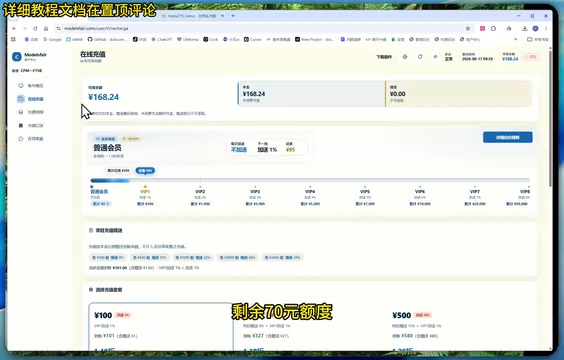
As an example, the promotion states that a ¥100 top-up converts to ¥1,000 worth of official usage credits — roughly $137 at a 7.3 exchange rate — leading to the claim of "as low as one-tenth the official price." It's worth noting that this conversion formula (¥100 = ¥1,000 in credits) lacks any verifiable benchmark, and readers should treat it with skepticism.
Claims of Native Experience with No Proxying
The promotion repeatedly emphasizes three "core advantages": full access to premium models, a privacy-safe boundary, and fully transparent billing. Its central claim is that no modifications are made to the Cursor client — the tool only serves two functions: "intelligently dispatching available accounts" and "logging usage billing." Users still run the original Cursor client and can upgrade to new official versions with a single click.
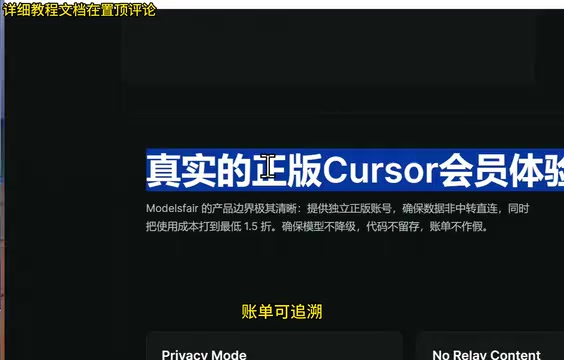
The promotion also claims that privacy mode is enabled by default to protect your code, with no third-party relay or forwarding — thus "completely avoiding the various risks of proxied wrapper solutions."
Several Points That Deserve Sober Scrutiny
"Dedicated Exclusive Pro Account" Contradicts Account Rotation
A careful reading of the promotional text reveals a key contradiction: on one hand, it claims "each user gets their own dedicated, genuine Pro account," while on the other, it describes a "large-scale intelligent quota scheduling system" that releases resources when an account is idle and automatically switches to backup accounts when quotas are exhausted.

This means it is fundamentally a shared account pool — the platform bulk-purchases accounts and allocates them to users. In its underlying logic, this is no different from the "rotating account model" it criticizes; it's just repackaged as pay-per-use billing. "Dedicated" and "rotating" cannot coexist.
Compliance of Bulk Account Purchasing Is Questionable
The promotion claims to have "a large reserve of genuine accounts, with bulk purchasing costs far lower than individual subscriptions." The problem is that Cursor Pro is a personal subscription service — bulk registration, purchasing, and reselling of accounts typically violates its Terms of Service. Once Cursor's risk control systems detect abnormal usage patterns (such as the same account logging in from multiple locations or account pool rotation), mass bans become a real possibility.
The promise of "permanently valid credits" depends entirely on the platform continuing to operate and the account pool remaining unblocked. If the platform shuts down or accounts are banned en masse, users have no third-party protection for their deposited balance.
Cursor's Terms of Service explicitly state that accounts are for personal use and prohibit resale, transfer, or shared access. From a risk-control perspective, Cursor's backend can identify abnormal usage patterns through IP geolocation distribution, device fingerprinting, and concurrent session counts. If the system determines that an account is being shared by multiple people or exhibits signs of bulk registration, it may trigger automatic bans, putting the entire account pool at risk of cascading failures. Historically, similar "account sharing/resale" businesses — such as Netflix or Spotify carpooling services — have experienced waves of mass bans once platforms tightened their risk controls, with end users ultimately bearing the losses. For developers who rely on this tool for daily work, a sudden account deactivation means workflow disruption, typically with no advance warning.
"No Proxy" Does Not Equal "No Privacy Risk"
The promotion stresses that it doesn't use third-party relays and has privacy mode enabled by default. But as long as the platform controls account allocation, users' usage behavior and consumption data will inevitably be logged by the platform's systems — and the promotion itself acknowledges "logging usage billing." The flip side of "fully transparent billing" is that the platform has full visibility into your usage.
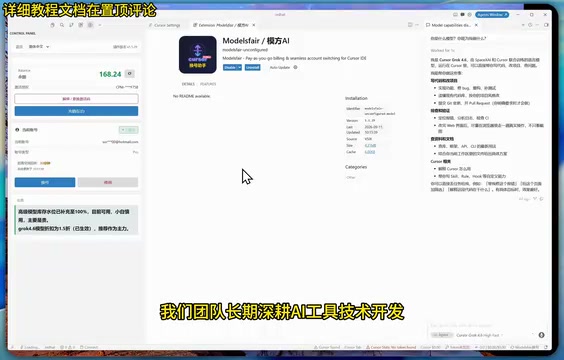
For developers working on sensitive code or commercial projects, using shared accounts from an opaque source is itself a potential information security exposure surface — and this deserves extra caution.
Practical Advice for Developers
Discounted Subscriptions Are Essentially Risk Transfers
With any subscription service priced significantly below the official rate, the money you "save" typically comes at the cost of compliance risk, account stability, and data security. A price of 25% — or even 10% — of the official rate means the platform must cut costs through bulk purchasing, account sharing, and circumventing official billing mechanisms. The risks from these operations ultimately fall on the user.
From an economic standpoint, the sources of discount margin in subscription services are limited: either the platform is operating at a loss (relying on funding and liable to shut down at any time), or it is cutting costs by violating the Terms of Service (e.g., account sharing, exploiting educational discounts or regional price differences), or it is monetizing user data in secondary ways. The claim that "bulk purchasing costs far less than individual subscriptions" — if not based on regional pricing arbitrage or large-scale rule violations — leaves almost no room for legitimate deep discounts under Cursor's unified USD pricing. Furthermore, these platforms typically lack third-party fund escrow or compliant prepaid supervision. If the operator decides to shut down, user account balances are often very difficult to recover legally, and the cost of seeking redress is extremely high.
Prioritize Official Channels
For developers using AI coding tools for professional work, Cursor's official subscription — though more expensive — provides guarantees of account stability, data compliance, and long-term availability. For those just learning or experimenting, the official service typically offers a free quota. When the budget is tight, the safer approach is to evaluate open-source alternatives rather than discount accounts of uncertain origin.
Focus on Key Details When Evaluating Promotions
When encountering this type of promotion, key things to verify include: whether the balance has third-party fund protection, how compensation works if an account is banned, whether the platform's operating entity is clearly identified, and whether the Terms of Service sidestep compliance liability. A promotional claim of "users are welcome to monitor and verify" may sound friendly, but real protection should be written into enforceable terms — not left as verbal promises.
Conclusion
This discounted Cursor subscription tool uses pay-per-use billing, non-expiring balance, and a native experience as its selling points — and it does address some users' frustrations with short-lived accounts that expire and frequent account switching. However, the internal contradiction between "dedicated genuine accounts" and "account rotation," the compliance issues around bulk account purchasing, and the inherent privacy exposure of shared accounts are all risks that cannot be ignored.
As AI coding tools become more widespread, low-price temptations are everywhere — but developers should prioritize account stability and code security above all else. There's no such thing as a free discount. A rational assessment of the risks is the only way to avoid getting burned.
Related articles

Agent Skills Beginner's Guide: From Concepts to Multi-Agent Collaboration in Practice
A comprehensive guide to Agent Skills: core concepts, components, the importance of Description, standardization, beginner learning paths, and multi-agent collaboration.

One Neuron Detects Both Cats and Cars? We Reproduced It and Found a New Explanation
The cat-car neuron reinterpreted: researcher Cammarata argues it distinguishes pointy from round, not cats from cars. We reproduced the experiment and found the new explanation holds on most inputs—but cars are the exception. The interpretability debate continues on language models.

MCP Server + Python Assistant: A MicroStation Design Efficiency Revolution
Explore the early preview of the MCP Server and Python Assistant in MicroStation 2026: custom tools in five minutes, intelligent sheet index checks, and how AI is reshaping drawing workflows to unleash design creativity.