DIY Printer Build Tutorial: Constructing a Complete Printing System from Scratch
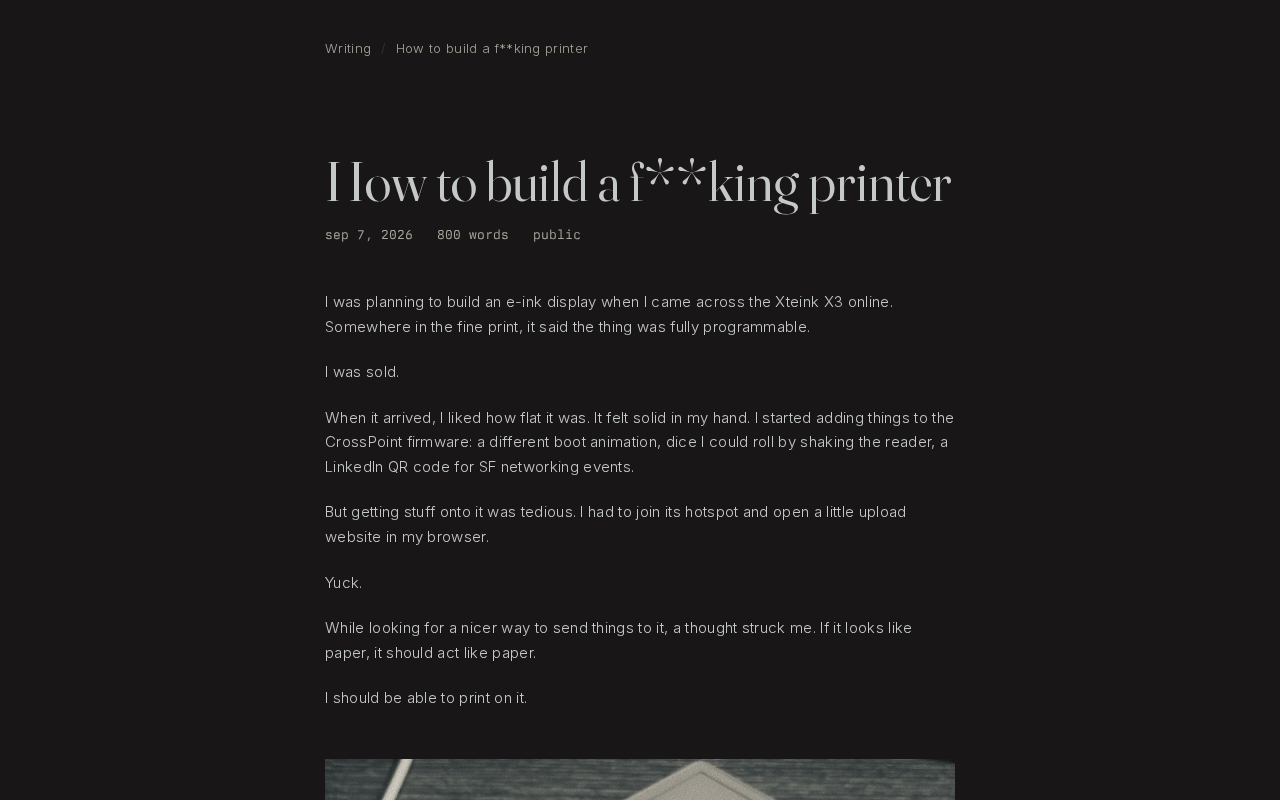
A deep dive into building a complete printer from scratch, covering mechanics, ink systems, and software.
This article walks through the full process of building a DIY printer from scratch, covering mechanical structure design with stepper motors and precision positioning, ink delivery and ejection technologies (piezoelectric vs. thermal inkjet), and the software control stack from rasterization to halftoning. It highlights the educational value of such projects for understanding mechatronics and celebrates the open-source maker spirit.
In the digital age, printers are a common piece of office equipment, yet their inner workings remain largely unknown. When developer Nishant Josh decided to build a printer from scratch, the process revealed a wealth of technical details spanning hardware engineering, mechanical design, and software control.
The Technical Value of Building Your Own Printer
This project was driven by a desire to explore the underlying principles of technology. Unlike simply buying an off-the-shelf product, building a printer from scratch requires a deep understanding of how multiple subsystems—ink delivery, paper transport, precision positioning—work together.
Building from the ground up is essentially a technical deconstruction of modern manufacturing. When we hit the print button, the mechanical precision, electronic control, and software algorithms behind it are far more complex than they appear on the surface. By building one with your own hands, you can truly grasp the operational logic of each technical component. This bottom-up learning approach aligns with the educational philosophy behind "From NAND to Tetris" in computer science—only by truly understanding every layer of abstraction can you build a complete technical knowledge framework.
Key Points in Mechanical Structure Design
The mechanical components form the foundational framework of the entire system. Core challenges include the paper feed mechanism, the print head movement track, and precise stepper motor control. These movements need to achieve millimeter-level or even higher precision—any deviation directly affects print quality or causes paper jams.
Stepper motors are among the most critical actuators in a DIY printer. Unlike ordinary DC motors, stepper motors can decompose a full rotation into discrete "steps," with each step corresponding to a fixed angle (commonly 1.8°/step, or 200 steps per revolution). Through microstepping technology, each step can be further subdivided into smaller angular increments, achieving sub-millimeter positioning accuracy. In printer applications, stepper motors on two axes—X-axis (horizontal print head movement) and Y-axis (longitudinal paper feed)—typically need to work in coordination, similar to the motion control principles used in CNC machines. Commonly used driver chips like the A4988 or TMC2209 receive pulse signals and convert them into precise motor rotations.
Traditional printers use complex gear systems and sensors to ensure smooth paper movement. While a DIY version can simplify some structures, it must adhere to fundamental principles: stable power transmission, reliable position feedback, and a fault-tolerant paper detection mechanism. Position feedback typically relies on optical encoders or linear scales—the former detects rotation angle via etched lines on a spinning disc, while the latter uses precision-ruled strips to measure linear position, achieving resolutions of several hundred DPI. The design of these components directly determines the printer's usability.
Ink Delivery and Ejection Control
The core of inkjet printing lies in precisely ejecting tiny ink droplets onto designated positions on paper. This involves either piezoelectric or thermal bubble technology, both requiring precision electronic control. Balancing ink viscosity, nozzle size, and ejection frequency is a key technical challenge.
Specifically, the two major inkjet ejection technologies represent different physical approaches. Piezoelectric technology, championed by manufacturers like Epson, leverages the property of piezoelectric ceramic crystals that deform when electrified, squeezing the ink chamber to shoot droplets from the nozzle. This approach offers better ink compatibility and longer nozzle life. Thermal inkjet technology, widely used by HP and Canon, places a micro heating resistor inside the ink chamber that instantly heats the ink to approximately 300°C, generating a bubble. The expanding bubble pushes the droplet out of the nozzle. When the bubble collapses, negative pressure draws in fresh ink, and the entire cycle can be completed in microseconds. For DIY projects, thermal inkjet print heads have a relatively simpler structure but demand extremely precise temperature control. A single ink droplet typically has a volume in the 1–5 picoliter range (one trillionth of a liter), meaning nozzle diameters are only a few tens of micrometers—thinner than a human hair.
Another challenge with ink systems is anti-clogging design. Commercial printers come equipped with dedicated cleaning routines and cartridge structures, while DIY systems require more frequent maintenance and tuning. This aspect of engineering involves not just mechanical design but also an understanding of chemistry and fluid dynamics. The solvent evaporation rate, surfactant concentration, and pigment particle size in the ink formulation all affect nozzle reliability—ink that's too thin bleeds and causes blurry prints, while ink that's too thick increases clogging risk. Commercial ink manufacturers typically need years of R&D to find the optimal balance.
Software Control System Development
Once the hardware is assembled, the software control layer is what truly brings the printer to life. The system needs to receive print commands from a computer and convert them into precise sequences of mechanical actions. This involves the coordinated operation of multiple modules including image processing, path planning, and motor driving.
From high-level printing languages (PostScript, PCL, etc.) to low-level GPIO signals, the conversion process in between contains a vast amount of technical detail. PostScript is a Turing-complete programming language invented by Adobe in 1984 that can precisely describe the position, size, color, and shape of every element on a page. It is widely used in professional publishing and high-end printing. PCL (Printer Command Language), developed by HP, focuses more on office printing efficiency. In a DIY printer, developers typically don't implement full parsing of these complex protocols. Instead, they first convert the print content to a bitmap on the computer side (rasterization) and then transmit the pixel data to the printer control board in a simpler format. This rasterization process (RIP, Raster Image Processing) is itself a computationally intensive task involving multiple algorithmic steps such as font rendering, vector graphics conversion, and halftoning.
Optimizing print speed, handling color space conversion, and implementing bidirectional printing—each aspect requires in-depth research and iterative debugging. Color space conversion is a particularly noteworthy technical challenge: monitors use the RGB (Red, Green, Blue) additive color model, while printers use the CMYK (Cyan, Magenta, Yellow, Key/Black) subtractive color model. The color gamuts of these two models don't fully overlap, so color management (ICC Profiles) is needed to ensure colors are reproduced as accurately as possible. Furthermore, since a printer can only choose to deposit or not deposit an ink droplet at each pixel—unlike a screen which can continuously adjust brightness—halftoning algorithms such as Floyd-Steinberg error diffusion or ordered dithering are needed to convert continuous-tone images into binary dot patterns, simulating grayscale and color gradations through varying dot density. This is also why print resolution (e.g., 1200 DPI) needs to be far higher than screen resolution (e.g., 96 PPI) to achieve visually acceptable results.
Community Response and Value in the Open Source World
This project received 285 upvotes and 54 comments on Hacker News, reflecting the tech community's sustained interest in DIY hardware projects. Hacker News, operated by Y Combinator, has been one of the most influential information aggregation platforms in Silicon Valley and the global tech community since its launch in 2007. Its user base consists primarily of software engineers, entrepreneurs, and technology researchers who have a high appreciation for in-depth technical content. Earning 285 upvotes on HN is a quite impressive achievement, typically indicating that the content has struck a broad technical chord. The comment section featured professional engineers sharing experiences and improvement suggestions, forming a valuable knowledge exchange platform.
From an educational perspective, projects like this are an effective pathway to understanding complex systems. Compared to reading technical documentation, actually building something leads to a much deeper grasp of mechatronics knowledge. Mechatronics itself is an interdisciplinary field that integrates mechanical engineering, electronic engineering, computer science, and control engineering. A DIY printer happens to cover core knowledge across all these domains: mechanical structure design corresponds to mechanical engineering, motor driving and sensors correspond to electronic engineering, and control algorithms and image processing correspond to software development. For students and makers, this is an ideal comprehensive learning platform.
From an open-source culture perspective, sharing the build process carries on the hacker spirit—understanding tools, modifying tools, and creating tools. In recent years, the global Maker Movement has flourished hand-in-hand with open-source hardware platforms like Arduino and Raspberry Pi, which have significantly lowered the barriers to hardware development and made it possible for individuals to manufacture complex devices. While a DIY printer can hardly compete with commercial products in terms of cost and performance, it embodies the pursuit of technological autonomy and helps more people recognize the engineering complexity hidden behind seemingly simple everyday devices.
Practical Experience and Future Optimization
The author documented the full process of multiple failures and improvements on their blog. Key takeaways include: precision is the top priority, debugging takes far longer than expected, and modular design is essential. These insights offer practical reference value for hardware makers. The philosophy of modular design is particularly critical here—breaking the printer down into independent modules for paper feeding, print head control, ink supply, and software control not only facilitates independent debugging and troubleshooting but also makes future upgrades to individual subsystems possible without overhauling the entire design.
Future improvement directions include increasing print resolution, adding color printing capabilities, and optimizing ink utilization efficiency. More importantly, this project could evolve into an educational kit, giving more people the opportunity to build a printer with their own hands and deeply understand how it works. It's worth noting that a similar educational kit approach has already proven successful in the 3D printing space—the RepRap project, launched in 2005, has enabled millions of people to build their own 3D printers through open-source designs, greatly advancing the adoption of additive manufacturing technology. While a DIY 2D printer follows a different technical path, it holds similar potential in terms of educational value and community-driven development.
This project reinforces an important point: even in a highly commoditized era, deeply understanding the technical core of things still holds unique value. When we take apart the devices we take for granted, we often discover astonishing engineering wisdom and design thinking. As Richard Feynman once said, "What I cannot create, I do not understand." This DIY printer is a vivid embodiment of that philosophy.
Related articles
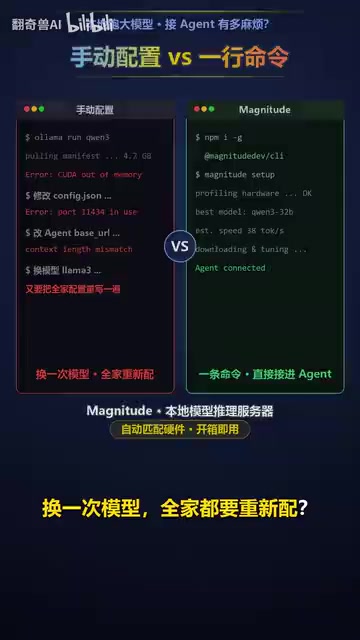
Magnitude: One Service to Handle Local LLM Inference and Agent Integration
Magnitude is an open-source local LLM inference server that auto-optimizes for your hardware and integrates seamlessly with Codex, Claude Code, and other AI Agents.
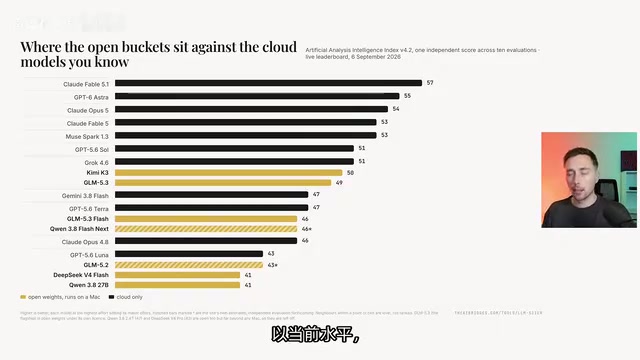
Mac Local AI Buying Guide: A Complete Breakdown of Memory Configurations and Model Speed
In-depth analysis of Mac memory requirements, inference speed, and costs for running local AI LLMs. From 48GB to 512GB configs — which models fit, how bandwidth affects speed, and local vs. cloud cost comparison.
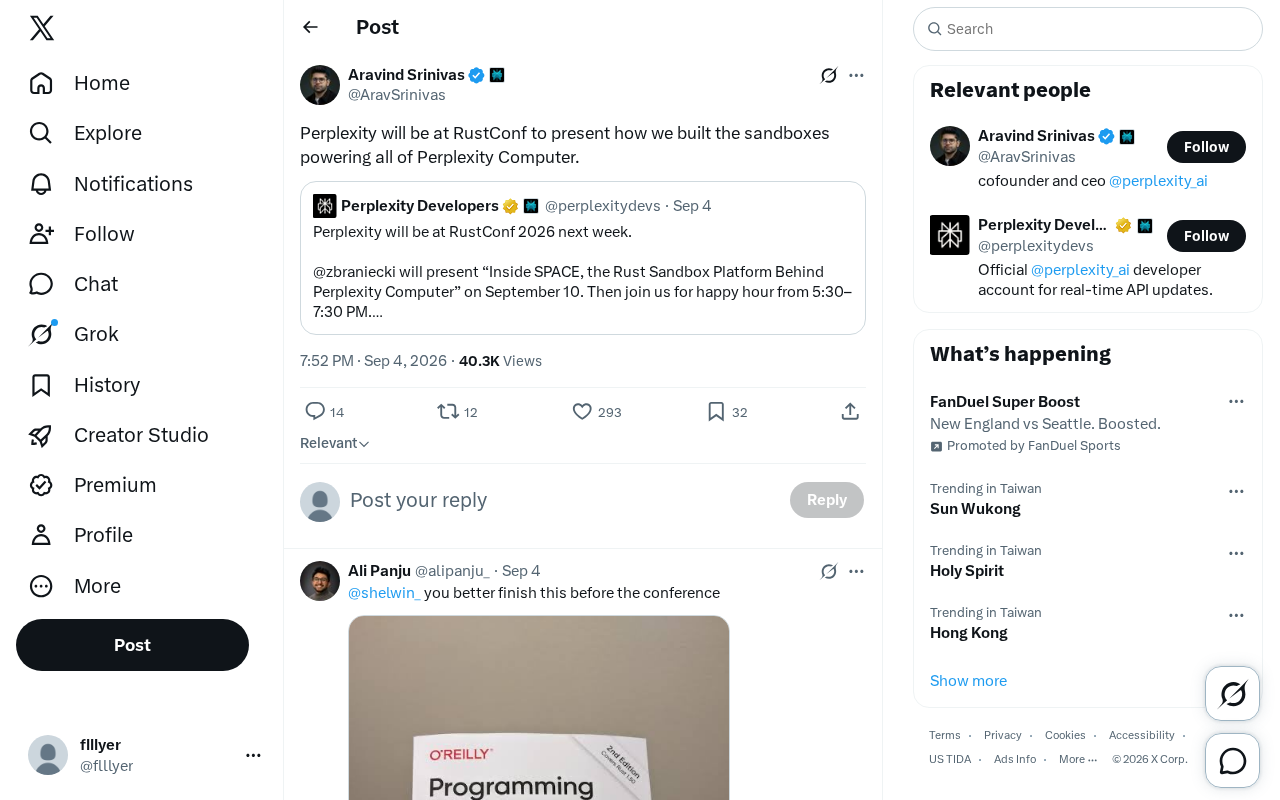
Perplexity Builds AI Sandbox with Rust: A Deep Dive into the RustConf Technical Talk
Perplexity shares its Rust-built sandbox architecture for its Computer product at RustConf. Explore why Rust is ideal for secure AI execution environments.