Dnipro: A Chrome Extension That Detects Fake LinkedIn Accounts with One Click
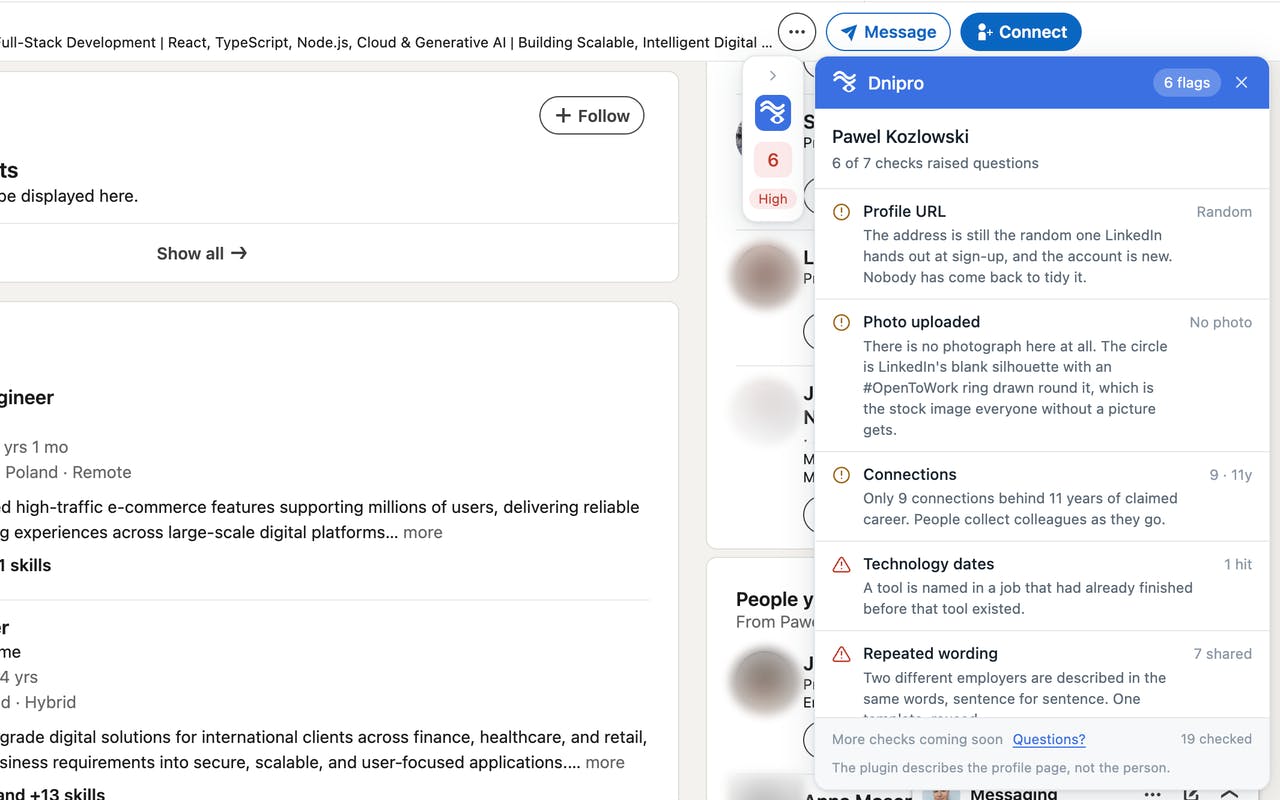
Dnipro is a Chrome extension that detects fake LinkedIn profiles using seven verification checks.
Dnipro is a free, open-source Chrome browser extension designed to combat fake LinkedIn accounts. It uses seven detection indicators — including profile completeness, activity patterns, and connection analysis — to generate a risk score for any LinkedIn profile. Built for HR professionals, business developers, and individual users, it runs locally without sending data to external servers. As an open-source project by developer Yevhenii Lymar, it offers transparency and community-driven improvement potential.
Fake accounts and suspicious profiles have become an increasingly serious problem on professional social networks. As the world's largest professional networking platform with over 900 million users, LinkedIn has seen the fake account problem grow alongside its rising value. According to LinkedIn's official 2023 Transparency Report, the platform needs to remove millions of fake accounts every year. These fraudulent profiles are typically used for various malicious purposes: recruitment scams (fake job postings designed to steal personal information or money), corporate espionage (impersonating industry professionals to extract trade secrets), phishing (building trust before executing scams), and opinion manipulation. The proliferation of fake accounts not only undermines the platform's credibility but also exposes users to real financial and information security risks.
From fake recruiters to business fraud, these fabricated LinkedIn accounts are eroding the platform's foundation of trust. Addressing this pain point, a Chrome browser extension called Dnipro has emerged. It quickly identifies suspicious accounts on LinkedIn, helping users spot potential risks at the earliest opportunity.
How Dnipro Works: Seven Fake Account Detection Mechanisms
A Chrome Extension is a browser plugin built with web technologies (HTML, CSS, JavaScript) that can enhance or modify browser functionality. Extensions define their permissions and behaviors through a Manifest file and can access the DOM (Document Object Model) structure of the current webpage to read page content, inject scripts, modify page displays, and more. Extensions like Dnipro use Content Scripts technology to run automatically when a LinkedIn page loads, extracting user information fields from the page for analysis.
Dnipro employs a system of seven detection indicators to evaluate the authenticity of a LinkedIn profile. When a user opens a LinkedIn profile page, the extension automatically reads the page information and performs a systematic analysis against common fake account characteristics.
Fake account detection is a classic Anomaly Detection problem. A single feature is often insufficient for accurate judgment, since real accounts may also exhibit certain 'abnormal' behaviors (e.g., newly registered users with sparse information, career changers with complex backgrounds, etc.). Each of the seven checks targets anomaly signals frequently found in fabricated profiles. A single signal may not be conclusive on its own, but when multiple indicators trigger warnings simultaneously, they form a pattern worth paying attention to.
The multi-dimensional cross-validation approach used by Dnipro is essentially rooted in Ensemble Learning: combining multiple weak discriminative indicators to form strong discriminative capability. The seven detection mechanisms may include: profile completeness (photo, work experience, educational background), activity patterns (posting frequency, interaction quality), connection relationships (number and quality of mutual connections), temporal consistency (whether account creation date aligns with the career timeline), and content authenticity (linguistic features of descriptions, whether they appear templated). Each indicator is assigned a weight, and a comprehensive risk score is calculated. This multi-dimensional cross-validation method effectively reduces false positive rates while improving detection accuracy for genuinely suspicious accounts.
You may not have noticed, but Dnipro's design philosophy is to assist judgment rather than deliver absolute verdicts. It doesn't simply label an account as "real" or "fake" — instead, it provides a risk score, allowing users to make their own informed decisions based on more comprehensive information.
Use Cases: From Recruitment Screening to Business Partner Verification
This LinkedIn detection tool is primarily used in professional contexts:
A Productivity Tool for HR and Recruiters
For HR professionals and recruiters, Dnipro can quickly filter out fake candidates during the resume screening phase, saving significant manual verification time. When processing large volumes of job applications, this kind of automated preliminary screening tool can dramatically improve recruitment efficiency and prevent wasted effort on fraudulent profiles.
Risk Mitigation in Business Development
Due Diligence is the process of conducting comprehensive checks on counterparties in business activities. Originating in the financial investment field, it has since expanded to cover recruitment, partnerships, and all types of business scenarios. In the digital age, online identity verification has become a critical component of due diligence. Business development professionals can greatly benefit from Dnipro. When establishing new business partnerships or evaluating potential clients, quickly verifying the authenticity of a counterpart's LinkedIn profile becomes essential.
Traditional due diligence relies on manual verification (background check companies, phone verification, credential authentication, etc.), which is expensive and time-consuming. Tools like Dnipro offer a low-cost preliminary screening solution that can quickly eliminate obviously suspicious subjects. A profile with numerous suspicious signals may indicate fraud risk or unprofessional business conduct.
Personal Network Security for Individual Users
Additionally, for individual users, this tool can help identify potential scam accounts or fake connection requests, protecting their professional network security.
Market Positioning and Competitive Advantages
After launching on Product Hunt, Dnipro received 10 upvotes and ranked 18th for the day. In terms of categorization, it was listed under Chrome Extensions, Recruiting, and LinkedIn — precisely targeting its intended user base.
While LinkedIn officially combats fake accounts, it primarily relies on user reports and algorithmic detection, lacking an instant, user-facing verification tool. Dnipro fills this gap by providing users with proactive defense capabilities rather than passively waiting for the platform to take action. This embodies the concept of decentralized security verification: distributing verification capabilities to end users so that everyone becomes the first line of defense for their own security — not depending on a single central authority, but building trust through distributed mechanisms.
Open Source refers to software whose source code is publicly available, allowing anyone to view, use, modify, and distribute it. The tool was created by developer Yevhenii Lymar and is offered as an open-source project. This transparency allows users to understand how the detection mechanisms work, audit the code to confirm there is no malicious behavior (such as data theft), and enables the community to contribute improvement suggestions. Open-source projects are typically hosted on platforms like GitHub and rely on community contributions for iteration, offering advantages in transparency, rapid development, and low cost.
Technical Features and Limitations
Dnipro runs as a browser extension, requiring no additional standalone software installation and maintaining a low barrier to entry. Compared to standalone applications, browser extensions offer several advantages: no extra installation needed, seamless integration with the browsing experience, and real-time response to page changes. It uses a local analysis mechanism, directly reading current page information for detection without uploading data to third-party servers. Local processing means data never leaves the user's device, providing a degree of privacy protection and avoiding privacy leak risks.
However, tools like this also have inherent limitations. Fake account creation techniques are constantly evolving, and relying solely on feature matching may fail to identify carefully crafted, sophisticated fake accounts. Additionally, some legitimate accounts may be flagged as suspicious due to incomplete information or unusual usage habits.
Therefore, Dnipro is best suited as a first-line screening tool in the due diligence process rather than the final basis for judgment. This aligns with the 'defense in depth' strategy in risk management: using automated tools to handle large volumes of low-risk decisions while applying professional human judgment to complex, high-risk situations. Before making important decisions, it remains essential to combine other verification methods with human judgment.
Future Outlook: The Trend Toward Intelligent Detection
As AI technology advances, future fake account detection tools are likely to integrate more intelligent capabilities. Behavioral Pattern Analysis monitors user behavior sequences (such as login times, browsing paths, interaction frequency) to identify anomalies. Real users typically have stable behavioral habits, while fake accounts or bots often exhibit batch-processed, regularized abnormal patterns.
Social Network Graph analysis examines the structure of a user's connection relationships. Real users' social networks typically show organic growth characteristics: clustering phenomena (colleague and alumni groups), mixed connection quality (a mix of strong and weak ties). Fake accounts often lack authentic social backgrounds, and their connection relationships show artificially constructed features.
Content semantic consistency checks can leverage Natural Language Processing (NLP) to analyze whether job descriptions match work experience, and use deep learning to identify more covert fabrication patterns. As an open-source project, Dnipro has the potential for rapid iteration and community-driven optimization.
For professionals concerned about cybersecurity and professional integrity, tools like this represent a new defensive approach — putting security verification capabilities directly in the hands of every user rather than relying entirely on centralized platform management. The advantages of this model include immediacy (real-time detection), personalization (decision-making based on individual risk preferences), and scalability (no additional burden on the platform). In the future, we may see hybrid models emerge: platforms providing baseline security while user tools offer enhanced protection, forming a multi-layered security ecosystem. This may well be one of the most effective approaches to addressing the increasingly complex crisis of trust on the internet.
Related articles
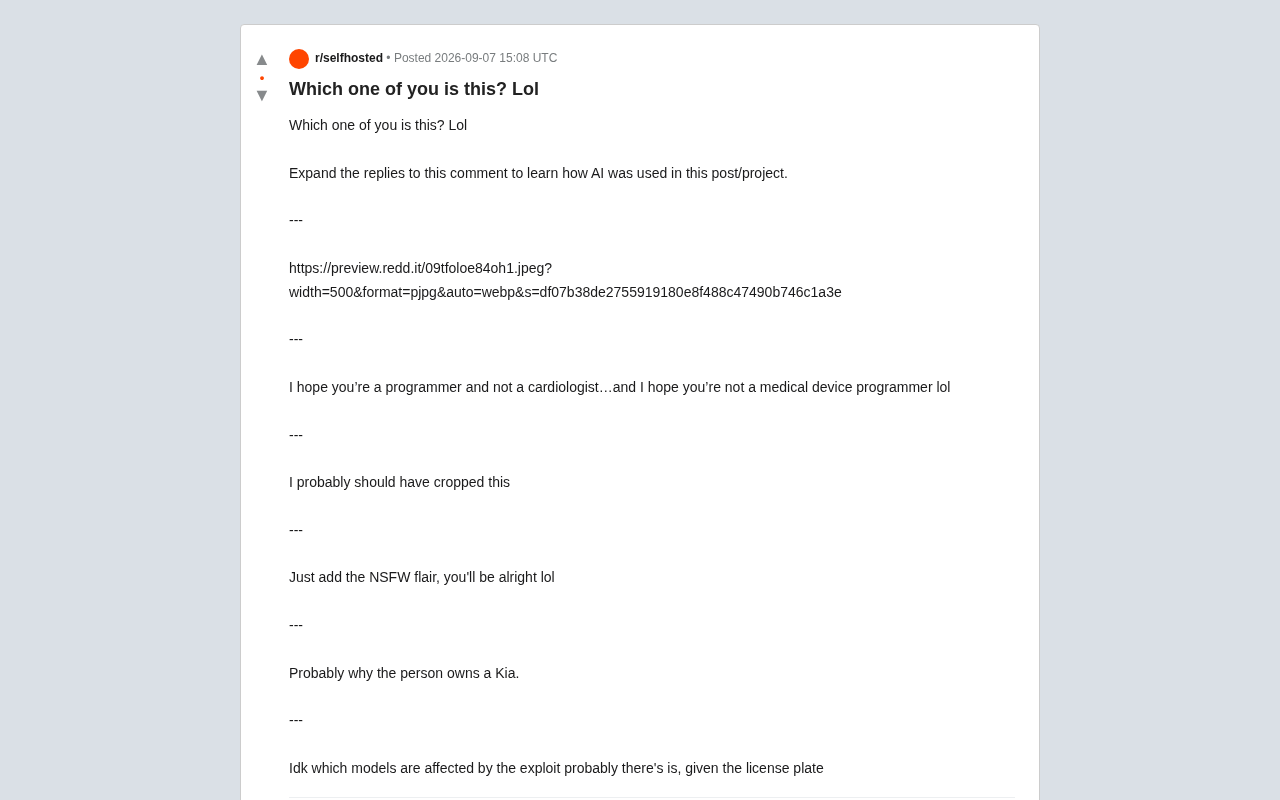
Is Vibe Coding Reliable? Security Concerns Behind the AI Programming Joke
A Reddit meme sparks programmer debate: Vibe Coding enables everyone to write code, but who's responsible for AI-generated code security? Exploring common security risks in AI-assisted programming.
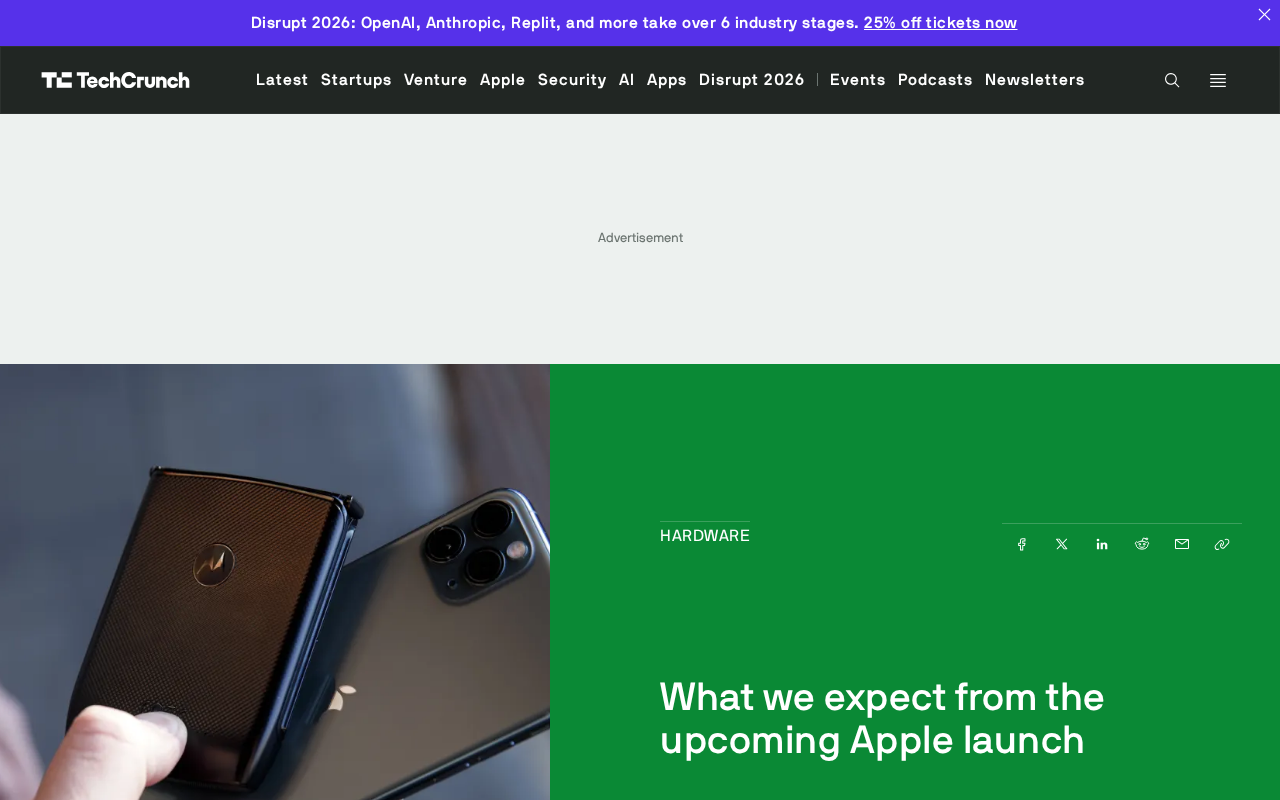
Apple September 9 Event Preview: Foldable iPhone Ultra Takes Center Stage
Apple's September 9 fall event is coming, headlined by the first foldable iPhone Ultra. This article covers the naming strategy, industry impact, key challenges, and expected AirPods and HomePod updates.

Sony Revisits the WH-1000XM4 After Six Years: Why This Legendary Noise-Cancelling Headphone Endures
Sony revisits the WH-1000XM4 wireless noise-cancelling headphones after six years. A deep dive into why this legendary product's sound, ANC, and design remain an industry benchmark.