Do Numbers Really Exist? A Deep Discussion Between a Mathematician and Lex Fridman

A mathematician discusses whether numbers are invented or discovered, revealing the constructed nature of abstract symbols and its implications for AI.
Based on an interview with a mathematician on the Lex Fridman podcast, the article explores whether numbers truly exist. The mathematician acknowledges that integers seem intuitively real but points out that "a stone" itself is an abstraction ignoring atomic differences, and numbers are symbolic tools for describing reality. It took humans thousands of years to discover zero, and Western acceptance of negative numbers came even later than complex numbers, showing numerical concepts are not innate. The article reviews mathematical Platonism versus anti-realism; the mathematician leans toward constructivism but remains open. It then extends to AI: numbers processed by large language models are human-defined symbol systems requiring careful scrutiny; the history of zero and negative numbers suggests AI mathematical reasoning cannot rely solely on data-driven approaches—the historicity and constructedness of mathematical abstraction may need explicit modeling.
Introduction: A Seemingly Simple Question That Has Puzzled Humanity for Millennia
We use numbers every day—counting, calculating, trading, programming. Numbers form the cornerstone of modern civilization. But have you ever stopped to ask yourself: do numbers really exist? On Lex Fridman's podcast, a mathematician raised this thought-provoking question. He admitted, "I keep wrestling with this question, and I don't know the answer." This is not merely philosophical speculation; it touches on the very nature of mathematics, cognitive science, and human abstraction.
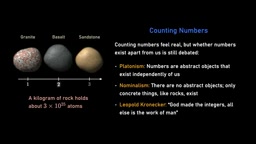
Numbers: Intuitive Reality and Abstract Essence
The mathematician first acknowledges that integers (natural numbers) give a strong intuitive sense of reality. "We all fundamentally feel that counting numbers are real in a very essential way. I can have one stone, two stones, three stones—that's a real number of stones." This everyday experience makes us never doubt the reality of numbers.
However, he immediately points out that this "reality" is built on abstraction. "But those are absolutely abstract concepts I created. A stone is not a stone; it's a bunch of atoms, different sets of atoms. There is no 'one stone' or 'two stones.'" In other words, when we say "three stones," we have already ignored the uniqueness of each stone and grouped them into homogeneous units—and this is precisely the process of abstraction. Numbers are a symbolic tool we use to describe reality, not reality itself.
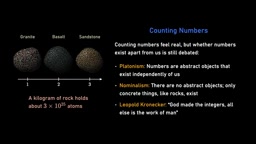
Milestones in Human Cognition: The Tortuous History of Zero and Negative Numbers
If numbers are a human invention, then their history is full of drama. The mathematician reminds us that it took humans thousands of years to discover the number zero. "It took humans thousands of years to discover the number zero." And the acceptance of negative numbers was even stranger: "In the West, negative numbers were actually accepted by mathematicians after complex numbers. The acceptance of negative numbers as a research mechanism seems incredible, but there's a whole story behind it."
This historical fact reveals the constructed nature of numerical concepts: the mathematical objects we take for granted today did not exist innately in the human mind but were gradually accepted through a long cultural evolution. Zero and negative numbers were once considered absurd or useless in history, which precisely shows that numbers do not "naturally" exist in our cognition but require specific cultural conditions and mathematical practices to be understood.
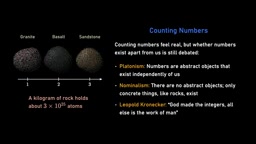
The independent invention of zero is extremely rare in history. The Babylonians used a placeholder symbol in their positional notation around the 3rd century BCE, but it was not a true number; the Mayans independently developed the concept of zero; the Indian mathematician Brahmagupta treated zero as an operable number in the 7th century. Europe only gradually accepted zero after Fibonacci introduced the Hindu-Arabic numeral system in the 13th century. Negative numbers had an even more tortuous acceptance: ancient Chinese mathematics in The Nine Chapters on the Mathematical Art already included operations with negative numbers, and Indian mathematicians used negative numbers to represent debts, but European mathematicians long regarded negative numbers as "absurd" or "impossible." Cardano used negative numbers but called them "fictitious numbers." It was not until the 19th century that negative numbers became fully legitimized in arithmetic. This history shows that seemingly basic mathematical concepts often require specific symbol systems, accounting practices, and algebraic needs to be culturally accepted, rather than being self-evident in human cognition.
Invention or Discovery? The Clash of Two Positions
In the philosophy of mathematics, two opposing views have long existed: one holds that mathematical objects exist objectively independent of the human mind (mathematical Platonism), and the other holds that they are creations of the human mind (mathematical anti-realism or constructivism). The mathematician's reflections clearly lean toward the latter, but he does not give a definitive answer; instead, he admits his confusion: "Do we really believe that integers are products created by humans to interact with symbolic abstractions of quantities we observe?"
This question is difficult to answer because numbers have a dual face: on the one hand, they show astonishing effectiveness in describing the physical world (such as mathematical structures in physical laws); on the other hand, their definitions and rules seem to originate from human conventions. The mathematician does not attempt to solve this millennia-old problem but invites listeners to maintain this intellectual humility.

Mathematical Platonism holds that mathematical objects (such as numbers, sets, functions) exist objectively independent of the human mind and language, and that the mathematician's work is to "discover" rather than "invent" them. This position can be traced back to Plato, with modern representatives including Gödel, who used mathematical intuition as the basis for grasping abstract objects. Mathematical anti-realism (or constructivism, nominalism) argues that mathematical objects are products of the human mind, language, or social practice, and their existence depends on specific definitions and construction rules. The constructivist mathematician Brouwer even rejected the unconditional use of the law of excluded middle on infinite sets. The clash between these two positions is not purely speculative: it affects the methodology of foundational research in mathematics and also affects how we understand what it truly means for AI systems to "master" mathematical concepts—whether they discover pre-existing structures or internalize human-conventional symbolic rules.
Implications for AI and Cognitive Science
Although this discussion takes place in the context of pure mathematical philosophy, it has direct implications for artificial intelligence and cognitive science. Current large language models and AI systems essentially process symbols and abstract representations, and the numbers they "understand" are likewise human-defined symbol systems. If even humans themselves cannot determine whether numbers truly exist, then AI's "understanding" of numbers requires even more careful scrutiny.
Furthermore, the history of human acceptance of zero and negative numbers, as mentioned by the mathematician, reminds us that expanding cognitive frameworks often requires breaking free from the constraints of intuition. For designing AI systems capable of mathematical reasoning, this means that data-driven approaches alone may not be sufficient to capture the essence of mathematical concepts—the historicity and constructedness of mathematical abstraction may be dimensions that need explicit modeling.
The symbol grounding problem, proposed by Harnad in 1990, refers to how symbols in purely symbolic systems (such as language models) acquire meaning rather than merely being associated with other symbols. When current large language models process "3" or "addition," they operate on statistical patterns in high-dimensional vector spaces, not on embodied perception of quantity. The theory of embodied cognition in cognitive science emphasizes that human numerical concepts are partly rooted in spatial perception and bodily experience (such as number sense, finger counting), which offers another path for AI mathematical reasoning: combining symbol manipulation with sensorimotor simulation. The tension between the two echoes the mathematician's confusion in the text—if numbers themselves are abstract symbols constructed by humans, then whether AI's "understanding" of numbers can only be second-order symbol manipulation, or whether some kind of grounding can be achieved through multimodal learning, remains an open question.
Conclusion: Maintaining Reverence for Fundamental Questions
"Do numbers exist?" has no standard answer, but its value lies in reminding us that the most basic and taken-for-granted concepts often hide the deepest mysteries. The mathematician's honesty—"I keep wrestling with this question, I don't know"—is not a failure of knowledge but a manifestation of intellectual integrity. In today's rapidly advancing technology, occasionally stopping to ask these fundamental questions may help us more clearly understand the symbolic world we are building.
One-line Summary
A mathematician explores whether numbers are invented or discovered, revealing the constructed nature of abstract symbols and its implications for AI.
Paragraph Summary
Based on an interview with a mathematician on the Lex Fridman podcast, the article explores the philosophical question of whether numbers truly exist. The mathematician acknowledges that integers seem intuitively real but points out that "a stone" itself is an abstraction that ignores atomic differences, and that numbers are symbolic tools for describing reality. It took humans thousands of years to discover zero, and in the West negative numbers were accepted even later than complex numbers, showing that numerical concepts are not innate in the mind. The article reviews the opposition between mathematical Platonism and anti-realism; the mathematician himself leans toward constructivism but remains open. Finally, it extends the discussion to AI: the numbers processed by large language models are also human-defined symbol systems, and their "understanding" requires careful scrutiny; the history of accepting zero and negative numbers suggests that AI for mathematical reasoning cannot rely solely on data-driven approaches—the historicity and constructedness of mathematical abstraction may need explicit modeling.
Related articles

DSH + Ollama Local LLM Deployment in Practice: Free Chat with Da Fei Yu
Bilibili creator tests DSH + Ollama local LLM deployment end to end: Ollama install, Xunlei-accelerated downloads, ModelScope GGUF model import, DSH custom API address setup, and a comparison of Qwen 3.5 4B, 8B, Gemma, and other models on 8GB VRAM, with advice on choosing local deployment vs. API calls.

Tested: A $899 Mac Mini vs. a $200/Month AI Subscription
Real-world test of whether an M4 Mac mini can replace a $200 AI subscription: 16GB can't fit large models, and both speed and quality fall short—but privacy, no caps, and near-zero running costs make it an ideal host for an always-on agent. Includes buying advice per configuration and money-saving strategies.

RSTGameTranslation: Real-Time OCR Localization + Offline Translation with Local LLMs
RSTGameTranslation is an open-source real-time Windows game translation tool: OCR for English, Japanese, and Korean with Chinese overlays in place, plus Ollama or LM Studio local LLM offline translation and Whisper speech transcription for games, manga, and visual novels.