Doco: The Android Desktop Companion That Matches Music to Your Mood
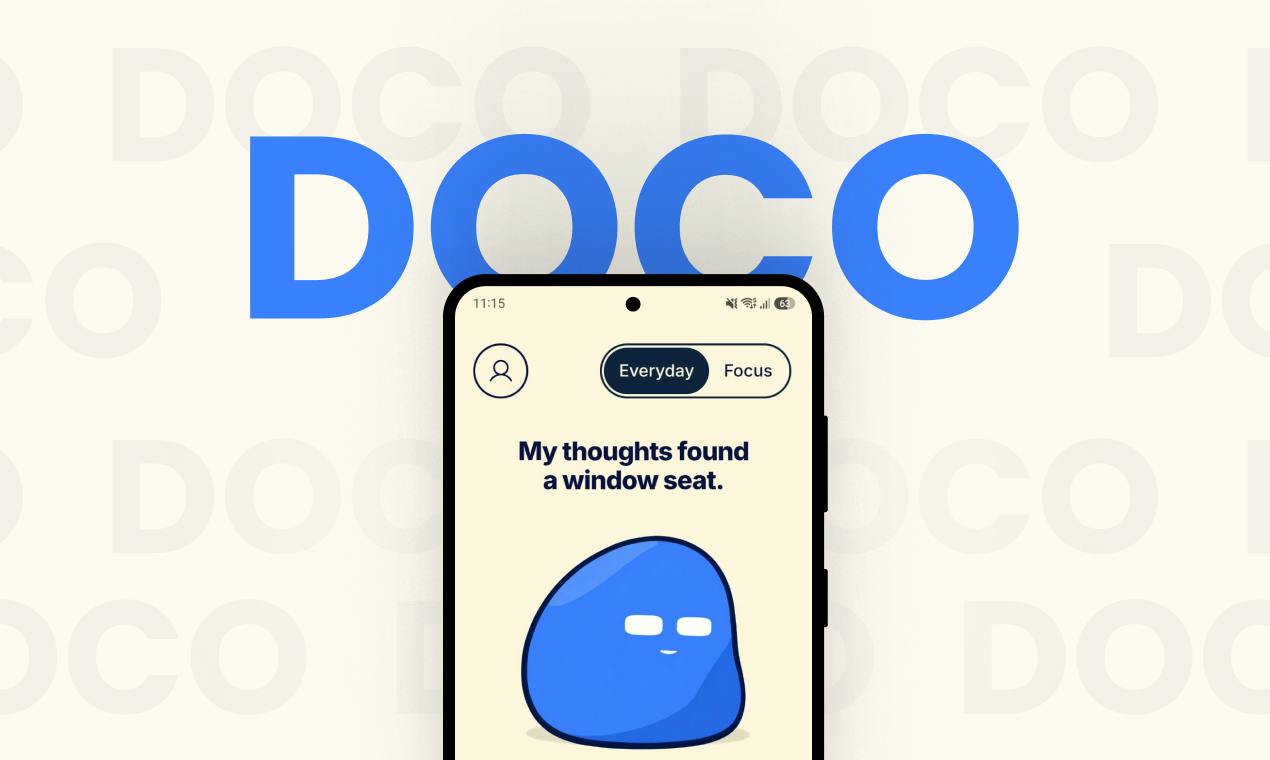
Doco is an animated Android companion that blends Spotify music recommendations with optional Gemini AI for emotional, personality-driven company.
Doco is a pre-launch Android virtual desktop companion (with a Windows version) built by developer Vatsal Upadhyay, offering a fully animated, zero-setup experience with genuine personality. It features an Everyday mode (warm and playful) and a Focus mode (with friendly sarcasm), replacing cold productivity timers with emotionally resonant design. It integrates with Spotify for context-aware music recommendations and supports BYOK Gemini API access for camera reactions and AI captions. Users can join the waitlist at getdoco.app.
A Desktop Companion with a Personality
On Product Hunt, a product called Doco is drawing attention — positioned around the tagline "Good Company. Music that fits." The product is still in pre-launch, with 71 upvotes, 7 comments, and a rank of #11 on ProductHunt, spanning categories including Productivity, Music, and Lifestyle.
At its core, Doco is a fully animated, zero-setup Android virtual companion, with an optional Windows desktop version. Its ambition goes beyond playing music — it aims to act as an emotionally present "companion" with personality, freely switching between focus and leisure modes, filling everyday idle moments with a human-like interactive experience.
Two Modes: Warm Companionship and a Touch of Sass
One of Doco's most interesting design choices is its dual-mode system. Everyday mode is described as "playful and warm" — a lighthearted daily companion to keep you company through life's mundane moments.
Focus mode takes a different approach: it "cuts through the noise" and uses a little friendly sarcasm to help you stay on track. This slightly sharp-tongued interaction style is uncommon among focus tools. Compared to the cold countdowns of traditional Pomodoro timers or white noise apps, Doco bets on emotional design — a companion with personality — to drive user engagement.
This design philosophy reflects a broader trend in companion-style apps: rather than stacking features, products are increasingly building user connection through character and emotional value.
The Pomodoro Technique remains the most common foundation for focus apps — breaking work into 25-minute focused sessions followed by 5-minute breaks to combat distraction. However, traditional Pomodoro tools rely heavily on self-discipline and lack emotional feedback mechanisms, making them easy to ignore or abandon. In recent years, companion-style focus tools have begun exploring "role-playing" and "emotionally charged feedback" as alternatives to lifeless progress bars — Forest, for example, uses tree-growing to create a sense of achievement, while Doco introduces a virtual character with genuine personality. The "friendly sarcasm" design language is essentially an application of mild negative reinforcement to prompt user action, softened by humor to reduce resistance — an interesting experiment in emotional design applied to productivity tools.
Spotify and Gemini: Blending Music with AI
Doco integrates two layers of functionality. On the music side, it connects to Spotify and plays music that "fits the current moment" — the official description says it stays close to your personal taste while leaving room to discover new content. This suggests it's not simple shuffle play, but an attempt to balance the familiar with the fresh.
AI capability is the other highlight, offered as an optional layer. Users can add their own Gemini API key to unlock camera-based reactions and AI-generated captions. This Bring Your Own Key (BYOK) design has two advantages: it lowers the product's own AI call costs, and it hands data and privacy control back to the user. For a companion app that involves camera access, this is a notably restrained approach.
It's worth noting that these AI features are optional — the core music-and-companionship experience doesn't depend on them, meaning users without a technical background can get started with zero friction.
BYOK (Bring Your Own Key) has grown increasingly popular in the AI tools space. The core idea: rather than storing or managing users' AI service credentials, the product has users apply for their own third-party API keys (e.g., OpenAI, Google Gemini) and enter them directly into the app. The benefits are multifaceted — developers avoid hefty API costs and don't need to handle sensitive user credentials; for users, requests go directly from their device to the AI provider, reducing privacy risks from intermediaries. For a companion app that needs camera access, this design effectively eases concerns about being "watched." That said, BYOK does have a barrier — users need to register with Google AI Studio and obtain a Gemini API key themselves, which still involves some friction for non-technical users.
The Zero-Setup Philosophy
"Fully animated, zero setup" is a selling point Doco repeatedly emphasizes. For a product centered on emotional companionship, lowering the barrier to entry is essential. Users don't need to wade through complex configuration — open the app and an animated virtual companion is right there.
In terms of platform strategy, Doco is Android-first, with the Windows desktop version existing as a "visitor" experience. This mobile-primary, desktop-supplementary approach aligns with its "always by your side" positioning — phones are the devices people interact with most, while the desktop version covers work-focused scenarios.
Still in the Pre-Launch Phase — Worth Watching
Doco is currently built by developer Vatsal Upadhyay and remains in pre-launch. Users can join the waitlist at getdoco.app.
Based on publicly available information, there's no official version available for hands-on testing yet, so the actual experience, the accuracy of music recommendations, and the smoothness of animated interactions all remain to be seen. But the product direction it represents — combining emotional companionship, music recommendations, and optional AI capabilities into a lightweight desktop companion — genuinely speaks to people's growing desire for tools that feel warm and human.
For users who enjoy desktop pets, virtual companions, or simply care about a more intentional focus experience, Doco is a new face worth adding to your waitlist. Whether it can truly deliver on "company that fits the moment" is a question only the official launch will answer.
Related articles

WorkBuddy Agent in Action: From AI Q&A to Automated Office Work
WorkBuddy is Tencent's AI agent desktop workbench that reads local files, operates office software, executes multi-step tasks, and runs on schedules. This article explains its core features, key differences from traditional AI tools, and use cases.

Anthropic Research: LLMs Make Formal Software Verification at Scale Possible
Anthropic Frontier Red Team research shows LLMs can generate formal proofs at the RISC-V assembly level for over 100 real open-source libraries, covering 123 OSS-Fuzz libraries and 239 entry points, totaling about 180 million lines of Rocq proofs and finding hundreds of bugs. The article analyzes specification generation, the proof pipeline, trust boundaries, and cost reduction paths.

Prompt Engineering for Beginners: From Writing Prompts to Building AI Collaboration Skills
From the four functions of prompts to the six-step prompt engineering process, this article systematically covers core concepts, business value, and three layers of limitations to help beginners build a complete cognitive framework for prompt engineering.