Documentary 'You Can See Everything': Nathan Fielder Uncovers the Truth About Holmes and Theranos
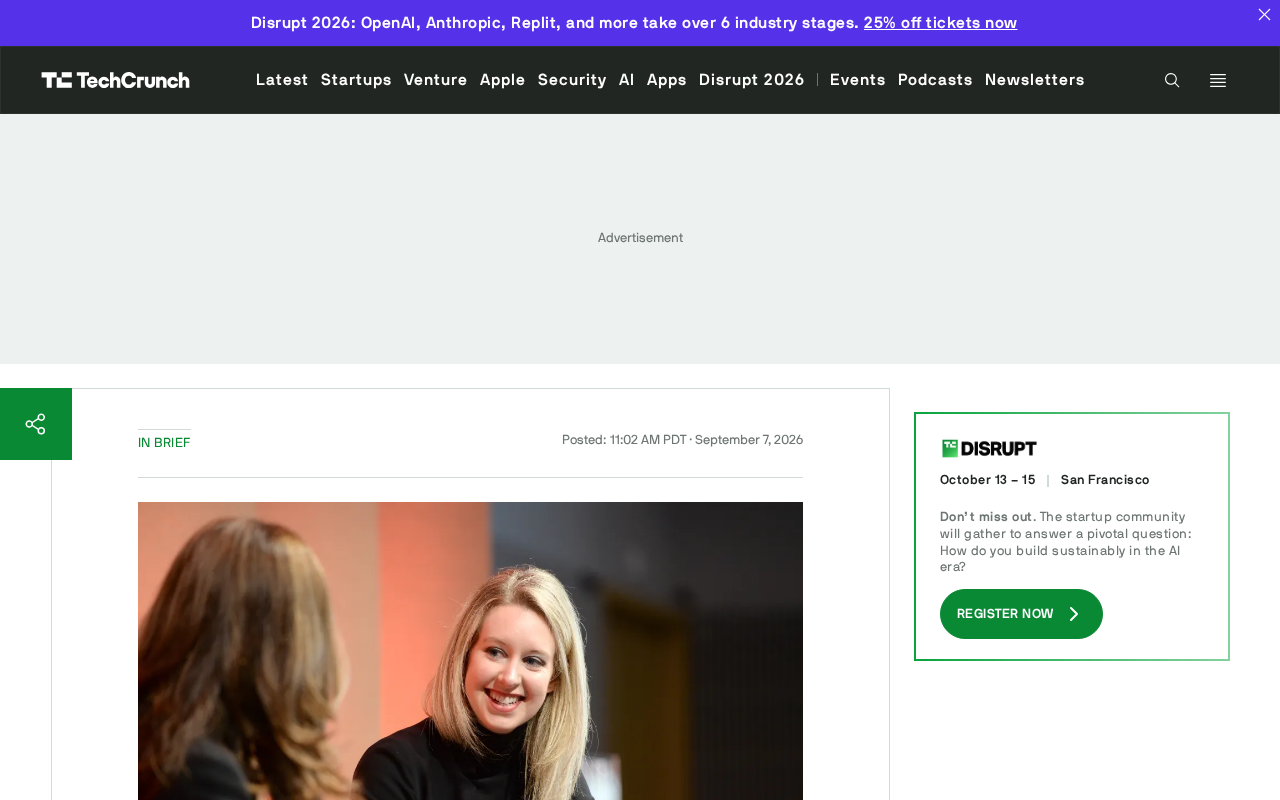
Nathan Fielder's secret Theranos documentary stuns Telluride with rare Elizabeth Holmes access.
A surprise documentary titled 'You Can See Everything,' co-created by Nathan Fielder and Lance Oppenheim, premiered secretly at the Telluride Film Festival. The film features unprecedented in-depth access to Theranos founder Elizabeth Holmes, offering a fresh, humanly complex perspective on the infamous Silicon Valley fraud. With Fielder's signature exploration of the line between performance and reality, the documentary resonates as a timely warning amid today's AI startup hype.
A Secret Premiere at the Telluride Film Festival
At the recently concluded Telluride Film Festival, a documentary that had never been publicly announced became the talk of the event. Titled You Can See Everything, the film was co-created by comedian and producer Nathan Fielder and documentary director Lance Oppenheim. It screened for the first time on Sunday evening, leaving audiences deeply shaken.
Background on the Telluride Film Festival
Founded in 1974, the Telluride Film Festival is one of North America's most prestigious independent film festivals, renowned for its unique setting in a small Colorado mountain town and its rigorous selection standards for art cinema. Alongside Venice and Toronto, it's often referred to as one of the "Big Three Labor Day Film Festivals," and frequently serves as the premiere stage for Oscar contenders. The festival doesn't announce its lineup in advance — audiences only discover what they'll be watching once they arrive. This "blind selection" tradition provides the perfect stage for secret premieres.
The documentary caused a sensation because it secured extraordinarily rare, in-depth access to Theranos founder Elizabeth Holmes. As one of Silicon Valley's most controversial figures of the past decade, Holmes has seldom agreed to extended, in-depth conversations on camera — and this film broke that pattern.
A Fresh Perspective on the Theranos Scandal
Digging Deeper Beyond the Known Narrative
The story of Holmes and Theranos has been brought to the screen multiple times before — HBO's documentary The Inventor and the Hulu series The Dropout both offered detailed accounts. The public is no stranger to this $9 billion bubble: Theranos once claimed it could perform hundreds of medical tests from just a few drops of blood, only to be exposed as a complete technological fraud. Holmes was ultimately sentenced to more than 11 years in prison for fraud.
The Scientific Context Behind Theranos's Promises
Theranos claimed its Edison blood-testing device could perform over 200 medical tests — covering cholesterol, cancer markers, infectious diseases, and more — using just a few drops of blood from a fingertip (roughly 1/1000th of the volume required for traditional blood draws). This would have been revolutionary in the medical testing field. Conventional blood tests require about 10 milliliters drawn from a vein, and different tests need separate processing. The fundamental problem was that micro-volume blood samples face inherent technical barriers: blood dilution ratios are difficult to control, ruptured cells release interfering substances, and detection sensitivity requirements increase exponentially. Investigations ultimately revealed that Theranos's devices had accuracy rates far below medical standards. The company was actually using off-the-shelf Siemens testing instruments and had tampered with the results.
What makes You Can See Everything uniquely valuable is the entirely fresh angle it takes. According to audience feedback from the premiere, the film doesn't simply rehash the known scandal timeline. Instead, through close-up observation of Holmes herself, it presents a far more complex, more humanly compelling portrait. This "generous access" itself constitutes the documentary's most essential draw.
Nathan Fielder's Distinctive Creative Vision
The creative team's pairing is particularly noteworthy. Nathan Fielder rose to fame through Nathan for You and The Rehearsal, where he excels at deconstructing the blurry boundary between reality and performance in near-absurdist fashion, leaving audiences unable to distinguish what's "real" from what's "acted."
Nathan Fielder's Creative Background
Nathan Fielder is a Canadian comedian, writer, and director known for his experimental work that deconstructs the boundary between reality and fiction. His landmark show Nathan for You (2013–2017) explored the authenticity paradox of reality television through the format of offering absurd business advice to small businesses. His 2022 series The Rehearsal pushed this exploration even further — having ordinary people rehearse major life moments in meticulously constructed settings, blurring the lines between documentary, reality TV, and psychological experiment. This creative approach has been called "meta-documentary," questioning whether any behavior performed in front of a camera can still be called "real."
Holmes happens to be the ideal subject for studying "performance" versus "reality" — her signature deep voice, the Steve Jobs–inspired black turtleneck, and that grand narrative about disrupting the healthcare industry all bear the unmistakable marks of carefully crafted performance. Placing such a subject in the hands of creators who specialize in interrogating the authenticity of performance gives the film a unique philosophical depth.
Why This Theranos Documentary Deserves Your Attention
A Warning for Today's Tech Startup Bubble
With the AI startup frenzy sweeping the globe, the Theranos story carries cautionary significance that extends far beyond a single case. When capital madly chases disruptive technology narratives, when founders' personal charisma is mythologized beyond reason, and when "fake it till you make it" becomes an unspoken rule in parts of the startup world, the Holmes case remains an inescapable mirror.
Unpacking Silicon Valley's "Fake It Till You Make It" Culture
This famous startup mantra was originally meant to encourage founders to present their vision before their product was fully developed, in order to secure resources. In the tech industry, this has a certain logic — software products can iteratively deliver on promises over time. But in the realm of medical devices, where human lives and health are at stake, this culture becomes dangerous. Theranos pushed unvalidated technology directly into clinical use, affecting real patients' diagnoses. This exposed the fundamental conflict between Silicon Valley's "move fast and break things" ethos and the safety requirements of regulated industries. In the aftermath of the Holmes case, the FDA tightened its regulatory scrutiny of medical technology startups.
As the generative AI space produces wave after wave of startups with staggering valuations and sweeping promises, re-examining how Theranos used a technology vision to deceive top investors, board members, and even former Secretaries of State feels especially timely.
Theranos-Style Risks in the Generative AI Era
The current AI landscape exhibits several risk signals similar to those of Theranos: company valuations disconnected from actual technological maturity, founders using grand visions ("artificial general intelligence," "solving all of humanity's problems") to attract investment, and technical capabilities being over-packaged. For example, some AI startups claim to have achieved autonomous driving or medical diagnostic capabilities that in reality still require extensive human intervention. The difference is that AI technology is genuinely advancing rapidly, which makes it far more difficult to draw the line between "ambitious promises" and "deliberate fraud." Regulators face a delicate challenge: preventing technological promises from being used for fraudulent fundraising without stifling innovation.
This documentary may offer deeper insight into how technological promises are packaged, how they earn trust, and how they ultimately collapse.
A Stealth Production Strategy That Amplifies the Buzz
The film's strategy of secret production and surprise screening is equally fascinating. In today's hyper-transparent media environment, the fact that a documentary about a well-known controversial figure managed to remain completely secret until its premiere is itself a textbook case of buzz marketing.
The Politics of "Access" in Documentary Filmmaking
In documentary production, "access" is the core resource — it determines how deep into the truth a film can reach. For Holmes to agree to in-depth filming before beginning her prison sentence is extraordinarily rare. Her legal team would typically block any media contact that could affect her appeal or public image. The Fielder team's securing of this access likely involved complex negotiations: timing (the window between sentencing and incarceration), the allocation of editorial control, and Holmes's own motivations to reshape her public image. This "collaborative" relationship is inherently fraught with tension — is the documentary recording the truth, or has it become a vehicle for the subject's self-narrative? This is precisely the kind of question Fielder's work has always explored.
This "surprise premiere" approach maximized the work's impact at the festival and laid the groundwork for building momentum ahead of its wider release.
A Story That Hasn't Ended
The reason Elizabeth Holmes's story continues to captivate creators and audiences alike is that it touches on some of the most fundamental questions of the technology age: the limits of trust, the power of narrative, and the elusive line between genius and fraud.
You Can See Everything, armed with rare access and Nathan Fielder's distinctive creative lens, offers an entirely new dimension for examining this repeatedly told Silicon Valley scandal. When the documentary is released to the general public, whether it truly lets us "see everything" — or whether, as the title suggests, even more truths lie hidden beneath the surface of what's visible, beyond the camera's reach — remains for each viewer to judge.
For anyone interested in tech ethics, startup culture, and the question of media authenticity, this documentary that stunned audiences at Telluride is an unmissable landmark work.
Related articles
PyTorch and Hugging Face Bangalore Tech Summit: In-Depth Recap
Bangalore PyTorch and Hugging Face tech summit recap: 170+ developers explore large-scale inference optimization, reinforcement learning practices, and open-source community building, analyzing India's AI ecosystem trends and technical innovation.
The Physics of Splash-Free Urinals: How Fluid Dynamics Solves a Public Health Challenge
Explore the fluid dynamics principles behind splash-free urinal design, examining how impact angle, hydrophobic coatings, and curved geometry reduce splashing, achieve 30-50% water savings, lower maintenance costs, and drive sustainable innovation in public health facilities.
Chipflation Hits: The Storage Crisis Behind iPhone Price Hikes
Apple's iPhone price hike stems from soaring DRAM and NAND flash prices—chipflation driven by AI demand squeezing consumer electronics supply. Storage costs rising with no quick relief in sight.