Docx-CLI: An Open-Source Tool That Boosts AI Agent Word Document Efficiency by 50%

Docx-CLI helps AI agents read and edit Word documents while cutting token consumption and time by about 50%.
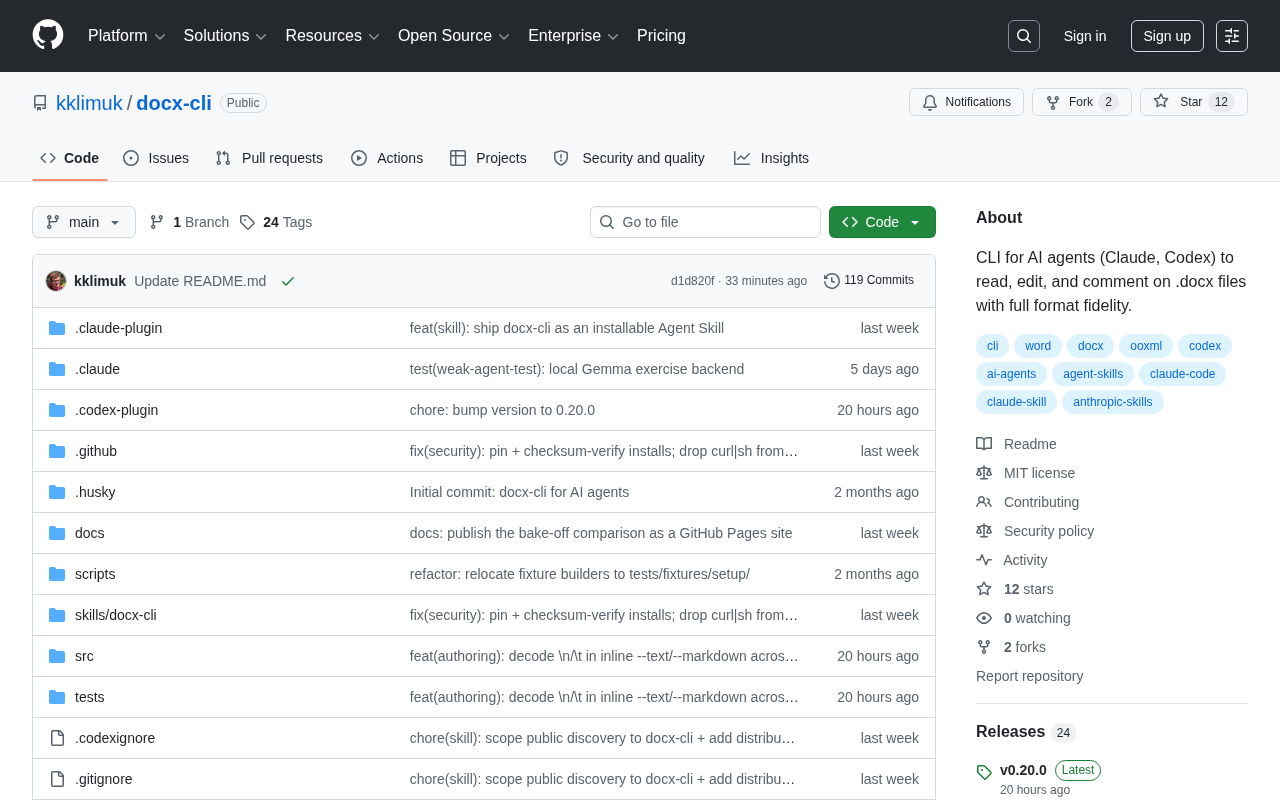
Docx-CLI is an open-source command-line tool that lets AI agents efficiently read and edit Word (.docx) files. By stripping redundant XML structures and enabling precise targeted editing, it saves roughly half the token consumption and processing time—addressing a key challenge in the emerging AI agent tool layer.
The Core Pain Point of AI Agents Handling Word Documents
As AI agents powered by large language models (LLMs) gradually integrate into real-world workflows, a long-overlooked problem has surfaced: how can AI efficiently handle Microsoft Word (.docx) files?
Recently, the open-source tool Docx-CLI made its debut in the tech community. Its core positioning strikes right at the pain point—enabling AI agents to read and edit Word documents while saving roughly half the processing time and token consumption. This direction reveals a technical trend within the AI tool ecosystem that deserves closer attention.
Why Word Documents Are a "Tough Nut" for AI Agents
The complexity of the .docx format far exceeds imagination
Many people mistakenly assume that .docx is just an ordinary text file, but it is essentially an XML-based compressed package (ZIP archive). The .docx format is based on the Office Open XML (OOXML) standard, designed primarily by Microsoft and made the ECMA-376 international standard in 2006, then further accepted by ISO as ISO/IEC 29500 in 2008—though this standardization process was quite controversial, with Microsoft accused of bypassing the normal review process via the Fast Track procedure. Nevertheless, OOXML has become the de facto standard for office documents, standing alongside ODF (Open Document Format).
This standardization history itself is worth examining. The OOXML specification document runs over 6,000 pages, far exceeding the scale of ODF, and includes numerous "legacy compatibility" clauses that address only the behavior of Microsoft's older products—dubbed "compatibility landmines" in the industry. During the 2008 ISO voting process, several national standards bodies were accused of being lobbied and pressured by Microsoft, giving rise to controversies such as sudden surges in membership and abnormal voting results, ultimately passing certification by an extremely narrow margin. This complexity is no accident but rather the combined product of Microsoft's decades of historical accumulation and commercial interests—and it is a technical reality that any tool attempting to parse .docx files today must confront head-on. OOXML has always been accompanied by criticism of being "nominally open, substantially proprietary," and looking back on this history from today's perspective of AI tool development is quite ironic.
After decompressing a .docx file, several key components become visible: word/document.xml stores the main body content, word/styles.xml defines styling rules, word/numbering.xml manages list numbering, and the _rels/ directory maintains the relationship mapping between components. It also includes additional modules such as relationship mappings and media resources.
A seemingly simple piece of bold text may unfold in XML into a structure containing dozens of nested tags—namespace declarations, paragraph properties (pPr), run properties (rPr), font definitions, and more—consuming 10 to 20 times the tokens of plain text content. An ordinary sentence in a document may be split into multiple XML tags (runs), interspersed with vast amounts of formatting attributes, namespaces, and metadata. This design was originally meant to serve the precision of document rendering and cross-platform compatibility, but in the LLM era it has become a natural enemy of information density.
Feeding raw XML content directly into a large model brings two serious problems:
- Severe token waste: XML tags and style declarations are "format noise," while the actual body content accounts for a tiny fraction, forcing the model to process large amounts of irrelevant characters.
- Error-prone editing operations: The model struggles to precisely locate the modification target within lengthy tag structures, easily breaking the document structure and producing files that can no longer be opened properly.
Token consumption: not just cost, but a feasibility threshold
Tokens are the basic unit of measurement by which large language models process text. Typically, one English word corresponds to roughly 1-2 tokens, and one Chinese character corresponds to roughly 1-2 tokens. Mainstream commercial models (such as GPT-4o and Claude 3.5 Sonnet) charge separately for input and output tokens, with prices ranging from a few dollars to tens of dollars per million tokens.
For enterprise-grade document automation scenarios, a Word document containing large amounts of formatting tags may consume tens of thousands or even hundreds of thousands of tokens, and costs accumulate rapidly during batch processing. More critically, every model has a context window limit—from the early GPT-3's 4K tokens, to GPT-4's 32K, to Claude's 100K, and up to Gemini 1.5 Pro's groundbreaking 1 million tokens, context windows have continued to expand.
However, a larger window means higher computational cost and latency, and the "Lost in the Middle" phenomenon exists. This phenomenon was systematically documented by researchers from institutions including Stanford University in 2023, revealing the inherent limitations of the Transformer architecture in processing long texts. From a mechanistic perspective, the Self-Attention mechanism can theoretically establish associations between any two positions in a sequence, but in practice the model distributes weights unevenly across information in middle positions. Experimental data shows that when key information is located at the beginning or end of the input sequence, the model's retrieval accuracy can reach over 90%, whereas when the same information is placed in the middle of the sequence, accuracy can plummet to below 60%. This phenomenon is particularly pronounced in RAG (Retrieval-Augmented Generation) applications—even if relevant document fragments have been retrieved, if they are arranged in the middle of an overly long context, the probability that the model actually "sees" and effectively uses them drops significantly. Improvements in positional encoding mechanisms (such as RoPE and ALiBi) have to some extent alleviated the extrapolation problem for ultra-long contexts, but they have not fundamentally eliminated the phenomenon of attention concentration decaying with distance.
Therefore, even in the era of ultra-large context windows, compressing input still holds practical value—the bloat effect of raw XML may cause longer documents to directly exceed the processing limit, or produce quality degradation due to attention dispersion, making the task completely impossible to execute effectively. Token compression is not merely a cost-reduction issue but a foundational threshold for technical feasibility and output quality. For document AI applications, "compressing input" and "optimizing information positioning" are equally important.
Limitations of existing solutions
Currently, mainstream approaches either convert Word to plain text (losing layout formatting) or rely on libraries like python-docx for programmatic operations. The former cannot preserve document structure, while the latter requires writing large amounts of code—neither is friendly to the application scenario of "letting AI autonomously complete document tasks."
Design Philosophy and Technical Principles of Docx-CLI
Command-line interface: aligning with agent invocation habits
Docx-CLI adopts the CLI (command-line interface) encapsulation form, a rather targeted design choice. Current mainstream AI agents (such as programming assistants based on Claude and GPT) generally possess the ability to invoke command-line tools—thanks to the maturation of standardized mechanisms like Function Calling and Tool Use.
The standardization of tool-invocation capabilities is a key leap for AI agents moving from the lab to production environments. Early LLMs could only indirectly express the intent of "I need to query a certain API" through text generation, requiring developers to manually parse model outputs and trigger function calls via Prompt Engineering—a fragile and unstable process. In mid-2023, OpenAI officially introduced the Function Calling specification, passing tool definitions (function signatures in JSON Schema format) into the model as part of the system message. The model outputs structured invocation requests rather than free text, fundamentally improving the reliability of tool invocation. Anthropic's Tool Use specification built on this by adding parallel tool use capabilities, allowing the model to simultaneously request the execution results of multiple tools within a single inference. In late 2024, Anthropic's MCP (Model Context Protocol) went even further—it not only defined the tool-invocation interface but also standardized broader context-exchange mechanisms such as Resources, Prompts, and Sampling, aiming to establish a universal connection standard akin to USB-C: any model can seamlessly connect to any tool server. The openness of this protocol has attracted a large number of developers to build tool ecosystems around it, and the document-processing tools represented by Docx-CLI are a natural component of this ecosystem.
Once Word document operations are encapsulated into concise commands, agents can read and write documents as naturally as using grep or sed, without needing to understand the underlying XML details. This "toolification" approach aligns with the currently popular Agent tool ecosystem (such as MCP and Function Calling)—abstracting complex low-level operations into clear interfaces, letting the model focus on task intent rather than implementation details.
Three key mechanisms for saving 50% token consumption
- Content extraction rather than raw text passthrough: When reading, it strips away redundant XML structures and returns only clean body text and essential structural information (heading hierarchy, paragraphs) to the model, greatly compressing input tokens.
- Precise targeted editing: Editing operations specify the target location via command parameters (such as replacing a certain paragraph or inserting at a certain point), eliminating the need for the model to regenerate the entire document and significantly reducing output tokens.
- Reducing the number of round-trip interactions: The structured interface lowers the model's probability of "trial and error," shortening overall task duration.
For enterprise scenarios requiring batch processing of contracts, reports, and templates, the simultaneous compression of tokens and time translates into quantifiable cost savings.
Industry Trend: The Competition at the Agent Tool Layer Has Only Just Begun
The competitive focus shifts from model capability to tool ecosystem
The emergence of Docx-CLI reflects an important trend in the AI application field: as large models' reasoning capabilities become increasingly homogenized, how to enable models to efficiently interface with real-world data formats (Word, Excel, PDF, databases) is becoming the key variable determining productivity.
Since 2024, infrastructure development around the AI agent tool layer has entered an accelerated phase. Beyond document processing, specialized tools have emerged for vertical scenarios such as PDF parsing (e.g., LlamaParse, Unstructured), database querying (e.g., sql-agent), browser operation (e.g., Playwright MCP), and code execution (e.g., Code Interpreter). Analyst firms such as Gartner refer to this layer as the "Agentic Infrastructure" layer, predicting it will become the next investment hotspot following the model layer.
A high-quality tool layer should deliver "clean information" rather than "format garbage" to the model. Docx-CLI takes on the complex work of format conversion and structural abstraction, presenting the most concise content to the model—essentially building a more efficient "perception layer" for AI agents. For enterprise users, the core criteria for selecting tool-layer products are shifting from feature richness to: format fidelity, error tolerance, and the cost of integration with existing IT systems.
The integration advantages of open-source CLI
As an open-source command-line tool, Docx-CLI offers practical advantages of easy integration and auditability. Developers can plug it into custom Agent workflows, with applicable scenarios including: automatically generating weekly reports and work summaries, batch-revising contract documents, building enterprise internal document Q&A systems, and more—serving as a plug-and-play foundational component.
An Objective Assessment: The Real-World Boundaries of an Early-Stage Project
It should be objectively noted that this project is still in an early validation phase. The "saving half the tokens" figure comes from the author's own account, and actual results depend heavily on document complexity—the compression benefits for plain-text documents are relatively limited, while the benefits for richly formatted documents are far more significant.
Moreover, Word document processing faces numerous long-tail technical challenges, which are often underestimated:
Track Changes is a frequently used feature in enterprise document collaboration, and its XML representation is extremely complex. In the OOXML specification, each text modification is represented as a pair of <w:ins> (insertion) and <w:del> (deletion) tags, within which metadata such as author ID, revision date, and revision ID must be nested, while the deleted original text must be fully retained in the document in the form of <w:delText>. When multiple reviewers modify the same paragraph in sequence, the nesting can reach 5-6 levels, forming an extremely difficult-to-parse "revision tree" structure. Formatting revisions and content revisions use different tag systems, and when they intersect with paragraph merge/split operations, the standard paragraph boundary definitions are completely broken. This also explains why the vast majority of document-processing tools choose in their first version to "ignore track changes and process only the final text"—a shortcut that is often unacceptable in enterprise-grade scenarios.
Field Codes are used to implement dynamic features such as automatic table-of-contents updates, page number references, and cross-references. Their syntax resembles macro instructions, and ordinary text-extraction tools typically cannot parse them correctly. Embedded objects (such as an Excel table embedded in Word) are stored as independent OLE objects and require separate unpacking to process.
These features together constitute the "long-tail complexity" of Word document processing, and are areas that most current tools have yet to fully cover. Mature enterprise-grade solutions often require substantial engineering resources invested in these edge scenarios, which will ultimately determine whether a tool can truly enter production environments.
Conclusion
With a small and focused entry point, Docx-CLI responds to the widespread need to "let AI efficiently process Office documents," and it also reminds us: for AI agents to truly integrate into daily office work, beyond powerful models, a foundational tool layer that fits real document formats is also needed. From the historical controversies behind OOXML's 6,000-page specification, to the attention-decay characteristics of the Transformer mechanism in long texts, to the tool standardization evolution from Function Calling to the MCP protocol, and to the long-tail complexity of enterprise-grade features like Track Changes—every link is shaping the ultimate landscape of this "agentic infrastructure" competition.
For developers building document automation workflows, tools like this are worth continued attention. The wave of innovation around the Agent tool layer may have only just begun.
Key Takeaways
Key Takeaways
Related articles
Automattic Executives Signed Reciprocal Severance Agreements During Mullenweg's Brief Ouster
Automattic's CFO and General Counsel signed reciprocal severance agreements during Matt Mullenweg's brief ouster, covering one year's salary and accelerated equity vesting, raising corporate governance concerns.
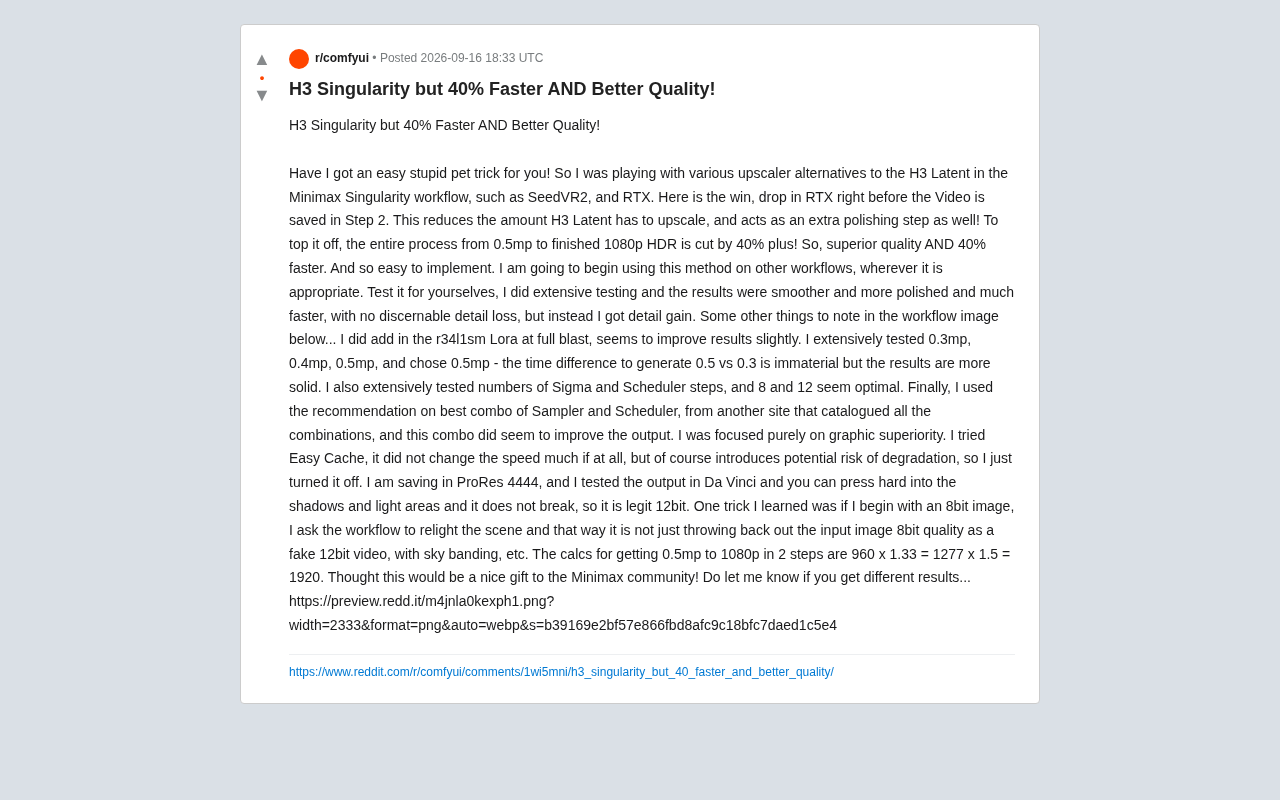
H3 Singularity Optimization: 40% Speed Boost With Better Image Quality
A Reddit user's Minimax Singularity workflow tip: insert an RTX upsampler before H3 Latent for 40%+ speed gains and better quality. Covers parameters, 12-bit output, and more.
Glyph: A Multi-Strategy Agent System for Automated Enterprise Data Catalog Annotation
Glyph is a multi-strategy LLM agent system for enterprise data catalogs that automates column description generation and sensitivity ontology tagging, grounding outputs in pipeline source code to improve accuracy.