Don't Be the Out-of-Touch Kung Fu Master: Carmack on Continuous Learning for Tech Professionals
Carmack warns tech veterans: prestige without hands-on practice becomes a cognitive trap.
Legendary programmer John Carmack's quip "Don't be the out-of-touch Kung Fu master" sparked 250+ comments on Hacker News, touching a raw nerve across the tech community. The metaphor captures a real risk: as engineers rise in seniority, they engage less with front-line practice and may develop blind spots rooted in outdated experience — especially dangerous in fast-moving fields like AI. The antidote, the article argues, is staying hands-on, recognizing the limits of past frameworks, and learning bidirectionally from newer practitioners.
A Tweet That Sparked a Tech Community Debate
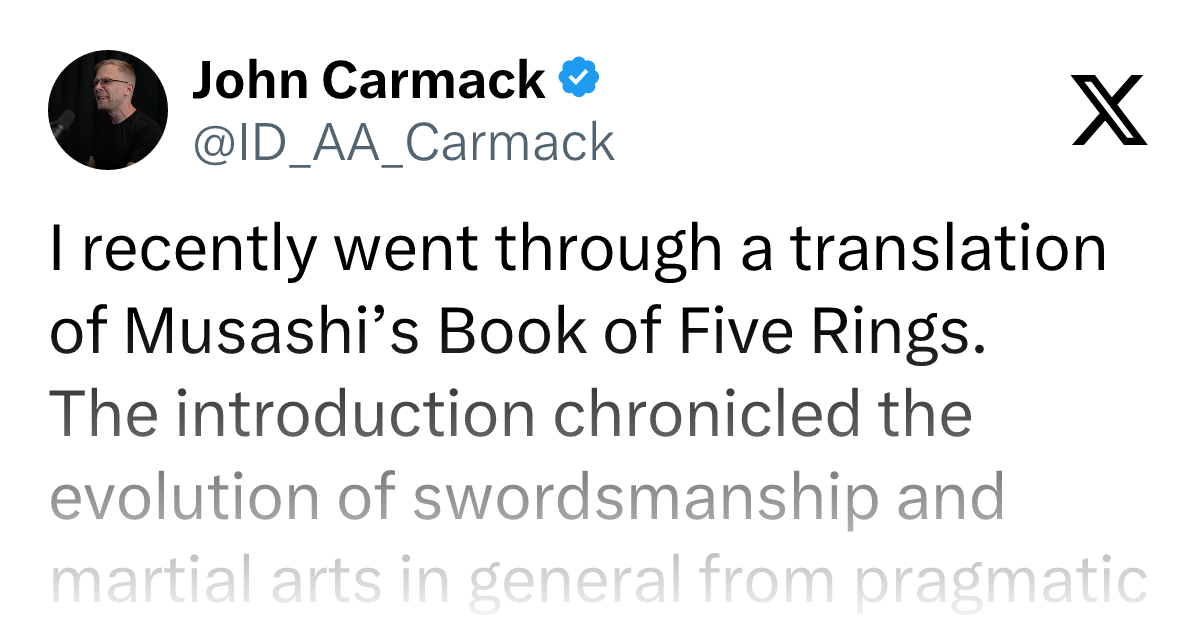
Legendary programmer and id Software co-founder John Carmack recently posted a brief but thought-provoking take on social media, distilled into a single memorable line: "Don't be the out of touch Kung Fu master." The post garnered 189 upvotes and over 250 comments on Hacker News, quickly becoming a focal point of discussion across the tech community.
The line may sound tongue-in-cheek, but it cuts to a very real dilemma facing many technical professionals: seasoned experts who were once at the top of their craft may, if they stop learning and engaging with front-line practice, gradually lose their judgment and relevance in the face of rapidly evolving technology.
What the "Kung Fu Master" Metaphor Really Means
The "out-of-touch Kung Fu master" refers to those senior figures who have accumulated enormous prestige through past accomplishments, yet have grown increasingly disconnected from the realities of the field by stepping away from hands-on work. They may still hold court and offer opinions, but their mental frameworks no longer map cleanly onto today's technical landscape.
The elegance of the metaphor lies in this: a Kung Fu master's techniques may have been unbeatable in their day, but when the rules of combat, the opponent's approach, and the entire environment have shifted, clinging to the old playbook can become a liability rather than an asset. In the context of software development and the rapid iteration of AI, this warning is especially sharp.
For someone of Carmack's own stature — himself an industry benchmark — voluntarily raising this kind of self-reflective concern speaks to a rare clarity. The truly skilled are often the most vigilant against their own stagnation.
Why This Resonates So Deeply in Tech
The high volume of discussion on Hacker News makes clear that this topic hits a nerve for many practitioners. The half-life of knowledge in the tech industry is extremely short — especially in areas like AI and machine learning, where experience from just a few years ago can already be partially obsolete.
Senior engineers and technical leaders frequently face a built-in contradiction: as they move up the ladder, they write less code, touch fewer cutting-edge tools, and increasingly rely on their teams and accumulated experience to make decisions. This path toward management or deep specialization, if not balanced with ongoing front-line engagement, is fertile ground for blind spots.
The lively comment threads also reflect how many people are actively grappling with this question — how do you avoid becoming that "out-of-touch master"? How do you leverage the depth of hard-won experience while staying genuinely sensitive to new developments and maintaining real hands-on capability? It's a balance that requires deliberate, ongoing effort.
What This Means for Tech Professionals
Carmack's observation offers something worth reflecting on at every stage of a technical career:
Stay hands-on. Regardless of seniority, regularly returning to the front lines — personally trying out new tools and frameworks — is one of the most effective ways to keep your judgment sharp. Theoretical understanding cannot replace the intuition built through direct practice.
Watch out for path dependency in your own experience. What worked brilliantly in the past may not translate to new environments. True expertise isn't just about what you know — it's about recognizing the boundaries of your knowledge and actively updating it.
Approach the next generation with genuine openness. Knowledge transfer in tech shouldn't be a one-way street. Senior practitioners also need to learn from younger colleagues who are native to new paradigms, creating a two-way flow rather than top-down transmission.
Closing Thoughts
The reason Carmack's post resonated so widely is that it uses a vivid metaphor to name a pervasive anxiety in the tech industry. In an era of accelerating change, reputation and seniority are both an asset and a potential cognitive constraint.
Avoiding the fate of the "out-of-touch Kung Fu master" is, at its core, an orientation toward lifelong learning — an acknowledgment that no one can stay permanently at the frontier, and that only through continuous engagement, continuous practice, and continuous questioning can one maintain genuine relevance. That may be the essential reminder this brief, memorable phrase leaves with every technical professional.
Related articles
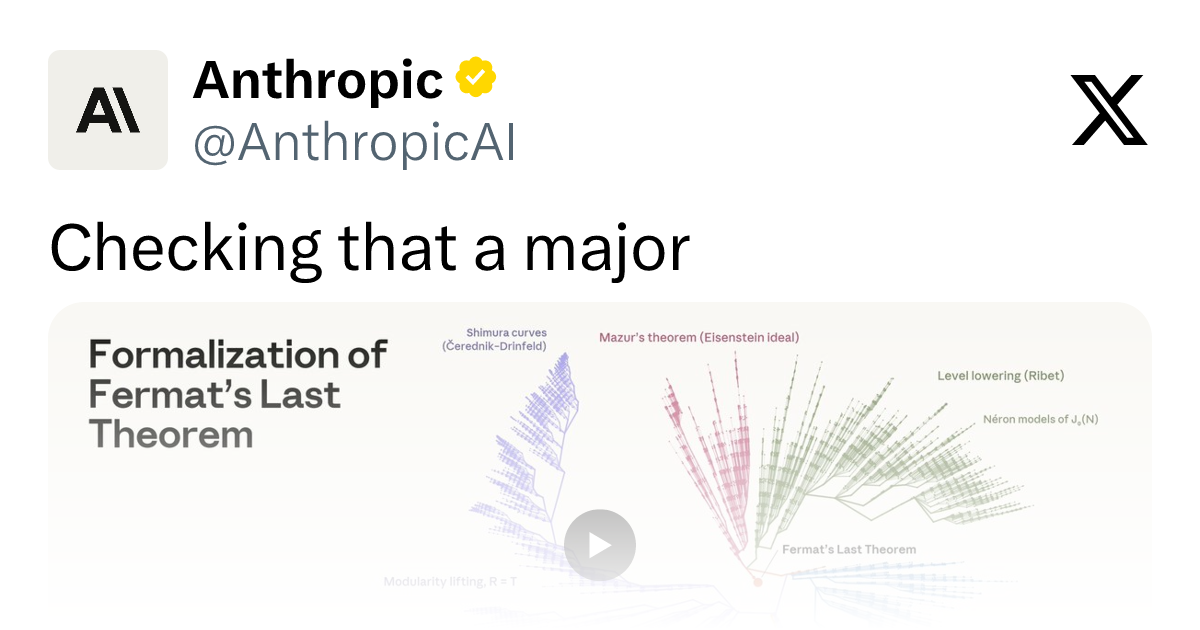
Claude Completes First Formal Proof of Fermat's Last Theorem: A Record-Breaking 13 Million Lines of Lean Code
Anthropic's Claude completes the first formal proof of Fermat's Last Theorem in over 13 million lines of Lean code — the largest ever — plus 29,000+ subsidiary theorems, opening new paths for AI-assisted math verification.

Microsoft Copilot Enters the NFL: How AI Is Supporting On-Field Decision-Making
Microsoft Copilot and Excel are entering NFL sidelines and booths, helping Seahawks analysts and coaches with real-time game decisions. Here's what it means for AI in pro sports.
Microsoft Copilot Goes Autopilot: From Assistant to Autonomous Long-Running Task Execution
Microsoft is evolving Copilot into autonomous Autopilots powered by Opal and Windows 365 cloud PCs, enabling end-to-end completion of long-running tasks without human intervention.