Drone-Delivered Potatoes: The Reality Behind Wing's Delivery Subsidies

Wing drones deliver Walmart potatoes at 82 cents a drop — the millennial lifestyle subsidy is back.
A suburban dad's group chat sparked a 'potato airstrike' after Wing drone delivery launched in their neighborhood — two dads independently ordered potatoes to a neighbor's yard. Behind the fun lies a serious signal: Wing's per-order cost is just ~82 cents, with no minimums or delivery fees, a classic loss-leader strategy the author calls the return of the 'millennial lifestyle subsidy.' The episode also shows how drone delivery spread organically by tapping into suburban social humor — something no ad budget can replicate. The author acknowledges the waste and labor ethics concerns, and closes with the key question: when subsidies end, will anyone pay for a 25-minute potato?
When the Neighborhood Group Chat Turned Into a 'Potato Airstrike'
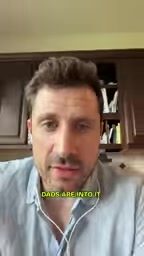
One Sunday morning, a dad in a suburban neighborhood dropped a message into the dads' group chat: "Anyone want to find something stupid to entertain the kids?" He followed it up with a video — a drone dropping a Walmart shopping bag into his backyard. The chat exploded. It turned out their community had been added to the Walmart drone delivery zone operated by Wing: 25-minute delivery, no delivery fee.
Then things got truly absurd. Someone asked: "Can you order a drone delivery to someone else's yard?" Minutes later, Will replied: "Nathan, I just ordered you a potato. Wanted to see if it could be delivered to someone else's house. 8 minutes out." Then neighbor Rick piled on: "Will, I just want you to know your potato will arrive before you do."
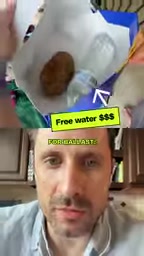
And so, a drone fleet carrying "one russet potato and a bottle of water for ballast" took to the skies over the neighborhood.
82 Cents Per Order: Losing Money to Win Customers
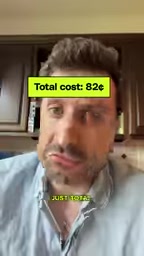
Behind this entertaining story lies a commercial signal worth taking seriously. Running the numbers: the total cost of each such delivery came to just 82 cents. No minimum order, no delivery fee, prices identical to in-store — or even cheaper, since drone delivery wasn't charged sales tax.
The conclusion is straightforward: Wing (the drone delivery arm of Google parent Alphabet) is almost certainly losing money on every single order. This is a classic user acquisition strategy — pricing well below cost to get people into the habit of using drone delivery.
The author calls this the return of "the millennial lifestyle subsidy" — a term once used to describe how companies like Uber and WeWork used investor money to subsidize consumers, letting users enjoy services at unsustainably low prices. Drone delivery now appears to be following the same playbook: buy scale with subsidies first, figure out profitability later.
Founded in 2012 as an incubator project within Alphabet's X lab, Wing became an independent operation in 2018 and in 2019 became one of the first drone delivery companies in the world to receive FAA Air Carrier Certification. Its delivery system uses an "aerial hover-and-release" method: the drone flies to about 7 meters above the target location and slowly lowers the package on a thin tether, never actually landing — sidestepping regulatory and safety issues around touching down in private yards. Wing currently partners with retailers including Walmart and Dollar Tree, primarily serving suburban communities in the Dallas-Fort Worth metro area of Texas. At 82 cents per order, the cost breakdown covers drone depreciation, electricity, dispatch operations, and customer service — but excludes long-term infrastructure investment and R&D amortization. Factor those in, and the per-order loss is substantially larger.
When a Tech Product Actually 'Breaks Through'
From a product perspective, this episode reveals something interesting: Wing's drone delivery spread quickly through the community not because of feature marketing, but because it accidentally tapped into a social behavior.
Two dads — Will and Rick — without any coordination, independently decided to send another dad a potato. The author describes this as "peak suburban dad energy": faced with a long list of deliverable items, they weren't thinking "what do I need?" but "what's the dumbest thing I can send someone?" The answer was obvious — a potato.
This kind of spontaneous, humor-driven usage is something no marketing budget can buy. Once users start treating a tech product as a vehicle for a running joke, its spread no longer depends on the company pushing it.
A Few Caveats and Honest Reflections
The author is careful to clarify two things. First, this content is not sponsored — Wing is not paying anyone to teach users how to violate its terms of service. Second, ordering a delivery to someone else's yard without their permission actually does violate Wing's terms of service. The "potato bombing" is funny, but it's not an officially sanctioned use.
Beyond the laughs, the author doesn't shy away from heavier questions. Is sending a single potato a waste? "Yeah, a little bit." Is drone delivery yet another mechanism through which capital squeezes workers and further suppresses wages in an already shrinking labor market? "Yeah, probably."
But he lands on an honest, contradictory conclusion: for those few minutes on a Sunday, watching a drone fleet carry loss-leader potatoes across a suburban sky, the whole thing did feel a little magical. The novelty of the technology and the commercial logic and labor ethics questions underneath it are all tangled up together.
Final Thought: How Long Can the Subsidy Party Last?
This little "potato war" story is, at its core, a snapshot of the early commercialization phase of drone delivery. Loss-leader pricing, zero minimums, lightning-fast delivery — all of it is designed to capture mindshare. The real question is: when the subsidies dry up and prices return to cost, will users still pay for a potato delivered in 25 minutes?
From Uber to food delivery platforms, history has repeatedly shown that lifestyle subsidies always come to an end. But before that day arrives, watching a drone cut across a suburban sky and drop a russet potato into a neighbor's backyard does give ordinary people a rare, close-up glimpse of what the future of logistics might look like.
Looking at existing drone delivery business cases, a clear path to profitability remains elusive. Amazon's Prime Air project, which debuted its concept video in 2013, has remained in limited pilot stages after more than a decade. Alphabet's Wing has taken a lighter-asset approach, deeply integrating with retail partners and focusing on fixed suburban routes. Analysts broadly agree that for drone delivery to achieve positive unit economics, at least three conditions need to be met: significantly higher daily deliveries per drone, further regulatory airspace liberalization to allow beyond-visual-line-of-sight autonomous flight, and consumers willing to pay a premium for speed. None of these conditions are in place yet — which explains why current pricing strategies look more like spending investor capital to buy time for market education than actually entering a profitable cycle.
Related articles

Amphibious Transforming Drone: Beyond 100x Power Savings, What Are the Real Needs?
Is the amphibious transforming drone just a gimmick? Starting from the 100x power difference of the M4 Morphobot, explore real application scenarios and thesis topic ideas, analyzing boundary conditions where pure drones and pure ground robots both fail.

Warhound Raises $200 Million: Genetically Engineered "War Dogs" Paired with Anduril Gear
Warhound raises $200M, backed by Ben Lamm and Palmer Luckey, to genetically engineer dogs for military and law enforcement use and equip them with Anduril gear. This article analyzes its technology direction, funding logic, and ethical controversy.

Claude API Comes to Google Cloud: IAM Integration and SDK Access Guide
Anthropic hosts the full Claude API on Google Cloud with IAM-controlled permissions and unified billing. This guide covers the Vertex AI and Anthropic-hosted entry points, IAM role configuration, and SDK access.