DSH Docker Auto-Update Edition Goes Open Source: Checks for Updates on Every Container Start
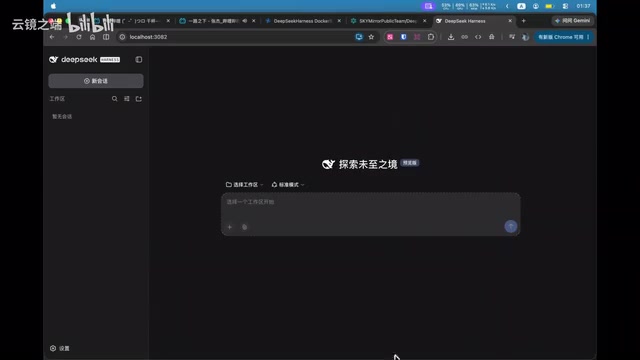
DSH Stalker goes open source with built-in Docker startup auto-update, reducing self-hosting maintenance overhead.
Deep Seek Hardening (DSH) Stalker edition has been significantly overhauled and open-sourced, with its key change being auto version-check logic embedded at Docker image startup. Each container start triggers a remote version comparison — downloading and running a new version if available. This automates what previously required manual image pulls and rebuilds, lowering the operational burden for developers. Open-sourcing the project also lets the community audit the update process for security. However, the lack of a manual review step means caution is advised in stability-sensitive production environments.
DSH Project Receives Major Overhaul and Goes Open Source
Deep Seek Hardening (DSH) Stalker edition has recently undergone a significant overhaul and has been officially open-sourced. For users who have been following the project, the most important change in this update is the introduction of an automatic container image update mechanism — every time the container starts, it automatically checks whether a newer version is available.
According to Bilibili creator "云镜之端", the goal of this change is to reduce the burden of manual maintenance. Previously, Docker-deployed projects typically required users to manually pull new images and rebuild containers to complete an upgrade. DSH's new approach moves this process to the image startup phase.
How the Auto-Update Mechanism Works
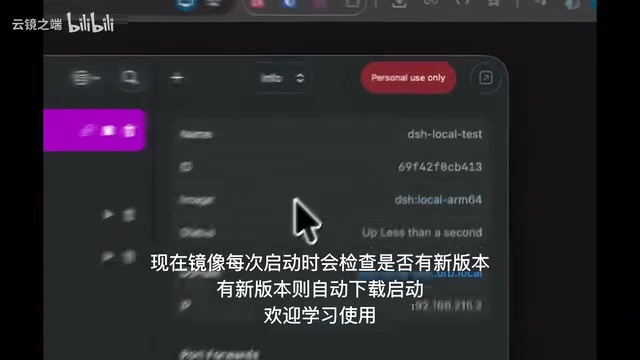
The core logic of the new version is straightforward: each time the image starts, it proactively checks a remote source for any available new versions. If a new version is detected, the container automatically downloads it and starts with the updated version; if none is found, it continues running the current version.
This "check on startup" design philosophy is becoming increasingly common in lightweight self-hosted tools. The advantage is that users don't need to track version numbers or periodically log into a server to run update commands — the container automatically syncs itself at the start of its lifecycle. The downside is equally clear: there's no review step for update content. If an upstream release contains issues, it could be pulled in on the next restart. For this reason, such mechanisms are generally better suited for personal use or scenarios where strict stability requirements are less critical.
From an engineering perspective, implementing auto-updates typically relies on a version comparison API, image tag diffing, or checksum comparison. While detailed implementation specifics for DSH are currently limited in public documentation, the description of "checking on every startup" strongly suggests that the update trigger is embedded at the container entrypoint script level.
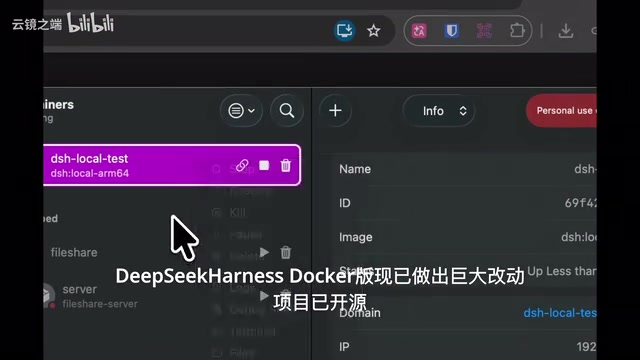
The container entrypoint script is the first script or command executed when a Docker image starts, defined by the ENTRYPOINT instruction in the Dockerfile. Embedding version-check logic into the entrypoint means that every time docker run is executed — or the container is restarted by a restart policy — a remote version comparison is triggered. This differs from standalone container auto-update tools like Watchtower, which run as independent daemons that continuously poll all running containers. The entrypoint approach encapsulates update logic within the image itself, requiring no additional components on the host machine, making deployment more lightweight. The trade-off, however, is that updates can only be fetched when the container restarts — long-running instances that are never restarted will not be automatically upgraded.
What Open Source Means
Open-sourcing the project is another major highlight of this update. Beyond simply using the pre-built image, users can now inspect the source code, understand the specific implementation of the auto-update logic, and even fork or contribute improvements based on their own needs.
For tools that touch deployment and runtime environments, transparency is especially important. Open source allows the community to scrutinize whether the auto-update process is secure and whether download sources are trustworthy — which goes a long way toward alleviating the trust concerns that come with "automatically downloading and launching" remote content. It also lays the groundwork for community contributions and faster iteration.
In the self-hosted tooling space, "automatically downloading and executing remote content" has always been a sensitive point in security audits. A Supply Chain Attack is a method where attackers compromise upstream software repositories or image sources so that downstream users unknowingly introduce malicious code during a normal update. Open source code allows the community to verify whether downloads are signature-verified, whether update channels use HTTPS with Certificate Pinning, and other protective measures. For tools like DSH that initiate network requests at startup, community access to these implementation details is a critical prerequisite for establishing user trust.
Who Is This For
Based on currently available information, the DSH auto-update edition is best suited for the following types of users: those who prefer Docker for deploying self-hosted services, who want to reduce manual maintenance overhead, and who are comfortable with the trade-off of "always running the latest version" — typically individual developers and tech enthusiasts.
It's worth noting that publicly available information about the project's functional scope, dependencies, and deployment steps is still fairly limited. Interested users are advised to consult the project's open-source repository directly for complete documentation and installation instructions before deciding whether to enable the auto-update feature in their own environment.
Summary
The core change in this DSH Stalker edition update is pushing "auto-update" down into the image startup phase, while open-sourcing the project improves overall transparency. For self-hosted users who value a low-maintenance setup, this is a practical step toward reducing operational overhead. For production environments where stability is critical, however, the uncertainties introduced by automatic updates still warrant careful evaluation.
Related articles
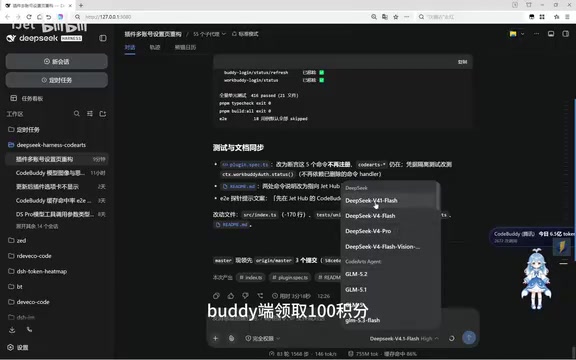
Free DeepSeek V4.1 Flash via DSH: Bulk Point Collection & International WorkBuddy Tested
DSH project update tested: WorkBuddy now offers 100 points per claim, rate limits raised beyond 80M tokens with faster resets, and international WorkBuddy supports free Hunyuan 4 and DeepSeek V4.1 Flash.
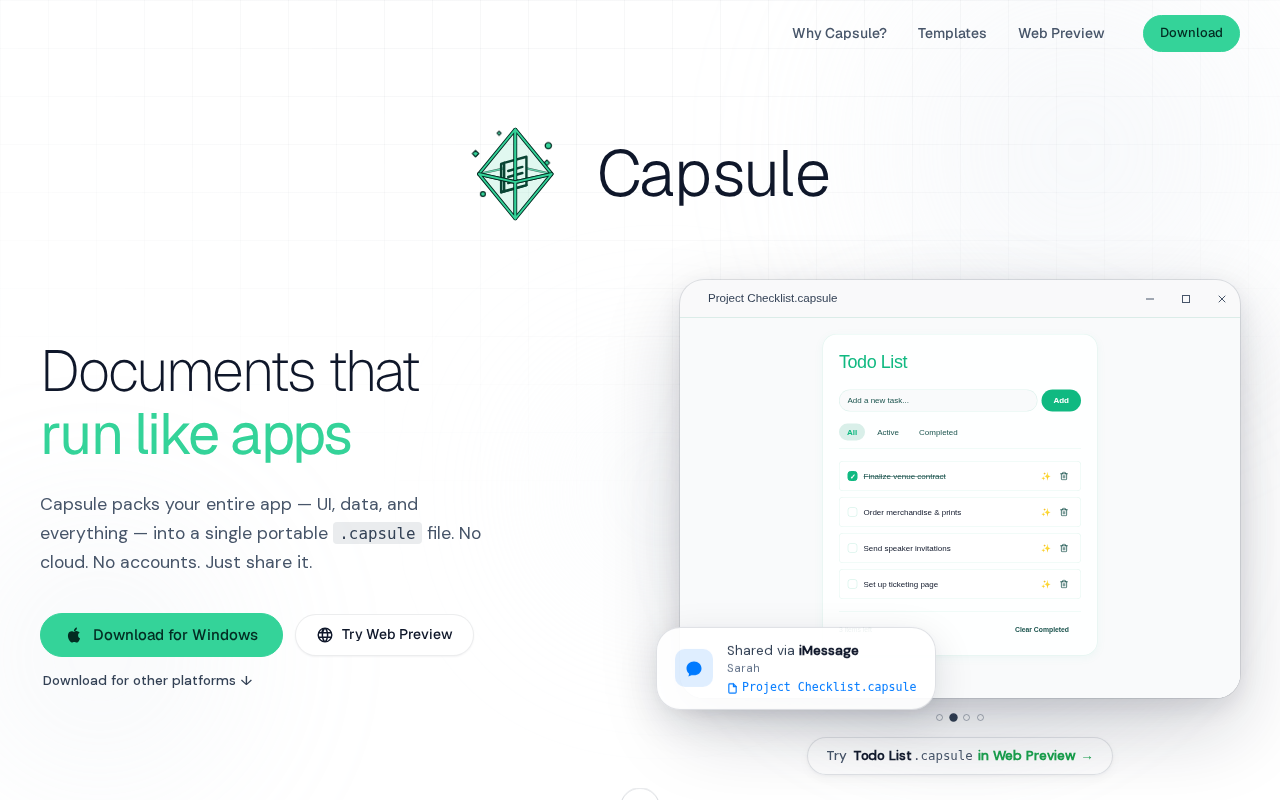
Capsule: Pack Web Apps and Data into a Single SQLite File
Capsule is a Rust/Tauri 2.0 tool that packs HTML web apps and data into a single SQLite file — privacy-first, local storage, portable sharing, with AI support.
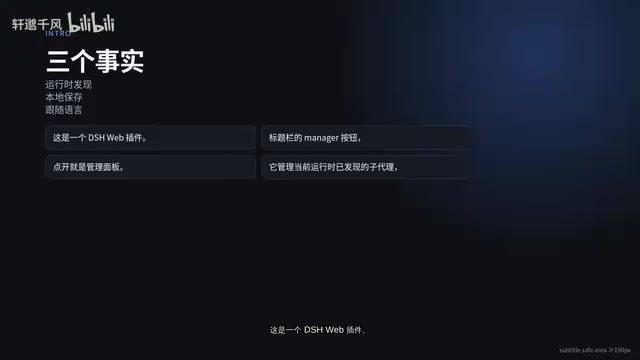
DSH-SUBAGENT-UI Plugin: The Ultimate Sub-Agent Manager for DeepSeek Harness
DSH-SUBAGENT-UI is a DeepSeek Harness browser plugin offering sub-agent overview, search, local categorization, and completion snapshots — install with one command.