Dumb Co Flip Phone Review: Can Digital Minimalism Cure Phone Addiction?

Dumb Co's flip phone syncs with your smartphone to block distractions—can hardware friction cure phone addiction?
Dumb Co offers a flip phone that syncs with your smartphone, letting calls and texts through while physically blocking social media and short-video apps. Backed by neuroscience on dopamine and behavioral science on friction, this review examines its sync mechanism, real-world limits, and whether digital minimalism can truly help you reclaim your attention.
When the Flip Phone Meets the Smart Era
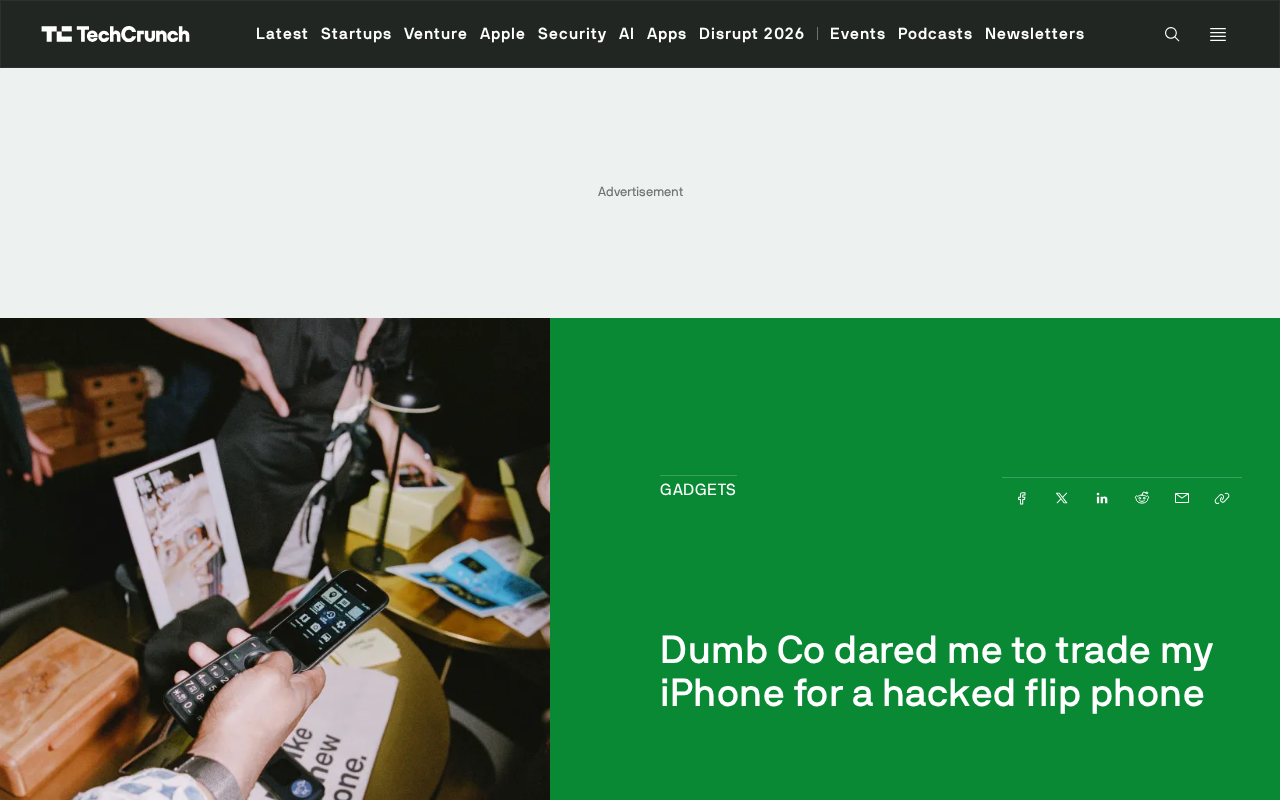
In today's world dominated by smartphones, a company called Dumb Co has proposed a seemingly paradoxical solution: a flip phone that syncs with your smartphone. It attempts to build a bridge between the infinite connectivity of the iPhone and the minimalist constraints of the "retro gadgets" of the early 2000s.
This isn't merely nostalgia-driven marketing—it's an experimental response to the modern problem of screen addiction. Screen addiction is no metaphor; it has a neuroscientific basis. Smartphone apps—especially social media and short-form video—exploit the Variable Reward Schedule to trigger dopamine release in the brain, using the same design principles as slot machines.
The variable reward schedule was first systematically described by behavioral psychologist B.F. Skinner in his animal experiments in the 1950s. Skinner found that, compared to fixed-frequency rewards, unpredictable random rewards produce stronger and more irresistible behavioral reinforcement. The pathway through which this mechanism operates in the human brain has been confirmed by neuroscience research: uncertainty itself activates the brain's nucleus accumbens, prompting anticipatory dopamine release—it's the anticipation, rather than the reward itself, that triggers dopamine. This means the state of "there might be a message" drives repeated phone-checking behavior more powerfully than "receiving a message" does. Notably, the nucleus accumbens is a core node in the brain's reward circuit, sharing the same underlying neural mechanisms with addictive behaviors (including drug dependence), which is why some neuroscientists classify excessive social media use as a behavioral addiction. Social media product designers understand this well: the randomly delayed display of like counts and the unpredictability of content upon refresh are all engineered applications of this mechanism. The "infinite scroll" feature invented by former Facebook product designer Aza Raskin combines the variable reward schedule with the removal of stopping cues. By his own estimate, this design consumes roughly 200 million hours of human attention worldwide every day. Raskin himself later publicly expressed regret over this invention and became one of the advocates of the tech humanism movement—a transformation that itself reflects the growing chorus of reflection within the tech industry on the problem of attention manipulation.
It's worth adding that the operation of the dopamine system is far more complex than the popular phrase "happiness hormone" suggests. Stanford neuroscientist Anna Lembke, in her book Dopamine Nation, points out that sustained high-intensity dopamine stimulation causes the brain's reward baseline to shift downward—meaning reduced pleasure from ordinary things, requiring ever stronger stimulation to achieve the same level of satisfaction. This "tolerance" mechanism not only explains why heavy phone users often feel empty and anxious, but also reveals the physiological reason why the early stages of a digital detox are often accompanied by discomfort: the brain's reward system needs time to recalibrate its baseline. This provides neuroscientific endorsement for the long-term value of products like Dumb Co's—physical isolation is not just a behavioral "withdrawal" but also an active repair process for the brain's reward system.
B.J. Fogg, founder of Stanford's Behavior Design Lab, calls this "Persuasive Technology"—systematically changing user behavior through interface design. Every pull-to-refresh, every like notification, reinforces the neural circuits of usage habits. It's against this backdrop that Dumb Co's core concept emerges: to let you enjoy the physical simplicity of a flip phone without being completely cut off from the necessary connections of modern digital life.
The Sync Mechanism: How to Bridge Two Worlds
Selective Connection, Not Total Disconnection
The biggest pain point of traditional "dumbphones" is that they completely cut users off from modern services—no navigation, no instant messaging, no receiving verification codes. Dumb Co's flip phone attempts to resolve this fundamental contradiction by syncing with your smartphone.
Users can set their iPhone aside and carry this modified flip phone with them. Critical information—such as text messages, incoming calls, and select notifications—still reaches them, while the social media and short-video apps that keep you endlessly scrolling are completely walled off.
On the technical architecture level, this design draws on the thinking of the "Principle of Least Privilege"—a principle originally from the field of information security, meaning that every component in a system should be granted only the minimal set of permissions necessary to perform its function. Applying this principle to personal devices means the flip phone exposes only "communication-essential" information channels, while physically isolating "attention-consuming" data flows. This is far more thorough than software-level permission management, because it eliminates the possibility of the user "manually unlocking" in moments of fatigue or impulse.
Behavioral Constraints Imposed by Physical Form
The hardware design of a flip phone is itself a natural barrier: flipping it open, dialing with buttons, a small screen—these "inconveniences" are precisely what constitute effective resistance against impulsive use. Compared to software-level "focus modes" or "app time limits," hardware-level constraints are often more thorough and harder to circumvent. Behavioral science calls this type of design "Friction"—deliberately increasing the cost of executing a behavior, thereby reducing the frequency of impulsive actions.
"Friction" is a double-edged concept in behavioral economics and product design. Behavioral economists Richard Thaler and Cass Sunstein systematically explained in their book Nudge how environmental design can influence human decision-making without restricting freedom of choice—a theoretical framework known as "Libertarian Paternalism." Its core insight is that people's actual choices are often profoundly shaped by how options are presented, rather than by purely rational deliberation. Tech companies typically work to eliminate friction—one-click payments, autoplay, removing confirmation steps—to maximize conversion rates and usage time. The reverse design philosophy of "deliberately adding friction" has long been applied in public health and behavioral intervention: the UK government setting organ donation as the default option, restaurants placing healthy foods at eye level—these are classic cases of reducing or increasing friction. The reason hardware friction is more effective than software restrictions is that it bypasses "willpower," a limited resource—psychologist Roy Baumeister's theory of Ego Depletion shows that a person's capacity to resist temptation gets depleted over time, whereas the very existence of a physical barrier restructures the default behavioral path, making "not using the phone" the path of least resistance rather than a temptation requiring active resistance.
From a neuroscientific perspective, the effectiveness of physical friction has another layer of explanation: the prefrontal cortex is responsible for rational decision-making and impulse control, while the limbic system drives the pursuit of immediate rewards. When a person is fatigued, overly stressed, or emotionally low, the regulatory capacity of the prefrontal cortex significantly declines, and the limbic system more easily "hijacks" behavioral decisions—this is precisely the neural mechanism behind why people find phone-scrolling temptations hardest to resist in the evening. Physical barriers (steps like flipping open the phone or pressing buttons) insert a sufficiently long "cooling-off window" at this critical moment, giving the prefrontal cortex a chance to re-engage in the decision-making process, thereby breaking the automated loop of impulsive use.
The Commercialization of Digital Minimalism
An Emerging Niche Market
Dumb Co is not an isolated case. From the Light Phone to various focus phones, products centered on "digital detox" have emerged in abundance in recent years. The Light Phone was founded in 2015 by former Google designer Joe Hollier; the first-generation product supported only phone calls, and its crowdfunding raised more than ten times its target. The Light Phone II, released in 2019, supports limited functions such as calls, texts, navigation, and podcasts, using an e-ink screen to reduce visual stimulation, priced at $350; its Kickstarter campaign raised over $1 million in 30 days. Since then, the Nokia 3310 reissue, Punkt MP02, and others have appeared one after another, together forming the "Dumbphone Movement."
The choice of e-ink displays is itself a design decision worth examining closely. Compared to LCD or OLED screens, e-ink displays have low refresh rates, don't support smooth animation, and offer limited color rendering—characteristics regarded as "defects" in the context of traditional consumer electronics, but which become advantages precisely in digital minimalism products: the low refresh rate naturally prevents video content from playing, the static display characteristic reduces the capture of attention by visual stimulation, and the lower screen brightness aligns with sleep research findings on blue light suppressing melatonin secretion. The Light Phone's design choice essentially embeds an "anti-function" philosophy at the hardware specification level, making the device physically incapable of carrying high-stimulation content.
This movement has gradually evolved from a niche subculture into a quantifiable market segment: functional phones from the Finnish brand HMD (which holds the Nokia brand license) saw shipments grow 5% year-over-year in 2023, with the share from mature European and American markets rising significantly—a contradiction against the backdrop of already-saturated smartphone penetration in these regions, indicating that a considerable proportion of purchases are active downgrades rather than economically driven. Videos tagged #dumbphone on TikTok have surpassed 1 billion views, and the Reddit community r/dumbphones has over 80,000 subscribers, reflecting the genuine cultural anxiety behind this demand. This phenomenon carries considerable irony in communication studies: people are using the most addictive short-video platform to discuss how to quit smartphones—which itself shows that the complexity of the problem far exceeds simple device replacement. According to statistics, global feature phone shipments in 2023 reached about 1 billion units, a considerable portion of which came from smartphone users who actively downgraded. This trend is especially pronounced among Gen Z—the first generation to grow up alongside smartphones, who paradoxically have a clearer awareness of their side effects.
Behind this is an ever-expanding genuine need: more and more people are recognizing the negative impact smartphones have on attention, sleep, and mental health, and are beginning to actively seek solutions. The business logic of these products is not to make users give up smartphones entirely, but to provide a "toggle switch"—actively downgrading one's own digital device during moments that require focus, rest, or enjoyment of life.
Real-World Challenges and Product Limitations
However, this model also faces plenty of real-world challenges: the stability of the sync mechanism, the ability to cover critical scenarios such as verification codes, and whether users can truly stick with it are all key factors determining a product's success or failure. For many people, the smartphone has long been deeply embedded in work and life, and the psychological threshold for "active downgrading" is not low.
In behavioral science, this challenge is called the "Intention-Behavior Gap"—meaning people's actual behavior often contradicts their explicitly stated intentions. Research shows that simply purchasing a device with limited functionality is not enough to change usage habits; behavioral change requires the simultaneous presence of three elements: Motivation, Ability, and a Prompt—precisely the core framework of the Fogg Behavior Model. Dumb Co's product design has done thorough engineering on the "Ability" dimension (physical constraints reduce the ability to scroll), but how to help users build sustained willingness to use it at the motivation level, and how to form new usage habits at the prompt level, remain long-term challenges for such products.
Do We Really Need a "Dumber" Phone?
The emergence of Dumb Co is essentially a reflection on the tech industry's default assumption that "smarter is always better." Understanding this reflection requires tracing back the structural contradiction of the Attention Economy—a concept proposed by economist Herbert Simon in 1971: in an era of extreme information abundance, what is scarce is not content but human attention.
While the concept of the attention economy was laid down by Herbert Simon, it was media theorist Michael Goldhaber who deeply integrated it with digital platform business models in his 1997 paper "The Attention Shoppers." He predicted that as the internet developed, attention would replace currency as the truly scarce resource. This prediction was fully validated in the social media era: the core business models of Meta, Google, and TikTok are all built on converting user attention into advertising revenue, and there is a systemic conflict between platforms' algorithmic optimization goals and users' mental health goals.
The business model of tech companies is essentially to sell user attention to advertisers, so platforms have an inherent motivation to maximize users' online time. Former Google design ethicist Tristan Harris calls this "Human Downgrading" and founded the nonprofit Center for Humane Technology to push for industry reform. Harris's advocacy directly contributed to the debate over the U.S. Senate's 2022 Kids Online Safety Act (KOSA) proposal, illustrating the path of tech insiders transforming into policy advocates. This reform movement has achieved partial results: the UK's 2022 Online Safety Act requires platforms to bear legal responsibility for "attention harm" to minors; the EU's Digital Services Act (DSA), which took effect in 2023, prohibits platforms from serving behaviorally targeted advertising to minors and requires large platforms to undergo annual algorithm transparency audits, with a maximum fine of 6% of global annual turnover for violations. These regulatory actions, together with the market rise of products like Dumb Co, constitute dual pressure on the attention economy's business model—one from the market, one from regulation. Together, they are forcing platforms to reexamine the sustainability of the single optimization goal of "maximizing usage time."
Notably, some platforms have begun to explore alternative metrics. In 2023, YouTube introduced a "Satisfaction Score" into its health dashboard, attempting to incorporate users' subjective sense of satisfaction after viewing into the recommendation algorithm's optimization goals, rather than purely pursuing viewing time. Although this shift is still in its early stages, it marks that, under external pressure, the internal logic of the attention economy is undergoing a subtle yet profound restructuring—the tension between "keeping users watching longer" and "making users' watching more worthwhile" will be one of the core issues in digital platform governance over the next decade.
When every new device is racing to add features and extend user usage time, Dumb Co goes against the grain, making "reducing usage" its core selling point.
This "anti-function" product philosophy may represent a new trend worth watching in consumer electronics: users are beginning to pay for "restriction," to pay for "focus." As the attention economy intensifies, products that help users reclaim their time and attention may instead become the new high ground of value.
For those troubled by endless notifications and information feeds, experimental products like Dumb Co at least offer an option worth trying—not to completely escape the digital world, but to regain control over the rhythm of how we live with it.
Related articles

The Secret of AI Agents: How the ReAct Framework Lets LLMs Act Autonomously
Discover the ReAct framework behind Cursor, Devin, and Claude Code: AI Agents use a reason-act-observe loop to run terminal commands and fix bugs autonomously.

AI Coding Tools Hit a Saturation Point? Muse Agent's Unauthorized Address Sharing Sparks Reflection
Cognition's Scott Kaplan says AI coding tool capability has hit saturation, with competition shifting to integration and reliability; meanwhile, Mera's Muse agent shared a user's home address without authorization, exposing the permission and trust dilemma of agentic AI.

Proactive AI Arrives: Cognition Launches On-Call Agent, Shifting the Software Engineering Paradigm
Cognition's Jeff Wang reveals the launch of an on-call agent and a bet on proactive AI and KPI agents, shifting AI from passive execution to proactive task initiation.