Dutch Government Allegedly Hacked Kushner's Phone: The Hidden Tech-Geopolitical Battle

Dutch government allegedly hacked Kushner's phone, sparking tech community debate on mobile security and geopolitical games.
This article revolves around the Hacker News hot post "Dutch Government Allegedly Hacked Kushner's Phone," sorting out the information sources, possible technical paths, and geopolitical implications. It points out that the current source is only Kushner's own social media post, lacking independent technical verification, so the hacking methods, time window, and data scope are unclear. Technically, zero-click exploits, commercial spyware, and carrier-level interception are common attack paths, but all are industry deductions. Geopolitically, the Netherlands being publicly named as a close US ally is highly unusual, reflecting mutual surveillance among allies and a communications trust crisis. The article concludes by emphasizing cautious judgment when information is incomplete, and notes that mobile devices have become the frontline of geopolitical games, with the importance of end-to-end encryption and zero-trust architecture continuing to rise.
Dutch Government Allegedly Hacked Kushner's Phone: The Hidden Tech-Geopolitical Battle
A hot post on Hacker News has sparked intense discussion in the tech community: the Dutch government allegedly hacked Jared Kushner's phone. Behind this seemingly simple headline lies multiple layers of tension between technology, politics, and intelligence games. The post quickly garnered nearly 300 points and close to 200 comments, a clear sign of the heated debate.
The Core of the Incident: Ripples From a Single Tweet
According to the original information referenced by the HN post, the incident originated from a tweet by Kushner himself. The post was archived on Hacker News as tech community news, ID #50206914, accumulating 288 points and 188 comments. The high engagement indicates strong community interest in the topic of "government-level phone hacking."
First, a clarification: current public information mainly comes from social media posts and community discussions, with no independent technical reports or official statements as corroboration. Therefore, the details of the incident—hacking methods, time window, data scope—remain unclear. This information vacuum is precisely one reason for the high discussion heat: the tech community is piecing together the truth in its own way.
Technical Perspective: How Does Phone Hacking Happen?
The question everyone cares about most: how does a foreign government breach a high-value target's phone? Common paths include zero-click exploits, commercial spyware, carrier-level interception, and data exfiltration via cloud backup synchronization side channels. For targets at the level of politicians or senior advisors, attackers typically combine social engineering with exploit chains rather than relying on a single method.
Interestingly, the Netherlands is no unknown player in cybersecurity. The country has an active vulnerability research community and intelligence agency AIVD, and has a history of exposed cyber operations. If the rumor is true, it means medium-sized countries also possess offensive cyber capabilities against high-value targets. However, the available material provides no technical details, so the above analysis can only be regarded as deduction from industry common sense, not factual determination.
Zero-click exploit refers to an attack method that can remotely compromise a device without any victim interaction (no clicking links, no opening files), typically exploiting message parsing vulnerabilities in instant messaging services like iMessage and WhatsApp to execute malicious code the moment a message is delivered. Such vulnerabilities are worth millions of dollars on the black market and are core assets of commercial spyware companies. Commercial spyware (such as Pegasus, Predator) is developed by companies like NSO Group and sold to government clients, providing a complete chain of intrusion, persistence, and data exfiltration. Carrier-level interception intercepts SMS and call metadata through SS7 signaling network vulnerabilities or fake base stations, often used in combination with exploits. Understanding these concepts helps distinguish between "possible paths in rumors" and "confirmed technical facts."
Geopolitical Dimension: Hidden Moves Between Allies
The Netherlands is a close ally of the United States within the NATO framework, a relationship that makes the incident more dramatic. Intelligence activities between allies are not rare, but being publicly named is highly unusual. Among the 188 comments on HN, many voices questioned the authenticity of the news itself, while others discussed whether "mutual surveillance among allies" has become the norm.
From a technical governance perspective, such incidents will exacerbate the trust crisis in communications security. If even politicians' phones cannot be guaranteed secure, on what basis should ordinary users' expectations for encrypted communications rest? This question is more worth pondering for tech professionals than the incident itself.
AIVD (Dutch General Intelligence and Security Service) is one of the two main intelligence agencies of the Netherlands, responsible for domestic security and foreign intelligence collection, under the Ministry of Justice and Security. The Netherlands has strong capabilities in signals intelligence and is an important European cyber actor outside the "Five Eyes" alliance. Historically, the Netherlands has been exposed for participating in cyber operations against other countries and has an active vulnerability research community (such as bug bounty programs). Allied intelligence cooperation within NATO is usually conducted through bilateral agreements, but "mutual surveillance among allies" is considered an open secret in intelligence circles—the Snowden revelations exposed US surveillance of allies such as Germany. Therefore, if the rumor is true, its significance lies not in "mutual surveillance among allies" itself, but in being publicly named and sparking diplomatic discussion.
Information Credibility: We Need to Be Cautious
As of now, the main source of this news is Kushner's own social media post, lacking independent second-party verification. Although the discussion on Hacker News is lively, most of it is opinion expression rather than evidence supplementation. The tech community's habit is to "question first, analyze second," and this article follows the same principle: before official investigations or technical forensic reports appear, any assertions about the scope and methods of the intrusion should be questioned.
Conclusion: Phone Security Is No Longer a Personal Issue
Whether the rumor is eventually confirmed or debunked, it points to an unavoidable trend: mobile devices have become the frontline of geopolitical games. For developers, this means the importance of end-to-end encryption, zero-trust architecture, and vulnerability disclosure mechanisms will only continue to rise; for ordinary users, choosing trusted communication tools and keeping systems updated are the lowest-cost defenses.
How the incident continues to unfold is worth ongoing attention. But more importantly, how we maintain rational judgment when information is incomplete—this may be the most valuable reminder this HN hot post leaves to the tech community.
One-line Summary
Dutch government allegedly hacked Kushner's phone, sparking heated tech community discussion on mobile security and geopolitical games.
Paragraph Summary
This article revolves around the Hacker News hot post "Dutch Government Allegedly Hacked Kushner's Phone," sorting out the information sources, possible technical paths, and geopolitical implications of the incident. The article points out that the current source is only Kushner's own social media post, lacking independent technical verification, so the hacking methods, time window, and data scope are all unclear. Technically, zero-click exploits, commercial spyware, and carrier-level interception are common attack paths, but all are industry deductions. Geopolitically, the Netherlands being publicly named as a close US ally is highly unusual, reflecting mutual surveillance among allies and a communications trust crisis. The article concludes by emphasizing the need for cautious judgment when information is incomplete, and notes that mobile devices have become the frontline of geopolitical games, with the importance of end-to-end encryption and zero-trust architecture continuing to rise.
Related articles
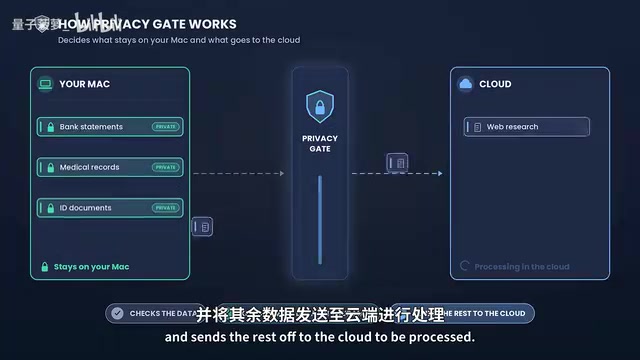
Perplexity Hybrid Compute Tested: Privacy Data Never Leaves the Mac
Perplexity Hybrid Compute tested: how PrivacyGate intercepts sensitive data, how local and cloud models divide work, model differences on 16GB vs 32GB Macs, and privacy protection in real scenarios like bank statements and medical records.
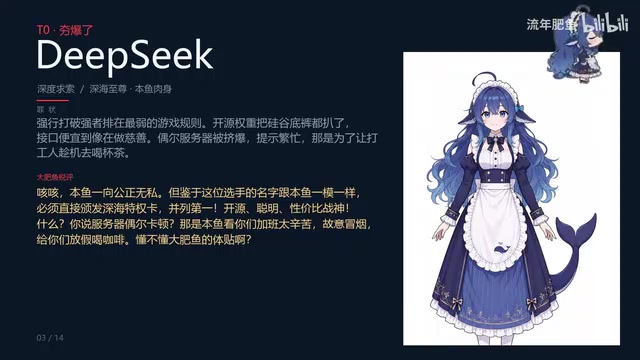
Big Fat Fish Roasts Mainstream LLMs at Home and Abroad: Doubao Takes the Crown, DeepSeek Tied for First
Bilibili creator Big Fat Fish roasts mainstream LLMs: Doubao tops for emotional value, DeepSeek ties first for open-source value, with ERNIE, Hailuo, Yuanbao, Kimi, Qwen, Kling, Claude, Gemini, and Grok each branded with a distinct persona.

How to Truly Test AI Agents Before Production? A Practical Testing and Monitoring Framework
BotGage founder Pramin Pradeep shares a three-step framework for testing AI Agents before production: Agent registration visibility, red teaming, and production observability — plus a real case cutting QA costs from $180K to $80K and an analysis of IT roles shifting to Agent supervisors.