E Ink Frames Get a New Twist: Trmnl Launches a Customizable Home Digital Dashboard
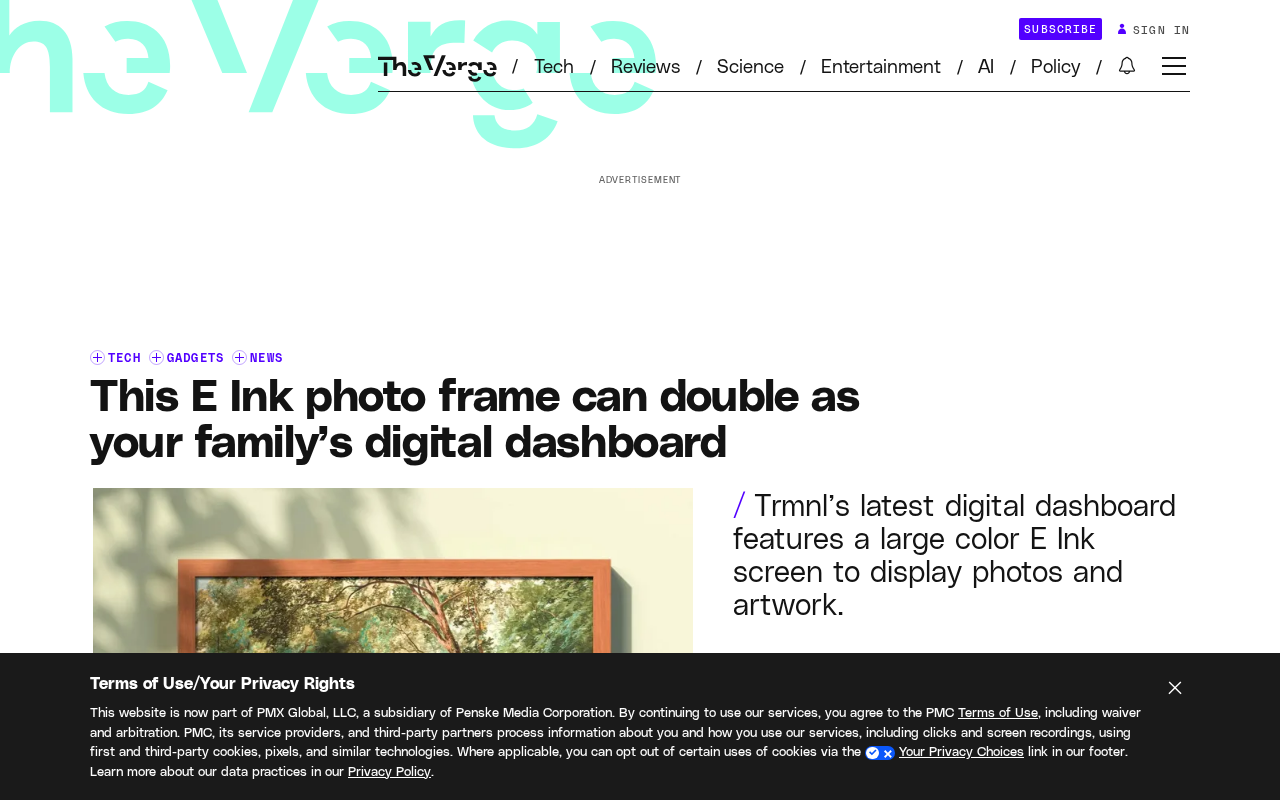
Trmnl launches a new color E Ink screen that doubles as a frame and a home dashboard.
Trmnl started with highly customizable E Ink dashboards. Its new product elevates artwork and family photo display to equal importance with the information dashboard, aiming to expand from efficiency enthusiasts to ordinary home users. This isn't its first color E Ink device; color E Ink still has limits in refresh speed, saturation, and cost, but frame scenarios don't need frequent refresh, making reflective display's low power and soft look advantages. The real selling point is one screen switching roles over time, but high customizability creates a setup barrier—balance will decide whether it enters ordinary living rooms.
Trmnl, the company known for its highly customizable E Ink dashboards, has recently launched a new display that can both showcase artwork and photos and serve as a home digital dashboard. It isn't the company's first color E Ink device, but this product extends its positioning into a more clearly defined scenario.
From Dashboard to Frame: Trmnl's Product Logic
Trmnl's best-known product to date is a highly customizable E Ink dashboard that users can deploy as a desk calendar, a stock tracker, or virtually any information display panel. This "one screen, many uses" approach essentially leverages E Ink's low power consumption and always-on display characteristics to present digital information with a near-paper look.
What's special about the new product is that it elevates "displaying artwork and photos" to a position equal in importance to "information dashboard." This means Trmnl is no longer targeting only efficiency-tool enthusiasts but is also attracting users who want to display family imagery in a low-distraction way.
The Trade-offs of Color E Ink
This device is not Trmnl's first color E Ink product. Although color E Ink technology looks closer to printed paper, it still has clear limitations in refresh speed, color saturation, and cost. Trmnl's decision to continue betting on color E Ink suggests it judges that its target users care more about "the texture of static display" than "the smoothness of dynamic interaction."
For the frame scenario, this trade-off is reasonable: photos don't need to refresh every second, and users care more about whether the image is soft, whether it's harsh on the eyes, and whether it consumes power. E Ink's reflective display principle is naturally suited to hanging on a wall and displaying the same image for long periods, unlike LCD or OLED, which require continuous power.
Color E Ink's mainstream technology routes currently include E Ink Holdings' Kaleido and Gallery series. Kaleido achieves color by layering a color filter array on top of a black-and-white ink layer; color saturation is lower and resolution takes a hit, but refresh performance is relatively mature. Gallery, by contrast, arranges colored particles within microcapsules, producing color closer to printed matter, but refresh is extremely slow and cost is higher. What both share is that they are reflective displays that form images using ambient light and do not require a backlight to stay lit.
Key metrics for evaluating color E Ink, besides refresh speed, include color gamut coverage, contrast, and ghosting control. Most color E Ink panels can cover only a small portion of the sRGB gamut, so they tend to look grayish and washed out when displaying vivid photos. This is also why manufacturers in the frame scenario often emphasize "softness" and "paper-like texture" rather than color accuracy.
The fundamental difference between reflective displays and LCD/OLED lies in how the image is formed. LCD and OLED are either actively emissive or rely on backlight transmission; the screen itself is a light source, so it requires continuous power to maintain an image. E Ink, by contrast, relies on charged particles in microcapsules moving under an electric field; once the particles move to their target positions, they retain their state even when power is removed—this is the so-called "bistable" property.
This principle has two direct consequences: first, static images consume almost no power, with electricity used only during refresh; second, the display is actually clearer in bright-light environments, because the stronger the ambient light, the better the contrast of the reflective image. The cost is that refresh speed is limited by the physical movement of particles, making it poorly suited to video and frequent interaction, while colorization requires additional filters or particle structures, further sacrificing brightness and saturation.
The Imagination Space of a Home Digital Dashboard
For a device that can serve as both a frame and a dashboard, the real value lies in "scenario switching." In the morning it can display the family schedule and weather, during the day it serves as decorative art, and in the evening it switches to a slideshow of the kids' photos—the same screen takes on different roles at different times, which is closer to the actual rhythm of family use than a single-function frame or dashboard.
This flexibility also brings a hidden problem: the more features there are, the more users need to configure. Trmnl's previous products sold precisely on being highly customizable, but for non-technical users in home scenarios, the configuration barrier may become an obstacle. Whether the new product can find a balance between "customizable" and "out-of-the-box" will determine whether it can truly enter the living rooms of ordinary families.
The tension between "out-of-the-box" and "highly customizable" is a typical challenge many products aimed at makers or productivity geeks face when entering the mass market. Customizability means users need to understand concepts such as data sources, layout templates, and refresh strategies, while ordinary users in home scenarios often just want to plug it in and see their schedule and photos.
A common compromise is to offer a tiered experience: provide several official templates and scenario modes so non-technical users can use it with zero configuration, while retaining an advanced editing entry point for users who enjoy tinkering. In addition, the onboarding flow of a companion mobile app, the local settings interface on the device, and the reasonable selection of default content sources all significantly affect the first-use experience. Whether complexity can be hidden behind defaults is the key for such products to cross the living-room threshold.
Final Thoughts
E Ink devices are spreading outward from the single category of "readers"; dashboards, frames, and information signs are all projections of the same technological capability into different scenarios. Trmnl's new product merges two product lines onto a single screen—the thinking is clear, but the final experience will depend on whether the software side can package complex customization capabilities into simple family routines.
One-line Summary
Trmnl launches a new color E Ink screen that doubles as a frame and a home dashboard.
Paragraph Summary
Trmnl started with highly customizable E Ink dashboards, and this new product elevates displaying artwork and family photos to equal importance with the information dashboard, attempting to expand from efficiency-tool enthusiasts to ordinary home users. The article notes that this is not the company's first color E Ink device; color E Ink still has limitations in refresh speed, color saturation, and cost, but the frame scenario precisely doesn't require frequent refresh, and the low power consumption and soft look of reflective displays become advantages instead. The real selling point is that the same screen switches roles at different times, but high customizability also brings a configuration barrier. Whether the new product can strike a balance between customizability and out-of-the-box use will determine whether it can enter ordinary family living rooms.
Related articles
Daybreak Red Deployment Guide: A Reference Architecture for Supervised Security Investigation
A breakdown of the Daybreak Red reference architecture: security control design, deployment configuration process, and runtime monitoring for supervised security investigation.
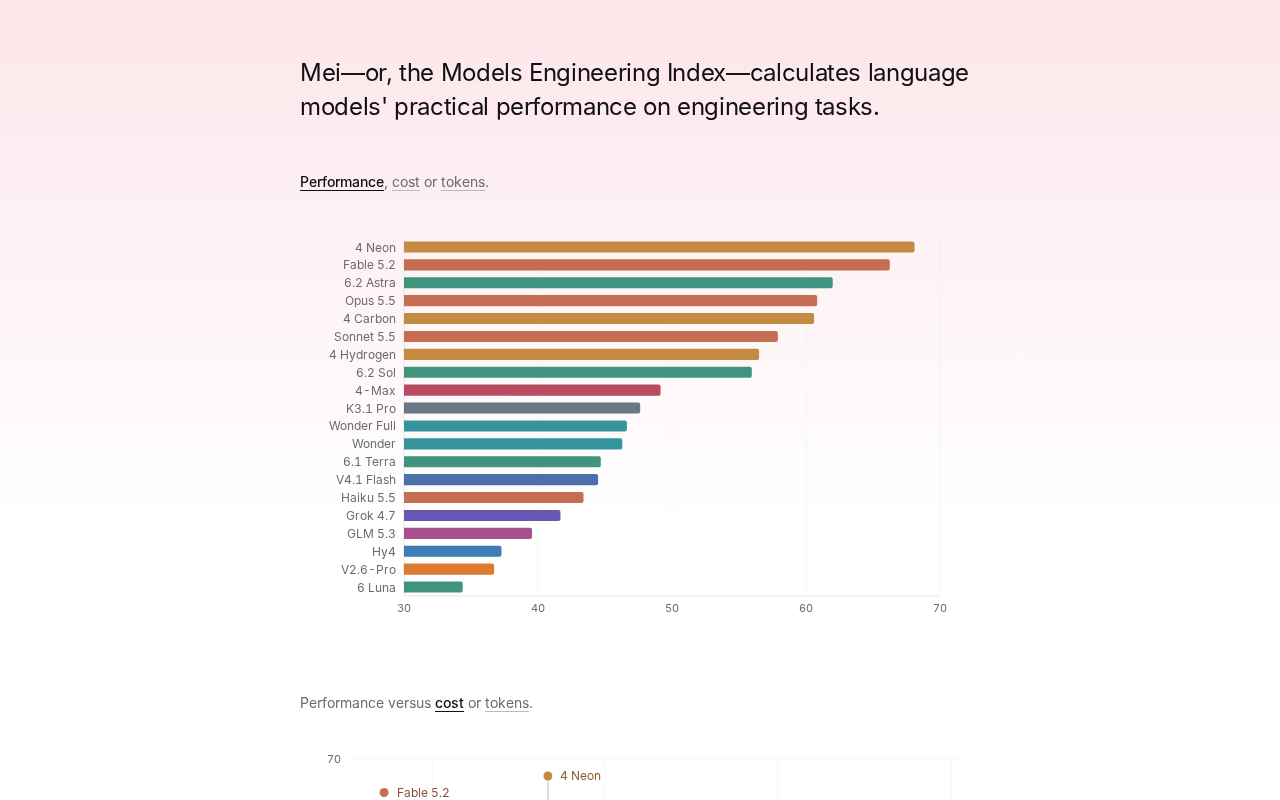
Gemini 4 Neon Tops the Models Engineering Index
Gemini 4 Neon tops the Models Engineering Index, sparking Hacker News debate over ranking credibility and evaluation methods. Here's what it means for developers.

Apple's Self-Developed AI Agent: An Agent That Can Operate Your Mac Is Coming
Apple is reportedly developing an AI agent that can operate a Mac, targeting Meta Muse, Claude, OpenAI Dots, and others. This article analyzes Apple's system-level advantages, the competitive landscape, and likely rollout paths in the agent race.