Eight Sleep Launches Pod 6 Smart Mattress: Smaller Sizes, Solo Version, Starting at $1,999

Eight Sleep Pod 6 debuts with a solo version, smaller sizes, starting at $1,999 with 20% faster temperature control.
Eight Sleep has launched the Pod 6 smart mattress, highlighted by new smaller sizes and a solo-user version starting at $1,999 — lowering the entry point for smart sleep technology. The company claims the water-based temperature control system responds 20% faster than its predecessor, reaching target temperatures more quickly for improved sleep comfort. The expanded lineup covers more use cases including small apartments and single-occupancy bedrooms, addressing demand for more flexible and affordable options. While $1,999 remains premium, it's notably more accessible than previous full-suite configurations.
Eight Sleep Pod 6: More Size Options
Smart sleep brand Eight Sleep has unveiled its next-generation product, the Pod 6. Compared to previous models, the most notable change is a broader range of size options — including smaller configurations and a version designed specifically for solo sleepers — starting at $1,999.
This pricing strategy signals Eight Sleep's intent to lower the barrier to entry for smart sleep technology. The brand's products have historically deterred potential buyers with steep price tags. By introducing a solo version, Eight Sleep can now reach a wider audience of single-occupancy users or those seeking a more personalized sleep experience.
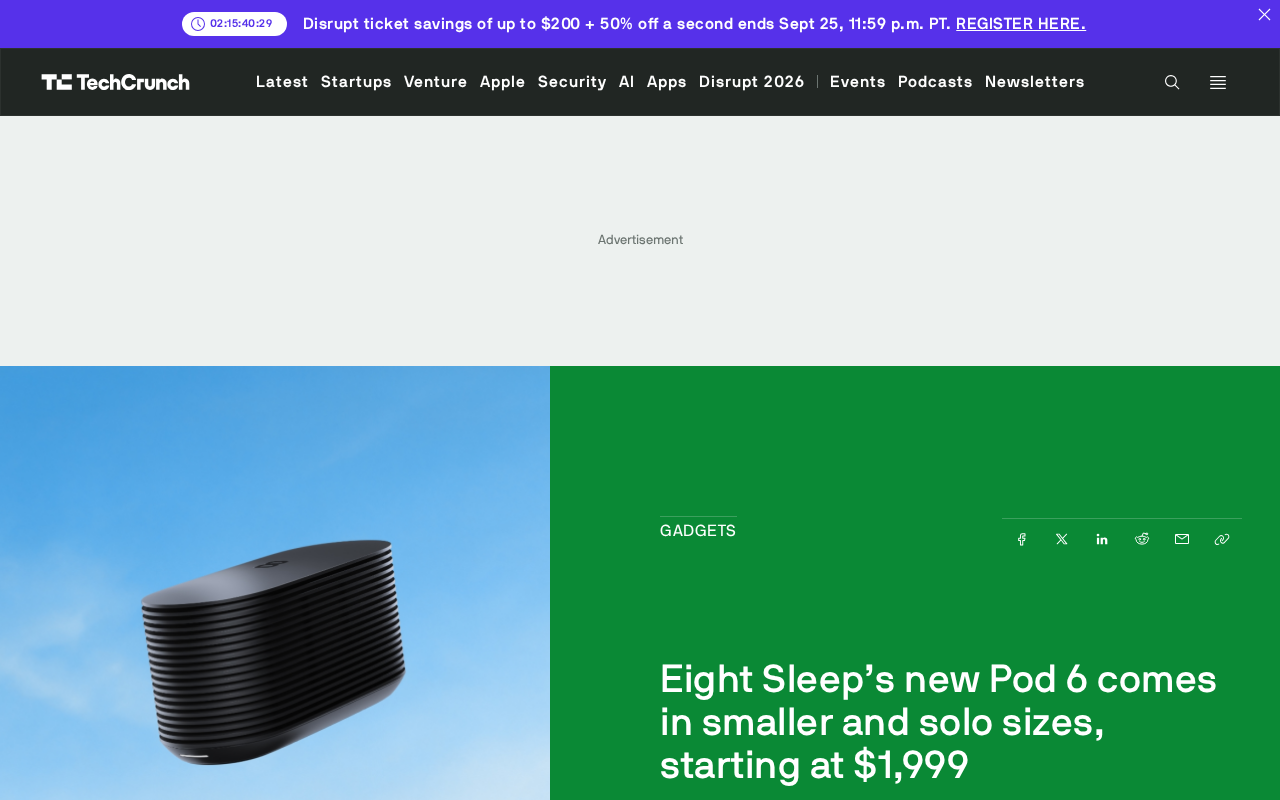
Performance Upgrade: 20% Faster Temperature Control
According to Eight Sleep, the new Pod 6 operates 20% faster than its predecessor. For a smart mattress where temperature regulation is the core feature, a speed improvement typically means the mattress can reach a user's target temperature more quickly — delivering a more immediate and precise sleep experience.
Eight Sleep's core technology uses a water circulation system to heat and cool the mattress, while onboard sensors monitor sleep state, body temperature fluctuations, and other data to dynamically adjust the surface temperature. Faster thermal response directly impacts how comfortable users feel as they fall asleep and throughout the night.
Eight Sleep's water-based temperature control technology (known as the "Pod System") works by embedding a network of micro water tubes inside the mattress. A bedside "Hub" unit heats or cools the water, then pumps it through the mattress to maintain the surface temperature within a user-defined range (typically adjustable between 55°F–110°F / 13°C–43°C). This differs from traditional electric blankets that rely on resistive heating wires — water has a higher specific heat capacity, distributes temperature more evenly, and is inherently safer. Combined with biometric data collected by built-in sensors — including heart rate, respiratory rate, and movement — the system can automatically adjust the temperature curve overnight, such as slightly cooling the bed during deep sleep to extend slow-wave sleep duration. The 20% speed improvement suggests the Hub's pump power or heat exchange efficiency has been optimized, allowing the surface temperature to ramp up or down from ambient to the target value in less time.
Product Positioning and Market Significance
Eight Sleep has consistently positioned itself in the premium smart sleep market, blending sleep technology with health monitoring to attract tech enthusiasts and wellness-focused consumers. With Pod 6, introducing smaller sizes and a solo version marks an important step toward a more segmented product lineup.
The smaller footprint and solo configurations expand the range of applicable scenarios — think compact apartments, single bedrooms, and guest rooms — while also addressing market demand for more flexible, better-value options. At $1,999, the starting price still sits firmly in the premium tier, but it's considerably more accessible than the full-suite solutions of the past.
Eight Sleep isn't without competition in the smart mattress space. Sleep Number's Climate360 lineup and various other active temperature-control mattresses target similar demographics. Eight Sleep's differentiator lies in its software subscription ecosystem — the "Autopilot" service, which provides AI-driven sleep scoring and automatic temperature adjustment for around $199 per year. This means the true cost of ownership for a Pod product must account for both the hardware and ongoing subscription fees. The launch of a solo version and smaller sizes may also be a strategic move to counter competitor pricing pressure while capturing the growing single-person household market.
Summary
The Eight Sleep Pod 6 refines the brand's smart sleep lineup through size segmentation and performance upgrades. The 20% speed improvement and more flexible sizing are the two standout features of this generation. For users focused on sleep health and smart home integration, the Pod 6 offers a lower barrier to entry than ever before.
(Note: This article is based on limited publicly available information. Further specifications and real-world performance data are pending.)
Related articles

"Black October": Did AI Uncover 3% of All Critical Vulnerabilities Ever?
A Reddit post claims 3% of all critical software vulnerabilities ever were found in the past month, dubbed 'Black October.' We break down the statistical issues, how AI-assisted code auditing accelerates discovery, and how developers should respond.

Microsoft Project Gecko: Using AI to Bridge Language Gaps for African Farmers
Microsoft's Project Gecko launches PharmaChat, letting African farmers ask questions in their native language and get precise video clips and farming book chapters via AI. The project also releases three interactive manuals to advance inclusive AI.

Musk's Space Dominance: How Starlink Throttling Undermines Ukraine's Defense
SpaceX's Starshield throttling disabled Ukraine's high-speed interceptor drones, exposing how Musk's private control over low Earth orbit communications affects battlefield dynamics and national security, and highlighting the risks of commercial space militarization and space governance dilemmas.