Empirical Transfer Between Protein Pockets: An Analysis of Experience Reuse in Molecular Optimization

The experience library distinguishes good and bad molecular edits, but transferable signals come mostly from the edits, not the target.
This study examines whether LLM agents in structure-based drug design can use an experience library to let new protein pockets inherit prior exploration costs. Using CrossDocked2020 test-set run logs, the authors test various key designs (contact, action, round combinations) for discriminative and transfer ability. Results show these keys distinguish improving from worsening edits, but their power mainly stems from non-target factors like molecular size changes, action type, and round; target identity is more discriminative, showing current keys underuse target information. For unseen pockets, specific descriptions rarely reproduce and coarse ones have limited power, with truly transferable signals mainly describing the edit and resulting molecule. The authors conclude the experience library better prioritizes agent docking suggestions than prescribes molecular construction.
Introduction
In structure-based drug design, LLM agents optimize molecules within protein pockets by iteratively editing ligands and docking them. Recent research has shown that the guidance induced by additional docking performed by agents during the exploration phase (i.e., "probes") is more helpful than the model's existing chemical knowledge. However, this probe information is typically discarded along with each instance. A natural idea follows: can we build an experience library that allows new protein pockets to inherit the exploration costs already paid by previous pockets? A recent study takes a deep look at this question and reaches a thought-provoking conclusion.
Structure-Based Drug Design (SBDD) refers to designing or optimizing small-molecule ligands that bind specifically to a pocket, given the known three-dimensional structure of a target protein (typically from X-ray crystallography or cryo-EM), using methods such as molecular docking, scoring functions, and conformational search. Its core assumption is that the binding pose and binding free energy of a ligand in a pocket can be approximately computed, thereby guiding the generation or screening of candidate molecules. In recent years, LLM agents have been introduced into this pipeline, treating ligand editing as a sequential decision problem in which the model progressively proposes modifications (e.g., adding functional groups, changing scaffolds) and receives feedback through docking scores.
Molecular Docking is a key computational step in SBDD: given a protein pocket and a ligand, it searches for low-energy binding conformations of the ligand in the pocket and estimates binding affinity using a scoring function. Docking results can serve both as optimization objectives and as "probe" signals during the agent's exploration process. Since each docking consumes considerable computational resources, the docking information generated by agents during exploration has reuse value—this is the practical motivation behind the experience library idea.
Key Design of the Experience Library: What to Transfer?
The experience library is read via a "key": the key defines under which record attributes past edits are aggregated and is used to look up new edits. The study used a complete run log on pockets from the CrossDocked2020 test set to examine whether these keys would reproduce on pockets never seen by the experience library and still distinguish improving from worsening edits.
The study tried various key designs, such as combining the contact, action, and round of the edit site as the key. Results showed that the experience library could clearly distinguish improving from worsening edits. However, further analysis revealed that this discriminative ability can largely be explained by the edit's change to molecular size, the action type, and the round—none of which describe the target itself.
CrossDocked2020 is a commonly used benchmark dataset in the SBDD and molecular generation fields, constructed from the CrossDocked dataset through cleaning and re-docking. It contains on the order of one hundred thousand protein-ligand complex structures and is split into training/test sets by protein sequence similarity, ensuring that test pockets differ sufficiently from training pockets at the sequence level. This split makes it suitable for evaluating the generalization ability of models or experience libraries on "unseen pockets."
Contact typically refers to the set of protein residues within a certain distance (e.g., 4–5 Å) around the ligand edit site, used to characterize the local pocket environment; round refers to which edit in the iterative optimization process the agent is performing, reflecting stage information along the optimization trajectory. Combining contact, action, and round into a key is essentially indexing historical edit records by local environment plus operation history—a hand-designed descriptor scheme.
Target Information: The Overlooked Key
A counterintuitive finding is that directly naming the target can distinguish edit effects more clearly, with discriminative power several times that of the aforementioned keys. This indicates that target information is not irrelevant; rather, the current key design fails to utilize it effectively. For pockets not present in the experience library, transfer must rely on descriptions rather than identity.
Transfer Learning in this context refers to applying edit experience accumulated on one pocket (source domain) to another pocket (target domain). Whether transfer succeeds depends on whether the representation shared between source and target domains captures the essence of the task. If the key or description encodes only the editing action itself, then what is transferred is a general preference for "how to modify molecules" rather than target-specific knowledge of "what this pocket needs."
Target identity refers to the protein's name or unique identifier (e.g., UniProt ID, PDB ID), which is a discrete, non-generalizable label: it can only exactly match known targets and cannot be directly used for entirely new pockets. This is precisely where the tension in the study arises—identity information is highly discriminative but non-transferable, while description information is transferable but weakly discriminative. An ideal solution needs to construct a representation between the two that preserves the essential features of the target while being computable on unseen pockets.
Specificity of Descriptions and Transfer Effectiveness
Among the exact-match descriptions evaluated, more specific descriptions rarely reproduce, while coarser descriptions provide limited discriminative power. The signals that can truly transfer mainly describe the edit itself and the resulting molecule, not the target. This means that, under the representation and lookup scheme of the current study, the experience library may be better suited for prioritizing the agent's own proposed docking suggestions rather than directly prescribing what molecule to build.
Implications and Outlook
This analysis reveals a fundamental challenge in experience reuse for molecular optimization: how to design keys or descriptions that capture the essential features of the target, thereby enabling effective transfer across pockets. Future work may need to explore more abstract target representations or combine meta-learning strategies so that agents learn how to extract transferable knowledge from experience.
Conclusion
Based on the analysis of a single run log, this study provides deep insight into the mechanism of experience reuse. Although the experience library shows some ability to distinguish edit effects, its transferability is limited by insufficient target description. This reminds us that when building agent-based drug design systems, experience representation and lookup mechanisms need to be designed more carefully.
One-line Summary
The experience library can distinguish good from bad molecular edits, but the transferable signal mostly comes from the edits themselves rather than the target.
Paragraph Summary
This study examines whether LLM agents in structure-based drug design can use an experience library to let new protein pockets inherit the exploration costs of previous pockets. Using run logs from CrossDocked2020 test-set pockets, the authors test the discriminative and transfer ability of various experience-library key designs (combinations of contact, action, and round). Results show that while these keys can distinguish improving from worsening edits, their discriminative power mainly comes from non-target factors such as changes in molecular size, action type, and round; directly using target identity can distinguish edit effects more clearly, indicating that current key designs fail to effectively utilize target information. For unseen pockets, precise specific descriptions rarely reproduce, coarse descriptions have limited discriminative power, and the truly transferable signal mainly describes the edit and the resulting molecule. The authors therefore conclude that the experience library is better suited for prioritizing the agent's proposed docking suggestions rather than directly prescribing molecular construction.
Related articles

Mistral Large 4 Open-Sources a Trillion Parameters, Microsoft Offers Voluntary Severance to 60,000 Employees
Mistral Large 4 open-sources a trillion-parameter multimodal model with a coding agent score of 48; SanDisk earnings show AI inference reshaping NAND demand; Google Gemini adds in-app file editing, OpenAI raises Codex quotas, and Microsoft offers voluntary severance to 60,000 employees.
Mistral Large 4 Opens Its Weights: AI Morning Brief Roundup of Models and Ecosystem Trends
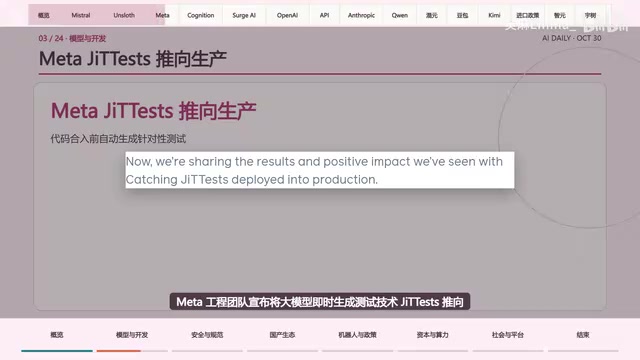
Mistral Large 4 opens its weights, a 1-trillion-parameter MoE architecture that can run locally on MacStudio; Meta's test-generation technology enters production; top tax benchmark pass rate only 10.8%; Canadian government takes a stake in Cohere; Doubao Work opens third-party model calls. This AI Morning Brief rounds up model, ecosystem, capital, and policy developments.

Mistral Large 4 Goes Open Source: A 1T-Parameter European Qwen Challenging DeepSeek
Mistral Large 4 is now open source: 1T total parameters, 52B activated, focused on coding and cybersecurity, with ~610G NVFP4 weights. We analyze its comparison with DeepSeek V4 Flash, API pricing, demo realism, and local deployment value.