Engineering Vibe Coding in Practice: Taming AI Programming with Superpowers and gstack

Engineering Vibe Coding with Superpowers and gstack to make AI programming controllable and reliable.
This article explores how to engineer Vibe Coding workflows using Superpowers for project-level task decomposition and gstack for module-level layering and boundary constraints. By building a three-layer architecture of orchestration, constraints, and supervised execution with tools like Codex and Claude Code, developers can transform AI programming from an unpredictable black box into a controllable, reproducible process.
The Engineering Challenge of Vibe Coding
As AI programming assistants like Codex and Claude Code become more widespread, a growing number of developers are experimenting with so-called "Vibe Coding" — using natural language to drive AI-powered code development. The term "Vibe Coding" was first coined by OpenAI co-founder Andrej Karpathy in early 2025, describing a programming paradigm where natural language intent drives AI code generation, with the developer primarily responsible for steering direction rather than writing code line by line. When introducing this concept, Karpathy particularly emphasized the state of "fully surrendering to the vibe, forgetting that code even exists" — and there's deep technical logic behind this: as LLMs achieve breakthroughs in code generation capabilities, the core bottleneck in programming is shifting from "how to write" to "what to write" and "how to verify."
From a computer science history perspective, Vibe Coding represents the fifth major abstraction leap in programming languages. From machine code to assembly language, from assembly to high-level languages like Fortran/COBOL, and then to object-oriented and functional programming — each leap encapsulated lower-level details, allowing developers to focus on higher-level expression. Vibe Coding takes this further by encapsulating syntax itself, using human natural language as the ultimate programming interface.
The technical foundation for this shift is the breakthrough in large-scale language model capabilities brought by the Transformer architecture. The Transformer architecture was introduced by Google in the 2017 paper Attention Is All You Need, completely replacing RNN/LSTM's dominant position in sequence modeling. Its core mechanism, "Self-Attention," enables the model to perceive the entire global context of a sequence when processing tokens at any position — a fundamental departure from RNN's sequential mechanism of passing hidden states step by step. Self-Attention has a computational complexity of O(n²), meaning every position in the sequence can directly establish relationships with all other positions. This property makes it far superior to previous-generation models for code understanding tasks, enabling simultaneous perception of function call chains, variable scopes, cross-file dependencies, and other long-range structural relationships. The scaling of code pretraining is a key driver of LLM code capabilities: over 100 billion lines of public code on GitHub form the training corpus, covering dozens of programming languages, mainstream frameworks, and their version iterations, giving models cross-language transfer capabilities — design patterns learned in Python can transfer to TypeScript, and component-based thinking learned in React can apply to Vue.
Notably, each abstraction leap has had a corresponding "compiler/runtime" handling the translation work — assemblers translate mnemonics into machine code, compilers translate high-level languages into target code, and LLMs translate natural language intent into executable code. Historical patterns also show that these abstraction layers never eliminated the value of lower-level knowledge: programmers who understood machine code still benefited in the assembly era, and programmers who understood memory management still had an edge when using garbage-collected languages — similarly, developers who understand code architecture and engineering principles will have stronger long-term competitiveness in the Vibe Coding era than "pure prompt players." This paradigm shift is analogous to the historical leap from assembly language to high-level languages — the compiler took over the translation work, and Vibe Coding represents yet another leap from "syntax expression" to "intent expression," with natural language becoming the new programming interface. This concept quickly sparked widespread discussion in developer communities because it represents a paradigm shift in programming work from "craftsmanship" to "directorial collaboration."
But an unavoidable pain point quickly surfaced: How do you make model output more convergent and better aligned with actual project requirements?
The root cause lies in the inherent limitations of large language models (LLMs) — limited context windows and a tendency to produce "hallucinations" or deviate from requirements when handling long-range dependency tasks. The "Context Window" refers to the maximum number of tokens a model can process in a single pass; one token corresponds to roughly 0.75 English words or 0.5 Chinese characters. Early GPT-3 had only 4K tokens (about 3,000 English words), while current mainstream models have expanded to 128K or more, but expanding the window doesn't proportionally improve effective comprehension — a phenomenon known as "diminishing effective context utilization."
The "Lost in the Middle" phenomenon was systematically documented in a 2023 Stanford University research paper, with experiments showing that when key information is placed in the middle of a long context, the model's retrieval accuracy can drop by over 20%. This phenomenon is related to the Transformer's Attention Mechanism — models tend to assign higher attention weights to positions at the beginning and end of sequences, which has an interesting parallel to the "primacy effect" and "recency effect" in human reading memory, though in AI it stems from statistical bias in Positional Encoding rather than cognitive fatigue. In code generation scenarios, this means that architectural constraints defined early in an extended conversation context may be "forgotten" by the model, causing subsequently generated code to deviate from established specifications.
The danger of "hallucinations" in code tasks deserves particular attention. The root cause lies in LLMs' autoregressive generation mechanism — when generating each token, the model relies on statistical probabilities from the training data distribution rather than genuine understanding of the world state. When an npm package name or API interface appears infrequently in training data, or undergoes breaking changes after the training cutoff date, the model may output incorrect information with high confidence. This contrasts sharply with human experts' metacognitive ability to distinguish between what they know and don't know — models lack accurate perception of their own knowledge boundaries and cannot distinguish between "definitely know" and "seem to know." Hallucinations in code tasks specifically manifest as calling nonexistent APIs, fabricating nonexistent npm packages or Python libraries, and misunderstanding library interface signatures. These errors are extremely difficult to catch promptly when unit test coverage is insufficient — because code errors aren't intuitively noticed the way natural language errors are, often only surfacing at runtime. Mitigation strategies beyond task decomposition include configuring static analysis tools (such as ESLint, mypy) as a first filter for AI-generated code, and integrating automated testing in CI/CD pipelines as a second verification layer.
Research shows that when the complexity of a single-pass task exceeds the model's effective processing range, output quality drops significantly. Therefore, breaking large tasks into small, well-bounded subtasks is the core engineering technique for achieving stable, convergent model output, aligning perfectly with the "Separation of Concerns" principle in software engineering. The Separation of Concerns principle was proposed by computer scientist Edsger Dijkstra in 1974, advocating that different functional responsibilities in a program should be clearly separated — in the Vibe Coding context, this principle applies not only to code organization but equally to the delineation of human-AI task boundaries.
Many people's approach is to prepare a requirements document before development, paired with a constraint-based README to guide the model. This is indeed effective, but far from sufficient. The quality of AI programming outcomes largely depends on whether you've established a complete task decomposition and constraint system, rather than simply betting on any particular large model's capabilities.
In other words, Vibe Coding isn't "toss the AI a sentence and call it a day" — it's a collaborative workflow that requires engineering design. This is precisely the fundamental reason why many developers experience inconsistent, hard-to-reproduce results when writing code with AI.

Two Key Tools: Superpowers and gstack
In the overall Vibe Coding toolchain, you shouldn't focus solely on Codex and Claude Code as "executors" — you also need to pay close attention to two upstream tools: Superpowers and gstack. They serve different purposes but together form a "supervisory layer" for AI programming assistants.
The current AI programming tools market is evolving from "point solutions" to "systematic platforms," forming a multi-layered competitive landscape. At the IDE integration layer, GitHub Copilot (Microsoft/OpenAI), Cursor (deeply modified from VS Code), and Windsurf (Codeium) form a three-way competition, with the gap in core features like code completion and conversational programming narrowing, and competitive focus shifting to ecosystem integration depth and latency optimization. At the terminal/agent layer, Claude Code (Anthropic), OpenAI Codex CLI, and Devin (Cognition) represent the "autonomous programming agent" direction, but fully autonomous execution in production environments still faces significant reliability challenges for complex tasks. At the orchestration layer, tools like Superpowers and gstack are trying to fill the gap — this layer is still in its early market stage, with the highest technical barriers, lowest standardization, and most intense differentiated competition.
The core technical challenge facing orchestration layer tools is the engineering problem of "context management" and "state tracking." Unlike IDE plugins that only need to handle single-file or single-function level context, orchestration layer tools need to maintain cross-session, cross-module project state — including completed modules, pending dependency relationships, historical constraint change records, and more. This is essentially an "AI-native project management database" problem that requires specialized context compression strategies (summarizing historical decisions rather than retaining them in full) and incremental update mechanisms to maintain awareness of overall project state within limited context windows. This challenge is engineering-wise similar to an operating system's memory management problem — how to ensure "the most important information" is always in the active processing space under limited resource constraints through intelligent scheduling. This also explains why the orchestration layer has significantly higher technical barriers than execution layer tools. Its core value lies not in AI capability itself, but in "engineering packaging" — converting implicit knowledge scattered across team experience into explicit constraints that are reusable and version-manageable.
Background on execution layer tools: OpenAI Codex is a language model based on the GPT architecture specifically fine-tuned for code tasks, and serves as one of the underlying engines for GitHub Copilot. Claude Code is Anthropic's command-line AI programming assistant, based on the Claude model, designed for understanding entire codebases and executing complex multi-step programming tasks in terminal environments. Both can directly read/write files and run commands, but lack awareness of overall project architecture — which is precisely why upper-layer orchestration tools are needed to fill the gap.
Superpowers: Project-Level Process Orchestration
Superpowers primarily targets a complete large-scale project, responsible for decomposing complex projects into task breakdowns, module breakdowns, and process breakdowns, ultimately forming a development workflow covering the entire project.
Specifically, it needs to answer the following core questions:
- What major functional modules should this project be broken into?
- What are the specific requirements for each functional module?
- How do modules interface with each other?
- At what stage should unit tests be done, and at what stage should integration tests be done?
- What should the standard workflow look like for each code generation cycle?
Think of Superpowers as the project's "chief architect," transforming vague requirements into a clear, executable development pipeline. This closely mirrors the decomposition hierarchy of "Epic → User Story → Task" in agile development — the difference being that this decomposition process itself can be AI-assisted, creating a recursive collaboration pattern of "using AI to plan how to use AI."
gstack: Module-Level Layering and Boundary Constraints
If Superpowers manages the macro-level process, then gstack manages the micro-level implementation. It targets a specific module within a project, further decomposing individual features.
gstack's core value manifests in three areas:
- Code layering: Decomposing a feature into a well-structured hierarchy;
- Code decomposition: Splitting complex logic into manageable small units;
- Setting boundaries: Defining rules, code preferences, and the "convergence rules" mentioned earlier.
It's precisely in gstack's rule and preference definition step that the core question raised at the beginning gets addressed — how to make model output more convergent. These "convergence rules" essentially inject project-level hard constraints into the model through System Prompts or configuration files.
The System Prompt occupies a special position in LLM inference architecture: in mainstream conversational model implementations, the system prompt is typically placed at the beginning of the context sequence, enjoying the highest attention weight priority and remaining effective throughout multi-turn conversations, forming a de facto "session-level soft constraint layer." The effectiveness of this mechanism stems from the Transformer attention mechanism's natural bias toward information at the beginning of sequences — the positional advantage of the system prompt ensures its constraint effectiveness is continuously reinforced throughout the conversation rather than decaying as conversation turns increase. From a Few-Shot learning perspective, embedding specification-compliant code examples within the system prompt is essentially providing the model with "prototype references" during inference — the model uses these examples as implicit format and style anchors when generating new code. Practice shows that the "negative constraints first" principle is effective because prohibitions have clearer semantic boundaries ("do not use moment.js" is more explicit than "prefer date-fns"), making it easier for the model to identify violations and self-correct during inference.
High-quality code constraint system prompts typically include several dimensions: architectural pattern constraints (e.g., "all database operations must go through the Repository layer; direct ORM calls in Controllers are prohibited"), naming conventions (e.g., "use camelCase for variables, UPPER_SNAKE_CASE for constants"), prohibitions (e.g., "moment.js is prohibited; use date-fns uniformly"), and error handling standards.
In prompt engineering practice, the design of constraint-based system prompts follows several proven principles: "Negative constraints first" — explicitly telling the model "what not to do" is often more effective than "what to do," because prohibitions have clearer boundaries; "Example-driven" — embedding 1-3 specification-compliant code snippets in the system prompt leverages the model's few-shot learning ability, improving output consistency more effectively than pure textual descriptions; "Layered constraints" — organizing architectural-level, module-level, and code style constraints in layers to avoid the attention dilution problem caused by a single overly long prompt. Research shows that such structured constraints can significantly improve the model's instruction-following rate compared to free-form instructions, with high-quality constraint-based system prompts boosting code generation "Pass@1" rates by over 30%, because models have seen vast quantities of similarly formatted technical specification documents during pretraining and have stronger generalization recognition ability for such structures.
Similar mechanisms already exist in industrial-grade AI programming practice — such as Cursor's .cursorrules files and GitHub Copilot's custom instructions feature. gstack's core value is precisely in systematically and modularly embedding this mechanism into the development workflow, allowing different modules to maintain independent constraint rules and avoiding cross-module constraint contamination. You can hardcode your team's coding standards, naming conventions, and architectural preferences into gstack, making AI-generated code truly aligned with your project's needs.
Toolchain Collaboration: Making AI Execute Under Supervision
Stringing these tools together, a complete Vibe Coding workflow takes shape:
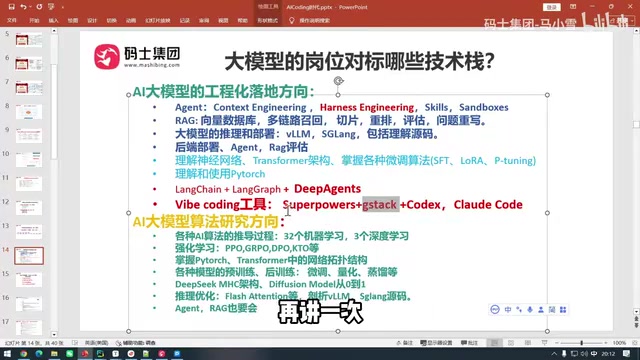
Superpowers (project process decomposition) + gstack (module layering and boundary constraints) + Codex / Claude Code (code execution)
This three-layer architecture closely mirrors the traditional software engineering division of labor: Architect — Tech Lead — Developer. The architect (Superpowers) handles overall module partitioning and process design, the tech lead (gstack) handles implementation specifications and boundary constraints for specific modules, and the developer (Codex/Claude Code) implements code section by section according to specifications.
This mapping reveals a deeper pattern, which can be understood through the lens of Conway's Law. Conway's Law was proposed by computer scientist Melvin Conway in 1967, originally stated as "organizations which design systems are constrained to produce designs which are copies of the communication structures of these organizations." In traditional software engineering, this law has guided microservices decomposition strategies — Amazon's "two-pizza team" principle and Spotify's Squad model essentially influence system architecture by adjusting team boundaries. In the context of AI programming toolchain design, Conway's Law presents a new dimension: the layered design of the toolchain similarly reflects the logic of decision-right distribution. Higher-level tools hold architectural decision rights (high uncertainty, requiring business judgment), middle-level tools hold module specification rights (high certainty but requiring professional knowledge), and execution-level tools only handle deterministic code generation tasks — paralleling the responsibility distribution among API Gateways, business services, and data layers in microservices architecture. It's worth extending this thought: the inverse of Conway's Law also holds — if a team adopts this three-layer toolchain, their codebase's modularity tends to improve as well, because the tool structure positively shapes people's thinking patterns.
More importantly, this architecture inherently supports the design principle of "humans can intervene at any layer at any time," preserving developer control over the entire process. The engineering essence of Vibe Coding is converting the best practices of human team collaboration into human-AI collaborative workflow design — the tools have changed, but the underlying software engineering wisdom remains unchanged.
In this system, Superpowers and gstack play the "supervisor" role, overseeing Codex and Claude Code as they do the actual work — generating one small feature at a time, advancing one small code segment at a time. This layered supervision mechanism is the key to transforming AI programming from "a roll of the dice" to "controllable."
Of course, this toolchain isn't the only path. Without Superpowers and gstack, developers can absolutely handle the module decomposition of the entire project themselves, as well as the refinement of subtasks within each module, personally acting as the supervisor watching over the AI assistant's section-by-section generation. This path is equally viable — it simply transfers the orchestration work from tools to the developer.
This actually reveals an essential truth: Whether or not you use tools, task decomposition and boundary constraints are non-negotiable steps. Tools merely productize and automate this methodology.
Why Every Programmer Should Master Vibe Coding
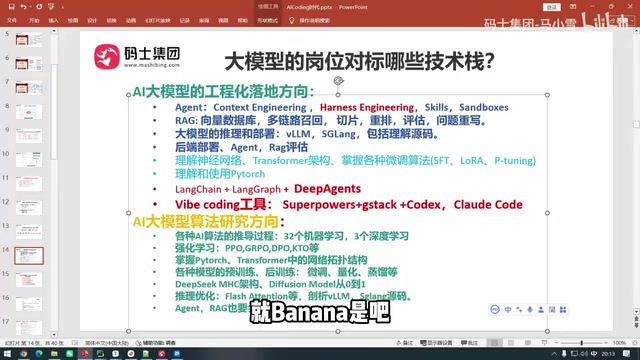
There's a rather blunt assessment worth taking seriously: In the AI era, a programmer who can't even use Vibe Coding tools can hardly be called a qualified programmer.
This sounds harsh, but the logic is clear. Whether you work in large model engineering, backend, frontend, testing, or Go backend development, AI programming tools are rapidly permeating daily workflows. They're no longer a nice-to-have optional extra — they're becoming foundational productivity tools. This penetration speed is backed by data: GitHub's 2024 developer survey showed that over 55% of professional developers already use AI programming tools in their daily work, compared to less than 10% in 2022 — a more than 5x increase in two years, a rate of adoption rarely seen in programming tool adoption waves, comparable to the speed at which IDEs replaced vi/emacs as the mainstream development environment.
More importantly, there isn't just one or two AI programming tools — there's "a whole bunch," and it's best to familiarize yourself with as many as possible. Because through using different tools, you'll gradually develop a methodological intuition for AI collaboration — knowing how to decompose tasks, how to set constraints, and how to make models converge. This capability holds more long-term value than mastering any specific tool.
The essence of mastering Vibe Coding is mastering a new "human-AI division of labor awareness": clearly understanding which judgments must be made by humans (requirements definition, architectural decisions, quality acceptance), which execution work can be confidently delegated to AI (code generation, boilerplate files, unit tests), and how to design the interface between the two. This division-of-labor awareness is closely related to the concept of "Metacognition" in cognitive science — metacognition refers to the ability to monitor and regulate one's own cognitive processes, which in the Vibe Coding context manifests as a developer's accurate perception of "AI capability boundaries": knowing in what scenarios AI performs reliably and in what scenarios human intervention and verification are needed. Given that the orchestration layer tools market is still rapidly evolving, maintaining tool-agnostic methodological awareness holds more long-term value than binding to a single tool — and this is precisely the core capability that competition in the current AI programming tools market ultimately points toward.

Practical Advice: Start with a Closed-Loop Workflow
For developers looking to implement Vibe Coding, here's a clear path to practice:
- Start by establishing pre-development requirements documents and constraint-based READMEs — this is the most foundational guidance layer;
- Introduce project-level orchestration tools (such as Superpowers) to decompose large projects into executable module workflows;
- Use module-level tools (such as gstack) for code layering and boundary constraints, hardcoding code preferences and convergence rules — this step is similar to maintaining
.cursorrulesin Cursor or standardizing System Prompts across a team. The more specific the constraints, the more stable the model output. When designing constraint rules, follow the three principles of "negative constraints first, example-driven, layered organization," and systematically migrate specifications originally scattered across Wikis, verbal agreements, and Code Review comments into this layer, converting implicit knowledge into explicit constraints that can be version-managed; - Let Codex or Claude Code execute under supervision, generating, verifying, and iterating section by section — it's recommended to simultaneously configure static analysis tools (such as ESLint, mypy) and automated testing as a dual verification net to catch errors produced by hallucinations. ESLint performs syntax and standards checking for JavaScript/TypeScript, mypy provides static type checking for Python, and both can catch a large number of AI hallucination-generated errors before code reaches runtime, working together with automated testing in CI/CD to form a "Shift Left" quality assurance system;
- Experiment with multiple tools in practice to develop overall awareness and methodological intuition for AI collaboration — given that the orchestration layer tools market is still rapidly evolving, maintaining tool-agnostic methodological awareness holds more long-term value than binding to a single tool.
This closed loop of "orchestration + constraints + execution + supervision" represents the current state-of-the-art in Vibe Coding engineering. It transforms AI programming from an uncontrollable black box into a well-layered, clearly-bounded, manageable process.
For every IT professional, rather than worrying about whether AI will replace you, it's better to proactively embrace this new collaborative paradigm — after all, those who truly know how to tame AI with the right tools are the ones who will thrive in this era.
Related articles

How to Quantitatively Evaluate Agent System Engineering Quality? A Six-Dimension Framework Explained
Beyond model capabilities, how do you quantitatively evaluate Agent system engineering quality? This article breaks down a six-dimension framework covering outcome, process, reliability, cost, observability, and security — with Cost per Success as the North Star metric, a four-layer evaluator system, and a release gate flywheel for continuous improvement.

AI Agent Builder: A Beginner's Guide to the Hottest New Role in LLM Deployment
AI Agent is the core of LLM deployment. Learn about the emerging AI Agent Builder role, the SME demand gap, low-code entry paths, and how to go from beginner to delivery.

AI Manga Series for Beginners: A Six-Step Production Workflow from Script to Final Cut
A beginner's guide to AI manga production: the six core steps from script to final cut, the universal AI prompting formula, and tips for storyboard scripts compatible with AI image generation.