AI Agent Builder: A Beginner's Guide to the Hottest New Role in LLM Deployment

AI Agent bridges LLMs and real business — low-code tools lower the barrier, but be skeptical of overnight-success claims.
This article analyzes the learning and career value of AI Agents. It explains that Agents are the key bridge transforming LLMs from chat tools into real productivity, and that the actual challenge for enterprises lies in integrating AI into existing workflows. The growing deployment gap among SMEs is fueling a potential new role: the AI Agent Builder. Low-code platforms have lowered the entry barrier for non-technical users, but "zero to expert" promises carry marketing hype — production-grade Agents still require prompt engineering, tool integration, and hands-on practice. The real path forward is business insight combined with project-based learning.
Why AI Agent Has Become the Core of the LLM Space
AI Agent (intelligent agent) is quickly becoming the critical link in deploying large language models for real-world use. Unlike simply calling a conversational model, an Agent is about letting AI truly integrate into business workflows and autonomously complete tasks — turning model capabilities into actual productivity.
As the original tutorial author puts it bluntly: "Nobody tells you that AI Agent is actually the core of today's LLM space." This reflects a real gap in perception — many people still think of LLMs as chat tools, but what actually creates business value is Agent applications that can be deployed and delivered.
For enterprises, the model itself isn't the bottleneck — the real challenge is figuring out how to "plug" the model into existing business processes. That's precisely where Agent technology earns its place: it serves as the bridge between large language models and real-world business scenarios.
Where the Demand Gap Lies for Small and Medium Businesses
The tutorial highlights a notable market signal: the gap in AI deployment needs among small and medium-sized enterprises (SMEs) is growing. Business owners generally know AI can improve efficiency, but when it comes to actually integrating it into specific workflows, "nine out of ten bosses are lost — they just can't make it work."
This divide between "wanting to use AI" and "not knowing how" is exactly where technical service providers can step in. The author makes a bold prediction: a new profession may emerge — AI Agent Builder — specialists who design, build, and deliver functional intelligent agent applications for businesses.
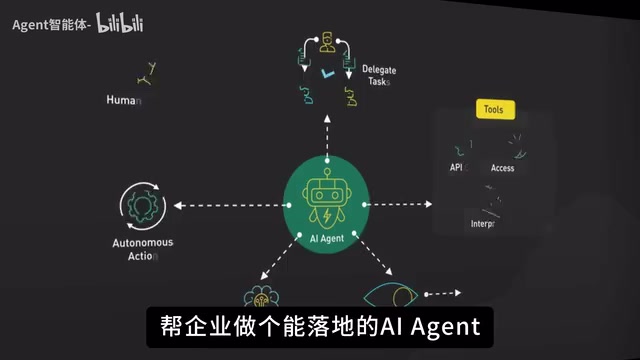
To be fair, the "new profession" framing is largely an optimistic trend forecast from content creators and hasn't yet become a widely recognized job title in the industry. That said, from a technology evolution standpoint, enterprise demand for AI deployment talent is genuinely rising — this is a real trend, not pure marketing spin.
Do You Need a Strong Programming Background to Get Started?
On the question of prerequisites, the tutorial argues that building deployable enterprise-grade Agents doesn't necessarily require deep programming experience — you can get started at low or even zero cost.
This claim has merit. The market now offers a wide range of low-code and no-code Agent-building platforms and workflow tools, enabling non-developers to build intelligent agents through visual configuration. For use cases driven primarily by business understanding, grasping requirements and designing workflows often matters more than raw coding ability.

That said, headlines like "zero to expert in one week" carry obvious marketing overtones. Production-grade Agents delivered to real clients still involve a series of technical details — prompt engineering, tool calling, data integration, stability tuning, and more — all of which require sustained hands-on practice. A low barrier to entry means it's easy to get started, but that's not the same as easy to master.
The Full Practical Loop: From Getting Started to Delivery
The tutorial emphasizes its core value as "no empty concepts, no overpromising" — focusing on actionable paths that lead to real deployments and deliverables. The author promises to break down the complete journey from zero to independently building and delivering Agents.
A complete learning loop typically covers several stages:
Foundational Knowledge
Understand what an Agent is, how it differs from a standard LLM call, and how its core components — model, tools, memory, and planning — work together.
The four core components of an Agent deserve individual attention: the Model is the reasoning engine, responsible for understanding intent and generating decisions; Tools are the interfaces through which the Agent interacts with the outside world — search engines, database queries, code executors, or third-party APIs; Memory includes short-term memory (current conversation context) and long-term memory (historical information stored in a vector database), keeping the Agent coherent across multi-turn tasks; Planning is the Agent's ability to break complex goals into executable sub-tasks, commonly implemented via paradigms like ReAct (reasoning + action loop) and Chain-of-Thought. These four elements work in concert to enable Agents to autonomously complete complex, multi-step, cross-system business tasks — rather than simply answering a single question.
Tool Building
Get familiar with mainstream Agent development frameworks or low-code platforms, and learn how to orchestrate workflows and integrate external tools and APIs.
The leading Agent development tools fall into two categories: development frameworks for users with programming backgrounds — including LangChain, LlamaIndex, AutoGen, and Microsoft's Semantic Kernel — which provide standardized modules for tool calling, memory management, and multi-agent collaboration; and low-code/no-code platforms such as Dify, Coze (ByteDance), FastGPT, and n8n, where users orchestrate workflows through a visual drag-and-drop interface, connecting LLMs, configuring tool nodes, and publishing deployable applications without writing extensive code. For beginners focused on business delivery, low-code platforms are often the faster starting point for validating ideas; when complex custom logic is required, the flexibility of development frameworks becomes indispensable.
Hands-On Projects
Practice through real-world scenarios — such as customer service, data analysis, and content generation — to connect scattered knowledge into a functioning system.
Deployment and Delivery
Learn how to customize, test, and deploy solutions for specific enterprise needs, ultimately delivering a usable product to the client.

The tutorial also mentions a curated set of documentation and hands-on project materials covering everything from beginner basics to enterprise-grade builds. For newcomers, having a structured learning path and reproducible projects genuinely reduces time wasted going in circles.
A Rational Take on the Trend — and Learning Recommendations
AI Agent is a genuinely valuable direction to learn as a core path for real-world LLM deployment. But when faced with "hot trend" narratives, learners should stay clear-headed:
- The trend is real: Rising enterprise demand for AI deployment and rapid advances in Agent technology are industry consensus.
- The barrier is lowering: Low-code tools make getting started easier, and non-technical backgrounds are no longer a dealbreaker.
- Be skeptical of overnight success claims: "Expert in one week" is mostly clickbait — real capability is built through project work.
- Business understanding is the key differentiator: Helping a company "plug AI into" its operations takes more than technical skills — it requires genuine insight into business pain points.
For anyone looking to start, rather than chasing the "most comprehensive" course or tutorial, the better move is to build one complete small project first. Understanding how Agents work and what delivery actually looks like comes through practice. That's the only real path from "knowing about it" to "being able to do it."
Related articles

Which $10 AI Coding Plan Should You Choose? Go vs. Code Credit Breakdown
After DeepSeek's price hike, should you pick Go or Code for your $10 AI coding plan? We break down credit allocations for Mimo, Qwen, DeepSeek V4, Kimi, and more.
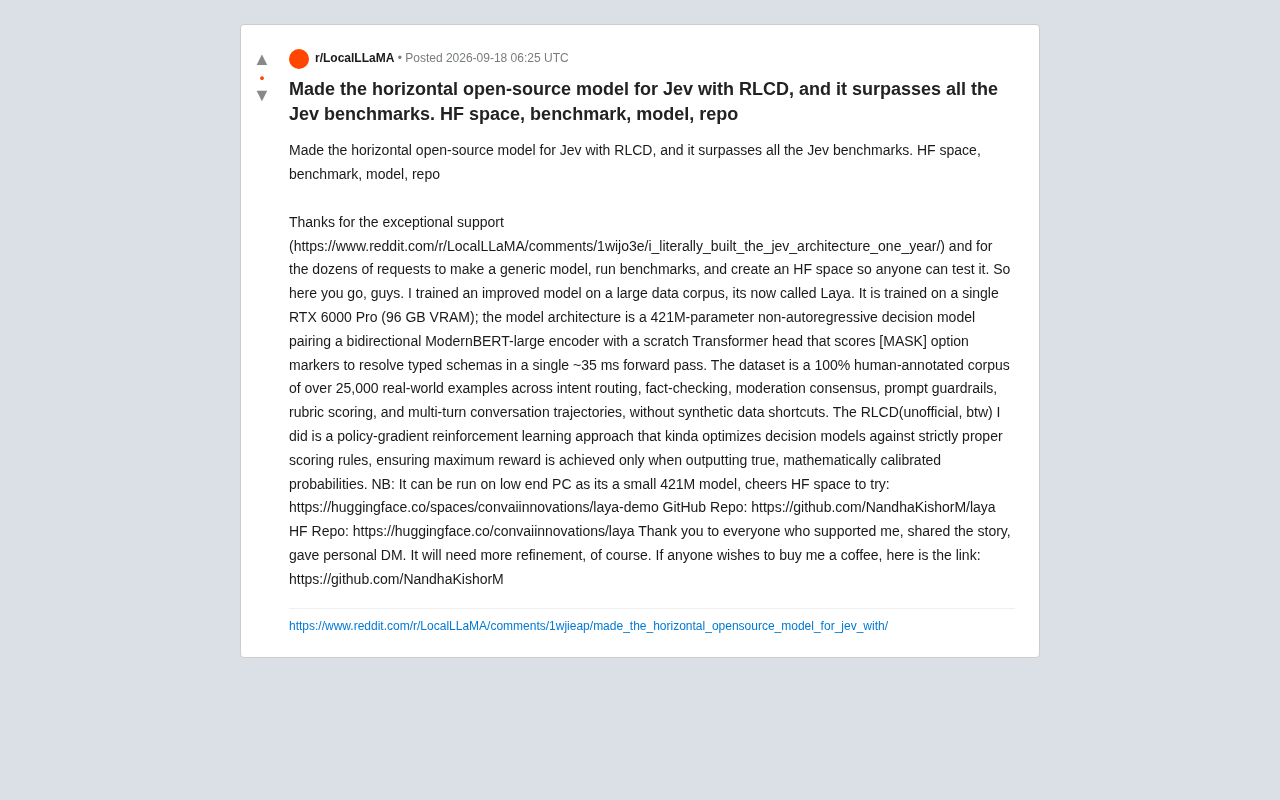
Laya Open-Source Decision Model: How 421M Parameters Beat Jev Benchmarks
Laya is an open-source 421M-parameter non-autoregressive decision model built on the Jev architecture, trained with RLCD on 25,000 human-annotated samples using a single GPU, running in ~35ms on low-end PCs.
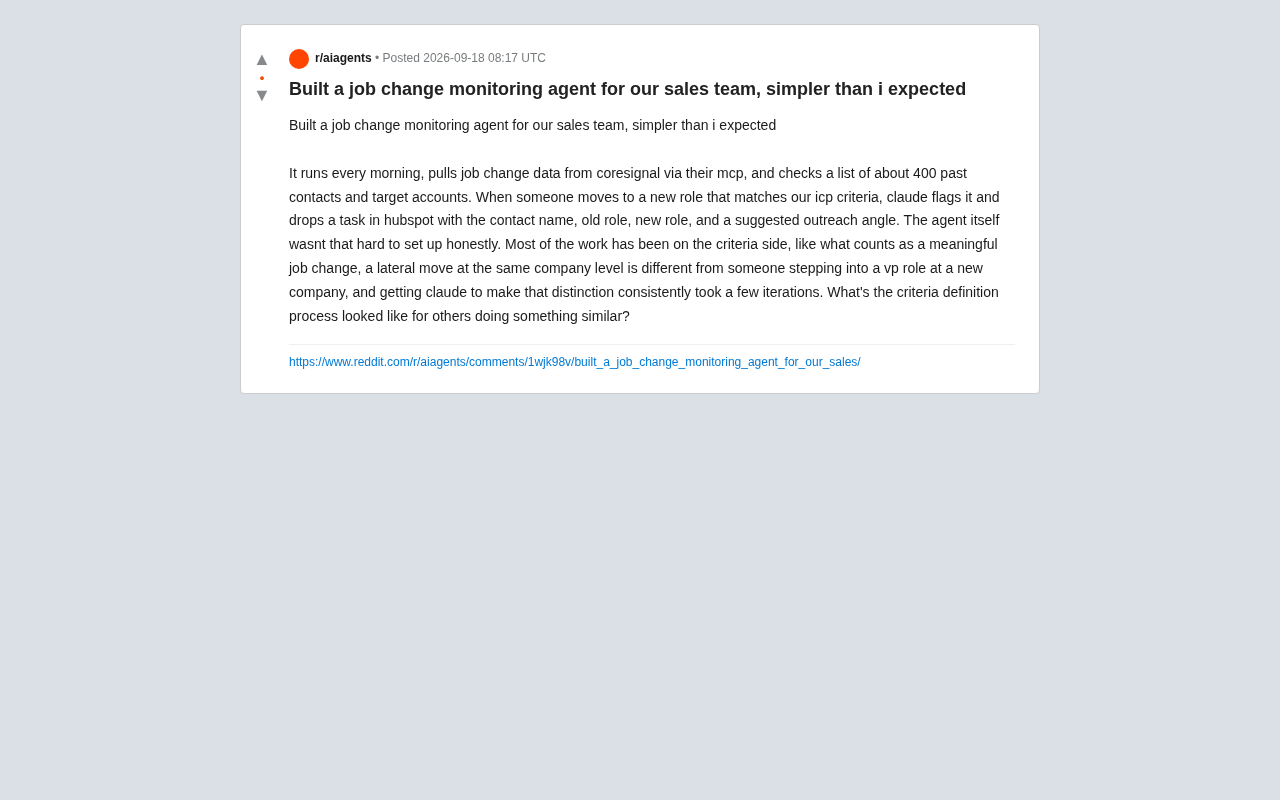
Using an AI Agent to Monitor Customer Job Changes: A Sales Team Automation Case Study
A Reddit user shares how he built a job change monitoring agent using Claude, MCP, and HubSpot to track 400 contacts daily and surface high-value sales signals.