Enterprise Agent Deployment Struggles? A Three-Layer Multi-Agent Architecture Solves Six Major Pitfalls of Traditional Agents

Traditional single agents have six engineering pitfalls; enterprise deployment needs a three-layer multi-agent architecture of planning, execution, and verification.
Starting from the four stages of large model commercialization (native models, prompt engineering, RAG, agents), the article notes that only the agent stage gives large models autonomous planning, execution, and tool-calling capabilities. Using a travel planning demo, it reveals six engineering flaws of traditional single agents: hardcoded keywords causing poor generalization, coupled tool call code, lack of budget constraints, no data verification exposing hallucinations, slow serial calls, and single point failures crashing the whole process. The root cause is that planning, calling, and verification are all coupled in one loop. The solution is a three-layer multi-agent architecture: a planning layer for intent understanding and task decomposition, an execution layer of parallel specialized sub-agents, and a verification layer that intercepts hallucinations and over-budget results and triggers retries. The article concludes with selection advice, stressing that engineering capability matters more than model choice, and cites data showing China's enterprise AI agent market will grow from 21.2 billion yuan in 2025 to 330 billion yuan in 2029.
Enterprise AI Agent deployment is often misled by simple demos; in real business scenarios, traditional single-agent architectures are full of holes. Starting from the four stages of large model commercialization, this article analyzes the fatal flaws of traditional agents in hallucination, hardcoding, serial calls, and more, and introduces the engineering necessity of a three-layer multi-agent architecture.
Four Stages of Large Model Commercialization: From Native Models to Agents
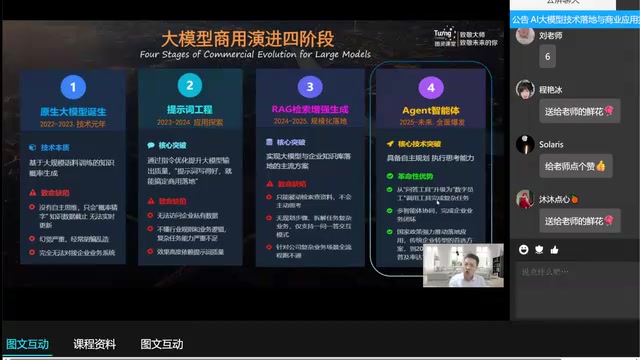
Enterprise applications of large models do not happen overnight. According to a technical sharing on Bilibili, commercial deployment roughly goes through four stages: native large models, prompt engineering, retrieval-augmented generation (RAG), and the full explosion of agents.
Native large models rely on massive public data training and can write copy and code, but they cannot think independently. Their knowledge has a cutoff date, and once asked about content outside their training data, they easily "spout nonsense with a straight face." Prompt engineering improves output quality by optimizing prompts, but it still cannot access enterprise private data or handle complex business processes. RAG stores enterprise internal tables, documents, images, and other data in a knowledge base and retrieves before answering, solving the private data access problem. However, it remains essentially passive retrieval, one question one answer, and cannot proactively plan complex tasks.
Only at the Agent stage do large models truly gain the ability to autonomously plan, execute, and call tools, upgrading from "answering questions" to "solving problems." This is also a key deployment direction for enterprise digital transformation today, alongside RAG.
Six Engineering Pitfalls of Traditional Single Agents
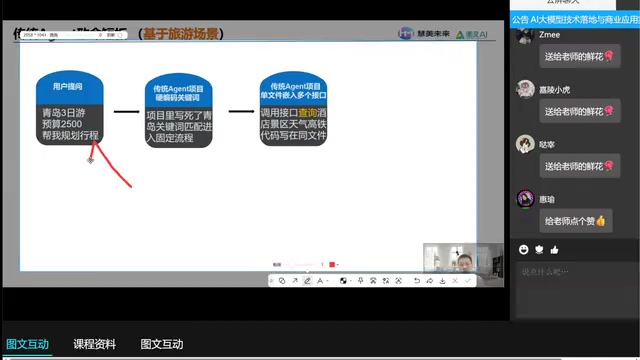
Many developers demonstrate agents with travel planning scenarios. It looks like it works, but mines are buried. Taking a requirement like "three-day trip to Qingdao, budget 2500 yuan" as an example, a typical implementation of a traditional agent will step on the following pitfalls one by one:
Pitfall 1: Hardcoded Keywords, Extremely Poor Generalization
The code hardcodes the word "Qingdao" and matches a preset process via keywords. If the user instead says "spend three days at the seaside in Shandong," the system directly errors out. In real enterprise scenarios, user needs vary endlessly, and hardcoding is doomed to fail.
The difference between hardcoding and semantic understanding: Hardcoding means developers directly write business logic into code as fixed strings, regular expressions, or branch judgments, such as if "Qingdao" in user_query. This approach is stable when the input domain is closed, but once users switch to synonymous expressions, dialects, typos, or more abstract descriptions (such as "see the sea on the Shandong Peninsula"), matching fails. In contrast, the semantic understanding approach based on large models feeds user intent as natural language input to the model for parsing, outputs structured intent and parameters (such as destination, days, budget), and then routes accordingly in the program. Semantic understanding sacrifices some determinism and latency but gains generalization to long-tail expressions. This is also the fundamental value of the planning layer in a multi-agent architecture: replacing manual rule enumeration with models.
Pitfall 2: Tool Call Logic Crammed into a Single File
To save effort, all interface code is written in one file. Changing one parameter or address may cause a global crash. When the project iterates from 1.0 to 2.0, maintenance costs rise sharply.
Pitfall 3: No Budget Constraint, Costs Out of Control
The user explicitly states a budget of 2500 yuan, but the large model has no cost control awareness and may recommend expensive trendy hotels and restaurants, ultimately far exceeding the budget. In enterprise scenarios, this means incorrect quotes and wasted resources.
Pitfall 4: No Data Authenticity Verification, Hallucinations Exposed Directly to Users
After an agent's API call errors or times out, it does not perform secondary verification and may fabricate nonexistent high-speed rail schedules, restaurants, or attractions. In travel scenarios this affects experience; in finance and healthcare scenarios it may cause accidents.
Pitfall 5: Serial Execution, Slow Response
Interfaces for weather, hotels, food, and more are called serially in order. A single call takes several seconds, and the overall response may take six to nine seconds. In high-frequency e-commerce inquiries or customer service scenarios, user experience is terrible.
Pitfall 6: Single Point of Failure Crashes the Entire Process
If any interface times out or the network fails, the entire process rolls back directly. The large amount of token cost consumed earlier is wasted, and the project is difficult to truly launch.
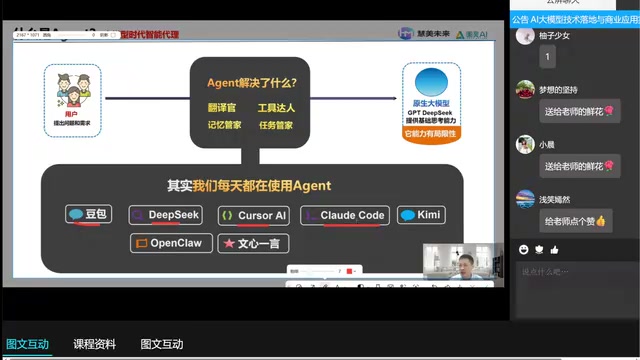
What is "tool calling" (Function Calling) in an agent framework: Tool calling is a standardized mechanism for large models to interact with the external world. Developers register available interfaces (check weather, book hotels, search train schedules) with the model in structured descriptions (name, parameter schema, purpose description). The model determines which tool is needed during the conversation and outputs JSON parameters conforming to the schema. The runtime executes them and feeds the results back to the model for continued reasoning. This mechanism turns agents from "only generating text" to "able to execute actions." But it also brings the risks mentioned in the article: the model may choose the wrong tool, fabricate parameters, or directly trust failed results without verification. Therefore, tool governance and a result verification layer are essential.
Three-Layer Multi-Agent Architecture: The Engineering Answer for Enterprise Deployment
The root cause of traditional single-agent defects is that planning, tool calling, and result verification are all coupled in one loop. Enterprise projects need to introduce a layered multi-agent architecture to separate responsibilities.
It can usually be divided into three layers: the planning layer is responsible for understanding user intent, decomposing tasks, and formulating execution plans; the execution layer consists of multiple specialized sub-agents, each responsible for calling tool interfaces such as hotels, transportation, and weather, and can work in parallel; the verification layer checks execution results for authenticity, budget, and consistency, and triggers retries or degradation when anomalies are found.
The changes this architecture brings are substantial. The planning layer no longer hardcodes keywords but relies on the large model's semantic understanding; the execution layer calls interfaces in parallel, significantly shortening response time; the verification layer intercepts hallucinations and over-budget results, preventing errors from reaching users directly. A single interface failure will not crash the entire process, and the system has fault tolerance and recovery capabilities.
The essential difference between multi-agent and single-agent: A single agent completes all steps of perception, planning, calling, and summarization in one reasoning loop. Its context window is limited, responsibilities are mixed, and any error in one step pollutes subsequent reasoning. Multi-agent assigns tasks to several agents with clear roles. Each agent has independent prompts, tool sets, and context, and they collaborate through an orchestrator or message passing. Engineering benefits include: parallel execution to shorten latency, isolated retries when a single agent fails, and independent testing and version management of each agent's prompts and tools. The cost is increased system complexity, requiring additional orchestration, state management, and observability. This is exactly the trade-off enterprise deployment must make.
Selection and Deployment Recommendations for Enterprise Agents
From an industry classification perspective, agents can be roughly divided into company-type, role-type, tool-type, and industry-type. Company-type agents include intelligent advisors on automakers' official websites; role-type agents include AI virtual anchors; tool-type agents focus on single-function pain points; industry-type agents go deep into B-end full processes such as finance, e-commerce, and industry, with long development cycles and high costs but also the greatest value.
For traditional industry enterprises, when deploying agents, they should avoid directly applying demo-level code. First, sort out high-frequency, clearly ruled, data-sensitive links in the business chain, and then evaluate whether they are suitable for a multi-agent architecture. Engineering capabilities—including tool governance, verification mechanisms, and observability—often determine project success more than model selection.
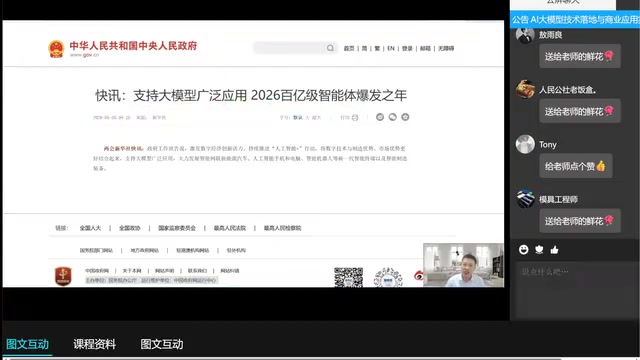
According to CCTV report data cited in the Bilibili sharing, the market size of China's enterprise AI agents reached 21.2 billion yuan in 2025 and is expected to increase to 44.9 billion yuan in 2026, with the potential to exceed 330 billion yuan by 2029. The market is growing rapidly, but what can truly be deployed will certainly be those projects that have filled in the engineering pitfalls.
The meaning of observability in agent systems: Unlike logs and metrics in traditional services, observability in agent systems requires recording the complete reasoning chain—the input context of each round, the model's tool selection and parameters, tool return results, verification layer judgments, and retry decisions. Only when these data are retained in a structured way can teams answer questions such as "why was an over-budget hotel recommended this time" and "at which step was this hallucination introduced." Without observability, agent behavior is close to a black box, failures cannot be reproduced, costs cannot be attributed, and online tuning is impossible. Therefore, the article lists it alongside tool governance and verification mechanisms as a foundational engineering capability that determines project success.
One-line Summary
Traditional single agents have six major engineering pitfalls; enterprise deployment requires shifting to a three-layer multi-agent architecture of planning, execution, and verification.
Paragraph Summary
The article starts from the four stages of large model commercialization (native models, prompt engineering, RAG, agents) and points out that only the agent stage enables large models to autonomously plan, execute, and call tools. However, using a travel planning demo as an example, traditional single agents expose six major engineering defects: hardcoded keywords leading to poor generalization, coupled tool call code, lack of budget constraints, no data verification leading to exposed hallucinations, slow serial calls, and single point failures causing full-process crashes. The root cause is that planning, calling, and verification are all coupled in one loop. The solution is a three-layer multi-agent architecture: the planning layer handles intent understanding and task decomposition, the execution layer consists of specialized sub-agents working in parallel, and the verification layer intercepts hallucinations and over-budget results and triggers retries. The article concludes with selection recommendations, emphasizing that engineering capability is more critical than model selection, and cites data showing that China's enterprise AI agent market will grow from 21.2 billion yuan in 2025 to 330 billion yuan in 2029.
Related articles

11 Tested Rules to Slash Claude Token Costs to the Bare Minimum
Claude Token costs too high? Creator Doobie rewrote 11 token-saving rules after 30 days of logs: keep effort at medium, use /clear when switching tasks, don't let cache expire, downgrade auxiliary agents to Haiku—with official Anthropic data and cost comparisons.

Build Your First AI Agent with Zero Code: A Claude Code Practical Guide
Build an AI agent in Claude Code with zero code. Learn the full workflow: folder setup, claude.md rulebook, plan-mode briefs, skills, and independent review.
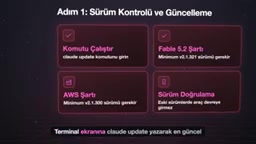
Claude Code Advisor Mode Explained: How Fable 5.2 and Sonnet 5.5 Collaborate on Code
A deep dive into Claude Code's experimental Advisor mode: how Fable 5.2 and Sonnet 5.5 split the work, access requirements, version thresholds, three ways to enable it, Fable's special billing rules, and a fact-check of the "3.4x cost reduction" claim against official docs.