Enterprise AI Deployment: The Core Decision Between Ontology and Agent Architecture

When and how enterprises should build an Ontology to power domain-level AI Agent automation.
This article breaks down the four core questions around enterprise Ontology and Agent deployment: what Ontology does (semantic reasoning and business domain modeling), what tools exist (OntoFlow, FIBO, BIAN), which organizations should build one (mostly larger enterprises with complex business logic), and how to get started with a top-down, pilot-first approach.
Enterprise AI Deployment: The Core Decision Between Ontology and Agent Architecture
Ontology and enterprise-grade Agent deployment have become hot topics in the enterprise AI space. Entrepreneurs, internal practitioners, and industry professionals alike are raising a common set of questions. This article systematically addresses four core questions around Ontology and Agents: what it's for, what tools are available to build it, what types of organizations should consider building it, and how to get started.
What Is Ontology Actually Good For?
Many people think of Ontology as simply a kind of knowledge graph or database — and in a sense, that's not entirely wrong; Ontology does encompass those functions. But to understand its technical essence, we need to go back to its definition in computer science: an Ontology is a formal, structured representation of knowledge within a given domain. It doesn't just store data — it explicitly defines concepts (classes), attributes (properties), and the relationships between concepts (such as inheritance, association, and dependency), enabling machines to perform logical reasoning rather than mere retrieval.
Compared to traditional relational databases, the core advantage of Ontology lies in its semantic reasoning capability: the system can automatically derive new knowledge conclusions based on predefined rules. In enterprise AI scenarios, Ontologies are typically expressed in standard formats like OWL (Web Ontology Language) or RDF (Resource Description Framework), ensuring interoperability across systems and the reusability of knowledge.
The deeper value of Ontology, therefore, lies in precisely modeling a business domain: it represents the facts and relationships within that domain, capturing critical business semantic information.
What is business semantic information? Here's a concrete example: a customer places an order with me, the order contains certain products, each product is composed of specific components, and those components are sourced from various suppliers. An Agent needs to understand this chain of business entities and relationships through an Ontology before it can truly deliver domain-level automation and decision support — producing answers that are both stable and accurate.
Without an Ontology, Agent outputs are prone to hallucinations or remain frustratingly generic — much like asking ChatGPT or Claude directly. You get answers disconnected from your company's actual business context and industry knowledge, and the responses can be inconsistent from one query to the next. That's simply not production-ready.
Why does the hallucination problem matter so much in enterprise settings? LLM "hallucination" refers to the model generating content that seems plausible but is actually incorrect or fabricated. In general conversational use, hallucinations are tolerable; but in enterprise production environments, a wrong decision recommendation can directly cause financial losses or compliance violations. The mainstream approaches to reducing hallucinations include RAG (Retrieval-Augmented Generation) and fine-tuning, but the unique advantage of the Ontology approach lies in its determinism: the definitions and relationships of business entities are human-verified facts. Agents reasoning over these facts produce outputs with far greater consistency and explainability than pure RAG solutions — which is especially critical in high-stakes domains like finance, healthcare, and supply chain.

Ontology is therefore the foundation that Palantir has developed in practice to enable Agents to make accurate, domain-level business decisions. It provides the business entities, relationships, and knowledge scaffolding needed — think of it simply as an Agent OS (Agent Operating System). That said, it's entirely possible that someone will eventually develop a lighter, more efficient alternative.
What Tools Are Available for Building Ontologies Quickly?
Several companies in China are already exploring or actively developing their own Agent OS products — ranging from web-based coding demos to early-stage versions — and virtually all of them take an approach of building on and simplifying the Palantir framework. At this stage, it would be premature to declare any single product the definitive go-to solution.
Background on Palantir's Ontology practice Palantir's core product, the Foundry platform, places Ontology at the foundation of its entire data operating layer. All business entities — orders, customers, assets — are defined and interconnected within the Ontology. AIP (Artificial Intelligence Platform), launched in 2023, further integrates LLMs with the Ontology, constraining and guiding LLM outputs within the enterprise business context to dramatically reduce hallucinations and improve decision reliability. Palantir's FDE (Forward Deployed Engineer) model has been key to its commercial success: engineers embed directly with clients, encoding business knowledge into the Ontology and building Agents and workflows around it. While this delivers exceptional service quality, it is labor-intensive and difficult to scale — and this is exactly the core tension that Agent OS products are trying to solve.
On the open-source side, the following projects are worth paying attention to:
- OntoFlow: An open-source tool for rapidly building Ontologies
- OntoEKG: A similar Ontology construction tool
- OntoPrompt: A demo built by the author, significantly extended from the original, incorporating Palantir's knowledge and methodology
For the financial sector, there are also open-source Ontologies available for direct use:
- FIBO (Financial Industry Business Ontology): Developed by the EDM Council, FIBO is the most authoritative open-source ontology standard in the financial industry, already adopted by major global institutions including JPMorgan Chase and Deutsche Bank. It covers hundreds of financial concepts and their relationships — derivatives, bonds, equity, corporate entities, regulatory compliance, and more — and is published in OWL format for direct integration into enterprise knowledge systems.
- BIAN (Banking Industry Architecture Network): A semantic network structure for the banking industry, focused on decomposing banking capabilities as services. It defines over 300 standardized Service Domains — such as account management, credit assessment, and payment processing — providing an architectural blueprint for bank digital transformation. For financial institutions, extending FIBO/BIAN with organization-specific concepts is several times more efficient than building an Ontology from scratch, while also ensuring alignment with industry standards and regulatory compliance.

There's a key insight worth clarifying here: the true users of Agent OS products are not enterprise clients themselves — they are FDEs (Forward Deployed Engineers). According to Bob McGrew, a former Palantir VP and one of the architects of the FDE model, who shared this on a podcast, Agent OS is essentially scaling something along a path that was previously unscalable.
More specifically: the FDE business model is difficult to scale — it's fundamentally a headcount-driven model that's hard to expand. The emergence of Agent OS is like building a highway for FDEs, enabling a single FDE to serve more clients while embedding domain-level Ontology knowledge directly into the product.
Is Your Organization Ready to Build an Ontology?
Many companies today are in a "follow-the-hype" mode: they hear the buzz and want to jump in, without having thought through why they want to build an Ontology — and end up stuck in an endless loop of searching for the right tools.
The honest assessment here is: most small and mid-sized businesses don't need to spend time on this, for two main reasons.
Poor Return on Investment
Building an Ontology plus the accompanying Agent infrastructure requires substantial investment. Most SMBs simply can't afford to play this game, and it's typically a "CEO-class initiative" that requires top-level leadership to drive.
Insufficient Business Complexity
SMBs have limited business processes and organizational scale — there simply isn't that much complex business semantics that needs to be codified. For them, the ROI of a full Ontology + Agent stack is not compelling.

The recommended starting point for any organization is to ask: Does my business actually need an Ontology? Or would a set of lightweight Agents combined with a few Skills be enough?
The organizations that genuinely should consider building one are those that want to establish a business-domain-level Agent Runtime — using it to improve efficiency or to reduce financial waste and misaligned incentives caused by excessive human intervention.
What is an Agent Runtime? Agent Runtime refers to the underlying infrastructure that enables AI Agents to run continuously, perceive their environment, invoke tools, execute tasks, and report results. Analogous to an operating system for applications, Agent Runtime provides core capabilities including Tool Calling, Memory Management, Task Orchestration, and state persistence. In enterprise business domain scenarios, an Agent Runtime must also integrate access control (ensuring Agents can only access authorized data), audit logging (meeting compliance requirements), and Human-in-the-loop mechanisms. Popular open-source Agent frameworks such as LangGraph, AutoGen, and CrewAI each provide varying degrees of Runtime capability, while Palantir AIP represents the commercial benchmark for enterprise-grade Runtime. Within this architecture, the Ontology plays the role of a "world model" — providing the Agents inside the Runtime with a structured cognitive foundation about the business world.
This type of decision typically needs to be evaluated and driven by senior leadership.
Once You've Decided to Build — How Do You Get Started?
This is the most practical question most people face: the direction is clear, but where do you begin?
Most enterprise Agents deployed today are fundamentally focused on individual productivity: using tools like Feishu AI or Multidimensional Tables, or building Agents for financial reconciliation, weekly report writing, or deck creation. More sophisticated implementations use open-source tools like Dify to build Workflows — monitoring emails, parsing attachments, having Agents write data into systems.
The value boundary of tools like Dify Dify is currently one of the most popular open-source LLM application development platforms in China, offering a visual Workflow orchestration interface that allows non-technical users to quickly build automation flows with LLM nodes, tool calls, and conditional branching. Enterprise Agent implementations built on Dify typically operate at the "process automation" level — replacing manual repetitive tasks with Agent execution, which is essentially an LLM-powered upgrade of RPA (Robotic Process Automation). The value is real, but it falls short of "business-domain-level automation" — it handles single-point, predefined tasks, not complex business scenarios requiring cross-entity reasoning and dynamic decision-making. Tools like Dify are an ideal starting point for enterprise Agent adoption, but if you want Agents to participate in core business decisions — supply chain optimization, risk pricing, customer strategy — you must introduce deeper business semantic support. That's exactly the differentiated territory where Ontology adds value.

The reality is that most enterprises have not yet deeply integrated Agents into business domain workflows, nor have they achieved any systematic, scalable outcomes. A key reason: business domain owners don't know it's possible, or don't know how to do it — they lack sufficient awareness and understanding.
This means the critical factor in any deployment path is first helping business domain owners understand "what value this can create" before you can mobilize company-wide, domain-level implementation. The recommended approach is two-phased:
Phase 1: Win Over Decision-Makers, Build Value Awareness
Senior decision-makers need to personally understand the value of Ontology and Agents. Consider building a targeted internal demo that gives leadership firsthand, intuitive exposure — confirming that it can genuinely create business value and deliver quantifiable, real-world results.
Phase 2: Prioritize High-Value Use Cases for Pilot Programs
Select areas with clear value streams and visible outcomes for pilot projects, such as:
- Sales channel transformation
- Procurement and supplier share allocation
- Finance and tax management
- Supply chain coordination and optimization
Closing Thoughts
Ontology and enterprise Agents represent an important pathway for enterprise AI to evolve from "individual productivity" to "business-domain-level automation" — but they are not a universal requirement for every organization. Rationally assessing your ROI, identifying the right high-value entry points, and driving awareness from the top down are the keys to making Ontology and Agents genuinely deliver business value. For the vast majority of small and mid-sized businesses, chasing the concept blindly is far less productive than making full use of lightweight Agent and Skill tooling first. Once your business complexity and organizational maturity reach a sufficient level, then it's time to consider building out a full Ontology architecture.
Related articles
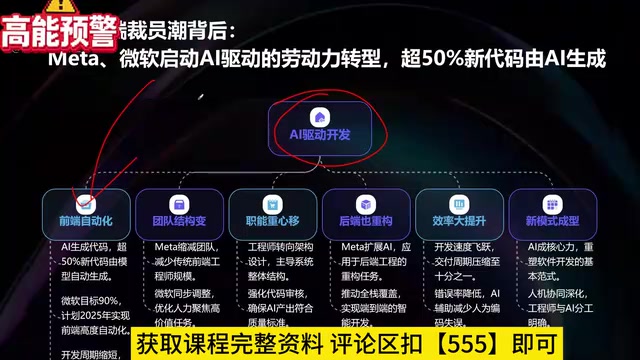
What Is Vibe Coding? The AI Programming Skill Every Developer Needs
What is Vibe Coding? Learn how AI programming is reshaping dev teams, why traditional programmers face displacement, and why Cursor & Claude Code matter.
Making Rocks Think: A Philosophical Exploration of Generative AI and Information Compression
From a viral Reddit post to deep AI theory: why compression equals understanding, the Library of Babel thought experiment, semantic compression, and the Hutter Prize.
Irregular Warns: Four AI Lab Security Breaches Traced to the Same Root Cause
Irregular reveals four AI lab security breaches share a single root cause, exposing systemic risks from technology stack homogeneity across the AI industry.