Enterprise Context: The Key to Unlocking AI's Real Value
Multiple AI tools in an enterprise are each smart but chaotic together—the root cause is the lack of shared enterprise context.
The article points out that when enterprises run multiple AI platforms and tools simultaneously, individual tools perform well, but combined use often produces erroneous or chaotic results. The root cause is the lack of shared understanding of enterprise context. Enterprise context includes three layers: business rules and constraints, cross-system real-time states, and organizational knowledge and history—far more than just feeding data to models. Lack of context leads AI to give technically correct but business-wise absurd recommendations. The solution is to treat context as infrastructure by building a shared context service layer or injecting context through an AI orchestration layer, enabling systems to act collaboratively based on the same facts. When evaluating AI tools, enterprises should prioritize their ability to connect to the context layer and action consistency, not just model accuracy.
When enterprises run multiple AI platforms, systems, and tools simultaneously—such as AI-driven customer platforms, conversational assistants, and workflow and process automation tools—each tool is sufficiently advanced and responsive on its own. But once actually put into use, the outputs and actions may be incorrect, chaotic, or even inconsistent. The problem often lies not in the capability of the AI models, but in these systems' lack of a shared understanding of "enterprise context."
Why Standalone AI Tools Are "Smart Yet Chaotic"
A common AI deployment in enterprises is fragmented: the customer service team uses one AI assistant, the operations team uses another set of automation workflows, and the sales team connects to yet another independent intelligent platform. Each tool performs well within its own data silo, but once cross-department collaboration is required, information breaks down.
According to the original article's observation, these systems appear advanced when operating individually, but combined they may produce erroneous or chaotic actions. The root cause is that they do not share the same business context—they don't know what stage the customer is currently in, don't know the constraints of internal processes, and don't know what other systems have already done. AI's "intelligence" is constrained by local data.
Data Silo refers to the situation where different departments or systems within an enterprise each maintain independent data storage without integration and sharing mechanisms between them. In AI scenarios, data silos cause each AI tool to see only local data and be unable to obtain a complete cross-department business view. For example, a customer service AI can only access data from the customer service system and cannot see order and inventory information; a sales AI can only access the CRM and doesn't understand the status of service desk tickets. This isolation not only limits the quality of AI decisions but also easily leads to duplicated work and conflicting actions. Breaking down data silos requires establishing a unified data governance framework and integration layer, but this often involves organizational barriers and technical debt, making it one of the main obstacles enterprises face when scaling AI.
The True Meaning of Enterprise Context
Enterprise context is not simply about feeding data to models. It contains at least three layers:
- Business rules and constraints: Internal approval processes, compliance requirements, service level agreements, etc. These rules determine what AI can and cannot do.
- Cross-system state: The customer's status in the CRM, the order's position in the supply chain, the ticket's progress in the service desk—AI needs to know these real-time states to make reasonable decisions.
- Organizational knowledge and history: Past interaction records, documents, and decision patterns help AI understand "what answer is appropriate in this enterprise."
Without this context, AI assistants may give technically correct but business-wise absurd recommendations. For example, a customer service AI doesn't know the customer just filed a complaint and still recommends upgrading their plan; an automation tool doesn't know inventory is critically low and still triggers a process that delays restocking.
Knowledge Graph is a technology that organizes knowledge in a graph structure, using nodes to represent entities (such as customers, products, orders) and edges to represent relationships between entities (such as "purchased," "belongs to," "depends on"). In enterprise context, a knowledge graph can connect scattered business entities and rules into a semantic network, enabling AI systems to not only know "what it is" but also understand "what relationships exist." For example, when a customer service AI handles a complaint, the knowledge graph can quickly associate the customer's historical orders, service level agreements, and similar cases to provide a more reasonable response. Knowledge graphs often serve as a core component of the context service layer, working with business rule engines and real-time state databases to provide a consistent factual foundation for multiple AI systems.
Practical Directions for Building a Context Layer
To solve this problem, enterprises need to treat context as infrastructure rather than expecting each AI tool to handle it on its own. The original article emphasizes that simply stacking AI platforms, systems, and tools will not automatically generate value; the key is to make them work together around a unified enterprise context.
A feasible direction is to establish a shared context service layer: centrally manage business rules, entity states, and knowledge graphs, and expose them through APIs for various AI systems to call. This way, conversational assistants, process automation tools, and customer platforms can all act based on the same "facts." Another direction is context injection at the AI orchestration layer—before tasks are distributed to specific models, relevant business constraints and state information are packaged and included.
These approaches won't make any single AI tool smarter, but they will make the overall system more reliable. The value of enterprise AI lies not in how powerful a particular model is, but in whether multiple AI systems can coordinate their actions within a shared context.
AI Orchestration Layer is a control logic layer above specific AI models, responsible for coordinating multiple AI services, managing task flows, injecting context, and ensuring action consistency. It is like the conductor of a symphony orchestra—it doesn't play the instruments directly but decides when and how to invoke which model. In context injection scenarios, the orchestration layer retrieves relevant business rules, entity states, and historical knowledge from the context service layer before distributing tasks to models, packaging them into prompts or parameters passed to the models. The orchestration layer can also implement conflict detection, priority ordering, and rollback mechanisms to prevent different AI systems from producing contradictory actions. For enterprises running multiple AI platforms, the orchestration layer is a key architectural component for achieving system-level reliability.
Implications for Enterprises
The core reminder of the original article is direct: don't focus only on the capabilities of individual AI tools, but on the context consistency between them. When AI systems operate in isolation, even the most advanced models may produce chaotic results. Enterprises need to elevate context management to the architectural level and treat it as a prerequisite for AI deployment.
For enterprises expanding their AI applications, when evaluating a new tool, beyond model accuracy and response speed, they should also ask: can it connect to the existing context layer? Will the actions it produces conflict with other systems? The answers to these questions often determine the success or failure of AI projects more than benchmark scores.
One-line Summary
Multiple AI tools in an enterprise are each intelligent but chaotic when working together—the root cause is the lack of shared enterprise context.
Paragraph Summary
The article points out that when enterprises run multiple AI platforms and tools simultaneously, individual tools perform well, but combined use often produces erroneous or chaotic results. The root cause is that systems lack a shared understanding of enterprise context. Enterprise context includes three layers: business rules and constraints, cross-system real-time states, and organizational knowledge and history—far more than just feeding data to models. Lack of context causes AI to give technically correct but business-wise absurd recommendations. The solution is to treat context as infrastructure, establish a shared context service layer, or perform context injection through an AI orchestration layer, enabling systems to act collaboratively based on the same facts. When evaluating AI tools, enterprises should prioritize their ability to connect to the context layer and action consistency, rather than just model accuracy.
Related articles

Ollama Local Deployment Guide: Run Open-Source LLMs with Zero Experience
Ollama local deployment tutorial: what Ollama is, why choose it, how to download, install, and run open-source LLMs, and use its API for custom development. Beginner-friendly.
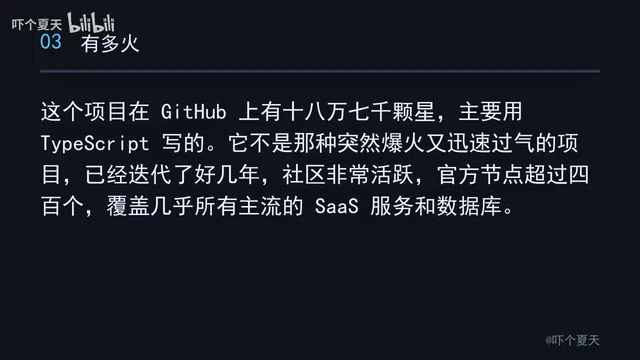
n8n: The 187K-Star Open-Source Automation Powerhouse That Turns Repetitive Work into Workflows
n8n is a 187K-star open-source visual workflow automation engine with 400+ nodes, Webhook/schedule/polling triggers, self-hosting for data security, and AI Agent support. Here's a guide to its core concepts, use cases, and pitfalls.
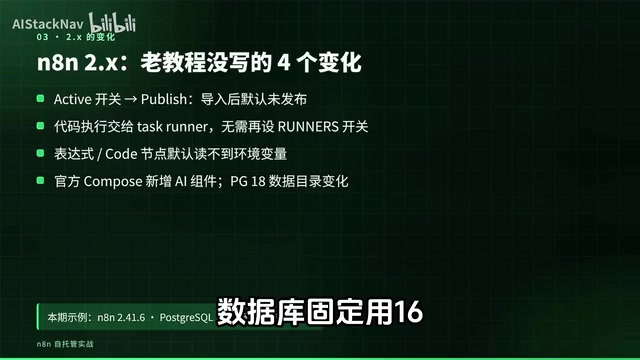
Self-Hosting n8n in Practice: Docker + PostgreSQL + Caddy Deployment Guide
A step-by-step guide to deploying a self-hosted n8n instance with Docker Compose, PostgreSQL, and Caddy automatic HTTPS, including env var pitfalls, Feishu alerting, and backup/upgrade/rollback tips.