Epic Games Launcher Officially Supports SteamOS, Signaling a Shift in the Linux Gaming Ecosystem
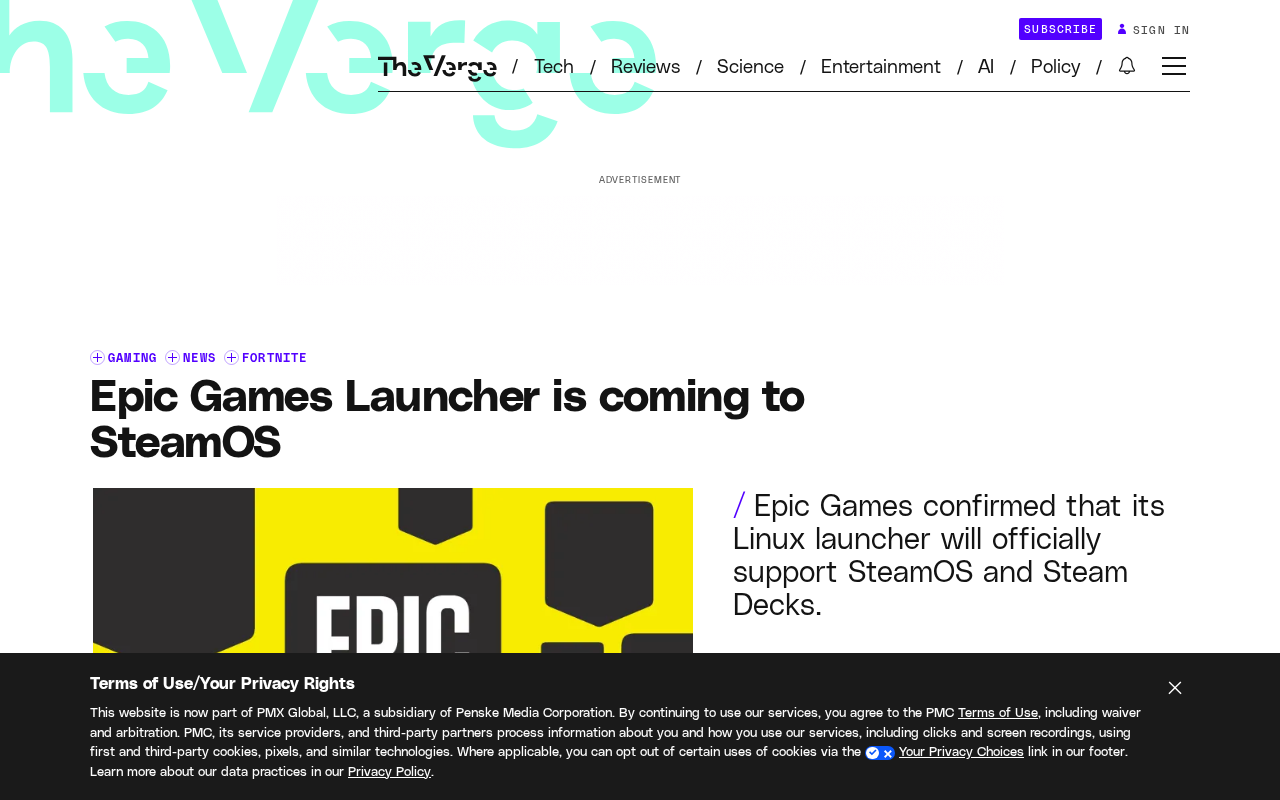
Epic Games Launcher confirms SteamOS support, bringing another platform-level adaptation to the Linux gaming ecosystem.
Epic Games Communications Director Jake Jones confirmed to GamingOnLinux that the Epic Games Launcher will support SteamOS and several other Linux distributions, marking Epic's shift from the passive "investigating" stance of last October to active adaptation. SteamOS is Valve's Linux distribution for devices like the Steam Deck, and official support will lower the barrier for users to run Epic games, reduce reliance on third-party workarounds, and expand Epic's user reach. However, the specific timeline, the first batch of supported games, and functional completeness have not yet been announced, and anti-cheat systems and graphics drivers remain compatibility variables. The move is also seen as a "vote with its feet" for Valve's years of Linux ecosystem building and may prompt other platforms to follow suit, strengthening SteamOS's content supply.
From "Investigation" to Official Confirmation: Epic Games Launcher Comes to SteamOS
Epic Games and Valve have always had a subtle relationship at the operating system level. Last October, Epic said it was "investigating" bringing Fortnite to Valve's Linux-based SteamOS. At the time, the Epic Games Launcher was still in preview, and SteamOS was not explicitly listed as a supported distribution. Now, the situation has made substantive progress.
According to GamingOnLinux, Epic Games Communications Director Jake Jones has confirmed to the outlet that the Epic Games Launcher will support SteamOS, along with several other Linux distributions. This statement means Epic is moving from passive observation to active adaptation, and SteamOS users are one step closer to running their Epic game libraries natively on handhelds or living-room PCs.
Why SteamOS Support Matters So Much
SteamOS is a Linux distribution built by Valve for devices like the Steam Deck, and its core value lies in compressing the PC gaming experience into handheld and living-room scenarios. For a long time, the Epic Games Launcher had limited availability on Linux, and users often needed third-party tools or workarounds to run games on the Epic platform.
For players, official support means less hassle and a more stable update path. For Epic, adapting to SteamOS expands its user reach—the installed base of the Steam Deck and its derivative devices cannot be ignored, and if Epic continues to be absent, it effectively shuts some potential players out. More subtly, Epic and Valve compete over store revenue splits and exclusivity strategies, but compatibility at the operating system level does not hinder commercial competition; instead, it may give Epic a new entry point beyond its own store.
The Proton compatibility layer is an open-source compatibility tool developed by Valve in collaboration with CodeWeavers and based on Wine. It allows games originally compiled for Windows to run on Linux without developer porting. Proton achieves compatibility by translating DirectX calls into Vulkan and emulating some Windows system interfaces, and its compatibility database ProtonDB is continuously maintained and rated by the community. Precisely because Proton greatly lowers porting costs, SteamOS can run a massive number of Windows games on the Steam Deck, and it also turns Linux adaptation for third-party launchers (such as the Epic Games Launcher) from "rewriting games" into an engineering problem of "getting the launcher itself to run." Understanding Proton's role makes it clear why Epic's confirmation is more feasible—the underlying runtime environment has already been paved by Valve.
Anti-cheat systems (such as Easy Anti-Cheat and BattlEye) are a key variable constraining Linux game compatibility. Such systems run at the kernel level to detect cheating behavior, but Linux's openness and kernel module signing mechanisms make adaptation complex. Some anti-cheat vendors already offer Linux/Proton support, while others explicitly refuse, causing competitive games like Fortnite to remain unplayable on Linux for a long time. Epic is also the parent company of Easy Anti-Cheat, and its stance has a decisive impact on whether its own games can come to SteamOS, which is one reason the adaptation timeline is difficult to predict.
Scope of Support and Uncertainties
Currently confirmed information centers on the level of "supporting SteamOS and several other distributions." Jake Jones confirmed compatibility to GamingOnLinux, but the specific timeline, the first batch of supported games, and the functional completeness of the Epic Games Launcher on SteamOS (for example, whether it supports cloud saves, friends systems, achievements, etc.) have not yet been disclosed.
From last October's "investigating" to today's confirmation, the pace is not particularly fast. Considering that the Epic Games Launcher had long been in preview status on Linux, formal SteamOS adaptation will likely still need to proceed in stages. Players can remain cautiously optimistic, but should not assume that all Epic games will immediately run smoothly on SteamOS—anti-cheat systems, graphics drivers, and compatibility of specific games remain variables.
Chain Reactions for the Linux Gaming Ecosystem
Epic's move is even more interesting when viewed against the bigger picture. Valve has invested in the Linux gaming ecosystem for years, from the Proton compatibility layer to iterations of SteamOS, with the goal of making Linux a viable gaming platform. As one of its main competitors, Epic bringing its launcher to SteamOS is, in a sense, a "vote with its feet" for the results of Valve's ecosystem building.
This will also put pressure on other gaming platforms and publishers that have not yet adapted to Linux. As the installed base of SteamOS devices rises, platform operators that continue to ignore Linux may face user attrition. Conversely, Epic's participation will enrich the content supply on SteamOS, further strengthening the platform's appeal and creating a positive feedback loop.
Of course, the competitive landscape will not change dramatically because of this. The contest between Epic and Valve over exclusive games and revenue shares will continue, and SteamOS support is only one piece of the puzzle. But for ordinary players, being able to access multiple game libraries more conveniently on the same device is itself an improvement in experience.
The Steam Deck's installed base is an important reference for judging platform adaptation willingness. Valve has not published exact sales figures, but third-party estimates put cumulative shipments in the millions, and third-party handhelds running SteamOS, such as the Lenovo Legion Go, have emerged. For publishers, this means a sizable and continuously growing Linux user pool. Epic's choice to confirm support at this time is a response to this existing and incremental market; and platform operators' willingness to follow up is often positively correlated with device installed base.
What Players Can Expect
In the short term, the most noteworthy thing is the adaptation details Epic will announce subsequently: how the Epic Games Launcher is installed on SteamOS, whether it is distributed through official channels, and whether flagship titles such as Fortnite will follow suit. If Epic can provide a clear timeline, SteamOS users' willingness to migrate will increase noticeably.
In the long term, this event is another signal that the Linux gaming ecosystem is maturing. Platform barriers are being gradually dismantled through compatibility, and players are the ultimate beneficiaries.
Related articles

Microsoft WebIQ: Verifiable Real-Time Web Grounding for AI Agents
Microsoft WebIQ gives AI Agents real-time, citable web grounding across web, news, images, videos, and Places—164ms P95 latency, 50% fewer tokens, Scopes source control, and MCP integration.
Augmentable Gaussian Splatting: Building Photorealistic Simulation Environments for Robot Training
Team combines Gaussian Splatting with meshes to build photorealistic robot simulation environments, integrating MuJoCo Warp physics and Franka Panda for augmentable, relightable real-site simulation.
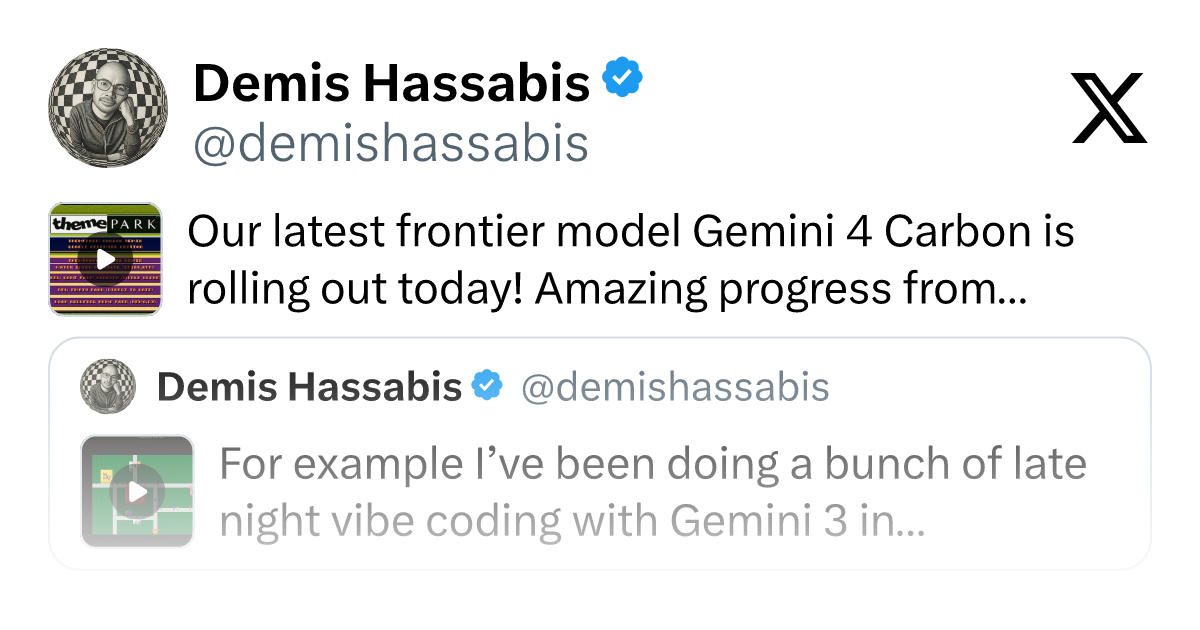
Gemini 4 Carbon Released: The Leap from Gemini 3 to Gemini 4 in Under a Year
Google releases Gemini 4 Carbon, less than a year after Gemini 3. In the official demo, Carbon reverse-engineered the Theme Park binary, added a new DeepMind-themed ride, and ported it to the web in one shot.