Essential for Embedded Development: Three Must-Have MCP Servers

Three MCP servers that supercharge AI-assisted embedded development with debugging, syntax checking, and docs.
This article introduces three MCP servers essential for embedded development: a Debugger MCP for AI-controlled GDB debugging, VS Code MCP Server that exposes LSP syntax checking to AI (solving the critical lack of real-time error detection), and Zephyr's official MCP for instant framework documentation access. Together, they address key pain points in AI-assisted embedded coding and significantly boost development efficiency.
Introduction: Pain Points of AI-Assisted Embedded Development
As AI programming tools become increasingly widespread, more and more developers are incorporating large language models into their embedded development workflows. However, the embedded domain has its unique challenges — syntax checking depends on compilers, framework documentation is scattered, and hardware-related contextual information is difficult for AI to understand. MCP (Model Context Protocol) servers have emerged as a bridge between AI and development tools.
MCP is an open protocol standard introduced by Anthropic in late 2024, designed to provide LLMs with a unified way to access external tools and data sources. Before MCP, integrating each AI tool with external systems required custom development, leading to severe ecosystem fragmentation. MCP adopts a client-server architecture where AI applications act as clients, communicating with MCP servers through a standardized JSON-RPC protocol, while servers encapsulate the capabilities of specific tools (such as file operations, API calls, database queries, etc.). This design is similar to how the USB protocol unified peripheral interfaces — developers only need to implement an MCP server once, and it can be called by any AI client that supports MCP.
Based on hands-on testing shared by a Bilibili creator in their Zephyr 101 series, this article introduces three highly practical MCP servers for embedded development scenarios, helping developers significantly boost their AI-assisted coding efficiency.
Debugger MCP: Let AI Directly Control GDB
The first recommended MCP server is, as the name suggests, specifically designed for debuggers.
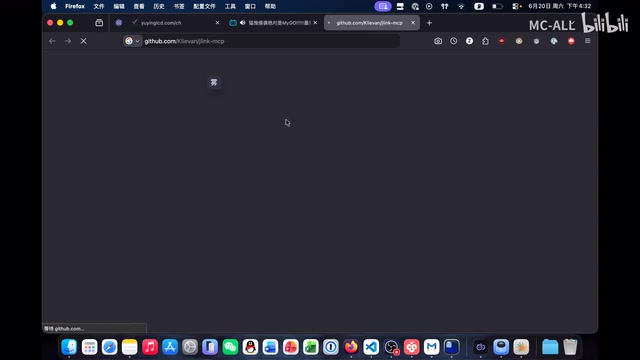
The core capability of this MCP is exposing debugger functionality to AI. In theory, you can attach debugging tools like GDB and let AI directly participate in the debugging process.
The Central Role of GDB in Embedded Development
GDB (GNU Debugger) is one of the most essential debugging tools in embedded development. Unlike desktop application debugging, embedded debugging typically requires connecting GDB to the target chip through hardware debug interfaces like JTAG/SWD, via middleware such as OpenOCD or J-Link GDB Server. The debugging process involves setting hardware breakpoints, inspecting register states, analyzing memory maps, tracing interrupt handling flows, and other operations that produce large volumes of complex output. In traditional workflows, developers must manually interpret this information, but with AI involvement, stack traces can be automatically analyzed and common hardware fault patterns (such as Hard Faults, memory overflows, etc.) can be identified, significantly lowering the debugging barrier.
The creator candidly admits that "it doesn't work that well," but the basic functionality does work. Interestingly, this MCP doesn't only support Zephyr — it claims compatibility with multiple embedded frameworks, though the creator has only verified Zephyr-related functionality so far. Support for other frameworks still needs to be tested by developers themselves.
Use case: When you need AI to help analyze debug information, set breakpoints, or inspect variable states, this MCP can save you a lot of manual copy-pasting of debug output.
VS Code MCP Server: Solving AI's Critical Lack of Syntax Checking
Why AI Programming Needs LSP
This is the most important recommendation in this article, addressing a fundamental problem that most people overlook.
To understand the value of this MCP, you first need to understand LSP (Language Server Protocol). The syntax highlighting, error prompts, code completion, and other features we enjoy in VS Code all rely on LSP servers behind the scenes. For example, when you install a DeviceTree plugin, the frontend display is just the surface — it's actually a backend LSP program parsing the corresponding syntax for you.
LSP was proposed by Microsoft in 2016, originally designed for VS Code, and later evolved into an editor-agnostic industry standard. Its core idea is to decouple language intelligence (code completion, go-to-definition, refactoring, error diagnostics, etc.) from the editor, provided instead by independent language server processes. The editor and language server communicate via JSON-RPC, with standard methods like textDocument/completion and textDocument/diagnostic. This means a single C/C++ language server (like clangd) can simultaneously serve VS Code, Neovim, Emacs, and other editors. In the embedded domain, clangd requires a correct compile_commands.json to understand the project's build configuration (including cross-compilation toolchain paths, macro definitions, header file search paths, etc.), which is why LSP configuration for embedded projects is more complex than for typical projects.
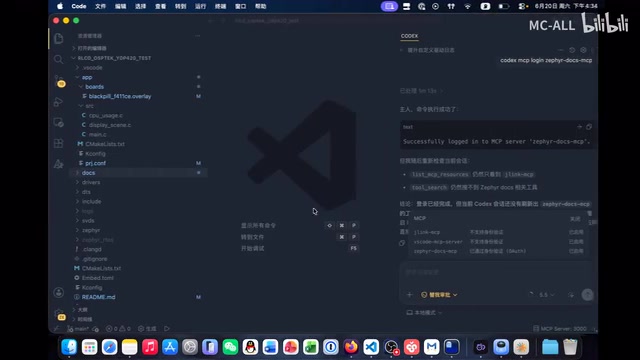
AI Programming's Fatal Weakness
AI programming tools like Codex essentially run an AI model inside VS Code. But the problem is: AI itself has no syntax checking capability.
AI programming tools represented by OpenAI Codex have evolved architecturally from simple code completion to full agentic development. Early GitHub Copilot only provided line-level completions, while the new generation of tools (such as Codex, Claude Code, Cursor Agent, etc.) can execute multi-step development tasks — including creating files, running commands, analyzing output, and iteratively modifying code. These tools typically run in sandbox environments with file system access and terminal execution capabilities, but lack IDE-level language understanding. The introduction of the MCP protocol enables these AI agents to call external tools for structured information, compensating for pure LLMs' shortcomings in code comprehension.
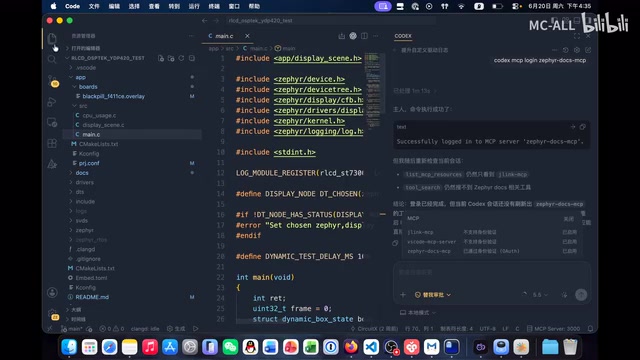
What is syntax checking? It's those red squiggly error indicators and yellow warnings we see in our editors. Without this real-time feedback, AI-generated code must go through a full compilation cycle to discover errors, which is especially time-consuming in embedded projects — compiling a Zephyr project can easily take tens of seconds or even minutes.
The Solution: Using VS Code as a Relay
The design philosophy of VS Code MCP Server is remarkably clever: it exposes all of VS Code's capabilities to AI.
Here's how it works:
- You install various language plugins in VS Code (C/C++, DeviceTree, Kconfig, etc.)
- VS Code MCP Server exposes the LSP capabilities provided by these plugins through the MCP protocol
- AI gains access to the syntax analysis capabilities of all installed plugins in VS Code by calling this MCP
This means that regardless of what language or framework your project uses, as long as VS Code has a corresponding plugin, AI can obtain the relevant syntax checking and diagnostic information. Compared to developing a separate MCP for each language, this approach offers far better versatility and extensibility.
For embedded developers, this solves a long-standing "weird problem" — AI-generated device tree files, Kconfig configurations, and more can finally receive syntax-level validation before being submitted for compilation.
Why DeviceTree Especially Needs Syntax Checking
DeviceTree was originally introduced by the Open Firmware specification and later widely adopted by the Linux kernel to describe hardware topology in a structured way. In Zephyr, DeviceTree files (.dts/.dtsi) define SoC peripheral address mappings, pin multiplexing configurations, clock tree relationships, interrupt connections, and other hardware information. Developers use overlay files to override default configurations for custom hardware adaptation. DeviceTree has its own unique syntax rules and binding constraints, and syntax errors are often only discovered during compilation, with error messages that are notoriously cryptic. This is precisely where VS Code MCP Server shines — through the DeviceTree LSP plugin, syntax errors and binding mismatches can be caught during the writing stage.
Zephyr Official MCP: One-Click Access to Framework Documentation
The third MCP is specifically tailored for the Zephyr framework, and it comes from an authoritative source — it's directly from the official Zephyr documentation.
Zephyr Framework's Complexity and Documentation Needs
Zephyr is an open-source real-time operating system (RTOS) hosted by the Linux Foundation, designed specifically for resource-constrained embedded devices, supporting everything from microcontrollers with 8KB of RAM to more complex multi-core SoCs. Unlike traditional RTOSes such as FreeRTOS, Zephyr adopts a build system similar to the Linux kernel (based on CMake and Kconfig), uses DeviceTree to describe hardware configuration, and features a complete driver model and network protocol stack. While this architecture is powerful, it also comes with a steep learning curve — developers need to master C programming, the CMake build system, Kconfig configuration syntax, DeviceTree syntax, and more simultaneously. This is precisely why an MCP that lets AI query official documentation in real time is so important.
While browsing the Zephyr documentation, the creator discovered that the official docs already provide a "Use MCP" configuration option. The setup is extremely simple:
- Copy the MCP configuration directly from the documentation page
- Paste it into your MCP configuration file
- Done!
This MCP uses the HTTP protocol (specifically the Streamable HTTP transport method, as opposed to local stdio-mode MCP servers), so no additional local dependencies need to be installed. However, there's one small hurdle: it requires human verification (logging in with a Google account or other account). Once verified, it works normally.
In hands-on testing, the creator used GPT-4o (ultra-high reasoning mode), and the AI was able to correctly invoke this MCP and return accurate Zephyr framework-related information. This means AI can query official documentation in real time while writing Zephyr code, dramatically reducing coding errors caused by incorrect API recall. This is especially valuable for a framework like Zephyr with its rich API surface and frequent version iterations — LLM training data often lags behind the latest version, while MCP ensures AI accesses the most up-to-date official information.
Bonus: Custom Zephyr Helper Skills
Beyond the three MCP servers above, the creator also revealed that they're developing a custom Skills called "Neko Zephyr Helper" — an AI assistant specifically designed for Zephyr projects. Although it hasn't been updated for several weeks, this direction is worth watching.
The creator notes that most existing Skills online are like "encyclopedias" — broad but not deep — and the actual user experience isn't ideal. Skills deeply customized for specific frameworks may be the key to truly improving AI programming efficiency. The "Skills" concept here is similar to an engineered encapsulation of system prompts, providing AI with domain-specific instructions, constraints, and best practices that significantly improve output quality in specific scenarios.
Summary and Selection Guide
| MCP Server | Core Capability | Recommendation |
|---|---|---|
| Debugger MCP | AI-controlled GDB debugging | ⭐⭐⭐ |
| VS Code MCP Server | Exposes LSP syntax checking | ⭐⭐⭐⭐⭐ |
| Zephyr Official MCP | Real-time framework documentation queries | ⭐⭐⭐⭐ |
For embedded developers, here are the recommendations:
- VS Code MCP Server is a must-install — it fundamentally solves AI's lack of syntax awareness
- Zephyr Official MCP is simple to configure and zero-cost — there's no reason not to use it
- Debugger MCP isn't mature enough yet — keep an eye on future updates
From a broader perspective, the MCP ecosystem is evolving rapidly, and more specialized servers for embedded scenarios are likely to emerge — such as chip datasheet query MCPs, PCB design rule checking MCPs, RTOS task scheduling analysis MCPs, and more. Embedded developers should pay attention to this trend and build familiarity with the MCP toolchain early.
AI won't take embedded engineers' jobs, but engineers who leverage AI tools effectively will always move faster than those who don't.
Related articles

Altman: Taking OpenAI Public This Year Would Be 'Ill-Advised'
OpenAI CEO Sam Altman says going public this year would be 'ill-advised,' even as the company has confidentially filed IPO paperwork. Here's what it means for AI.

An Open Letter to Dario: If AI Safety Is Real, Open the Model Weights
Developer Jacob's open letter to Anthropic CEO Dario Amodei went viral on Hacker News, challenging the contradiction between AI safety rhetoric and closed-source models: if safety truly matters, why not open the weights?
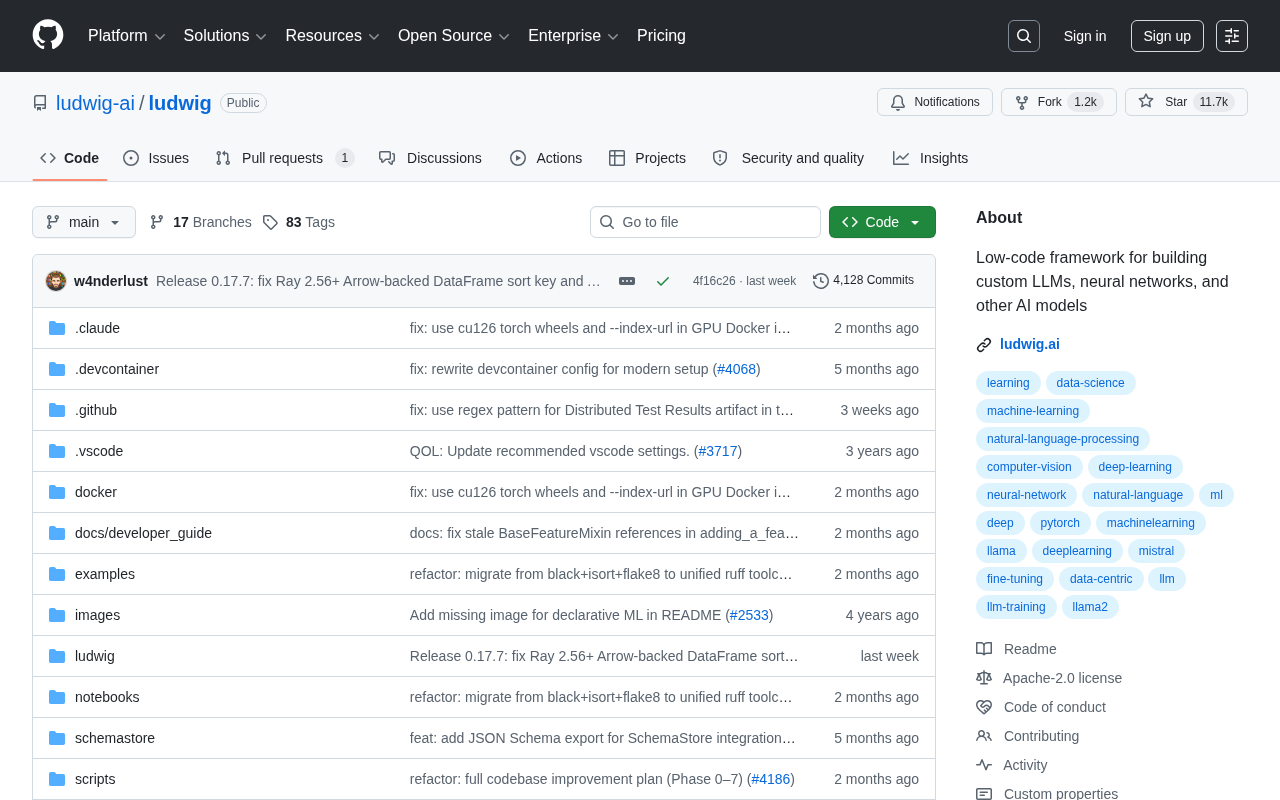
Ludwig: Building Custom LLMs and Neural Networks with Declarative Low-Code Configuration
Ludwig is an open-source low-code ML framework that builds custom LLMs and neural networks via declarative YAML config — no boilerplate training code required.